
Whether you’re replacing a worn-out vanity or redesigning your bathroom from scratch, understanding bathroom cabinet installation cost is the first step toward making a smart investment. Prices vary widely depending on the type of cabinets you choose, the complexity of the installation, and whether you go with stock, semi-custom, or fully custom options. Without a clear picture of what drives these costs, it’s easy to overspend on the wrong things or underestimate what quality actually requires.
At Suman Custom Carpentry, we build and install custom bathroom vanities and cabinetry out of our shop in Hyannis, Cape Cod. Every piece is hand-built in-house, from design through final installation, so we see the full cost picture on every project. That hands-on experience gives us a practical understanding of what homeowners actually pay and where the budget tends to shift.
This guide breaks down the real numbers behind bathroom cabinet installation in 2026, including material costs, labor rates, and the key factors that move your total up or down. We’ll walk through stock vs. custom pricing, what professional installation typically runs, and where you can save without cutting corners. By the end, you’ll have a clear framework for planning your bathroom cabinet project with confidence.
What bathroom cabinet installation cost covers
When you see a price quote for bathroom cabinet work, it’s not just the box on the wall. Bathroom cabinet installation cost typically bundles several distinct cost categories together, and understanding what each one includes helps you evaluate whether a quote is competitive or incomplete. Skipping this breakdown is one of the main reasons homeowners end up surprised by a final invoice that runs higher than expected.
The cabinet units themselves
The cabinets themselves represent the largest single line item in most bathroom projects. You’re paying for materials, construction quality, and finish options, and those three variables swing the price dramatically depending on which tier you choose. A stock vanity cabinet from a home improvement store uses lower-grade particleboard or MDF boxes with a factory finish, while a custom-built cabinet uses solid wood joinery, dovetail drawers, and finishes applied by hand.
The cabinet unit you choose sets the ceiling for every other cost in your project, labor, hardware, and installation all scale with the complexity of what you’re putting in.
Semi-custom options occupy the middle tier: you get more size flexibility and finish choices than stock, but the cabinet boxes are still factory-built. Custom cabinets are built to your exact dimensions and specifications, which matters significantly in bathrooms where walls are rarely perfectly square and plumbing locations constrain your layout.
Labor and installation charges
Labor is the second major component, and it varies based on who you hire and what the installation actually requires. A straightforward vanity swap, pulling an old unit and dropping in a new one, takes a few hours for an experienced carpenter. A full bathroom cabinet installation that includes wall cabinets, a custom built-in vanity, and new trim work can take one to three days depending on scope.
Professional installation labor typically covers measuring and marking, securing cabinets to wall studs, leveling, shimming, scribing to walls and floors, and installing hardware. If your project requires plumbing adjustments to accommodate a new vanity size or relocate a drain, you’ll need a licensed plumber on top of your carpenter’s fee. Electrical work, such as adding or moving an outlet for a built-in cabinet, requires a licensed electrician separately.
Materials beyond the cabinet box
The cabinet box is not the whole story. Countertops, sinks, hardware, and finishing materials all add to your total cost and are sometimes quoted separately from the cabinet units themselves. Countertop materials for bathroom vanities range from basic laminate to quartz and marble, and each option carries its own fabrication and installation fee.
Hardware includes drawer pulls, hinges, and soft-close mechanisms. Soft-close hardware adds a small cost per door or drawer but noticeably improves daily usability and reduces wear over time. Finishing materials like caulk, paint touch-ups, and trim pieces are minor individually but add up across a full bathroom renovation. Any tile work, flooring adjustments, or drywall repairs connected to your cabinet installation will also appear in your final budget, even if a separate trade handles them.
2026 bathroom cabinet installation price ranges
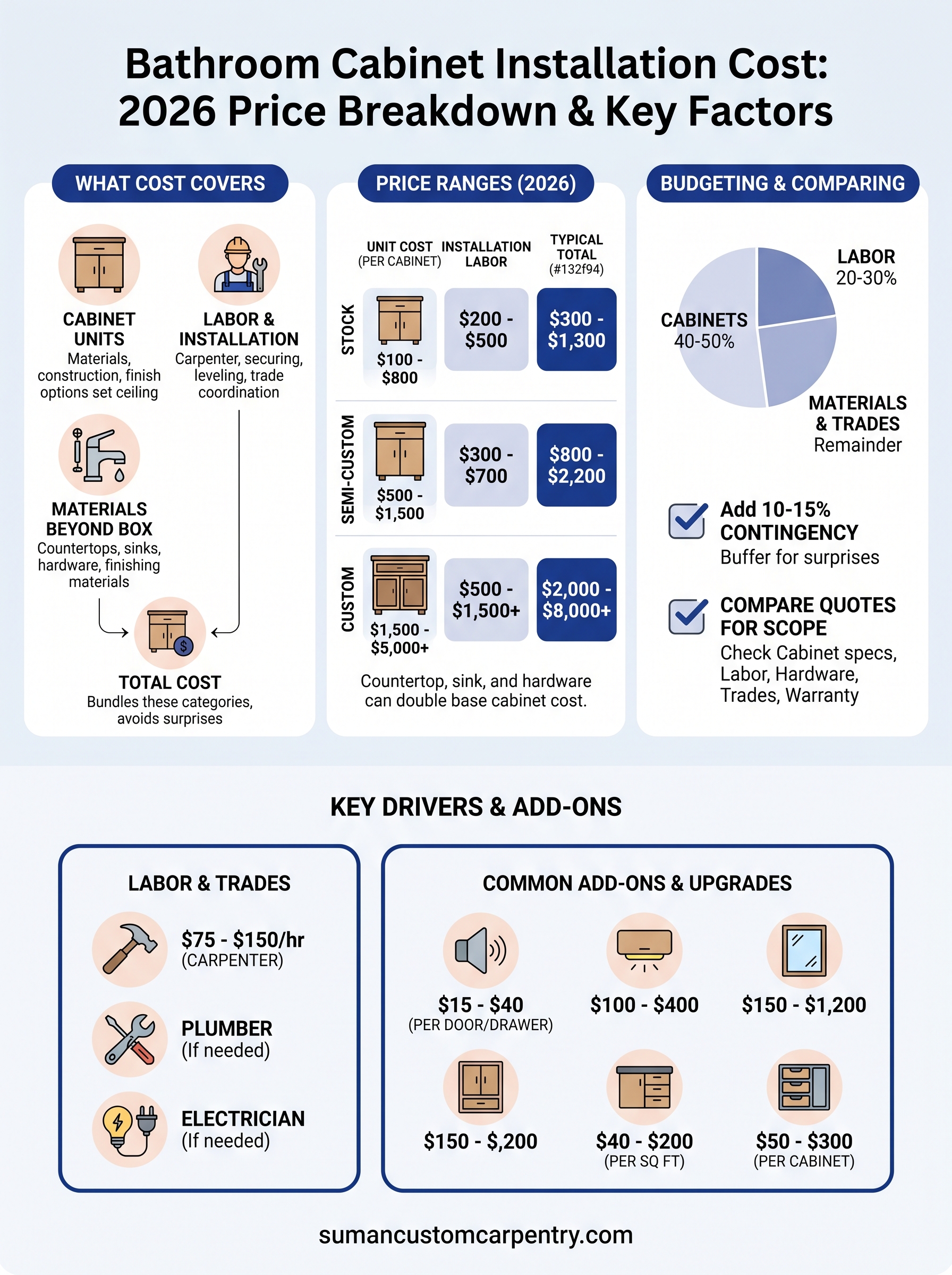
Prices shifted upward through 2025 and have held into 2026, driven by rising material costs and strong demand for skilled tradespeople. Total bathroom cabinet installation cost for a single vanity replacement typically runs between $300 and $8,000 or more, depending on cabinet type, bathroom size, and finish level. Understanding where you fall in that range comes down to whether you’re working with stock, semi-custom, or custom cabinets.
Stock and semi-custom cabinet pricing
Stock cabinets represent the most affordable entry point for most bathrooms. Ready-to-assemble or pre-built stock vanity cabinets typically cost between $100 and $800 for the unit itself, with professional installation adding another $200 to $500 on top. Semi-custom cabinets give you more size and finish flexibility, and unit costs generally run from $500 to $1,500 per cabinet before installation labor.
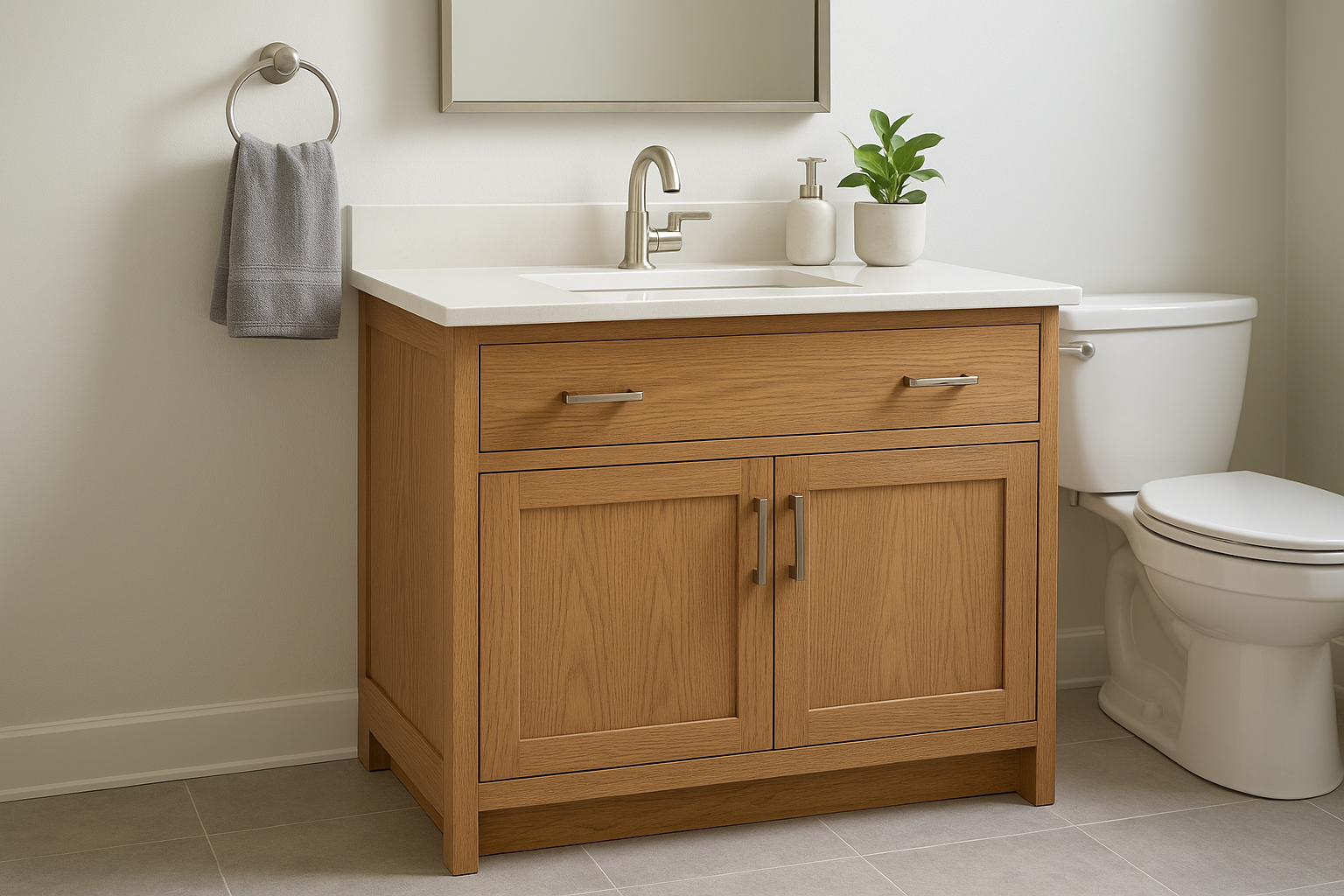
Your countertop, sink, and hardware choices can easily double the base cabinet cost, so budget for the full package and not just the box.
Here is a general breakdown of what to expect at each tier in 2026:
| Cabinet Type | Unit Cost (per cabinet) | Installation Labor | Typical Total |
|---|---|---|---|
| Stock | $100 – $800 | $200 – $500 | $300 – $1,300 |
| Semi-custom | $500 – $1,500 | $300 – $700 | $800 – $2,200 |
| Custom | $1,500 – $5,000+ | $500 – $1,500+ | $2,000 – $8,000+ |
Custom cabinet pricing
Custom cabinets carry a higher starting price, but they include significantly more than the unit cost alone. A fully custom bathroom vanity built to your exact dimensions typically starts around $1,500 per cabinet and can reach $5,000 or more for complex designs with specialty wood, painted finishes, or integrated storage features. Full-bathroom custom installations with multiple cabinet runs, built-in storage towers, and custom mirrors regularly come in between $5,000 and $12,000 total.
Real variation within that range comes from wood species, finish complexity, and hardware selection. Solid wood construction, dovetail drawer boxes, and soft-close hardware are standard in custom work, and those details contribute to both the higher upfront price and the longer service life you get in return.
Labor costs and who you may need to hire
Labor is a major driver of your bathroom cabinet installation cost, and it’s one of the most variable parts of the budget depending on project scope. Rates differ based on who performs the work, your location, and whether the job requires trade coordination. Understanding which professionals you need before you start helps you build an accurate budget and avoid surprises when the final invoice arrives.
Carpenter or millwork installer
A licensed carpenter or millwork installer handles the core installation work: securing cabinets to studs, leveling, shimming, scribing to walls, and installing hardware. Hourly rates for skilled carpenters in Massachusetts and the Cape Cod area typically run $75 to $150 per hour, with some custom millwork specialists charging more for detailed finish work.
Most single vanity replacements take two to four hours for an experienced installer, putting labor alone at $150 to $600 for a straightforward swap. A full bathroom cabinet installation with multiple cabinet runs, built-ins, or custom trim can take one to three full days, pushing labor costs toward $1,000 to $2,500 or more before any other trades are involved.
Getting a fixed-price quote rather than an hourly estimate protects your budget when project scope is clearly defined upfront.
When you also need a plumber or electrician
Some bathroom cabinet projects require additional licensed tradespeople beyond your carpenter, and those fees add directly to your total. If your new vanity is a different width than the old one, your drain, supply lines, or shutoff valves may need to move, which requires a licensed plumber. Plumbers in Massachusetts typically charge $100 to $200 per hour, and even a minor relocation adds two to four hours of work to your project.
Electrical work comes into play if you’re adding outlets inside a cabinet, under-cabinet lighting, or a new circuit for heated features. A licensed electrician in the Cape Cod area charges $80 to $160 per hour for this type of work. Both plumbing and electrical adjustments fall outside your cabinet installer’s scope, so confirm early in the planning process whether your project will require either trade. Coordinating all three professionals under one general contractor or a full-service millwork shop reduces scheduling friction and keeps your project moving on time.
Key cost drivers and common add-ons
Several variables push your bathroom cabinet installation cost up or down more than anything else. Knowing which factors carry the most weight lets you make deliberate choices about where to spend and where to hold back without compromising the finished result.
Bathroom size and cabinet count
The more cabinets your project includes, the higher your total. Each additional cabinet unit adds material cost, hardware, and installation labor, so a bathroom with a double vanity, a wall cabinet, and a linen tower costs significantly more than a single vanity swap. Cabinet count also affects how long installation takes, which directly impacts your labor bill.
Layout complexity adds another layer of cost. If your bathroom walls are out of square or the plumbing location limits where your cabinet can sit, your installer will spend more time fitting and scribing each unit to achieve a clean result.
Wood species and finish selection
Material choices affect price more than most homeowners expect. Solid hardwoods like maple and white oak cost more than paint-grade poplar or MDF, and specialty species like walnut with a wire-brushed finish add a premium on top of that. Painted finishes require more preparation, priming, and sanding between coats compared to a clear stain, which adds labor time to the project.
The finish you choose does more than affect looks: it also determines how well your cabinet holds up to bathroom humidity over time, so treating it as a durability decision pays off long-term.
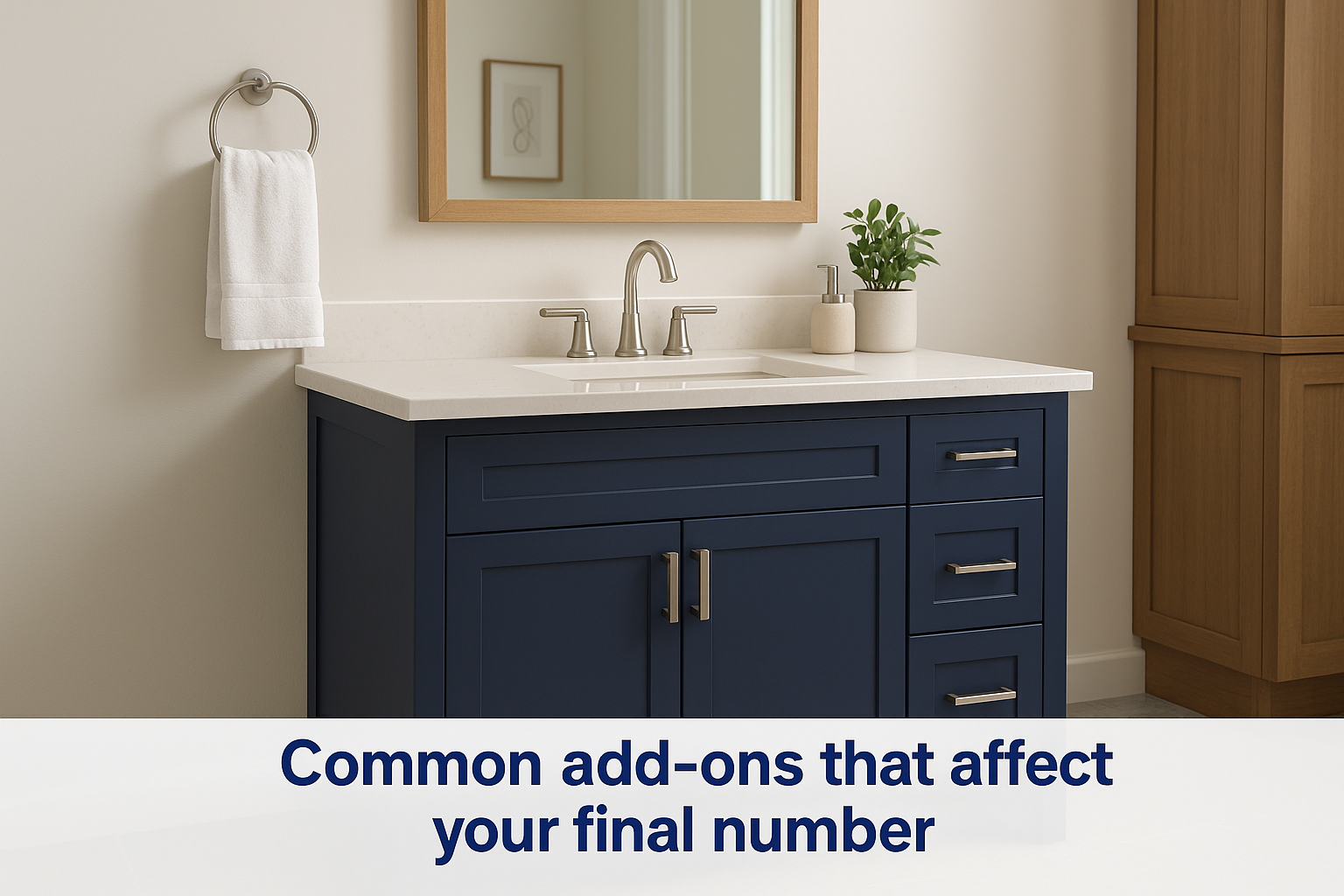
Common add-ons that affect your final number
Several upgrades regularly appear in bathroom cabinet budgets beyond the base unit and installation labor. Reviewing them upfront helps you plan your total accurately rather than getting caught off guard, and each one has a measurable impact on daily usability and long-term value.
- Soft-close hinges and drawer slides: $15 to $40 per door or drawer
- Under-cabinet lighting: $100 to $400 depending on run length and switch type
- Custom mirrors or framed medicine cabinets: $150 to $1,200 depending on size
- Countertop upgrades (quartz, marble, or butcher block): $40 to $200 per square foot installed
- Interior cabinet organizers: $50 to $300 per cabinet depending on configuration
How to estimate your budget and compare quotes
Building an accurate estimate for your bathroom cabinet installation cost starts before you contact a single contractor. The more clearly you define your project scope upfront, the more reliable the numbers you get back will be, and the easier it is to compare quotes on equal footing rather than trying to reconcile bids that cover completely different scopes of work.
Build your estimate from the outside in
Start with your total budget and work inward rather than adding up line items and hoping the total fits. Decide what you’re willing to spend on the entire project before you price individual components, then allocate that total across cabinets, countertop, hardware, and labor. A practical starting point is to budget roughly 40 to 50 percent for the cabinet units, 20 to 30 percent for labor and installation, and the remainder for countertop, sink, hardware, and any trade work like plumbing or electrical.
Write down your bathroom dimensions, plumbing locations, and a short list of must-have features before your first consultation so contractors are quoting the same job.
Once you have a working number, add a 10 to 15 percent contingency on top of your planned total. Bathrooms often reveal surprises behind walls or under floors once work starts, and having a buffer built in keeps the project moving without renegotiating mid-installation.
What to look for when comparing quotes
When you receive multiple quotes, read each one carefully before comparing the bottom line. Not every quote includes the same scope, and a lower number often just means something was left out. Look for these items in every quote you evaluate:
- Cabinet specifications: material, construction method, finish type, and brand or builder
- Labor scope: what the installer will and will not handle
- Hardware: whether soft-close mechanisms, pulls, and hinges are included
- Countertop and sink: quoted separately or bundled
- Trade work: whether plumbing or electrical is in-scope or excluded
- Warranty terms: what is covered and for how long
If a quote is missing any of these details, ask for a written clarification before signing anything. The cheapest quote on paper rarely stays the cheapest once you add back everything it excluded.
Next steps for your bathroom cabinet project
You now have a clear picture of what bathroom cabinet installation cost actually includes, where your budget will shift based on your choices, and how to evaluate quotes before committing to a contractor. The next step is to define your project scope clearly: measure your bathroom, note your plumbing locations, and write down the features that matter most to you before you reach out to anyone.
If you’re planning a bathroom renovation on Cape Cod and want cabinets that are built to your exact dimensions and installed by the same team that built them, working with a local custom millwork shop removes the guesswork from the process. Suman Custom Carpentry handles every project from design through installation, with a lifetime warranty on cabinet boxes and doors. Request a consultation for your bathroom cabinet project and get a quote built around your actual space, not a generic estimate.