
Searching for custom millwork near me usually means you’ve already decided that stock cabinetry or off-the-shelf trim won’t cut it. You want something built to fit your space, not the other way around. The challenge is figuring out who actually builds in-house, what it’ll cost, and how long you’ll be waiting before the finished product is installed.
At Suman Custom Carpentry, we design and hand-build all of our millwork right here in our Hyannis, Cape Cod shop, from custom kitchen cabinetry and vanities to architectural trim, built-ins, and specialty pieces. We’ve been doing this since 2018, and we know the questions homeowners and property owners ask before committing to a project. Most of them come down to three things: price, timeline, and trust.
This article breaks down realistic costs for custom millwork, explains what affects your timeline, and gives you a list of specific questions to ask any shop before signing a contract. Whether you’re planning a full kitchen renovation or need a single built-in for a tricky alcove, you’ll walk away knowing exactly what to look for, and what to avoid.
What custom millwork means near you
Millwork refers to wood products that are milled and shaped to fit a specific architectural purpose inside or outside a building. That covers everything from baseboards and crown molding to custom cabinetry, doors, window casings, built-ins, and decorative trim. When you search for custom millwork near me, you’re looking for a shop that builds these pieces to your exact specifications, not one that pulls something generic from a warehouse catalog and calls it custom.
The difference between millwork and standard carpentry
Standard carpentry handles structural work: framing walls, subfloors, and rough construction. Millwork is the finished layer you actually see and interact with once the walls are up. A custom millwork shop designs, machines, and installs those finished pieces. The work demands precision tooling, trained craftspeople, and a clearly defined design process before a single board gets cut. Common millwork products include:
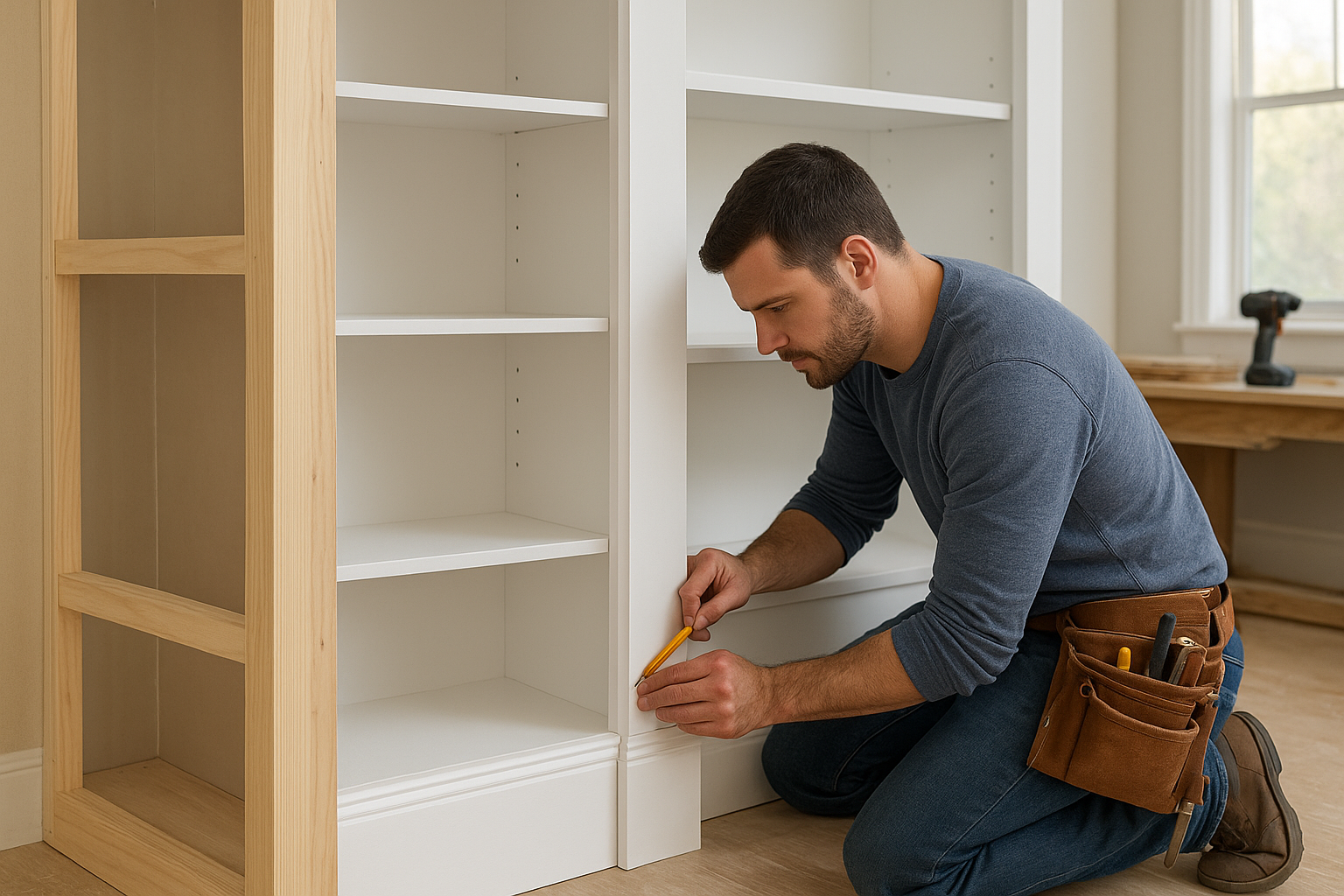
- Crown molding and baseboards
- Custom cabinetry and vanities
- Interior doors and window casings
- Built-in shelving and entertainment units
- Decorative columns and paneling
A shop that handles design, production, and installation under one roof gives you one point of accountability if anything needs adjusting.
What "local" actually means for your project
Choosing a local millwork shop matters more than most people expect. Site visits and in-person measurements are a core part of the process, especially for tight alcoves, irregular walls, or rooms with unusual dimensions. A shop based near you can come out, assess the space firsthand, and give you an accurate quote rather than guessing from photos.
Remote suppliers often skip that step entirely, which leads to fitment problems and costly back-and-forth. At Suman Custom Carpentry, being based in Hyannis on Cape Cod means we measure in person and stay involved through every phase of your project.
Why custom millwork beats off-the-shelf
Stock products are built to fit the average room, not yours. When your walls aren’t square, your ceiling isn’t level, or your layout has a quirk that no catalog accounts for, pre-built pieces create gaps, awkward filler strips, and visual compromises you’ll notice every single day. Custom work eliminates those concessions before the project even begins.
Fit and finish you can’t get from a catalog
Custom millwork is designed around your actual measurements, not an industry standard. That means doors, cabinetry, and trim sit flush where they’re supposed to, without shimming or workarounds. When you search for custom millwork near me, you’re essentially hiring a shop that starts from scratch with your actual space as the blueprint rather than adjusting your room to fit a product.
A piece built specifically for your space will always outperform something built for a space like yours.
Built to last longer
Most stock cabinetry uses particleboard cores and thin veneers that don’t hold up well in high-humidity environments like coastal Cape Cod kitchens and bathrooms. Custom millwork shops typically work with solid wood or high-grade plywood, which resists warping, holds fasteners more reliably, and stays structurally sound for decades. That durability translates directly into long-term property value rather than a renovation you’ll need to redo in ten years.
How to choose a millwork shop near you
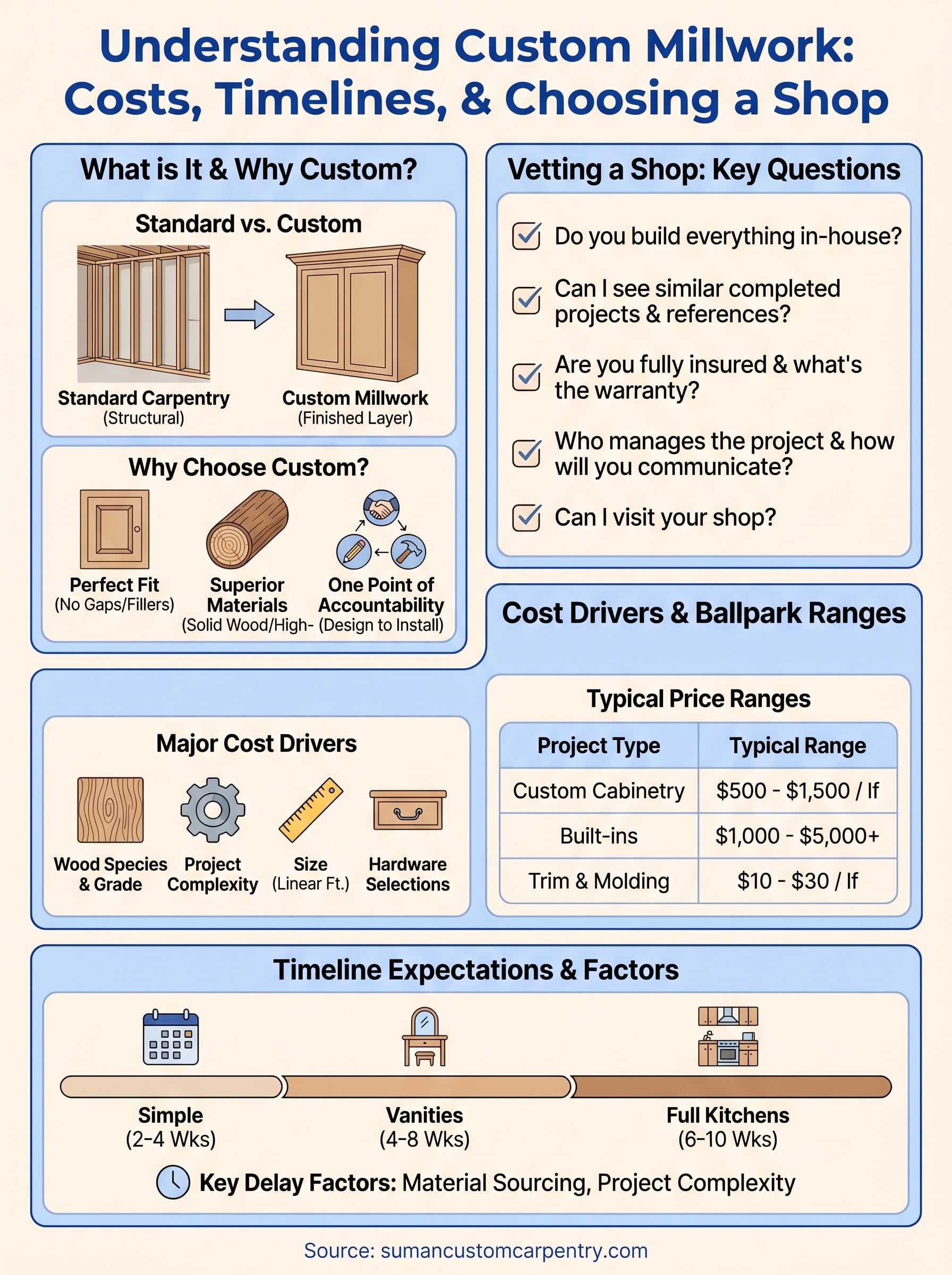
Not every shop that appears when you search custom millwork near me actually builds its products in-house. Some source pieces from larger manufacturers and mark up the price. Before you commit, ask one direct question: do they design, build, and install everything themselves?
Verify track record and credentials
Ask to see photos of completed projects similar to yours and request references from real past clients. A legitimate shop won’t hesitate. Look for several years in operation and full liability insurance coverage, which protects you if anything goes wrong during installation.
A shop that builds in-house controls quality at every stage, which reduces the chance of problems surfacing after the project is finished.
Pay attention to how long they’ve been operating and whether their reviews are detailed and credible, not just a string of five-star ratings with no context.
Questions to ask before signing
Pin down who manages your project day to day and how the shop communicates during the build. Ask specifically about warranty terms. A shop that backs cabinet boxes, doors, and painted finishes with a clear warranty is one that trusts its own craftsmanship.
- What’s covered under the warranty and for how long?
- Who handles issues after installation?
- Can you visit the shop before committing?
Custom millwork costs and what affects them
Custom millwork doesn’t come with a fixed price list, and that’s intentional. Every project starts with your actual space, your material preferences, and the complexity of the build. When you’re searching for custom millwork near me, getting an accurate quote requires an in-person consultation, not a number pulled from a general website.
Factors that drive the price up
Several variables push costs higher on any custom project. Wood species and grade make a significant difference: clear maple costs more than paint-grade poplar, and solid hardwood outprices plywood-core alternatives. Project complexity matters just as much. Intricate joinery, decorative inlays, or pieces built around irregular walls take more time and skill to produce.
The more precision a piece demands, the more time a skilled craftsperson spends on it, and time is the biggest cost driver in custom work.
- Wood species and finish type
- Number of pieces or linear feet
- Hardware selections (soft-close mechanisms, custom pulls)
- Site conditions requiring custom fitting
Ballpark ranges to expect
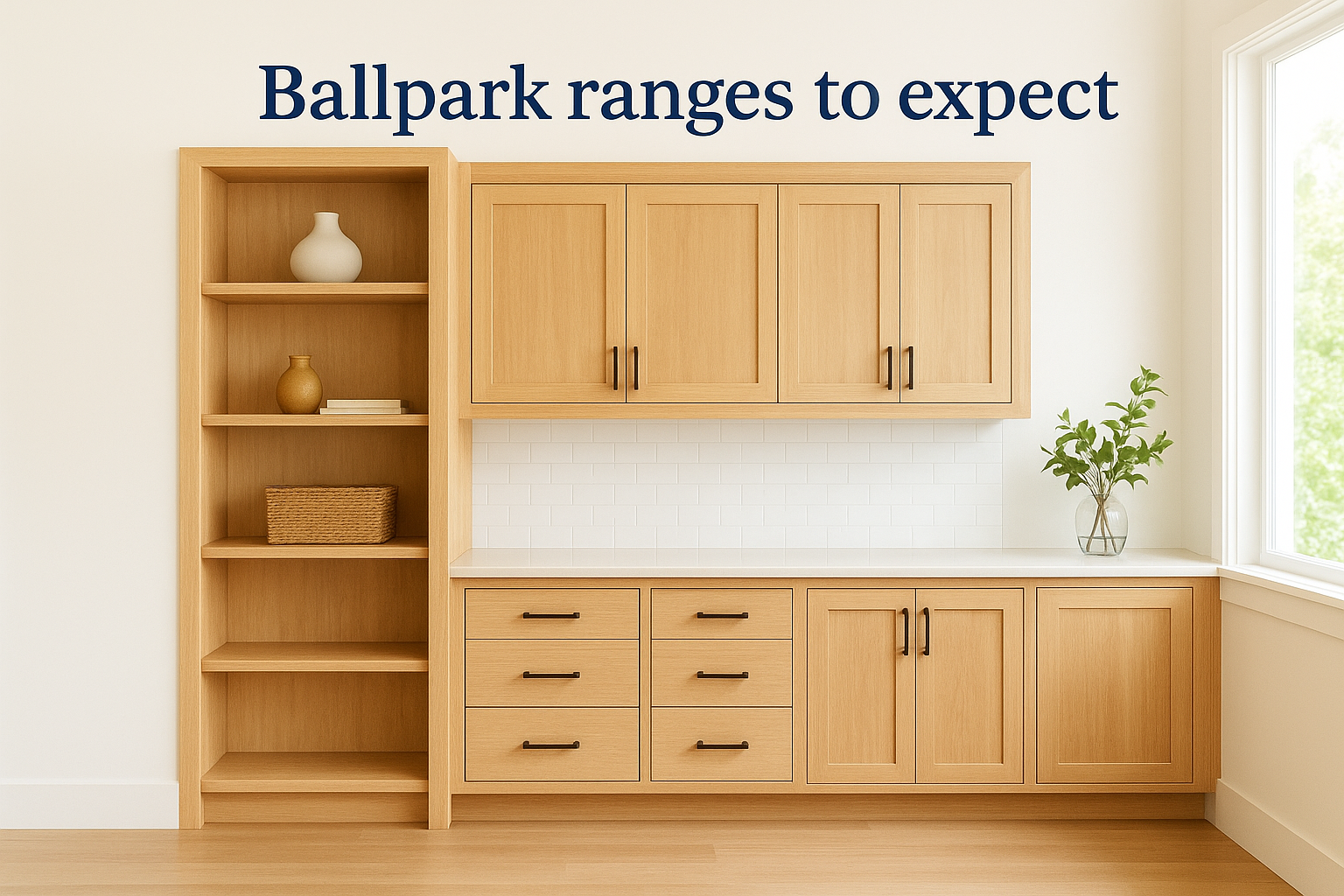
Custom cabinetry typically runs $500 to $1,500 per linear foot depending on material and design. Built-ins and specialty pieces vary widely, from a few hundred dollars for a simple shelving unit to several thousand for a full wall installation with detailed trim work.
| Project Type | Typical Range |
|---|---|
| Custom cabinetry | $500 to $1,500 per linear foot |
| Built-ins | $1,000 to $5,000+ |
| Trim and molding | $10 to $30 per linear foot |
Timelines for custom millwork projects
When you search for custom millwork near me, timeline is one of the first practical questions to answer. Lead times vary significantly based on shop workload, project scope, and material availability. Most custom shops book weeks to months ahead, so starting your search early gives you the most options.
What affects your build time
Several factors determine how long your project takes from design approval to final installation. Material sourcing can add weeks if specialty wood species or hardware need to be ordered. Project complexity plays an equally large role, since a straightforward shelving unit takes far less time to produce than a full custom kitchen.
At Suman Custom Carpentry, custom kitchens run on a 40-to-60-day build and installation timeline from design approval.
- Simple trim or shelving: 2 to 4 weeks
- Custom vanities or built-ins: 4 to 8 weeks
- Full kitchen cabinetry: 6 to 10 weeks
Planning around your project schedule
Give yourself a buffer of several weeks between your target completion date and your project start. Confirm with your shop exactly when your build slot begins and what happens if materials arrive late. Getting this clarity upfront prevents delays that push back every other trade on your renovation.
Asking about communication during the build matters just as much as locking in the schedule. A shop that keeps you updated lets you make quick decisions if anything shifts during production.
Wrap-up and next steps
Finding the right answer when you search for custom millwork near me comes down to knowing what to look for before you pick up the phone. Price, timeline, and trust are the three things that determine whether a project goes smoothly or turns into a frustration. Shops that build in-house, communicate consistently, and back their work with a real warranty are the ones worth your time.
Your next step is to schedule a consultation with a shop that can come to your space, take accurate measurements, and give you an honest quote based on your actual project. Vague estimates and generic timelines are a sign that a shop hasn’t done enough projects like yours. Specific answers are a sign that they have. If you’re on Cape Cod and ready to start, reach out to Suman Custom Carpentry to talk through your project and get a clear picture of what it takes to build it right.