
Salt air, natural light, and the sound of waves just beyond the window, Cape Cod bathrooms deserve a design approach that matches the setting. Whether you’re gutting a dated half-bath in a Barnstable cottage or reimagining the primary suite of a Chatham waterfront home, the right coastal bathroom renovation ideas can turn a purely functional space into one that actually feels like the coast. Not the theme-park version with starfish decals, but the real thing, weathered textures, soft palettes, and materials that hold up to humidity and salt.
At Suman Custom Carpentry, we build custom vanities, cabinetry, and millwork for bathrooms across Cape Cod, all hand-crafted at our Hyannis shop. We see firsthand what works in coastal homes and what falls apart after two seasons. That experience shapes every recommendation in this guide, practical choices grounded in real builds, not Pinterest boards. Every piece we install comes with a lifetime guarantee, so durability isn’t an afterthought.
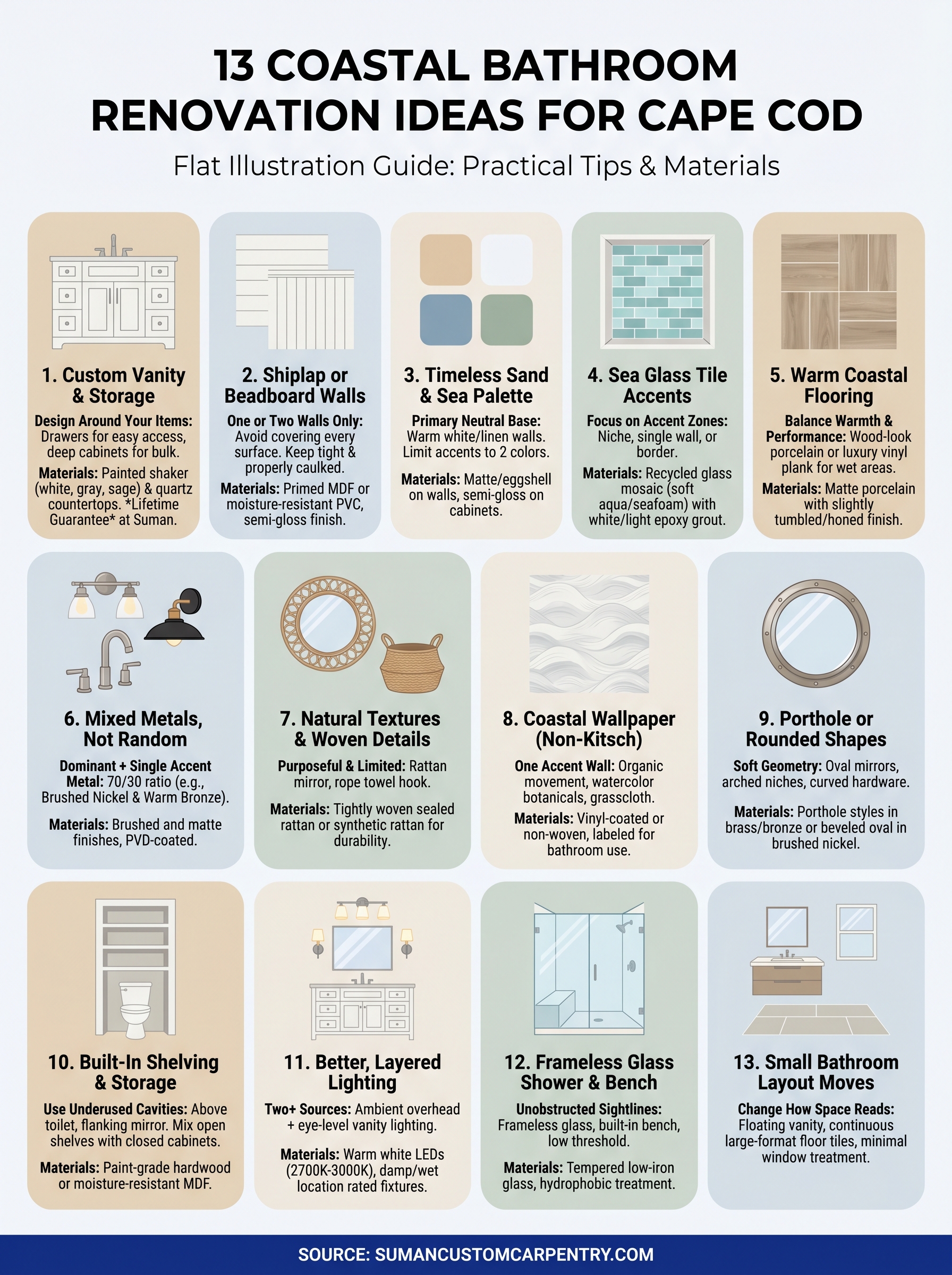
Below, you’ll find 13 ideas that cover everything from color palettes and tile selections to layout changes and custom storage solutions. Each one is tailored to the realities of Cape Cod living, because a bathroom renovation here isn’t quite like one anywhere else. Use these as a starting point for your own project, mix what resonates, and skip what doesn’t.
1. Custom built vanity with hidden storage
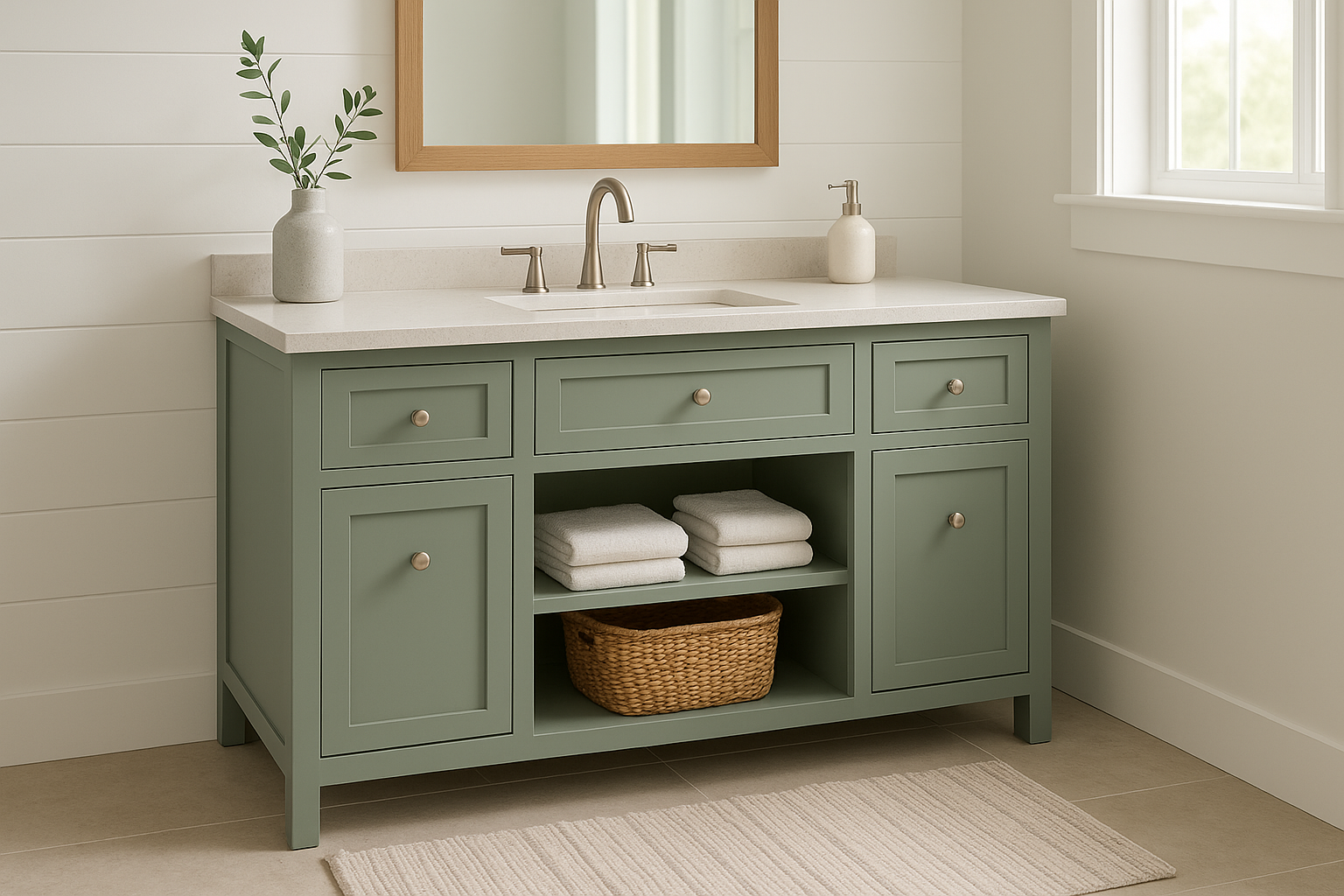
A custom-built vanity is the highest-impact upgrade in most coastal bathroom renovation ideas projects, and it does far more than look good. When you build it from scratch, every dimension, drawer, and door is designed around your specific bathroom, not a generic floorplan that may share almost nothing with your actual space.
What to do
Start with your storage priorities before thinking about aesthetics. Write down everything you actually keep in the bathroom, from spare towels and toiletries to cleaning products and extra toilet paper, then design compartments around those real items. Common features worth requesting include:
- Pull-out drawers for easy access to items stored at the back
- Deep lower cabinets for bulkier everyday supplies
- Hidden compartments tucked behind decorative side panels
- Open center shelving for curated display with closed cabinetry on each end for everyday function
A well-designed vanity hides the clutter that makes a bathroom feel cramped, and that matters most in smaller Cape Cod bathrooms where every square foot counts.
Best materials and finishes
For a coastal look, painted shaker-style cabinet doors in white, soft gray, or sage green are the most requested finishes in Cape Cod bathrooms right now. These read clean without feeling cold. Pair your cabinet boxes with a natural stone or quartz countertop featuring warm white tones or soft veining to bring in organic texture without overwhelming the rest of the palette.
Cape Cod moisture and maintenance notes
Salt air and year-round coastal humidity create accelerated moisture exposure that inland bathrooms simply do not deal with at the same level. At Suman Custom Carpentry, we use moisture-resistant primers and cabinet-grade topcoats formulated for this environment, applied in our Hyannis shop before installation. Solid wood doors consistently outlast hollow-core alternatives, and proper ventilation in the room adds years to the finish and the cabinet boxes themselves.
Budget range
A custom single-sink vanity typically runs between $2,500 and $5,000 installed, depending on size, wood species, and hardware. Double vanities or builds with more complex storage configurations land between $5,000 and $9,000. Those numbers reflect hand-built quality backed by a lifetime guarantee on cabinet boxes and doors, which changes the value calculation compared to flat-pack alternatives.
2. Shiplap or beadboard walls done the right way
Shiplap and beadboard are two of the most recognizable features in coastal bathroom renovation ideas, and both work especially well in Cape Cod homes where the aesthetic already leans toward relaxed New England character. The difference is subtle: shiplap uses flat horizontal boards with a small reveal between them, while beadboard features vertical grooves and a more classic, cottage feel. Either can look sharp or look cheap depending entirely on how they’re installed and finished.
What to do
Use shiplap or beadboard on one or two walls rather than all four, since covering every surface tends to make smaller bathrooms feel heavy. A popular approach is running beadboard along the lower half of the wall up to a chair rail, then painting the upper half a complementary solid color. Keep the boards tight and properly caulked at joints, especially near water sources like the sink and tub surround.
Skipping the caulk step is the most common installation mistake, and it leads to moisture getting behind the boards within a single winter on Cape Cod.
Best materials and finishes
Primed MDF or moisture-resistant PVC boards outperform standard pine in high-humidity bathrooms. If you prefer real wood, choose a paint-grade hardwood and apply a moisture-sealing primer before your topcoat. Semi-gloss or satin finishes both clean easily and resist steam better than flat paint.
Cape Cod moisture and maintenance notes
Coastal humidity accelerates any finish failure, so re-caulk seams every two to three years as standard maintenance. Proper bathroom ventilation matters as much as the materials you choose.
Budget range
Beadboard or shiplap installation typically runs $800 to $2,500 for a standard bathroom, depending on wall area, board material, and trim complexity.
3. A sand and sea color palette that stays timeless
Color does more work than most people realize in a bathroom renovation. For coastal bathroom renovation ideas, the most enduring palettes pull from the actual landscape around you: warm sand tones, soft whites, muted blues, and sage greens that shift with the light throughout the day. These colors age well because they reference something real rather than chasing a trend.
What to do
Build your palette around a primary neutral base like warm white, linen, or soft greige on the walls and larger surfaces, then bring in one or two accent colors through tile, textiles, or painted millwork. Limit yourself to three tones total. More than that and the space starts to feel busy rather than calm.
- Warm whites and linens for walls and ceiling
- Soft blue or sage as an accent on vanity paint or tile
- Natural wood tones to ground the palette with warmth
The most common color mistake in coastal bathrooms is packing in too many blues and greens at once.
Best materials and finishes
Matte and eggshell finishes on walls hold color more naturally than high-gloss and reduce the appearance of surface imperfections. For painted cabinetry, semi-gloss holds up better in humid conditions and still looks intentional against a matte wall.
Cape Cod moisture and maintenance notes
High coastal humidity can cause lower-quality paints to peel or yellow within a single season. Use a moisture-resistant interior paint rated for bathroom use, and confirm your ventilation fan moves enough air to keep steam from sitting on your walls.
Budget range
A full bathroom repaint using quality moisture-resistant products runs between $400 and $900 for most Cape Cod bathrooms, including labor.
4. Sea glass tile accents in the shower and niche
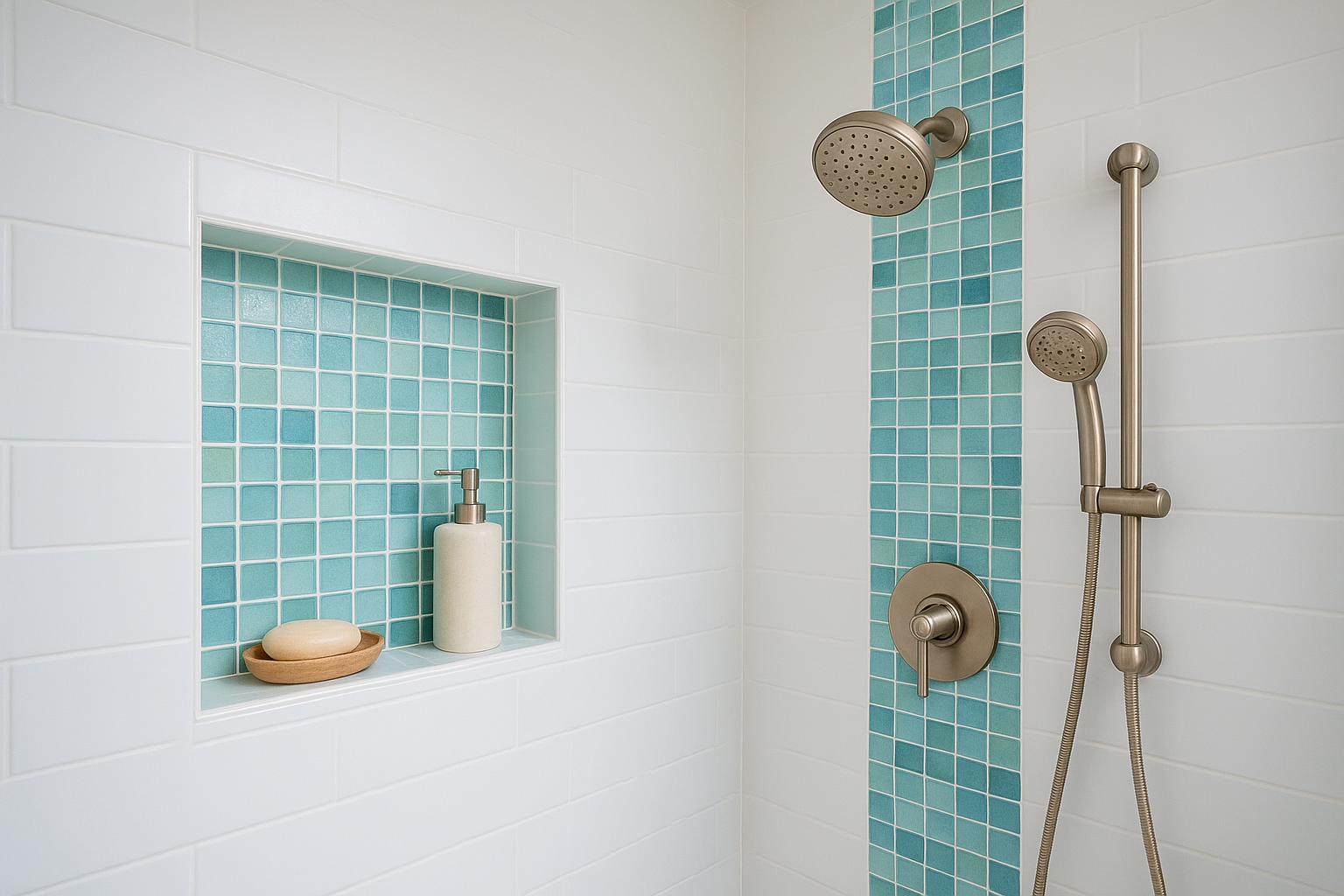
Sea glass tile brings one of the most distinctive looks in coastal bathroom renovation ideas to life without committing the entire space to a single color statement. The translucent, frosted quality of sea glass tile catches light the way actual beach glass does, adding depth that standard ceramic simply cannot replicate.
What to do
Focus your sea glass tile on specific accent zones rather than full wall coverage. The shower niche, a single accent wall behind the vanity, or a border row along the shower surround are all natural landing spots. This approach keeps the material feeling special rather than overwhelming.
A single well-placed niche in sea glass tile does more visual work than an entire tiled wall of the same material.
Best materials and finishes
Recycled glass mosaic tiles in soft aqua, seafoam, and clear tones are the most common choice for this look. Look for tiles with slight color variation within the same tile run since that natural irregularity is what makes the material feel authentic rather than flat. Pair them with a white or light gray grout to keep the look fresh and easy to maintain.
Cape Cod moisture and maintenance notes
Glass tile holds up well in wet environments, but grout quality matters more than the tile itself in coastal conditions. Use an epoxy grout in the shower niche to resist mold and moisture penetration over time.
Budget range
Sea glass tile runs $15 to $35 per square foot for materials, with installation adding $10 to $20 per square foot depending on the pattern complexity.
5. Warm coastal flooring that can handle wet feet
Flooring is one of the most overlooked decisions in coastal bathroom renovation ideas, and it’s also one of the hardest to undo after the fact. You want something that reads warm and natural rather than cold and clinical, but it also has to handle standing water, sandy feet tracked in from the beach, and the kind of moisture that comes with Cape Cod summers and humid winters.
What to do
Choose flooring that balances visual warmth with practical performance. Large-format tiles in wood-look porcelain or natural stone-look ceramic are the current go-to for coastal bathrooms because they reduce grout lines, which means less maintenance over time. If you prefer an actual wood look, luxury vinyl plank rated for wet areas is a more forgiving option than real hardwood, which warps and swells in humid conditions.
The biggest flooring regret we hear from homeowners is choosing real wood in a bathroom and having to replace it within three years.
Best materials and finishes
Matte-finish porcelain tiles in sand, warm gray, or stone tones carry the coastal look without feeling cold underfoot. For texture, a slightly tumbled or honed surface adds grip and hides water marks better than polished alternatives.
Cape Cod moisture and maintenance notes
Seal natural stone tiles annually to prevent moisture absorption. For grout lines, use an epoxy or stain-resistant grout to reduce mold growth in the wet season.
Budget range
Expect to pay $8 to $20 per square foot for porcelain tile materials, with installation adding $6 to $14 per square foot depending on pattern and subfloor preparation.
6. Mixed metals that look intentional, not random
Mixed metals work well in coastal bathroom renovation ideas when you follow one simple rule: pick a dominant metal and a single accent metal, then apply that pairing consistently across the space. Using brushed nickel on your faucet, matte black on your light fixture, and polished chrome on your towel bar is not a curated look, it is just three unrelated purchases in the same room.
What to do
Choose a primary metal for your largest fixtures, including faucets, shower hardware, and cabinet pulls, then bring in a secondary metal through smaller details like mirror frames, towel hooks, or lighting. Two metals is usually the right limit. The pairings that read most naturally in coastal bathrooms are brushed brass with matte black or brushed nickel with warm bronze, both of which complement sandy and soft-white palettes without competing with them.
The ratio matters as much as the pairing: aim for roughly 70 percent primary metal and 30 percent accent throughout the room.
Best materials and finishes
Brushed and matte finishes hold up far better in humid conditions than polished ones, which show water spots and need constant attention. PVD-coated fixtures resist tarnishing and corrosion better than standard electroplated options and are worth the higher upfront cost in any Cape Cod bathroom.
Cape Cod moisture and maintenance notes
Salt air accelerates finish degradation on lower-quality metals, sometimes within a single season in homes close to the water. Wipe fixtures dry after heavy use and avoid abrasive or acidic cleaners that strip protective coatings faster than humidity alone would.
Budget range
A coordinated fixture set covering faucet, shower hardware, towel bars, and light fixtures typically runs between $400 and $1,200, depending on brand and the number of pieces you replace.
7. Natural textures with rattan, rope, and woven details
Natural textures are one of the simplest ways to ground coastal bathroom renovation ideas in something that feels organic rather than manufactured. Rattan, rope, and woven elements pull in warmth and depth that painted surfaces and tile alone rarely achieve, and they work in bathrooms at almost any budget level.
What to do
Keep the texture purposeful and limited to a few key spots. A rattan mirror frame, a woven storage basket under the vanity, or a rope-wrapped towel hook all introduce the material family without overloading the space. Think of these pieces as supporting details, not the main act.
One well-placed rattan mirror does more for the coastal feel of your bathroom than a dozen smaller accessories scattered around the room.
Best materials and finishes
Look for tightly woven rattan and natural rope sealed with a clear protective finish that slows moisture absorption. Synthetic rattan alternatives made from resin-wrapped wire offer better durability in high-humidity spaces while holding the same visual warmth as natural materials.
Cape Cod moisture and maintenance notes
Untreated natural fibers absorb humidity quickly and can develop mildew within a single damp season on Cape Cod. Keep woven accessories away from direct water splash zones, and rotate or air out baskets and bins occasionally to prevent trapped moisture underneath.
Budget range
Natural texture accessories are among the most affordable upgrades in a bathroom renovation. A rattan mirror runs $80 to $250, woven baskets average $20 to $60 each, and rope hardware typically falls between $15 and $45 per piece.
8. Coastal wallpaper that adds personality without kitsch
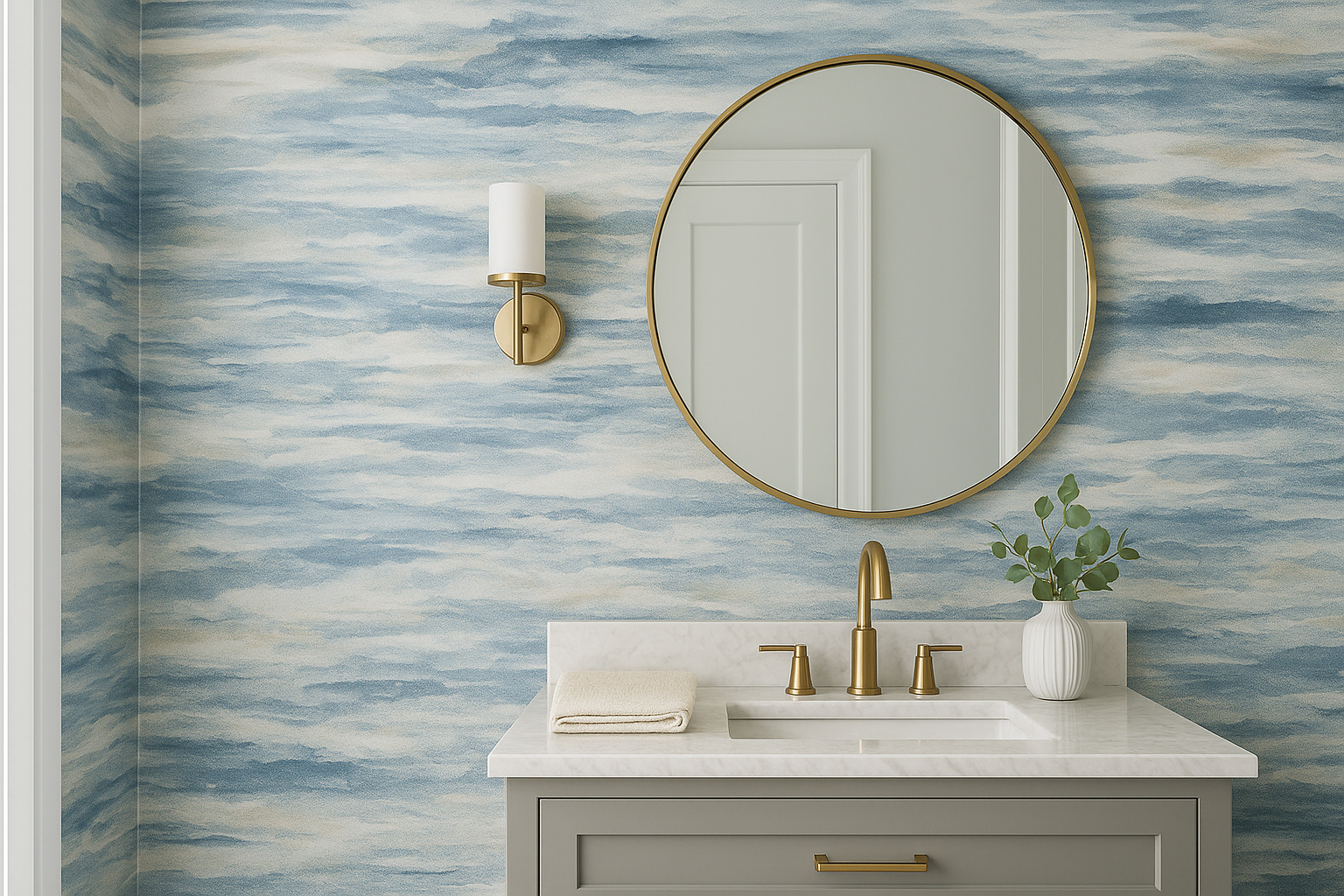
Wallpaper belongs in coastal bathroom renovation ideas when you choose the right pattern and hang it in the right place. The mistake most people make is going too literal, anchors, lobsters, and lighthouse prints that read more like a novelty gift shop than a thoughtful renovation. The patterns that work best reference the coast through texture and tone rather than explicit imagery.
What to do
Use wallpaper on one accent wall only, typically behind the vanity or on the wall facing the door, where it gets maximum visibility without wrapping the entire room. Look for patterns with organic movement: soft watercolor botanicals, abstract wave forms, or subtle grasscloth textures in sandy and blue-gray tones. These patterns suggest the coastal environment without illustrating it directly.
Restraint is the difference between a bathroom that feels designed and one that feels decorated.
Best materials and finishes
Vinyl-coated or non-woven wallpapers handle bathroom humidity far better than traditional paper-backed options. Look for products specifically labeled for high-moisture or bathroom use, since these resist peeling at the seams when steam hits them repeatedly over time.
Cape Cod moisture and maintenance notes
Cape Cod bathrooms deal with above-average humidity year-round, so proper wall preparation before hanging matters as much as the wallpaper itself. Prime the wall with a moisture-blocking primer first, and run your ventilation fan during and after showers to keep steam from working behind the edges.
Budget range
Quality moisture-rated wallpaper runs $3 to $12 per square foot for materials, with professional installation adding $1 to $3 per square foot for a standard accent wall.
9. A porthole mirror or rounded shapes for soft nautical cues
Rounded shapes are one of the quietest ways to reference the coast in coastal bathroom renovation ideas without leaning on obvious nautical props. A porthole mirror, an oval vanity mirror, or a circular light fixture all introduce soft geometry that reads as intentional design rather than decoration lifted from a boat catalogue.
What to do
Swap out a rectangular mirror for a round or oval mirror above your vanity as a starting point. From there, look at other hard angles in the space where a curved alternative could soften the overall feel: a rounded freestanding tub, an arched shower niche, or even curved cabinet pulls that subtly reinforce the shape language you’ve established. Carry the detail through two or three elements and stop there.
One round mirror above a clean shaker vanity does more for a nautical feel than a wall full of anchor prints.
Best materials and finishes
Porthole-style mirrors with brass or bronze frames are the most direct reference to classic maritime design without tipping into kitsch. For a more understated option, a simple beveled oval mirror in a brushed nickel frame fits coastal and transitional bathrooms equally well.
Cape Cod moisture and maintenance notes
Metal-framed mirrors near salt air and steam need a protective coating on the back to prevent the frame finish from corroding. Avoid hanging mirrors on exterior-facing walls where temperature swings can cause condensation to build up behind the frame.
Budget range
Quality round and porthole mirrors typically run $80 to $400 depending on frame material, size, and whether the piece is custom-ordered or sourced ready-made.
10. Built-in shelving and towel storage that looks custom
Built-in shelving transforms awkward wall space into purposeful storage that reads as part of the room rather than an afterthought. In smaller Cape Cod bathrooms especially, recessed or flush-built shelving eliminates the visual clutter of freestanding units and gives the whole space a more considered, finished look.
What to do
Focus built-in shelving on underused wall cavities since the space between studs above the toilet, beside the vanity, or flanking the mirror are all productive spots. Pair open display shelving with closed cabinet doors below to balance a curated coastal look with practical concealed storage for items you reach for daily. Plan towel storage into the design from the start rather than adding hooks as a separate purchase, since this is one of the details that separates thoughtful coastal bathroom renovation ideas from basic remodels.
Built-in towel storage that matches your vanity millwork makes the whole bathroom feel like a single designed space rather than a collection of separate purchases.
Best materials and finishes
Use paint-grade hardwood or moisture-resistant MDF for built-in shelving boxes, and match the paint color and hardware to your vanity for a cohesive result. Solid wood shelves with a sealed finish outlast particle board alternatives in humid coastal bathrooms by several years.
Cape Cod moisture and maintenance notes
Open shelves in humid bathrooms collect moisture on stored items, so avoid stacking fabric or paper products directly on shelves near the shower. Seal all raw wood edges before installation to prevent swelling at the joints over time.
Budget range
Custom built-in shelving units typically run $600 to $2,000 installed, depending on size, complexity, and whether the work ties into existing millwork.
11. Better lighting that flatters and feels airy
Lighting is one of the most underinvested elements in coastal bathroom renovation ideas, and it shows in the finished result. A well-lit bathroom feels larger, cleaner, and more welcoming, while a single overhead fixture leaves the space dim, flat, and hard to use.
What to do
Layer your lighting across at least two sources: a main overhead fixture for ambient light and dedicated vanity lighting positioned at eye level on either side of or directly above the mirror. Side-mounted sconces eliminate the harsh shadows that overhead-only lighting casts across your face and make the bathroom feel far more finished overall.
Layered lighting is the single change that makes the biggest difference between a bathroom that feels designed and one that just feels functional.
Best materials and finishes
Brushed nickel, matte black, or aged brass fixtures all carry coastal character naturally and pair well with the soft palettes common in Cape Cod bathrooms. For bulbs, choose warm white LEDs in the 2700K to 3000K range since they replicate the soft natural light that coastal spaces are known for without the cold blue cast of higher-kelvin alternatives.
Cape Cod moisture and maintenance notes
Any fixture near the shower or tub needs a damp or wet location rating to handle the steam and humidity that builds up in coastal bathrooms. Check the UL or ETL listing label before purchasing to confirm the fixture is rated for bathroom use.
Budget range
A quality vanity sconce pair runs $80 to $300, while a ceiling fixture typically costs $100 to $400 depending on style and size.
12. A glass shower with a bench and clean sightlines
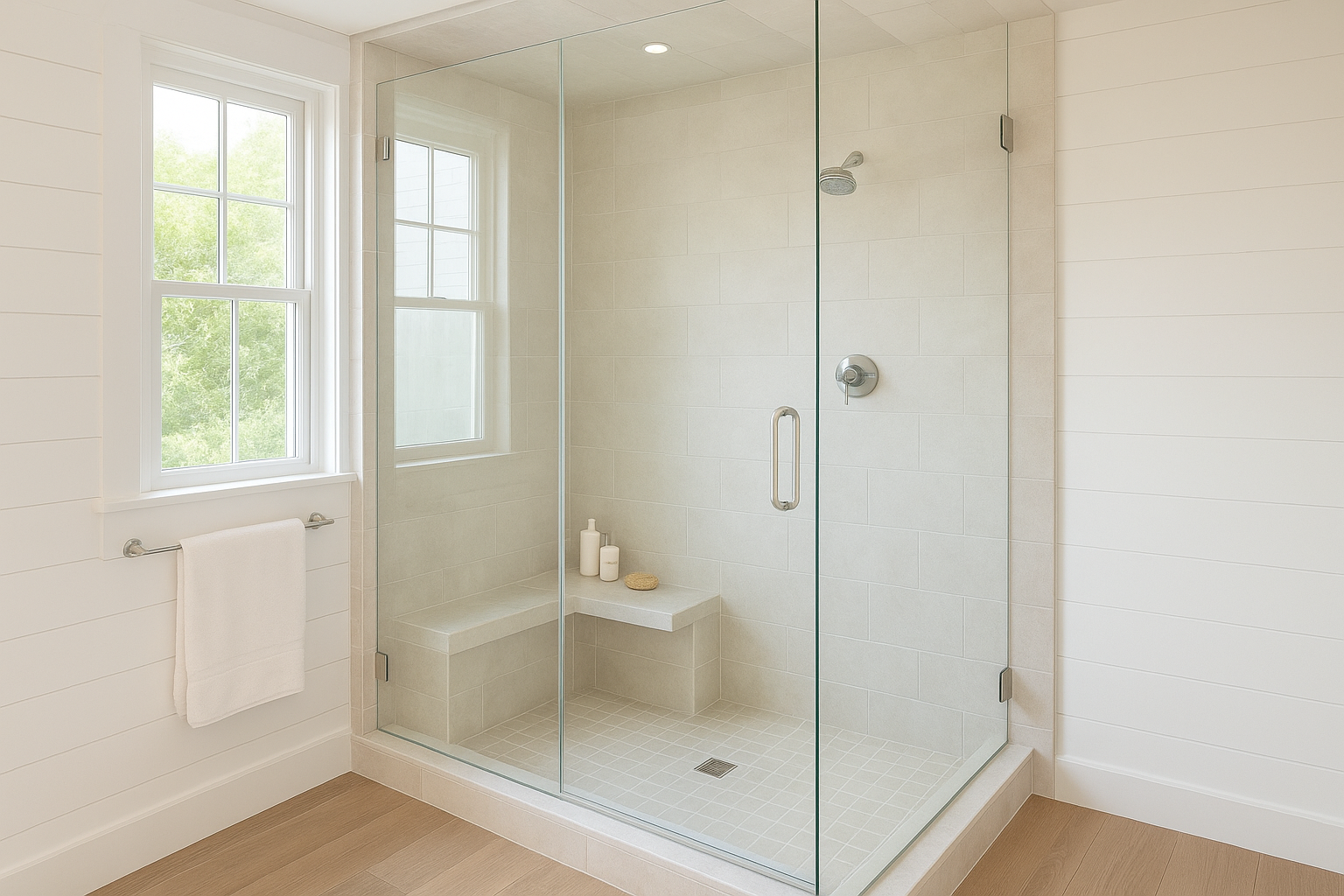
A frameless glass shower is one of the most effective moves in coastal bathroom renovation ideas because it opens up the visual field of the room without removing a single square foot. Unobstructed sightlines make even a modest bathroom feel twice as large, and the clean geometry pairs naturally with the soft palettes and natural materials that define a Cape Cod aesthetic.
What to do
Replace a dated tub-shower combo or a curtained stall with a frameless glass enclosure and build a bench into one wall of the shower. The bench serves double duty as a practical seat and a display ledge for shower products, eliminating the need for awkward hanging caddies that clutter the space. Keep the shower floor pan low and the threshold minimal so the floor flows visually from the bathroom into the shower without interruption.
A frameless glass shower with a built-in bench reads as a luxury upgrade in almost every Cape Cod bathroom, regardless of the overall size of the space.
Best materials and finishes
Use tempered glass panels at least 3/8 inch thick for a frameless installation, and choose a low-iron or ultra-clear glass option to avoid the greenish tint that standard glass shows against light tile.
Cape Cod moisture and maintenance notes
Apply a hydrophobic glass treatment to the panels after installation to repel water and reduce mineral buildup from hard coastal water. Squeegee the glass after each shower to keep salt mineral deposits from etching the surface over time.
Budget range
A frameless glass shower with a built-in bench typically runs between $4,500 and $9,000 installed, depending on the enclosure size, glass thickness, and bench construction.
13. Small bathroom layout moves that make it feel bigger
Layout changes are the most overlooked category in coastal bathroom renovation ideas, but they often deliver the biggest return without adding a single square foot. Moving a door, floating a vanity off the floor, or repositioning a toilet can completely change how a space reads, and none of those moves requires tearing out load-bearing walls.
What to do
Start with your vanity height and position. A wall-mounted floating vanity clears the floor plane visually and makes the room feel taller and less cluttered. If you have a window in the shower wall, keep the tile light and the window treatment minimal so natural light pulls your eye outward rather than stopping at the glass.
Pulling the vanity off the floor and keeping grout lines tight on large-format floor tile are two moves that consistently make small Cape Cod bathrooms feel significantly larger.
Best materials and finishes
Use large-format floor tiles in a continuous color to reduce the number of grout lines breaking up the floor plane. On walls, keep the primary color light and consistent from floor to ceiling to push the boundaries of the room outward visually.
Cape Cod moisture and maintenance notes
Floating vanities need solid blocking installed in the wall before drywall goes up to support the weight over time, especially in older Cape Cod homes where wall framing can be unpredictable. Verify your ventilation fan capacity when you change the layout, since moving fixtures sometimes shifts where steam concentrates.
Budget range
Layout adjustments like floating a vanity or repositioning fixtures typically add $500 to $2,500 to a bathroom renovation depending on plumbing relocation and wall preparation required.
A simple plan to pull it all together
You don’t need to execute all 13 of these coastal bathroom renovation ideas at once. Most successful Cape Cod bathroom renovations start with two or three anchoring changes, typically a custom vanity, a refreshed color palette, and one strong material choice like sea glass tile or beadboard, then layer in accessories and lighting from there. That sequence keeps the project manageable and gives each decision room to breathe before you commit to the next one.
Start by identifying which problems bother you most about your current bathroom, whether that’s storage, dated finishes, poor lighting, or a layout that wastes space. Prioritize those first, then build the coastal aesthetic around the structural improvements rather than the other way around. If you’re ready to start with a custom vanity or built-in shelving that actually fits your space, talk to us at Suman Custom Carpentry about what your project needs.