
Stock shelving from a big box store never quite fits. It’s either two inches too wide, three inches too short, or it just looks like it was dropped into your room instead of built for it. That gap between what’s available off the shelf and what your space actually needs is exactly why custom shelving exists, and why more Cape Cod homeowners are asking about it every year.
So what does "custom" actually mean when you’re talking to a carpenter instead of a furniture catalog? It means shelving custom made to your exact measurements, your materials, and your storage habits, not adjusted to fit an existing product line. You get to decide the depth, the spacing, the wood species, and the finish, and the result gets built specifically for your wall, your closet, or your built-in nook.
In this article, we’ll walk through what custom shelving really involves, from design consultation through installation, what it typically costs compared to prefab options, and what you should expect from a carpenter who builds it in-house rather than outsourcing the work.
Why custom shelving beats off-the-shelf units
Most prefab shelving is designed for an average room that doesn’t exist. Manufacturers build to standard widths and depths that fit as many houses as possible, which means they fit none of them perfectly. Custom built-in shelving solves that by starting with your actual wall, your actual ceiling height, and your actual belongings, not a generic template built for a warehouse showroom.
The fit problem with prefab units
Big box shelving comes in fixed increments, usually 12, 24, or 36 inches wide, with depths that rarely go past 16 inches. If your alcove is 41 inches wide or your ceiling slopes near a dormer window, a stock unit either leaves a gap or doesn’t fit at all. Cape Cod homes, especially older capes and colonials, are full of these irregular spaces: knee walls, chimney chases, odd-angled closets. A carpenter measures the actual space and builds to it, down to the eighth of an inch.
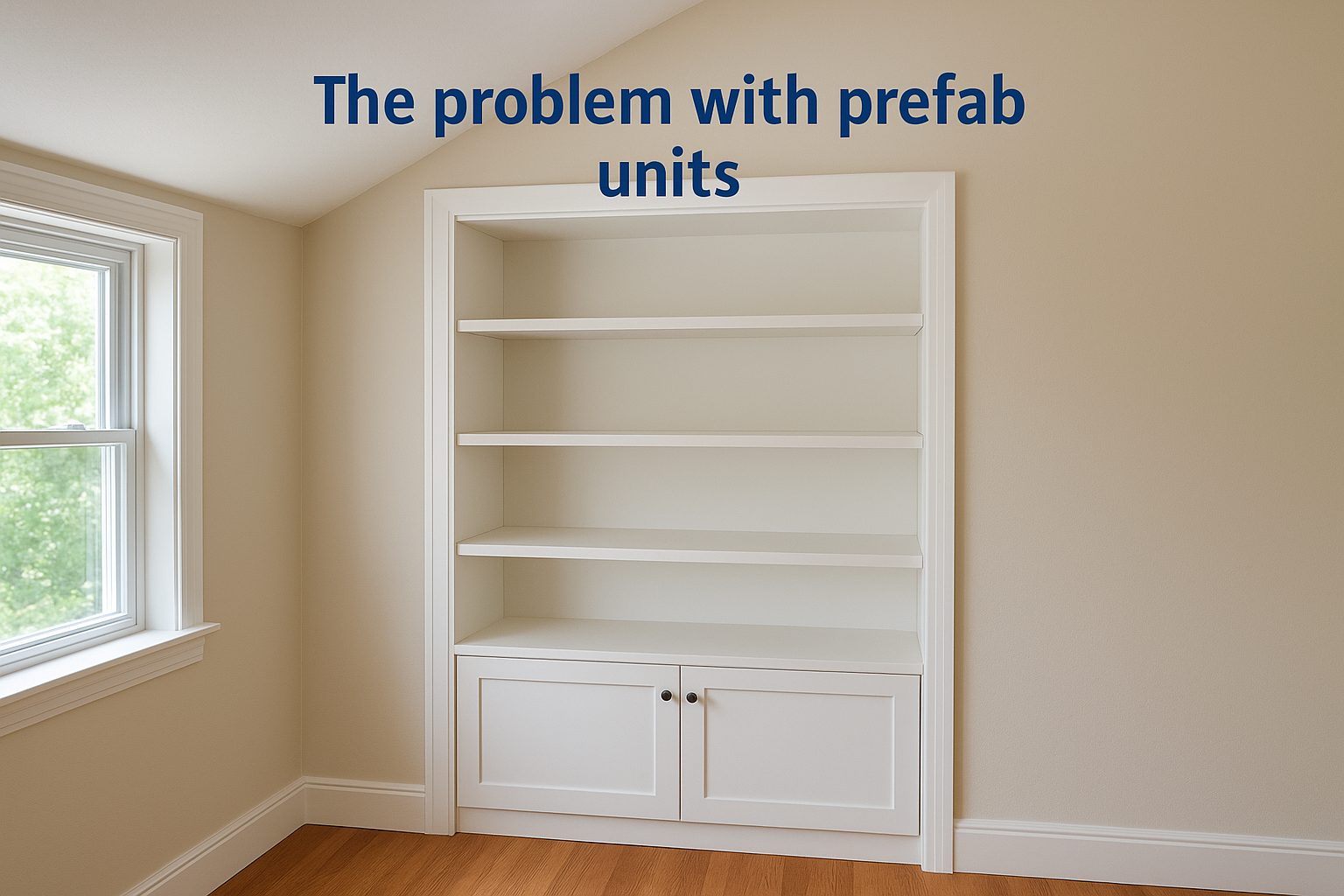
Shelving built for the average room will always compromise in your room.
Built around how you actually use the space
Off-the-shelf units assume every book is the same height and every kitchen stores the same items. Real households don’t work that way. Maybe you need 14-inch clearance for cookbooks but only 8 inches for spice jars, or you want a hidden compartment behind a false panel for valuables. Shelving custom made for your habits lets you set shelf spacing, weight capacity, and layout around what you actually own, not around what a factory assumed you’d own. That’s the real advantage over anything modular: the design starts with your stuff, not a catalog page.
Materials that actually hold up
Particleboard and laminate dominate the prefab shelving market because they’re cheap to mass-produce. They also sag under real weight, swell if they get damp, and rarely survive a move without chipping. A carpenter working in solid wood custom shelving or furniture-grade plywood builds shelving that carries real loads, cookbooks, tools, vinyl records, without bowing after a year. Suman Custom Carpentry hand-builds every piece in the Hyannis shop using the same joinery and material standards applied to its hand-built cabinetry on Cape Cod, which is a different tier of durability than anything assembled from a flat-pack box.
| Feature | Off-the-shelf shelving | Custom shelving |
|---|---|---|
| Fit to space | Fixed sizes, gaps common | Built to exact measurements |
| Material | Particleboard, laminate | Solid wood, furniture-grade plywood |
| Weight capacity | Limited, sags over time | Engineered for actual load |
| Finish options | Few, factory-applied | Custom stain, paint, hardware |
| Lifespan | 5-10 years typical | Decades with proper care |
| Warranty | Manufacturer limited warranty | Lifetime guarantee on cabinet boxes |
Long-term value for your home
Renovation appraisers consistently note that built-in storage adds more resale value than furniture-style pieces, because it reads as part of the house rather than something the next owner has to replace. Custom shelving that matches your trim, your cabinetry, and your finishes looks intentional instead of added on. That’s a meaningful difference when you’re investing in a home on Cape Cod, where buyers pay close attention to craftsmanship and how well a house has been maintained. According to the National Association of Realtors’ Remodeling Impact Report, custom storage upgrades consistently rank among the improvements homeowners find most satisfying after completion, well ahead of purely cosmetic changes.
Working with a local carpenter also means someone stands behind the work years later. A lifetime guarantee on the cabinet boxes and doors, backed by a shop you can actually walk into, is a level of accountability no imported flat-pack unit can offer. That combination of fit, material quality, and long-term backing is why more homeowners are skipping the stock aisle entirely and going straight to a custom build.
How the custom shelving design and build process works
Getting custom shelving built isn’t a one-visit transaction. It’s a process that runs from a first conversation about how you live in your space to a final walkthrough after installation. Knowing what happens at each stage helps you show up prepared and avoid surprises halfway through the build.
Initial consultation and measuring
Every project starts with an on-site design consultation, usually so the carpenter can see the actual wall, closet, or nook in person rather than working from a photo. This is where you talk through what you need to store, how much weight the shelving has to hold, and any quirks in the room like sloped ceilings or uneven walls that are common in older Cape Cod homes. The carpenter takes precise measurements at this stage, often multiple points along a wall, since older houses rarely have perfectly square corners. This is also when you’ll discuss budget range and rough timeline, so there are no surprises once drawings start.
A good consultation catches the problems a tape measure alone would miss.
Design and material selection
Once measurements are locked in, the carpenter puts together a design, sometimes a sketch, sometimes a full drawing, showing shelf spacing, depth, and layout. This is your chance to adjust before anything gets cut. You’ll typically review:
- Shelf configuration (fixed vs. adjustable, spacing between each)
- Wood species and overall finish direction
- Hardware details like brackets, edge profiles, or hidden supports
- How the piece will tie into existing trim or cabinetry nearby
Material choice gets finalized here too, since shelving custom made from solid wood behaves differently than plywood or MDF in terms of weight, cost, and finish options. Most reputable shops won’t start cutting until you’ve signed off on a final design, which protects you from mid-project changes that blow up the budget.
Building and installation
After approval, the actual build happens off-site in the carpenter’s shop, where climate control and proper tools produce a tighter, more durable joint than anything assembled on-site from pre-cut parts. Suman Custom Carpentry hand-builds every shelving unit in its Hyannis shop, applying the same joinery standards used on full custom cabinetry jobs. Depending on complexity, this stage takes anywhere from a couple weeks to over a month.
Installation is usually the fastest part, often a single day for most residential projects. The crew levels, secures, and finishes the piece on-site, then walks you through weight limits and care instructions before they leave. That final walkthrough matters: it’s your chance to flag anything before the crew packs up, rather than discovering an issue weeks later.
Choosing materials and finishes for your shelving
Material choice shapes everything about a shelving project, from how much weight it can hold to how long it lasts before it needs replacing. Custom shelving gives you control over that choice in a way stock units never do, but that also means you need to understand the tradeoffs before you commit. What looks similar in a showroom sample can behave very differently once it’s holding a full run of cookbooks or vinyl records for ten years.
Wood species and their tradeoffs
Solid wood is the gold standard for durability, but not every species suits every project, so it helps to know the top wood choices for custom carpentry before deciding. Oak and maple resist warping and take stain evenly, which makes them a common pick for open shelving in living rooms and kitchens. Pine costs less and works well for painted built-ins where the grain won’t show. For anyone who prefers a budget-friendly option that still outperforms particleboard, furniture-grade plywood offers a strong middle ground, stable, resistant to warping, and cheaper than solid hardwood.
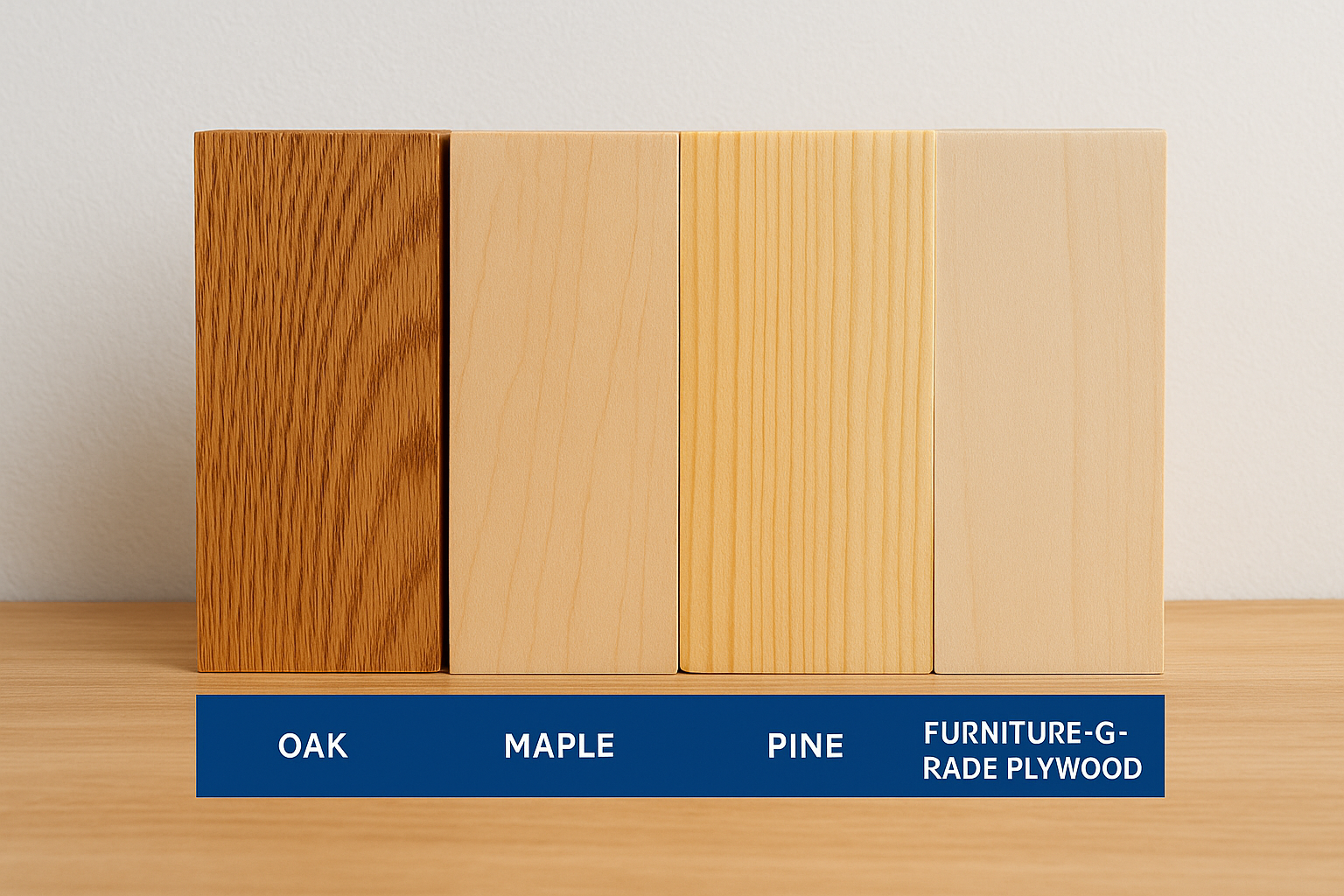
| Material | Best for | Cost tier | Durability |
|---|---|---|---|
| Oak | Stained, natural-look shelving | Higher | Excellent |
| Maple | Painted or stained finishes | Higher | Excellent |
| Pine | Painted built-ins | Moderate | Good |
| Furniture-grade plywood | Closets, utility shelving | Moderate | Very good |
| Particleboard/laminate | Not recommended for load-bearing use | Low | Poor |
The wood you pick determines whether your shelving lasts a decade or a lifetime.
Finish options: paint, stain, or natural
Once the wood is chosen, finish decides how the piece reads in the room. A stained finish shows off the grain and works well when the shelving needs to match existing wood trim or cabinetry, and it helps to compare the types of wood finishes side by side first. Painted finishes give you unlimited color options and tend to suit shelving custom built into a closet or mudroom, where matching wall color matters more than showing grain. Natural or clear-coated finishes are lower maintenance and popular in coastal Cape Cod homes where a lighter, beach-inspired palette dominates. Suman Custom Carpentry backs its painted finishes with a three-year warranty, separate from the lifetime guarantee on the cabinet boxes themselves, since paint simply wears differently than a stained wood surface over time.
Hardware and hidden details
Hardware gets overlooked in these conversations, but it changes how the shelving functions day to day. Adjustable shelf pins let you reconfigure spacing as your storage needs change, while fixed shelves offer more rigidity for heavy loads like a home library. Soft-close mechanisms on any cabinet doors paired with the shelving, hidden brackets for a floating look, and matched edge profiles all get decided at this stage too. Getting these details right at the design phase, rather than after installation, is what separates a piece that feels built-in from one that just sits in the room.
Popular types of custom shelving projects
Ask ten homeowners why they want custom shelving and you’ll get ten different answers, but a handful of project types come up again and again on Cape Cod. Each one solves a different storage problem, and each pushes different decisions about material, depth, and layout.
Closets and dressing rooms
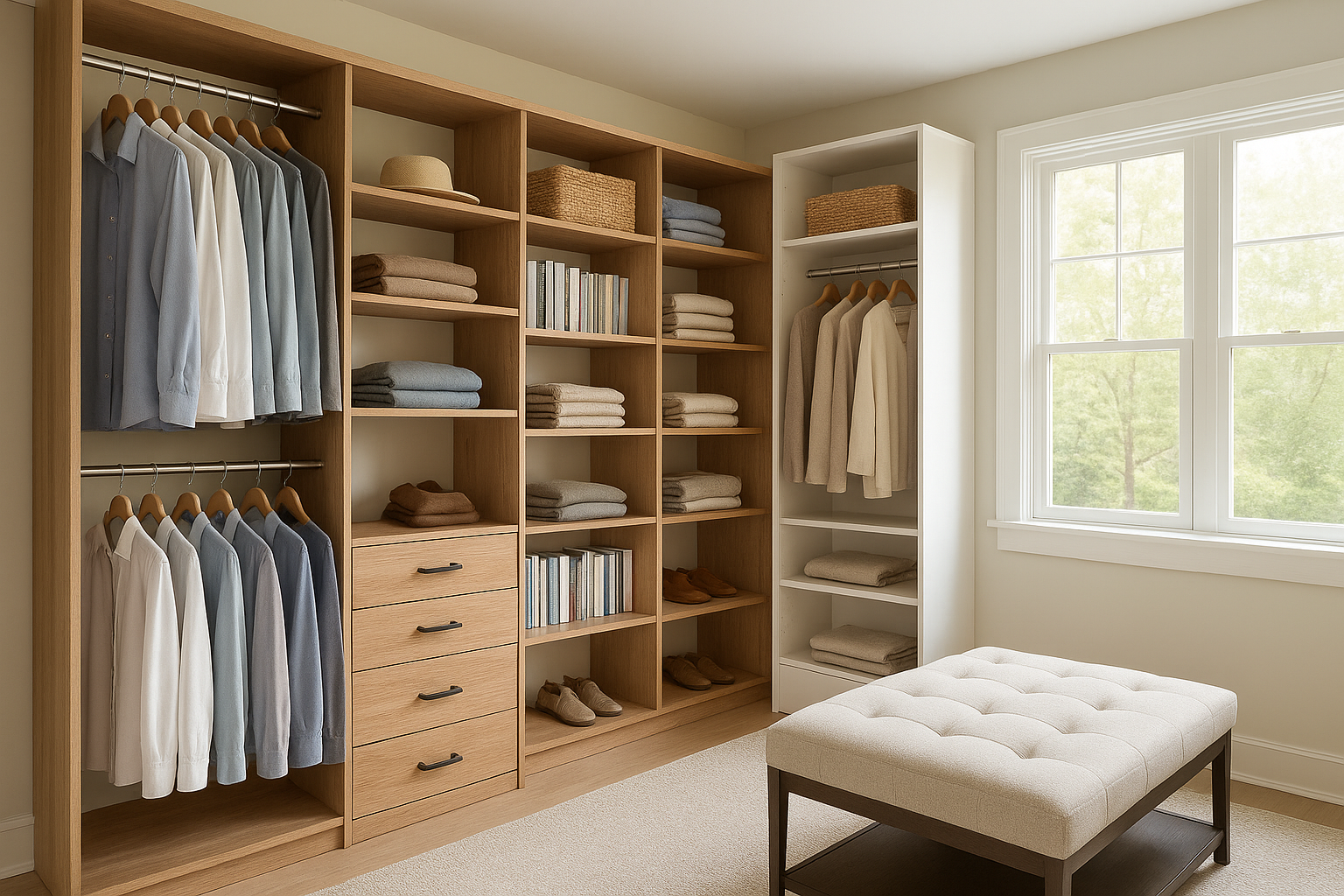
Custom closets built to fit are the most requested shelving project by far, because a closet’s value depends entirely on how well the space inside is organized, not just its square footage. A carpenter builds around your actual wardrobe: double-hung rods for shirts, deeper shelves for folded sweaters, narrow cubbies for shoes, and drawer inserts where a dresser used to be. Older Cape Cod homes often have shallow, oddly shaped closets tucked under stairs or into knee walls, and that’s exactly where a built system earns its cost over a wire shelving kit.
Home offices and libraries
Floor-to-ceiling bookshelves remain one of the most requested built-ins, especially in older capes with a dedicated study or reading nook. These projects usually combine open shelving with closed cabinet sections below for files and equipment you’d rather not see. Weight capacity matters more here than in almost any other room; a wall of hardcover books puts real strain on unsupported spans, which is why fixed shelving with hidden internal supports beats anything adjustable in a true home library.
A bookshelf that sags after two years wasn’t built for the weight you put on it.
Kitchen and pantry shelving
Open shelving ideas for kitchens have grown popular for displaying dishware, but pantries still lean on function over looks. Shelving custom made for a pantry typically includes pull-out drawers for canned goods, adjustable shelves for bulky appliances, and deeper bottom shelves for small appliances that rarely leave the counter. Since kitchens see more moisture and daily wear than any other room, material choice matters even more, which is why furniture-grade plywood or sealed hardwood outperforms particleboard here.
Living rooms and entertainment centers
Shelves flanking a fireplace or built-ins wrapping a television wall are a signature request, since they turn an awkward blank wall into finished architecture. These typically combine glass-front cabinets, open display shelving, and concealed entertainment center storage for cable boxes and gaming consoles.
Specialty and commercial projects
Beyond standard rooms, carpenters regularly build:
- Mudroom cubbies with hooks and bench seating
- Garage storage solutions and workshop shelving rated for heavier tool storage
- Custom bunk beds with built-in shelving and ladders
- Retail display shelving for commercial storefronts
- Wine and bar storage with custom bottle spacing
Each of these draws on the same design and build process, just scaled and reinforced for the specific load and use the space demands.
What custom shelving typically costs
Pricing for custom shelving varies more than most homeowners expect, since a small closet insert and a floor-to-ceiling library built-in draw on completely different amounts of material, labor, and finish work. Getting a real number means talking to a carpenter about your specific project, but understanding what custom millwork costs and how long it takes helps you budget realistically before that first call.
What drives the price
Several factors push a quote up or down, and none of them show up on a big box store price tag. Wood species matters most: solid oak or maple costs significantly more than furniture-grade plywood or painted pine. Complexity matters too, a simple run of fixed shelves costs far less than a unit with pull-out drawers, adjustable pins, and hidden brackets. Finish work, whether it’s a hand-applied stain or a painted surface backed by a three-year warranty, adds labor hours that a factory-applied laminate never requires. Linear footage and depth also scale cost directly, since more material and more joinery time go into a deeper, longer piece.
The price of custom shelving reflects labor and material quality, not just size.
Typical price ranges by project type
Because every space is different, ranges give a better starting point than a flat rate. Here’s a general breakdown based on common project types:
| Project type | Typical price range |
|---|---|
| Closet shelving system | $1,500 – $4,500 |
| Home office bookshelves | $2,000 – $6,000 |
| Pantry shelving | $1,200 – $3,500 |
| Living room built-ins (fireplace flanking) | $3,000 – $9,000 |
| Garage or workshop shelving | $800 – $2,500 |
These figures assume solid wood or furniture-grade plywood construction with a professional finish, not particleboard. A project built from shelving custom made with premium hardwood and detailed joinery will land at the higher end, while simpler utility shelving in a garage or basement keeps costs down.
Getting an accurate quote
Nothing beats an on-site measurement for pinning down real numbers, since photos and rough estimates almost always miss the quirks that come with older Cape Cod homes. Suman Custom Carpentry provides a design consultation where you walk through your goals, budget, and timeline before any pricing gets finalized, so you know what you’re paying for before a single board gets cut. Reach out through the Suman Custom Carpentry contact page to schedule a walkthrough and get a quote based on your actual space rather than a generic estimate pulled from a catalog.
What to expect when working with a carpenter
Hiring a carpenter for custom shelving is a different relationship than buying furniture. You’re not picking a product off a shelf; you’re working with someone who needs your input at several points along the way, and knowing what that looks like ahead of time keeps the project moving without friction.
Communication throughout the project
Expect regular check-ins rather than radio silence between the consultation and installation day. A reliable carpenter tells you when the design is finalized, when the build starts in the shop, and gives you a realistic window for installation rather than a vague promise. Suman Custom Carpentry gives clients direct access to owner Dieyson Suman throughout a project, which matters more than it sounds; questions about a stain sample or a shelf depth get answered by the person actually building the piece, not routed through a call center or a sales rep who’s never seen your house.
A carpenter who answers your questions directly is worth more than one who just answers your calls.
Timelines and what affects them
Most residential shelving projects run anywhere from two to six weeks from signed design to finished installation, depending on complexity and current shop workload. A simple closet insert moves faster than a floor-to-ceiling library with hidden supports and custom hardware. Weather, material availability, and how quickly you sign off on the design also shift the timeline. Ask for a written estimate upfront so you know what’s realistic, and treat any quote with no timeline attached as a warning sign.
Site access and what happens during installation
Installation day is short compared to the build time, but it does require some prep on your end:
- Clear the area where the shelving will go, including furniture and existing items on the wall
- Make sure a clear path exists from the entry to the install location
- Plan for a few hours of noise if the crew needs to adjust trim or wall anchors
- Be available at the end for a walkthrough before the crew leaves
That final walkthrough is where you confirm weight limits, ask about care instructions, and flag anything that needs a second look before it’s considered finished.
Warranty and follow-up support
A carpenter worth hiring stands behind the work after the invoice is paid. Suman Custom Carpentry backs every custom-built piece with a lifetime guarantee on cabinet boxes and doors, plus a three-year warranty on painted finishes, since paint wears differently than stained wood over time. That kind of backing only means something when it comes from a local shop you can actually walk into if a shelf ever needs adjusting, which is exactly the accountability a big box return counter can’t offer.
Custom shelving vs. DIY kits and modular systems
Modular systems and flat-pack kits sit in the middle between a big box shelf and a full custom build, and for some projects they make sense. Before you commit to custom shelving, it’s worth understanding where a modular closet system or a wall-mounted bracket system actually holds up, and where it falls short compared to something built specifically for your space.
Where modular systems make sense
Budget-friendly modular kits work reasonably well for low-stakes storage: a garage wall, a basement utility room, or a temporary setup in a rental where you can’t modify the walls. These systems come with adjustable components and can be installed in an afternoon without hiring anyone. If the space is a standard rectangle, the load is light, and looks matter less than function, a modular kit gets the job done for a fraction of the price of shelving custom built by a carpenter.
Where DIY and modular systems fall short
Once a space gets irregular, walls aren’t square, or the load gets heavy, modular systems start showing their limits fast, which is usually the point where hiring a pro beats a DIY built-in. Track-and-bracket systems flex under real weight, seams between panels never disappear the way a built-in does, and finish options are limited to whatever the manufacturer stocks that season. Fitting an oddly shaped alcove or a sloped ceiling with prefab components usually means gaps, filler panels, or a compromise on layout that a custom-built piece never requires.
A modular kit can fill a gap. It can’t fill your gap.
Comparing the two approaches
| Factor | DIY/modular kits | Custom shelving |
|---|---|---|
| Upfront cost | Lower | Higher |
| Fit to irregular spaces | Poor | Exact |
| Installation time | Hours, DIY | Days to weeks, professional |
| Material quality | Variable, often laminate | Solid wood, furniture-grade plywood |
| Weight capacity | Limited | Engineered for actual load |
| Long-term durability | 3-8 years | Decades |
| Resale value impact | Minimal | Reads as built-in home feature |
The real cost comparison
Saving money upfront on a modular kit only holds up if you don’t replace it in five years. Once you factor in the time spent assembling, the panels that warp under moisture, and the mismatch with your trim and cabinetry, the gap between custom shelving and a DIY kit narrows considerably. Suman Custom Carpentry builds every piece to outlast the kit-and-replace cycle entirely, backed by a lifetime guarantee that no modular manufacturer offers on their hardware. For anyone planning to stay in their home more than a few years, that long-term math tends to favor a custom build over another trip to the flat-pack aisle.
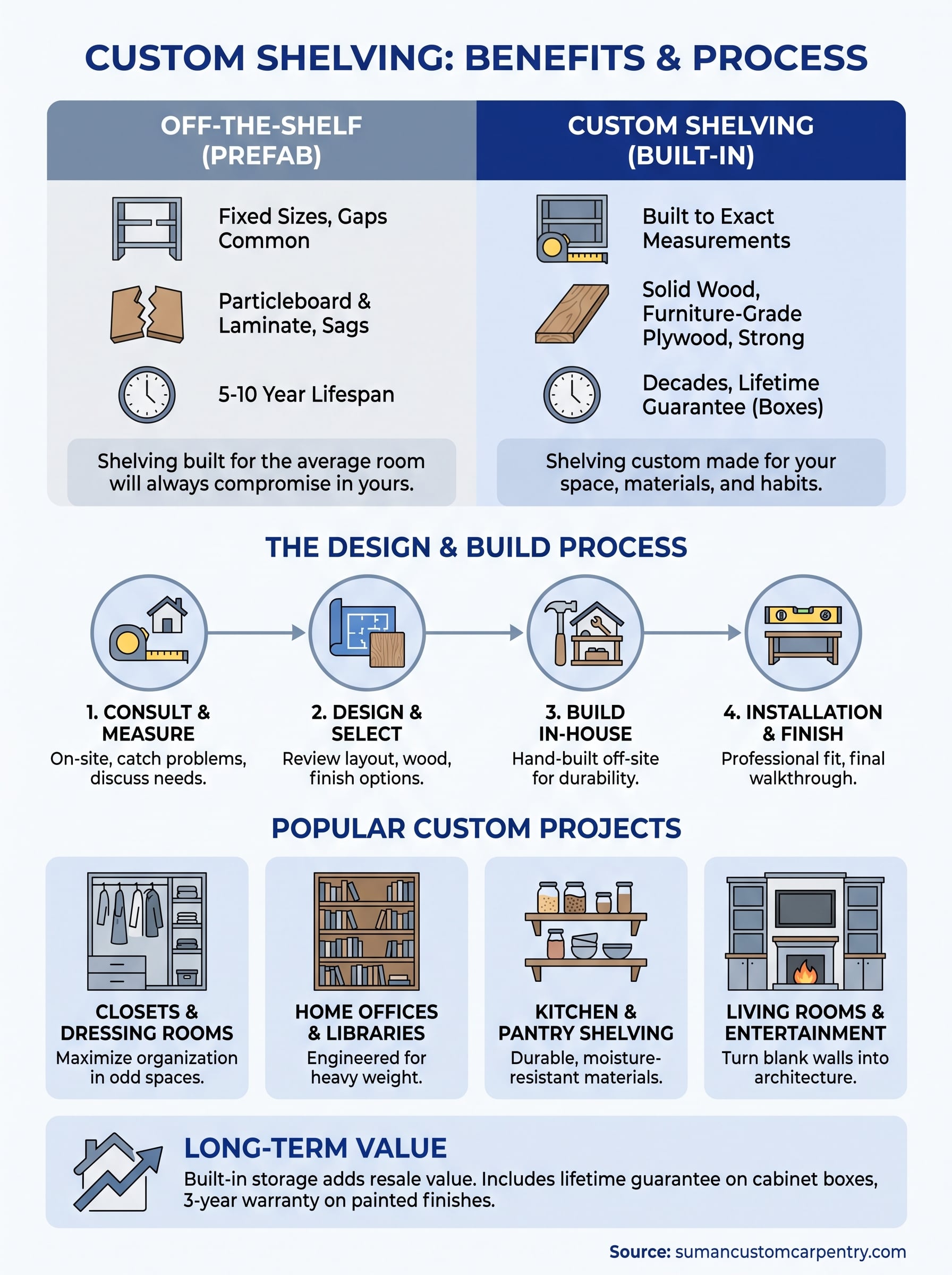
Making the right choice for your space
The decision really comes down to how long you plan to live with the result. A modular kit fills a gap for a few years. Custom shelving fills your gap, exactly, for decades, because it’s built from real measurements, solid materials, and joinery meant to carry actual weight instead of a showroom sample. If you’ve read this far, you’re probably past the point of wanting another wire shelf that bows under a stack of books.
Getting there starts with a conversation, not a purchase. A carpenter who measures your space, walks you through material choices, and stands behind the work with a real warranty gives you something a flat-pack box never can. If you’re on Cape Cod and ready to see what shelving custom made for your home actually looks like, schedule a design consultation with Suman Custom Carpentry.