The finish you put on your kitchen cabinets affects everything, how they look on day one, how they hold up five years later, and how much maintenance they demand in between. Choosing the best finish for kitchen cabinets isn’t just about picking a color or a sheen. It’s about matching the right material and topcoat to your kitchen’s daily wear, your home’s style, and Cape Cod’s coastal humidity that warps and peels lesser finishes faster than most homeowners expect.
At Suman Custom Carpentry, we hand-build custom kitchen cabinets at our Hyannis shop and finish every piece in-house. Over seven-plus years of building kitchens across Cape Cod, we’ve seen firsthand which finishes last and which ones don’t, and we’ve learned that the "best" finish depends entirely on your priorities. A family with young kids needs something different from a couple renovating a vacation home. That hands-on experience is exactly what shaped this guide.
Below, we break down seven finish options, from painted cabinets to high-gloss lacquer, covering durability, cost, maintenance, and appearance so you can make a confident decision before your project starts. We’ll also compare topcoat types like polyurethane and conversion varnish, and help you pick a sheen level that actually works in a real kitchen.
1. Shop-sprayed conversion varnish on custom cabinets
Shop-sprayed conversion varnish is the finish we use most often at Suman Custom Carpentry, and for good reason. When you want the best finish for kitchen cabinets in terms of long-term durability and a factory-quality surface, conversion varnish sits at the top of the list.
What it is
Conversion varnish is a catalyzed finish that cures through a chemical reaction rather than simply drying. A professional adds a catalyst to the varnish before spraying, and the two components bond at a molecular level, creating a hard, cross-linked surface that standard paints and lacquers can’t match. It requires professional spray equipment and a controlled shop environment to apply correctly, which is why you won’t find this option at a big-box store.
Best use cases
This finish works best on custom-built cabinetry sprayed in a controlled shop setting, like the work we do in our Hyannis facility. If you have a kitchen that sees heavy daily cooking, multiple users, or humid coastal conditions common on Cape Cod, conversion varnish handles all of it without flinching.
Durability and moisture resistance
Conversion varnish is one of the most scratch-resistant and moisture-resistant finishes available for wood cabinets. Once cured, it resists grease, cleaning chemicals, and steam from cooking far better than water-based alternatives. Cape Cod kitchens benefit especially from this resistance because salt air and seasonal humidity accelerate wear on weaker finishes.
If you’re building a kitchen near the water, conversion varnish is the single strongest barrier you can put between your cabinet wood and coastal moisture.
Look and sheen options
You can apply conversion varnish in satin, semi-gloss, or gloss sheens. Satin remains the most popular choice because it hides minor smudges and fingerprints while still looking clean and refined. Gloss delivers a mirror-like surface that works well in modern kitchens but shows every fingerprint.
Maintenance and repair
Day-to-day cleaning is straightforward: a damp cloth and mild soap handles most messes. The main drawback is that spot repairs are difficult once the finish fully cures. A scratch or chip typically requires a professional touch-up rather than a DIY fix.
Typical cost range
Because this finish requires professional spray equipment and skilled application, labor costs are higher than brushed finishes. Expect the conversion varnish finish alone to add $500 to $1,500 or more to a full kitchen project, depending on cabinet count and complexity.
2. Two-component polyurethane topcoat
Two-component polyurethane (often called 2K poly) is a professional-grade finish that comes close to conversion varnish in terms of hardness and chemical resistance. It’s a strong option when you want durability without the complexity of a full catalyzed varnish system.
What it is
Two-component polyurethane combines a polyurethane resin with an isocyanate hardener, which triggers a chemical curing process similar to conversion varnish. Unlike single-component water-based finishes, this system creates a dense, hard film that holds up under real kitchen conditions.
Best use cases
This finish suits custom cabinets in high-traffic kitchens where you want a clear or lightly tinted topcoat over stained or natural wood. It’s also a good fit when you want the best finish for kitchen cabinets that shows off natural wood grain without hiding it under a heavy painted layer.
Durability and moisture resistance
Two-component polyurethane resists moisture, grease, and household cleaners well. It won’t soften under steam or heat the way single-component finishes can.
For coastal kitchens, 2K polyurethane outperforms standard water-based topcoats by a significant margin when humidity levels fluctuate seasonally.
Look and sheen options
You can achieve satin, semi-gloss, or gloss results depending on the sheen additive used. The finish tends to carry a slightly warm, amber tone, which complements natural wood species well.
Maintenance and repair
Daily cleaning with mild soap and water keeps the surface in good shape. Like conversion varnish, spot repairs require professional refinishing rather than a simple DIY patch.
Typical cost range
Expect to pay a moderate premium over single-component finishes. Material costs run $80 to $150 per gallon, with professional application adding labor costs on top.
3. Water-based polyurethane clear coat
Water-based polyurethane is the most widely available cabinet finish on the market, and it’s a reasonable option when budget and accessibility matter more than maximum hardness. It’s worth understanding what you’re getting before you commit.
What it is
Water-based polyurethane uses water as the carrier solvent instead of mineral spirits, which makes it lower in VOCs and easier to clean up during application. It dries faster than oil-based alternatives but builds a thinner, softer film with each coat.
Best use cases
This finish works best on lower-traffic cabinets, such as bathroom vanities, laundry rooms, or secondary storage spaces where daily wear is minimal. It’s not the best finish for kitchen cabinets that see heavy cooking, kids, or coastal humidity on a regular basis.
Durability and moisture resistance
Water-based polyurethane is softer than catalyzed finishes and can scratch or dent more easily under hard use. Prolonged exposure to steam and standing moisture will cause it to cloud or peel faster than conversion varnish or 2K polyurethane.
For Cape Cod kitchens, water-based polyurethane is a short-term solution that typically requires refinishing within five to seven years under normal conditions.
Look and sheen options
The finish dries clear with minimal yellowing, which makes it a popular choice over light-colored stains or painted surfaces. You can find it in matte, satin, and gloss versions at most hardware stores.
Maintenance and repair
Wipe down with a damp cloth and mild cleaner. Small scratches respond better to DIY touch-ups compared to catalyzed systems, though deep repairs still benefit from professional recoating.
Typical cost range
Materials run $30 to $70 per gallon, making this one of the most affordable topcoat options available.
4. Pre-catalyzed lacquer
Pre-catalyzed lacquer sits between standard nitrocellulose lacquer and full two-component catalyzed systems. It offers a meaningful durability upgrade over basic lacquers without requiring you to mix a separate catalyst before spraying.
What it is
Pre-catalyzed lacquer comes from the manufacturer with the catalyst already blended in, so you open the can and spray without additional mixing steps. The catalyst activates during curing and builds a harder film than traditional lacquer once the finish fully dries.
Best use cases
This finish works well on painted or clear-coated cabinets in moderate-traffic kitchens. It’s a practical middle-ground option when you want more durability than water-based polyurethane but your project budget doesn’t support a full conversion varnish system.
Durability and moisture resistance
Pre-catalyzed lacquer outperforms standard lacquer and single-component water-based finishes, but it doesn’t reach the hardness of conversion varnish or 2K polyurethane. Coastal kitchens on Cape Cod can push this finish to its limits, as seasonal humidity fluctuations accelerate wear more quickly than they would with a fully catalyzed system.
If you’re searching for the best finish for kitchen cabinets near the water, pre-catalyzed lacquer is a reliable step up from basic finishes but not the strongest option for heavy daily use.
Look and sheen options
You can achieve satin, semi-gloss, or gloss results depending on the product formulation. The finish dries clear with minimal color shift, making it compatible with both stained wood and painted surfaces.
Maintenance and repair
Daily cleaning needs only a damp cloth and mild soap. Small scratches are somewhat easier to touch up locally compared to fully catalyzed systems.
Typical cost range
Materials run $50 to $90 per gallon, with professional labor costs added on top depending on cabinet count and layout.
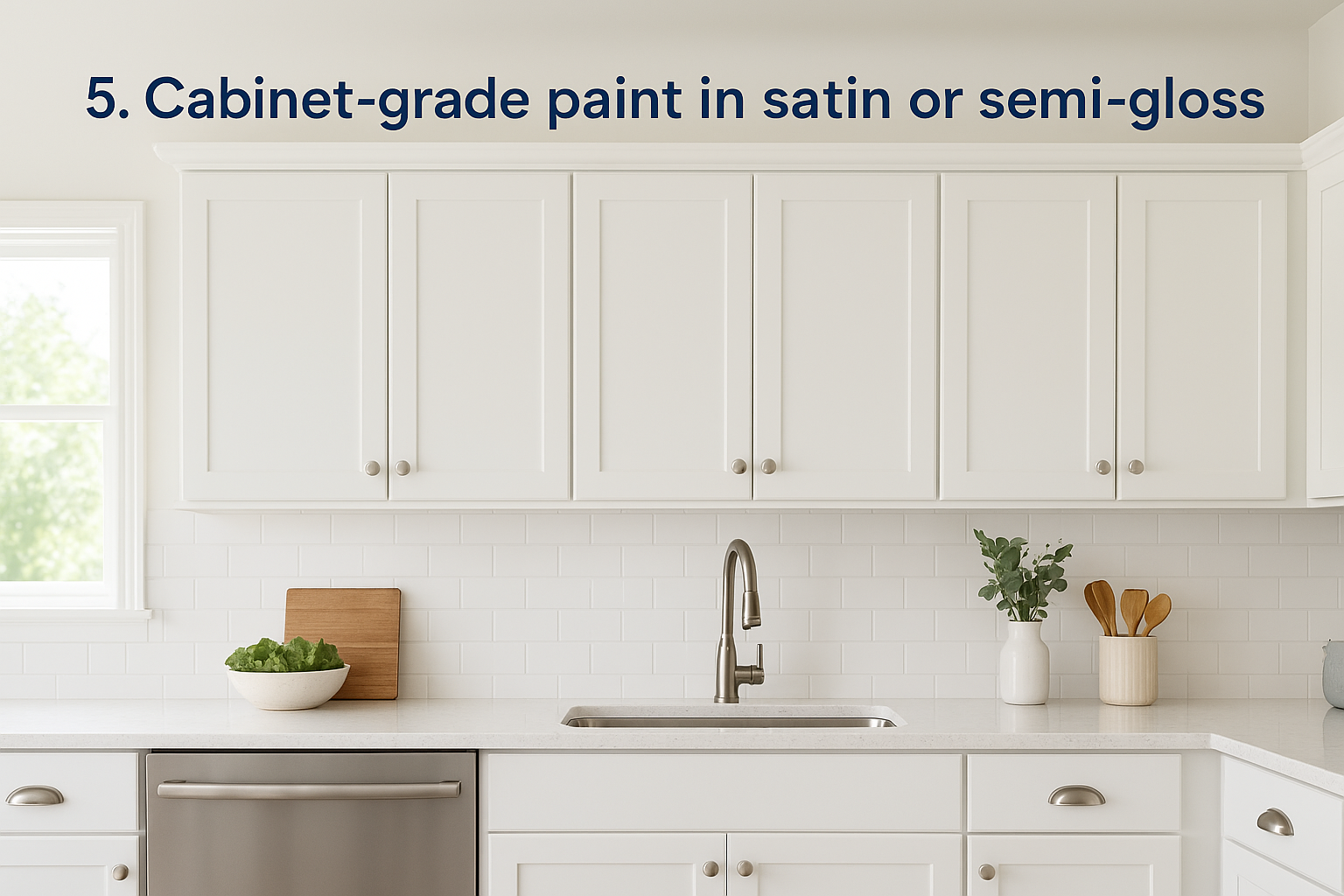
5. Cabinet-grade paint in satin or semi-gloss
Cabinet-grade paint is the most recognizable finish option for kitchen cabinets, and it stays a popular choice for homeowners who want a clean, uniform look without exposing natural wood grain. When you apply it correctly over properly prepared surfaces, it performs well in most moderate-traffic kitchens.
What it is
Cabinet-grade paint refers to high-quality alkyd-based or waterborne alkyd formulations designed specifically for trim and cabinetry rather than walls. These paints level out more smoothly, resist yellowing better, and build a harder film than standard interior wall paint does.
Best use cases
This finish works best when you want painted cabinetry in a light or bright color and your kitchen sees moderate daily use. It’s a practical option for homeowners who want a refreshed look without the full cost of a catalyzed system.
Durability and moisture resistance
Cabinet-grade paint is more durable than wall paint but noticeably softer than catalyzed finishes. Chips and scuffs appear more readily in high-traffic spots, and prolonged steam exposure can cause the surface to soften over time.
For the best finish for kitchen cabinets in a coastal environment, pair cabinet-grade paint with a clear catalyzed topcoat to extend its service life significantly.
Look and sheen options
Satin and semi-gloss are the most practical sheen levels for kitchens. Satin hides surface imperfections better, while semi-gloss reflects more light and wipes down easier after cooking messes.
Maintenance and repair
You can touch up chips and scratches with the original paint more easily than you can with catalyzed systems, which is a genuine advantage for busy households.
Typical cost range
Materials run $40 to $80 per gallon for quality cabinet-grade paint, with professional application labor added separately based on cabinet count.
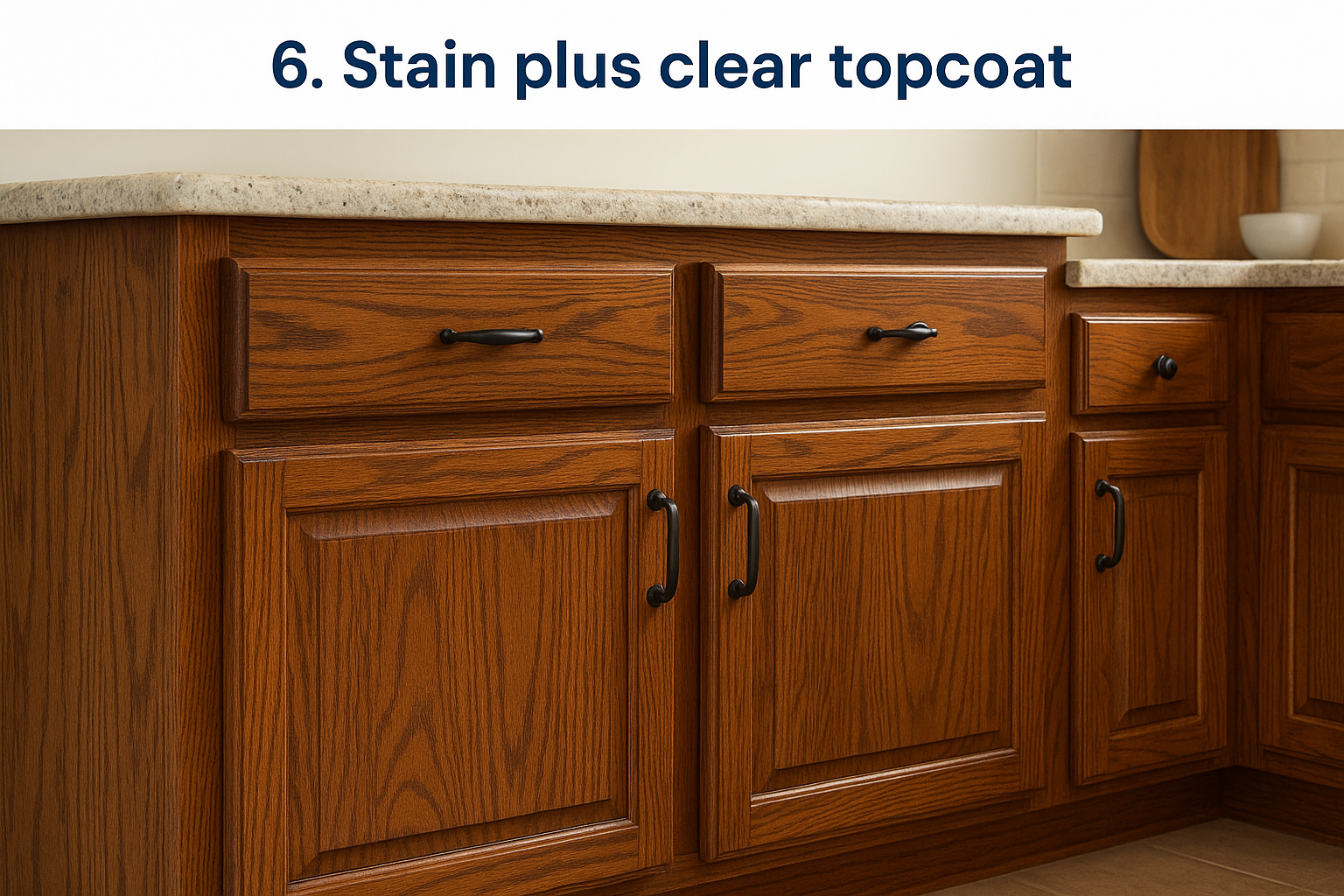
6. Stain plus clear topcoat
Stain combined with a clear topcoat lets natural wood grain carry the visual weight while the topcoat handles daily protection. This two-step system works best when you want warmth and character in your cabinets rather than a solid painted surface.
What it is
Stain penetrates the wood and colors the grain without forming a protective film on its own. A clear topcoat, typically conversion varnish, 2K polyurethane, or pre-catalyzed lacquer, then seals the surface and provides the actual resistance against daily kitchen wear.
Best use cases
This finish works well when you want to highlight natural wood species like oak, maple, or cherry. It fits traditional and transitional kitchen styles where visible grain adds warmth and depth to the overall space.
Durability and moisture resistance
Durability depends entirely on which topcoat you choose. Conversion varnish over stain performs near the top of the range, while water-based polyurethane over stain is softer and more vulnerable to coastal humidity common on Cape Cod.
Choosing the best finish for kitchen cabinets in a stained wood look means prioritizing your topcoat selection above everything else.
Look and sheen options
Stain tones range from light natural washes to deep walnut shades. Finish it with a satin or semi-gloss topcoat to keep the look refined without drawing attention to every fingerprint.
Maintenance and repair
Touch-ups are harder than with painted cabinets because matching aged stain on worn wood is difficult. Most significant scratches or worn areas require professional refinishing to blend correctly.
Typical cost range
Stain and topcoat materials together run $60 to $120 per gallon, with professional labor costs added based on cabinet count and wood species.
7. Thermofoil and laminate wrap finishes
Thermofoil and laminate wraps take a completely different approach from every other finish on this list. Instead of coating wood with a liquid finish, these systems bond a vinyl or plastic film directly to the cabinet surface, giving you a finished look without any spraying or brushing involved.
What it is
Thermofoil is a vinyl film heated and vacuum-pressed onto MDF or wood substrate, while laminate is a harder resin-impregnated sheet bonded with adhesive. Neither system involves a liquid topcoat applied in layers.
Best use cases
These finishes work best on budget-conscious kitchen remodels where you want a clean, consistent look without investing in hand-built custom cabinetry. They suit rental properties, secondary kitchens, or utility spaces where performance expectations are more modest.
Durability and moisture resistance
Thermofoil handles light moisture reasonably well, but heat from ovens and dishwashers can cause the film to peel at edges and seams over time. On Cape Cod, where humidity fluctuates seasonally, thermofoil is not the best finish for kitchen cabinets that need to last decades.
Laminate holds up slightly better than thermofoil under heat, but neither material comes close to the durability of a shop-sprayed catalyzed finish.
Look and sheen options
Both options come in a wide range of colors and textures, including wood-grain patterns and solid matte or gloss faces. The look is uniform and consistent but rarely reads as a convincing natural wood substitute up close.
Maintenance and repair
Wipe surfaces with a damp cloth and mild cleaner for everyday messes. Peeled edges cannot be easily repaired and typically require full panel replacement rather than a simple touch-up.
Typical cost range
Materials are among the lowest-cost options available, running $10 to $30 per square foot installed for thermofoil and slightly more for laminate sheet systems.
Conclusion
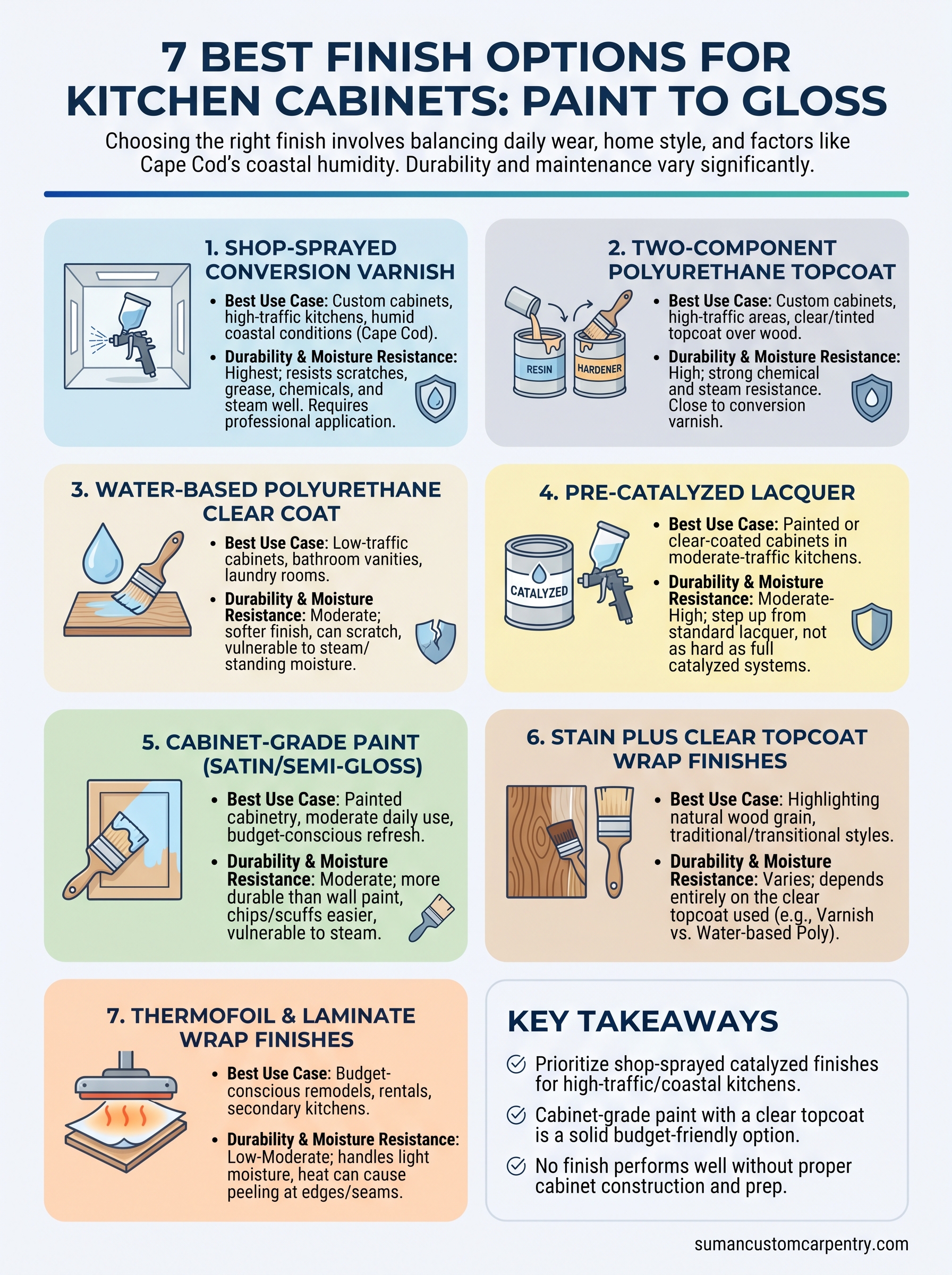
Choosing the best finish for kitchen cabinets comes down to matching the right system to your kitchen’s actual conditions. If your cabinets handle heavy daily cooking, young kids, or Cape Cod’s coastal humidity, shop-sprayed conversion varnish gives you the strongest protection available. If budget is the priority, cabinet-grade paint in satin or semi-gloss is a solid entry point, especially when paired with a clear catalyzed topcoat.
Each option in this list has a clear purpose, and none of them performs well when applied to poorly built or improperly prepared cabinets. The finish is only as good as the work underneath it. That’s why the cabinet construction, prep, and finishing process all matter equally.
If you’re planning a kitchen renovation on Cape Cod and want cabinets built and finished to last, contact Suman Custom Carpentry to start a conversation about your project.