
The material inside your kitchen cabinets matters more than the material on the outside. That’s something we see homeowners on Cape Cod overlook all the time. They fall in love with a door style or a paint color, sign a contract, and only later discover their cabinet boxes are made from something that won’t survive five years of daily use, let alone the humidity that comes with coastal living. Choosing the best kitchen cabinet materials starts with understanding what each option actually brings to the table in terms of durability, cost, and long-term performance.
At Suman Custom Carpentry, we hand-build every cabinet in our Hyannis shop, which means we work with these materials every single day. We’ve seen how solid wood ages beautifully in a well-ventilated kitchen and how particle board falls apart when moisture creeps in. That hands-on experience shapes every recommendation we make to our clients, and it’s exactly what we’re sharing in this guide.
Below, we break down 11 cabinet material options, from plywood and MDF to solid hardwoods and engineered alternatives, covering the honest pros, cons, and cost expectations for each. Whether you’re planning a full kitchen renovation or just trying to figure out what’s worth your money, this guide will give you the information you need to make a confident decision.
1. Cabinet-grade plywood
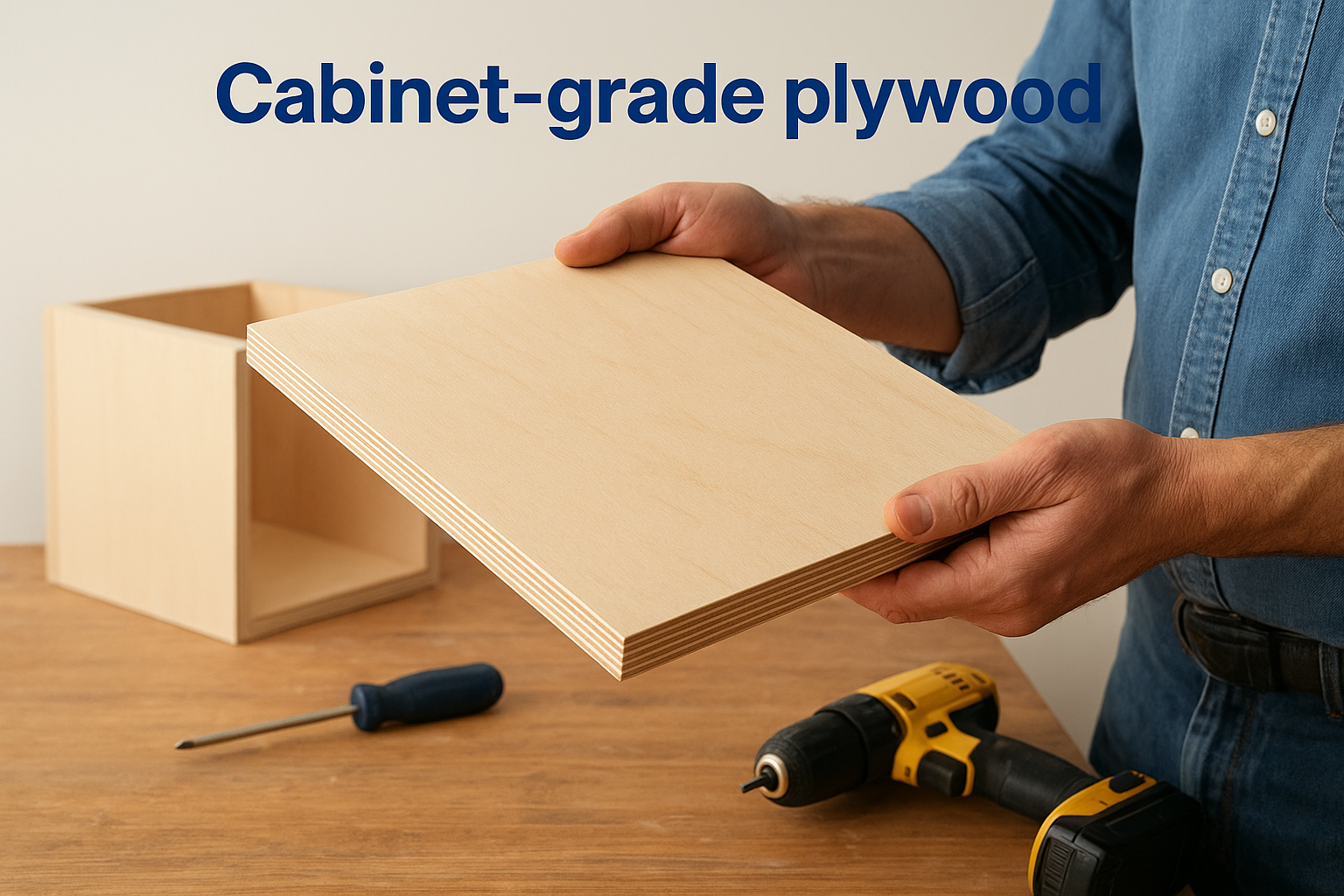
Cabinet-grade plywood is the material we use most often at Suman Custom Carpentry, and for good reason. When clients ask about the best kitchen cabinet materials, plywood consistently earns its spot at the top because it combines structural strength with real-world durability in a way that most other sheet goods simply can’t match.
What it is and where it’s used
Cabinet-grade plywood is made from thin wood veneers glued together in alternating grain directions, which gives the panel exceptional resistance to warping and splitting. You’ll find it in cabinet boxes, shelves, drawer bottoms, and back panels. Unlike standard construction plywood, cabinet-grade sheets carry a higher face veneer grade specifically suited for joinery and finishing work.
Common applications include:
- Full cabinet box construction (sides, top, bottom, back)
- Fixed and adjustable shelving
- Drawer boxes in higher-end builds
Pros and cons in a real kitchen
Plywood holds screws far better than particle board or MDF, which matters every time you mount hardware or hang a cabinet on a wall. It also handles humidity and moisture exposure more reliably than wood composites. On the downside, cabinet-grade plywood costs more upfront, and lower-quality sheets can hide voids in the inner plies that weaken joints over time.
Plywood’s cross-grain construction is what keeps it from warping, and that’s exactly what you need in a kitchen where temperature and humidity shift year-round.
Best uses and who it fits
Plywood works best for the structural parts of your cabinets: the box itself, fixed shelves, and drawer bottoms. If you’re renovating a kitchen you plan to keep for 20 or more years, plywood box construction is a non-negotiable investment in longevity.
This material fits homeowners who prioritize durability over the lowest possible upfront price and want cabinets that hold up through daily use without sagging or joint failure.
Cost range and long-term value
Expect to pay $70 to $120 per sheet for quality cabinet-grade plywood, depending on species and grade. That’s a bigger upfront cost than particle board, but plywood cabinets routinely outlast cheaper alternatives by a decade or more. The long-term value justifies the price when you factor in what you avoid spending on repairs and replacements.
What to check before you buy
Look for void-free inner plies and a consistent face veneer before committing to a sheet. Ask your supplier about the adhesive’s formaldehyde content if indoor air quality is a concern. Baltic birch plywood is one of the most dependable options for cabinet boxes and is widely recognized for its uniform ply construction and tight grain.
2. Solid hardwood
Solid hardwood is the material most people picture when they imagine premium custom cabinetry. It carries a natural beauty and character that no engineered product can replicate, and it has been used in fine furniture and millwork for centuries. When evaluating the best kitchen cabinet materials, solid hardwood deserves serious consideration, though it comes with tradeoffs worth knowing before you commit.
What it is and where it’s used
Solid hardwood is milled directly from lumber without any composite core or filler. Common species include maple, cherry, oak, and walnut, each with distinct grain patterns and hardness ratings. You will most often see solid hardwood used for cabinet door frames, face frames, and drawer fronts rather than full box construction, where wood movement and cost make it a less practical choice.
Pros and cons in a real kitchen
Solid hardwood is exceptionally strong and repairable, meaning you can sand and refinish it when wear appears over the years. The main drawback is that wood expands and contracts with humidity shifts, which can cause warping or cracking in kitchens that lack climate control.
Solid hardwood doors built with proper joinery can outlast the house they’re installed in, but only if your kitchen stays reasonably stable in temperature and moisture year-round.
Best uses and who it fits
Hardwood fits homeowners planning a long-term kitchen renovation who value natural materials and want the option to refinish cabinets decades later. It works best for face frames, doors, and drawer fronts in well-ventilated kitchens.
Cost range and long-term value
Solid hardwood runs $8 to $20 per linear foot for face frames and adds cost to door pricing depending on species. High-value species like walnut push that higher, but the ability to refinish extends usable life considerably.
What to check before you buy
Confirm the species and lumber grade before signing any contract. Ask whether the joinery method accounts for seasonal wood movement, particularly on raised-panel doors where improper construction leads to cracking.
3. Wood veneer over a plywood or MDF core
Wood veneer is one of the more misunderstood options among the best kitchen cabinet materials. Many homeowners assume it’s a compromise, but a well-made veneer panel gives you the look of solid wood at a significantly lower price without the seasonal movement issues that come with full lumber construction.
What it is and where it’s used
Wood veneer is a thin slice of real wood, typically 1/42 to 1/8 inch thick, bonded to a stable core made from plywood or MDF. The core handles structural demands while the veneer delivers the natural grain and warmth you see on the surface. You will find veneer used most often on cabinet doors, drawer fronts, and box exteriors where visual quality matters most.
Pros and cons in a real kitchen
Veneer gives you genuine wood character at a lower material cost than solid hardwood, and the stable core beneath it resists warping better than pure lumber in humid kitchens. The downside is that veneer panels have a limited refinishing depth, meaning you can only sand them a few times before cutting through to the core below.
A plywood core veneer outperforms an MDF core veneer in kitchens with consistent moisture exposure, so always confirm what’s underneath before you commit.
Best uses and who it fits
Veneer fits homeowners who want a natural wood aesthetic without paying solid hardwood prices. It works particularly well on large cabinet door panels where solid wood construction would carry a real warping risk.
Cost range and long-term value
Expect to pay $50 to $100 per sheet for quality veneer panels. Long-term value depends heavily on core quality and veneer thickness, with thicker face veneers offering meaningful durability advantages.
What to check before you buy
Confirm the veneer thickness and core material before ordering. Thicker veneers allow light sanding and refinishing, while thin veneers leave almost no margin for error during installation or future upkeep.
4. Medium-density fiberboard
Medium-density fiberboard, or MDF, shows up in more kitchens than most homeowners realize. It is one of the most widely used materials in cabinet construction today, particularly in painted cabinet lines where a smooth, consistent surface matters more than natural grain character.
What it is and where it’s used
MDF is made from wood fibers and resin compressed under heat and pressure into a dense, uniform panel. You will find it most often in cabinet doors, drawer fronts, and painted interior panels, where its pore-free surface accepts paint better than almost any other wood-based material on the market.
Pros and cons in a real kitchen
MDF paints exceptionally well and resists the grain telegraphing you sometimes see through painted solid wood or plywood. The significant downside is that MDF swells and deteriorates when exposed to moisture, making it a poor choice for cabinet boxes or any area with regular water exposure.
If your kitchen runs humid or you live near the coast, MDF cabinet boxes carry real risk that plywood construction simply does not.
Best uses and who it fits
MDF fits homeowners choosing fully painted cabinets who want a flawless, grain-free finish. It works well for door panels and shelving inside dry, climate-controlled kitchens, but skip it for box construction in any environment with humidity fluctuations.
Cost range and long-term value
MDF sheets typically run $30 to $60 per sheet, placing it among the more budget-friendly options in the best kitchen cabinet materials category. That said, moisture damage can cut its lifespan dramatically, which limits its long-term value in coastal climates.
What to check before you buy
Confirm whether the panels carry moisture-resistant additives, sometimes labeled MR-MDF, before purchasing for any kitchen use. Also verify the panel density rating, since denser boards hold screws more reliably and resist edge swelling far better than lighter alternatives.
5. High-density fiberboard
High-density fiberboard, or HDF, is the denser counterpart to MDF and one of the more overlooked options among the best kitchen cabinet materials. Its manufacturing process packs more fiber and resin into each panel, producing a harder, more uniform surface than standard MDF delivers.
What it is and where it’s used
HDF is made from wood fibers compressed at higher pressure, resulting in panels that typically run between 3mm and 8mm thick. You will most often find it used for cabinet back panels, drawer bottoms, and thin door skins where a flat, consistent surface matters more than structural strength.
Pros and cons in a real kitchen
Unlike MDF, HDF handles everyday surface wear more reliably thanks to its higher density, and it holds routed profiles cleanly during fabrication. The downside is that prolonged moisture exposure still causes swelling, which limits its usefulness in cabinet boxes or under-sink areas.
HDF works well where thinness and surface hardness matter, but it is not a structural panel and should never carry shelf loads.
Best uses and who it fits
This material fits homeowners choosing painted or laminated cabinets who want a smooth, consistent back panel without adding bulk. It performs best in dry, interior kitchen environments away from regular water sources.
Cost range and long-term value
Sheet prices for HDF typically run $40 to $70 per panel, placing it between MDF and plywood in cost. Your long-term value depends on moisture control in your kitchen, since water exposure shortens its lifespan fast.
What to check before you buy
Confirm the panel density rating in kg/m³ before ordering, since denser boards hold fasteners better and resist surface denting under daily use. Ask whether the panels include any moisture-resistant treatment if your kitchen tends to run warm or humid.
6. Particle board
Particle board is the most common material you will find in budget and stock cabinets, and it is worth understanding clearly before you sign any contract. Knowing where it fits among the best kitchen cabinet materials helps you make a realistic call about where to accept it and where to push back.
What it is and where it’s used
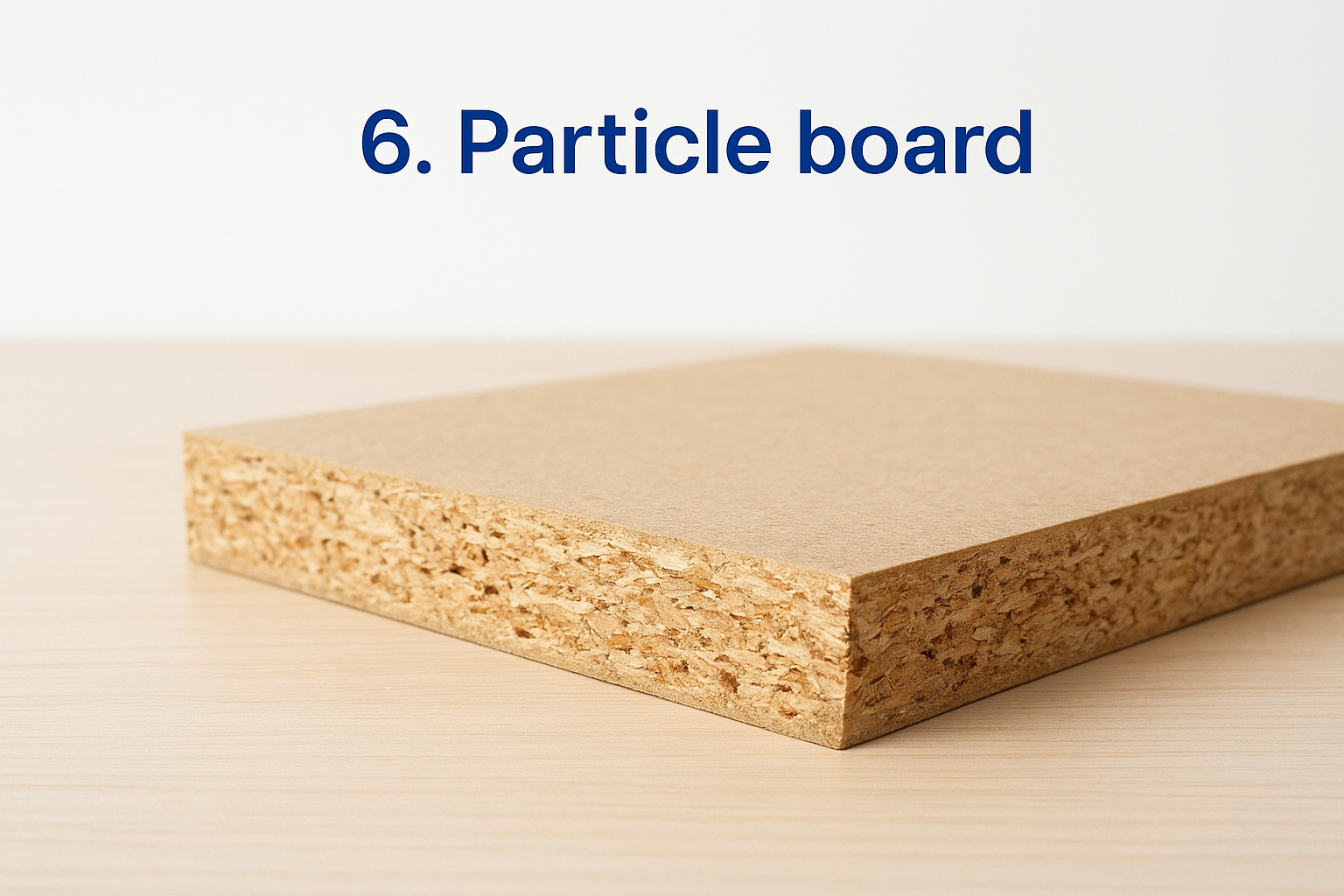
Particle board is made from compressed wood chips, sawdust, and resin bonded together under heat and pressure. You will find it most often in flat-pack and stock cabinet boxes, shelving, and furniture-grade case goods where keeping production costs low is the primary goal.
Pros and cons in a real kitchen
The clearest advantage is low cost, which makes it accessible for tight renovation budgets. The drawbacks are significant: particle board absorbs moisture quickly, swells at edges and joints, and holds screws poorly compared to plywood or solid hardwood.
Once particle board swells from moisture exposure, the damage is permanent and no repair brings it back to its original strength.
Best uses and who it fits
Particle board fits short-term renovations or rental properties where budget is the deciding factor and longevity is less critical. It works reasonably well in dry, interior cabinet positions away from sinks, dishwashers, and any direct water source.
Cost range and long-term value
Sheets typically run $20 to $40 each, making it the most affordable option on this list. The long-term value is limited, since moisture damage and joint failure can cut its usable lifespan to under ten years in an active kitchen.
What to check before you buy
Confirm whether the panels carry any edge banding or laminate protection, since exposed particle board edges are the first place moisture damage starts. Also check the panel density rating, because denser boards hold hardware fasteners more reliably and resist sagging on longer shelf spans.
7. Melamine
Melamine is a resin-coated surface treatment bonded to a substrate, most often particle board or MDF, and it is one of the most common finishes you will find on stock and semi-custom cabinet interiors across all price points.
What it is and where it’s used
Melamine starts as a paper layer saturated with melamine resin and pressed onto the core panel under heat. The result is a hard, smooth surface that resists staining and everyday moisture better than raw wood composites. You will find it on cabinet box interiors, shelf surfaces, and door panels in both residential and commercial kitchens where easy cleaning and consistent color matter most.
Pros and cons in a real kitchen
The main advantage is that melamine cleans easily and holds its color without requiring paint or topcoat maintenance over time. The downside is that the surface can chip at edges and corners with heavy daily use, particularly around hardware cutouts and hinge mounting points where stress concentrates.
Melamine’s durability depends almost entirely on the quality of the substrate beneath it, so always ask what the core material is before assuming the finish alone tells you how long the cabinet will last.
Best uses and who it fits
Melamine fits budget-conscious homeowners or rental property owners who want a clean, low-maintenance interior finish without paying for painted hardwood or veneer construction. Among the best kitchen cabinet materials in this price range, it performs reliably in dry, interior cabinet positions away from direct water sources.
Cost range and long-term value
Melamine-faced panels typically run $25 to $55 per sheet. Long-term value stays reasonable in dry kitchens, but edge damage and substrate moisture issues can shorten cabinet life noticeably in active coastal cooking environments.
What to check before you buy
Confirm the substrate density and edge banding quality before committing to any melamine cabinet. Tight, well-applied edge banding keeps moisture from reaching the core at the most vulnerable points on every panel.
8. High-pressure laminate
High-pressure laminate, commonly called HPL, is a decorative surface material bonded to a substrate core, and it holds up to kitchen wear better than most people expect. Among the best kitchen cabinet materials for durability and design flexibility, HPL earns serious consideration for homeowners who want a hard-wearing surface in a wide range of colors and textures.
What it is and where it’s used
HPL is made by fusing multiple layers of resin-saturated paper under intense heat and pressure, producing a rigid surface panel that resists scratches, heat, and impact. You will find it applied to cabinet doors, drawer fronts, and exterior box surfaces in both residential kitchens and commercial installations where appearance and durability need to coexist.
Pros and cons in a real kitchen
HPL resists scratches and surface staining far better than melamine or painted MDF, which makes it a practical choice in active cooking households. The main limitation is that edge joints and cuts require precise finishing, since exposed substrate edges remain vulnerable to moisture if not properly sealed or banded.
HPL’s surface durability is one of the strongest in this category, but that strength only holds when the edges and substrate underneath are protected properly.
Best uses and who it fits
This material fits homeowners who want a modern, low-maintenance finish with consistent color and texture across large cabinet surfaces. It performs particularly well in high-traffic kitchens where scuffs and spills happen daily.
Cost range and long-term value
HPL panels typically run $50 to $90 per sheet, and their surface longevity justifies the price in kitchens that see heavy daily use.
What to check before you buy
Confirm the substrate material and edge banding quality before ordering, since HPL’s surface performance depends on what sits beneath it and how well every exposed edge is sealed against moisture.
9. Thermofoil
Thermofoil is a vinyl film heat-bonded to an MDF core, and it shows up frequently in painted cabinet lines marketed as a low-maintenance, budget-friendly alternative to traditional finishes. Understanding where it fits among the best kitchen cabinet materials helps you decide whether the price savings justify the performance tradeoffs in your specific kitchen.
What it is and where it’s used
Thermofoil starts as a flexible PVC film wrapped and heat-pressed over a shaped MDF substrate, creating a seamless surface with no visible seams on most door profiles. You will find it most commonly on cabinet doors, drawer fronts, and decorative panels in budget and mid-range kitchen lines where a consistent, painted appearance is the goal.
Pros and cons in a real kitchen
Thermofoil resists staining and cleans quickly with just a damp cloth, which appeals to busy households. The significant downside is that heat and moisture cause the film to peel away from the MDF core, particularly near dishwashers, stovetops, and under-sink cabinet doors where temperature and humidity concentrate.
Once thermofoil starts peeling at the edges or corners, the delamination spreads and no adhesive repair holds it reliably for long.
Best uses and who it fits
Thermofoil fits rental properties or short-term renovation budgets where upfront cost is the deciding factor. It works best in low-heat, low-moisture cabinet positions away from appliances and plumbing.
Cost range and long-term value
Thermofoil doors typically run $30 to $70 per door, making it one of the more affordable finish options. Long-term value is limited in active kitchens where heat and moisture exposure shorten its lifespan significantly.
What to check before you buy
Confirm the MDF core density and film bond quality before committing. Ask specifically about heat resistance ratings if any cabinet positions sit near your stove or dishwasher.
10. Bamboo plywood
Bamboo plywood is a rapidly renewable panel material that has moved from novelty to legitimate option in residential cabinetry over the past decade. Among the best kitchen cabinet materials being considered by environmentally focused homeowners, bamboo plywood stands out for its hardness and distinctive grain pattern that sets it apart from conventional wood-based options.
What it is and where it’s used
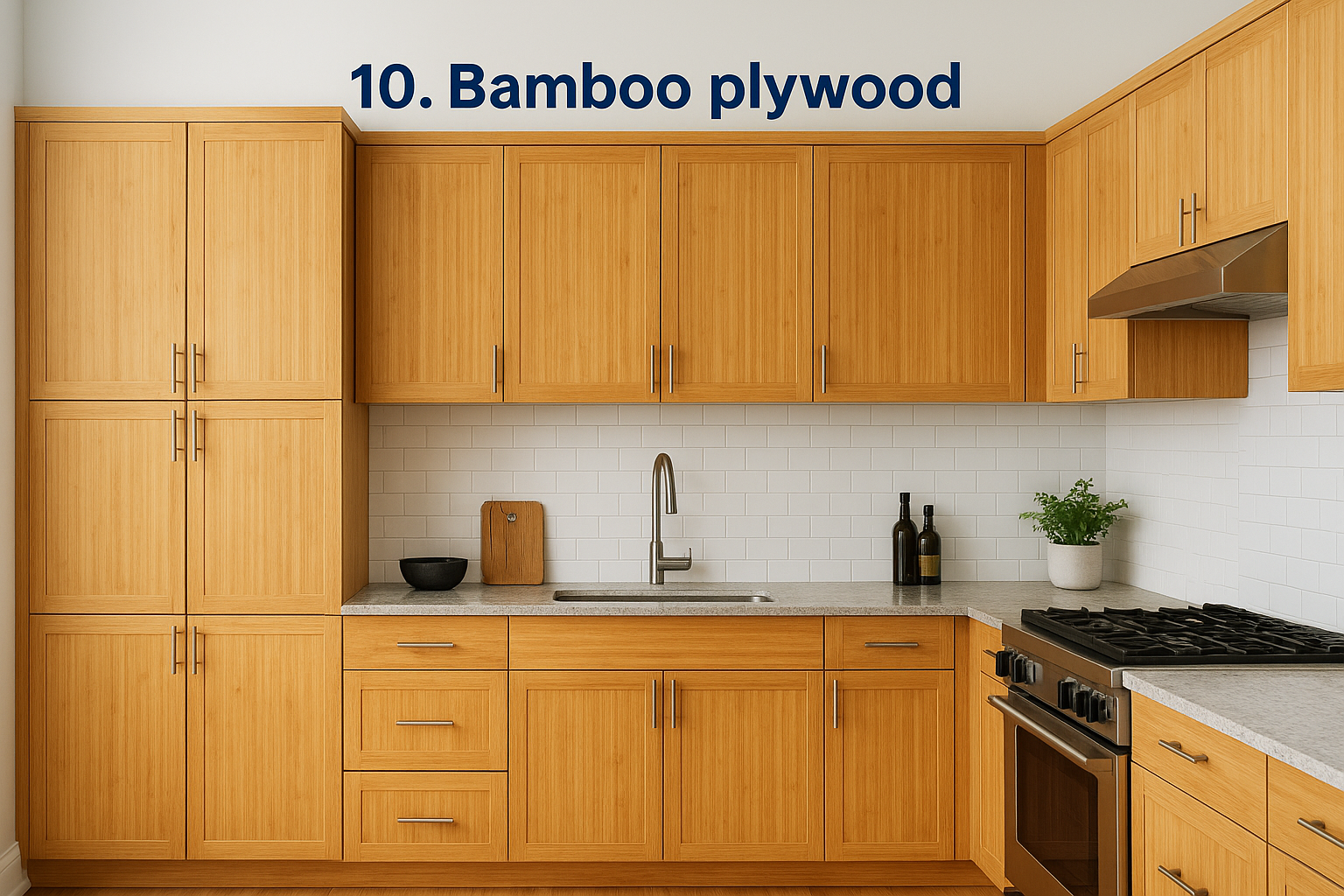
Bamboo plywood is manufactured by slicing, flattening, and laminating bamboo strips into panels that resemble traditional plywood in form but carry a denser, tighter surface grain. Cabinetmakers use it for cabinet doors, drawer fronts, and visible box exteriors where its unique linear grain becomes a deliberate design feature rather than something to hide.
Pros and cons in a real kitchen
Bamboo is harder than most domestic hardwoods including maple and red oak, which gives it strong resistance to denting and surface wear under daily kitchen conditions. The downside is that bamboo absorbs moisture and can warp when exposed to humidity fluctuations, requiring proper sealing and a stable kitchen environment to perform well long term.
Unsealed bamboo plywood in a humid coastal kitchen will show movement and surface checking within a few seasons, so sealing every exposed face and edge is not optional.
Best uses and who it fits
This material fits homeowners prioritizing sustainable sourcing who also want a visually distinctive surface with real durability credentials.
Cost range and long-term value
Bamboo plywood typically runs $60 to $110 per sheet, with long-term value holding strong in properly sealed, well-ventilated kitchens.
What to check before you buy
Confirm the adhesive type and formaldehyde rating before purchasing, since some bamboo panel adhesives release higher VOC levels than comparable plywood products.
11. Stainless steel
Stainless steel sits at the far end of the best kitchen cabinet materials spectrum, and it earns its place there through sheer durability rather than visual warmth. Most homeowners associate it with restaurant kitchens, but a growing number of residential projects use it deliberately for a modern, industrial aesthetic that no wood-based material can replicate.
What it is and where it’s used
Stainless steel cabinetry uses formed and welded steel panels, typically 16 to 20 gauge, for both box construction and door faces. You will find it most often in professional-grade home kitchens, commercial food service spaces, and outdoor kitchen installations where hygiene, moisture resistance, and durability take priority over traditional aesthetics.
Pros and cons in a real kitchen
Stainless steel resists moisture, heat, and bacteria at a level no wood product comes close to matching. The tradeoffs are real: fingerprints and surface scratches accumulate visibly with daily use, and the material carries a cold, hard look that clashes with warmer interior design styles.
Stainless steel’s lifespan in a well-maintained kitchen is effectively unlimited, but the finish requires consistent upkeep to stay presentable.
Best uses and who it fits
This material fits homeowners designing a professional or modern kitchen who prioritize function and longevity over wood’s natural warmth.
Cost range and long-term value
Stainless steel cabinets typically run $500 to $1,200 per linear foot, placing them among the most expensive options available. The lifespan justifies the cost in the right application.
What to check before you buy
Confirm the gauge thickness and weld quality before ordering, since thinner gauges dent more easily under normal kitchen use.
Picking the right material for your kitchen
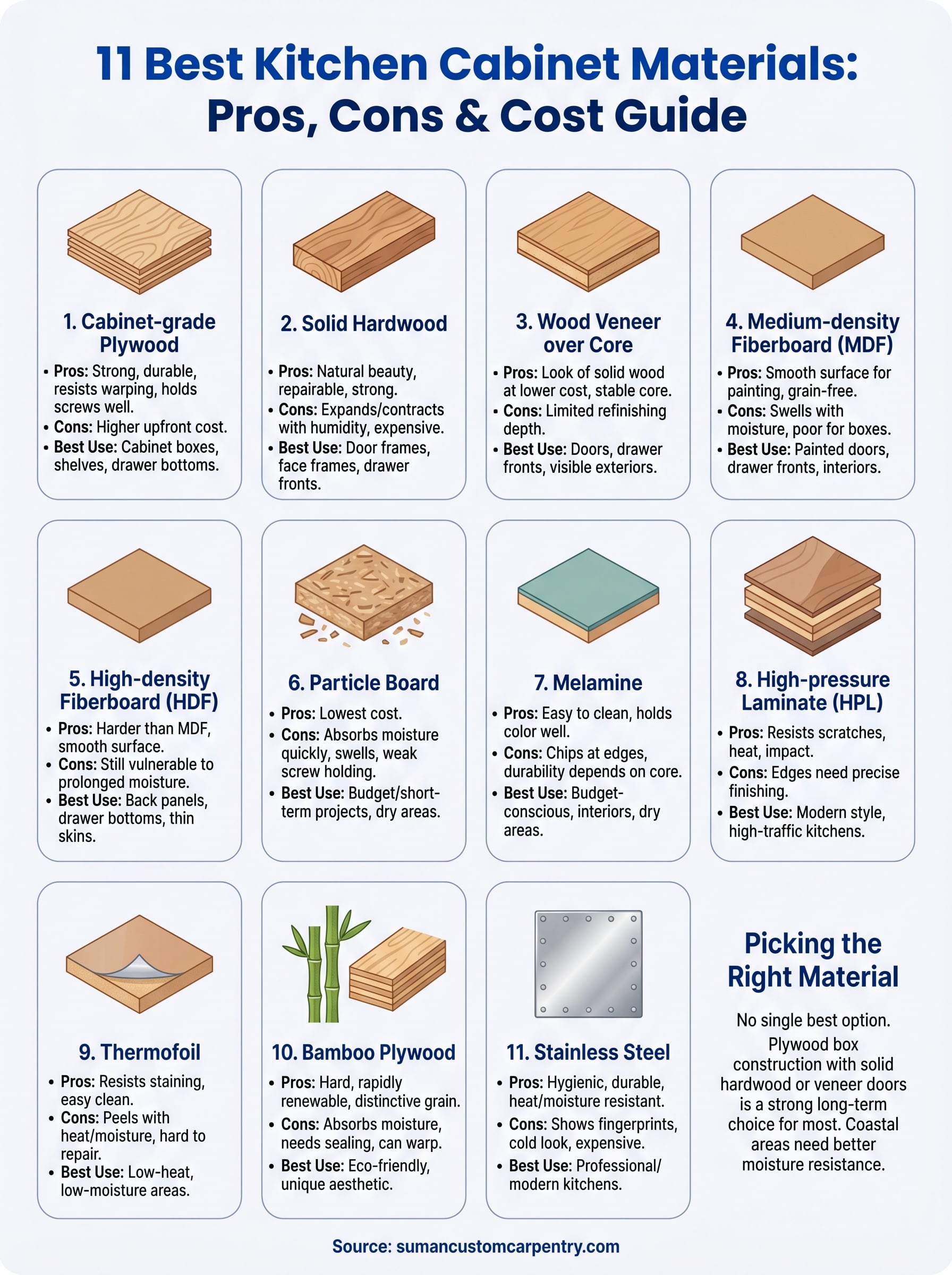
No single option wins across every situation when you look at the best kitchen cabinet materials side by side. Your budget, your kitchen’s humidity level, and how long you plan to stay in the home all push you toward different answers. Plywood box construction with solid hardwood or veneer doors gives you the strongest long-term combination for most residential kitchens, while MDF and melamine make sense in specific painted applications where moisture exposure stays low.
Your location matters more than most guides admit. Coastal kitchens on Cape Cod face humidity and temperature swings that expose the weaknesses in cheaper materials faster than inland homes ever would. Choosing the wrong substrate costs you far more in repairs and replacements than upgrading your materials upfront ever would.
If you want guidance tailored to your specific kitchen and budget, talk to the team at Suman Custom Carpentry about what materials make sense for your project.