
Typing custom cabinets makers near me into Google gets you a long list of names, but no real way to tell who actually builds quality cabinetry and who just installs stock boxes with a fancy label. On Cape Cod, that gap matters. Coastal humidity, older homes, and tight kitchen layouts all demand a builder who knows the territory, not just someone with a truck and a website.
So how do you actually pick the right one? You need a short list of criteria: where the work gets built, what materials and joinery methods they use, how they handle warranties, and whether you can talk directly to the person doing the work. Skip these questions and you risk a rushed install, mismatched finishes, or a shop that vanishes when something needs fixing years later.
This guide walks through exactly what separates a reliable local cabinet maker from a middleman, what to ask during a consultation, and red flags that signal you should keep looking. We built it from years of hand-crafting cabinetry right here in Hyannis, so you’re getting practical, on-the-ground advice, not generic checklist filler.
1. Local custom carpentry shops and small workshops
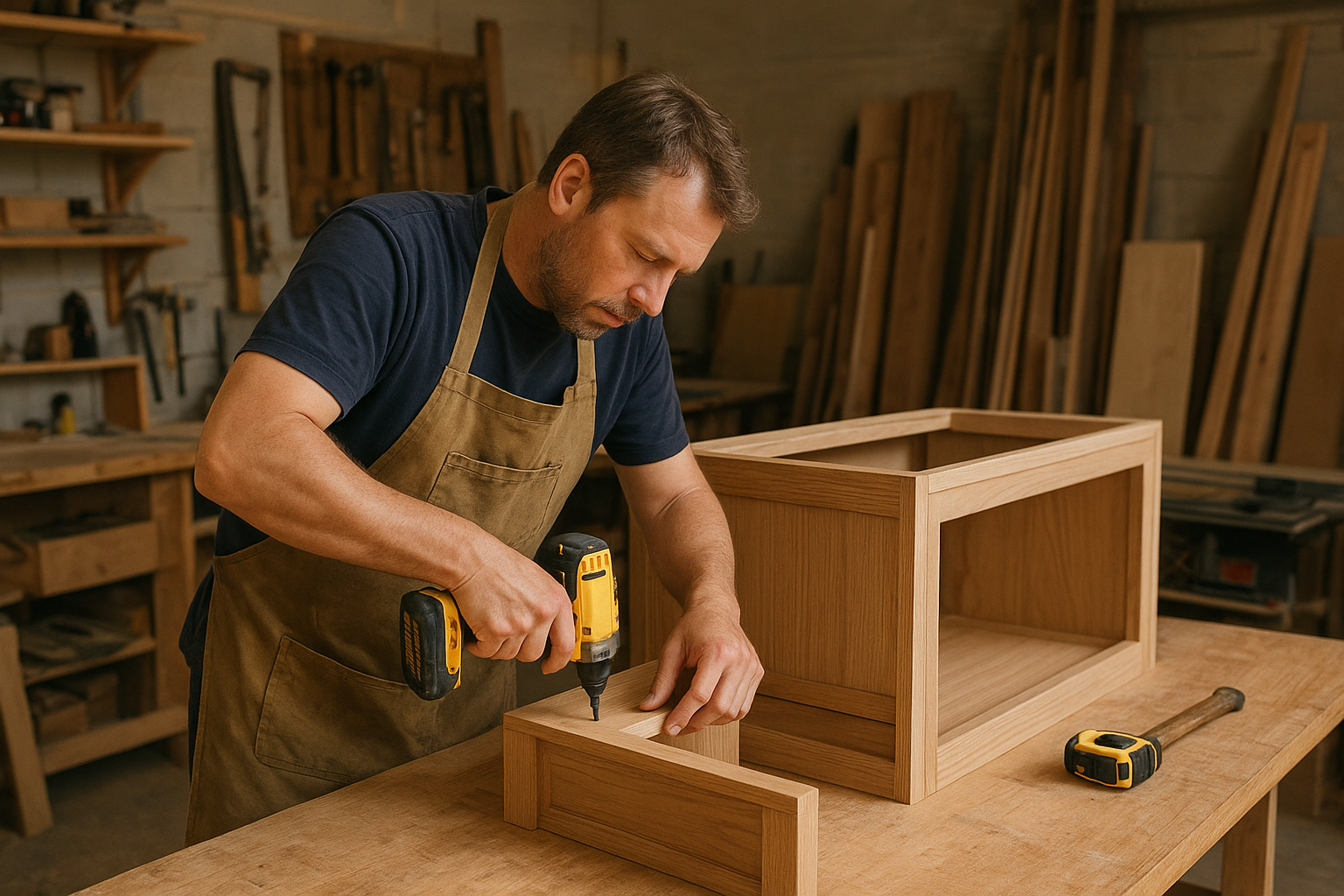
A small, owner-operated shop is usually the closest thing to the classic idea of a custom cabinet maker, and there are tips for finding custom kitchen cabinet makers near you that make the search easier. These businesses are typically run by a master carpenter or a small crew who design, build, and install cabinetry themselves, often out of a shop within driving distance of your home. Suman Custom Carpentry, hand-building all of our cabinetry in-house at our Hyannis shop, is a good example of this model on Cape Cod.
How it works
Work usually starts with an in-home or in-shop consultation where you talk through layout, storage needs, and style. From there, the shop measures your space, drafts a design, and builds each piece to those exact dimensions rather than pulling from stock sizes. Because the same team handles design and fabrication, changes get made in real time instead of getting lost between a salesperson and a factory. Installation is done by people who already know the project inside out, which cuts down on the fitting problems that show up with pre-built cabinets.
Who it’s best for
This route suits homeowners who want cabinetry built around an unusual layout, an older home with uneven walls, or a specific storage problem that off-the-shelf lines can’t solve. It also fits anyone who wants long-term accountability: a real person you can call in five years if a hinge loosens or a drawer sticks. If you value craftsmanship and a direct relationship with the builder over the fastest possible timeline, this is your category.
Typical pricing
Expect to pay more per linear foot than big-box cabinetry, since you’re paying for solid materials, custom sizing, and skilled labor instead of mass production. Most full kitchens run higher upfront but hold their value and durability far longer.
A custom shop costs more today so you’re not replacing cabinets again in eight years.
| Project type | Typical range |
|---|---|
| Custom vanity | $1,500 to $4,000 |
| Built-ins or shelving | $2,000 to $8,000 |
| Full custom kitchen | $15,000 to $40,000+ |
What to ask before hiring
Before signing anything, get clear answers on these points:
- Where exactly is the cabinetry built, in-house or outsourced?
- What wood species and hardware brands do they use as standard?
- What does the warranty cover, and for how long?
- Can they show finished projects in homes similar to yours?
- Who handles the installation, the shop’s own crew or a subcontractor?
A shop that answers these without hesitation, and backs it up with a solid warranty like a lifetime guarantee on cabinet boxes and doors, is worth moving forward with.
2. Kitchen and bath design-build firms
Design-build firms bundle everything under one roof: an in-house designer, a project manager, and a network of installers who handle plumbing, electrical, and cabinetry together. Instead of hiring a cabinet maker near you separately from your contractor, you sign one contract and one company coordinates the whole renovation. Many Cape Cod homeowners choose this route when a kitchen or bathroom project involves more than just new cabinets, like moving a wall or relocating plumbing lines.
How it works
Firms typically start with a design phase, often using 3D renderings, before ordering materials. The cabinetry itself is usually manufactured off-site by a supplier the firm partners with, then delivered and installed by the firm’s crew alongside the rest of the renovation.
Who it’s best for
This model fits homeowners tackling a full remodel where cabinets are one piece of a bigger puzzle, alongside the other kitchen renovation services a project like that pulls in. It also suits people who want a single point of contact managing subcontractors, rather than coordinating a carpenter, plumber, and electrician themselves.
One contract can simplify a big remodel, but it also means less control over exactly who builds your cabinets.
Typical pricing
Expect design-build pricing to run higher than a standalone cabinet shop, since it folds in design fees, project management, and multiple trades. A midrange kitchen remodel through a design-build firm commonly lands between $30,000 and $70,000.
What to ask before hiring
- Is cabinetry built in-house or sourced from an outside manufacturer?
- What happens if the timeline slips due to a subcontractor delay?
- Can you meet the actual carpenter installing your cabinets?
- What warranty applies specifically to the cabinetry, separate from the rest of the remodel?
3. Custom furniture makers and fine woodworkers
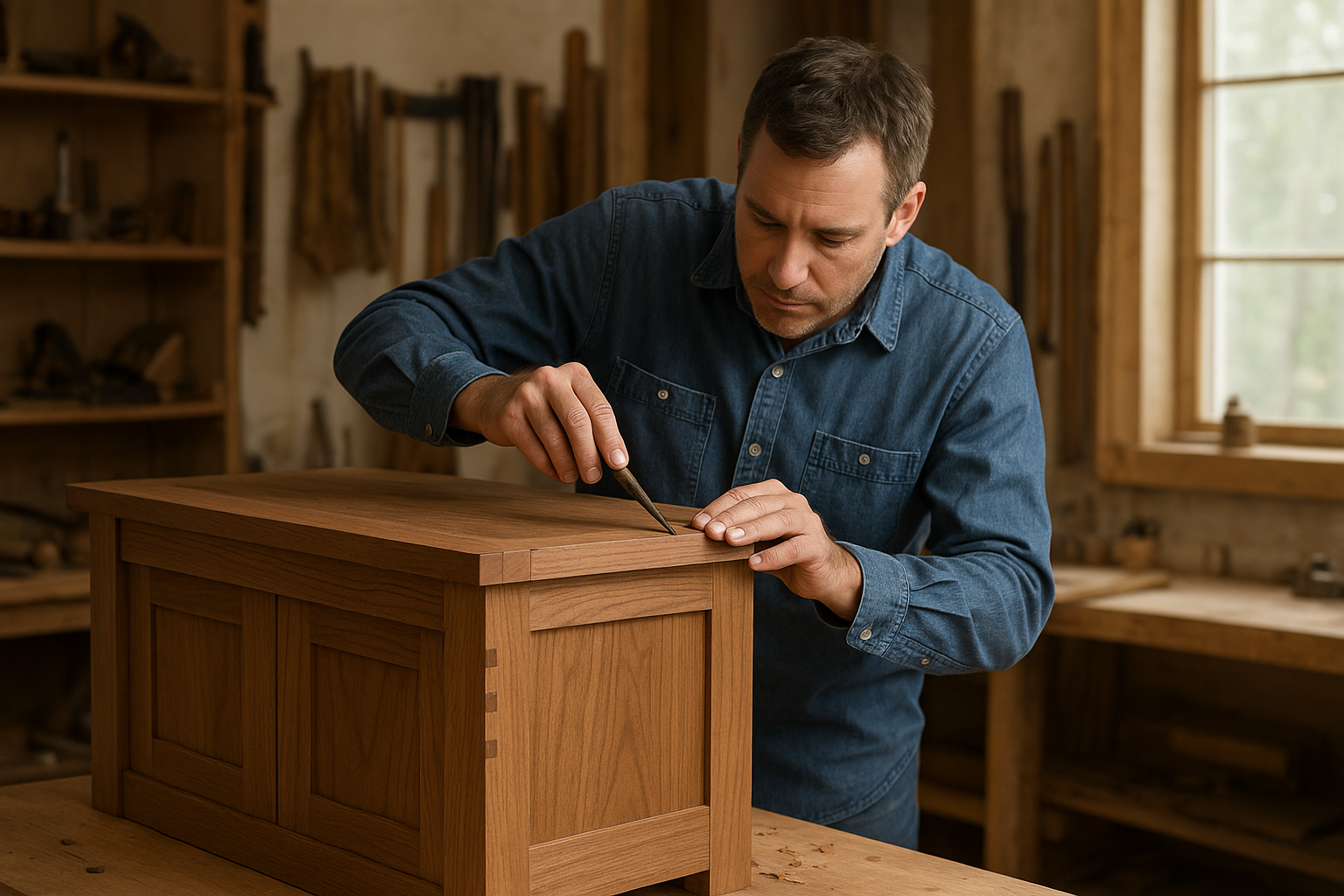
Some of the best cabinetry on Cape Cod comes from craftspeople who don’t call themselves cabinet makers at all. Fine woodworkers who build tables, chairs, and heirloom furniture often take on cabinetry as an extension of that craft, treating a kitchen island or a built-in bookcase the same way they’d treat a dining table: as a piece of furniture meant to last generations.
How it works
Expect a slower, more artisanal process than a standard cabinet shop. These builders often work with solid wood joinery, hand-cut dovetails, and finishes applied in small batches rather than sprayed on an assembly line. Timelines run longer because each piece gets individual attention, and lead times can stretch several months during busy seasons.
Who it’s best for
This path suits homeowners after a statement piece, like a live-edge island (see our custom kitchen island ideas), a freestanding butler’s pantry, or cabinetry with visible joinery as a design feature. It’s not the fastest or cheapest route, but it fits anyone who wants furniture-grade cabinetry indistinguishable from custom-built family heirlooms.
Fine woodworking cabinetry isn’t about speed, it’s about pieces that outlast the house they’re built for.
Typical pricing
Pricing runs high, often exceeding standard custom cabinet shops, because you’re paying for hand craftsmanship and slower production. A single statement island can run $5,000 to $15,000 alone.
What to ask before hiring
- Have they built cabinetry before, or mostly standalone furniture?
- What’s the realistic lead time given their current workload?
- Do they install on-site, or only deliver finished pieces?
- What wood movement or seasonal warping issues should you expect in a coastal climate?
4. General contractors who subcontract cabinetry
Many homeowners hire a general contractor for a whole renovation and never realize the cabinets themselves get built by a separate shop the contractor brings in. This is common with additions, full gut renovations, or any project where cabinetry is just one line item among framing, drywall, and flooring. The contractor manages the schedule and the money, but the actual custom cabinetry work gets passed to a sub they’ve used before, sometimes a solid local shop, sometimes whoever quoted lowest that month.
How it works
Your contract sits with the general contractor, who then negotiates separately with a cabinet subcontractor. You rarely meet that subcontractor before signing, and change orders on cabinetry often route through the contractor first, adding a layer of communication between you and the person actually building your cabinets.
Who it’s best for
This setup suits homeowners already deep into a larger structural project, where cabinetry is secondary to bigger construction work. It’s less ideal if cabinetry quality is your top priority, since you have limited say in which shop actually builds it.
When cabinets are a subcontracted afterthought, quality control becomes someone else’s decision, not yours.
Typical pricing
Pricing varies widely because it depends entirely on which sub the contractor selects. Markups on subcontracted cabinetry commonly run 10 to 20 percent above what you’d pay hiring that same shop directly, on top of the usual cabinet installation labor rates.
What to ask before hiring
- Which cabinet shop will actually build the cabinets?
- Can you speak with that subcontractor directly?
- Does the contractor’s markup include cabinetry warranty support?
- What happens to your warranty if the contractor goes out of business?
5. Cabinet refacing and franchise companies
Refacing companies and cabinet franchises solve a narrower problem: your cabinet boxes are structurally fine, but the doors, drawer fronts, and finish look dated. Instead of building new cabinetry from scratch, these businesses strip the old doors and hardware, then apply new veneer, doors, and drawer fronts to your existing boxes, the kind of change you can see in these refacing transformations. National franchises with local licensees are common in this space, and they market heavily under searches like custom cabinets makers near me even though they aren’t building anything custom from the ground up.
How it works
A rep measures your current cabinets, then orders doors and veneer from a catalog of standard styles, since franchises rarely fabricate one-off designs. Installation crews swap the old fronts for new ones, usually finishing the whole kitchen in two to four days.
Who it’s best for
This route fits homeowners with structurally sound boxes who mainly want a faster, lower-cost cosmetic update rather than a full rebuild, much like hiring a wood cabinet refinishing pro. It’s not the right fit if you need layout changes, extra storage, or nonstandard dimensions.
Refacing changes how your kitchen looks, not how it’s built.
Typical pricing
Refacing typically runs $150 to $300 per linear foot, well below a full custom rebuild, with most kitchens landing between $8,000 and $20,000.
What to ask before hiring
- Are the new doors made from solid wood or laminate over particleboard?
- What’s the warranty on the refacing materials versus the original boxes?
- Can layout or storage features change, or only surfaces?
- Is the crew doing the work local, or a subcontracted install team?
6. Big box stores and national cabinet retailers
Home improvement chains and national cabinet retailers sell pre-manufactured cabinet lines in a handful of standard sizes and finishes. You pick from a catalog, a store associate helps plan the layout using their software, and the cabinets ship from a factory hundreds or thousands of miles away. It’s the fastest way to fill a kitchen with cabinets, but it’s the furthest thing from hand-built custom carpentry, and the gap shows up clearly when you compare custom kitchen cabinets against stock cabinets, even though these stores rank constantly for custom cabinets makers near me.
How it works
Staff use planning software to lay out stock cabinet modules based on your room dimensions, then submit an order to the manufacturer. Cabinets arrive flat-packed or partially assembled weeks later, and installation is usually handled by a subcontracted crew the store books separately, not employees of the retailer itself.
Who it’s best for
This option suits homeowners on a tight budget or timeline who have a fairly standard room layout and don’t need nonstandard sizing. It works less well for older Cape Cod homes with uneven walls, odd angles, or storage needs that stock modules can’t solve.
Stock cabinets fit standard rooms, not the room you actually have.
Typical pricing
Big box pricing runs lowest among all these options, typically $100 to $300 per linear foot installed depending on the line and materials. A full kitchen commonly lands between $8,000 and $15,000, though add-ons and installation fees push that total higher fast.
What to ask before hiring
- Are cabinet boxes made from plywood or particleboard?
- Who installs the cabinets, store staff or a subcontractor?
- What’s the return policy if measurements are off?
- How long is the manufacturer’s warranty, and who honors it locally?
Finding the right fit for your project
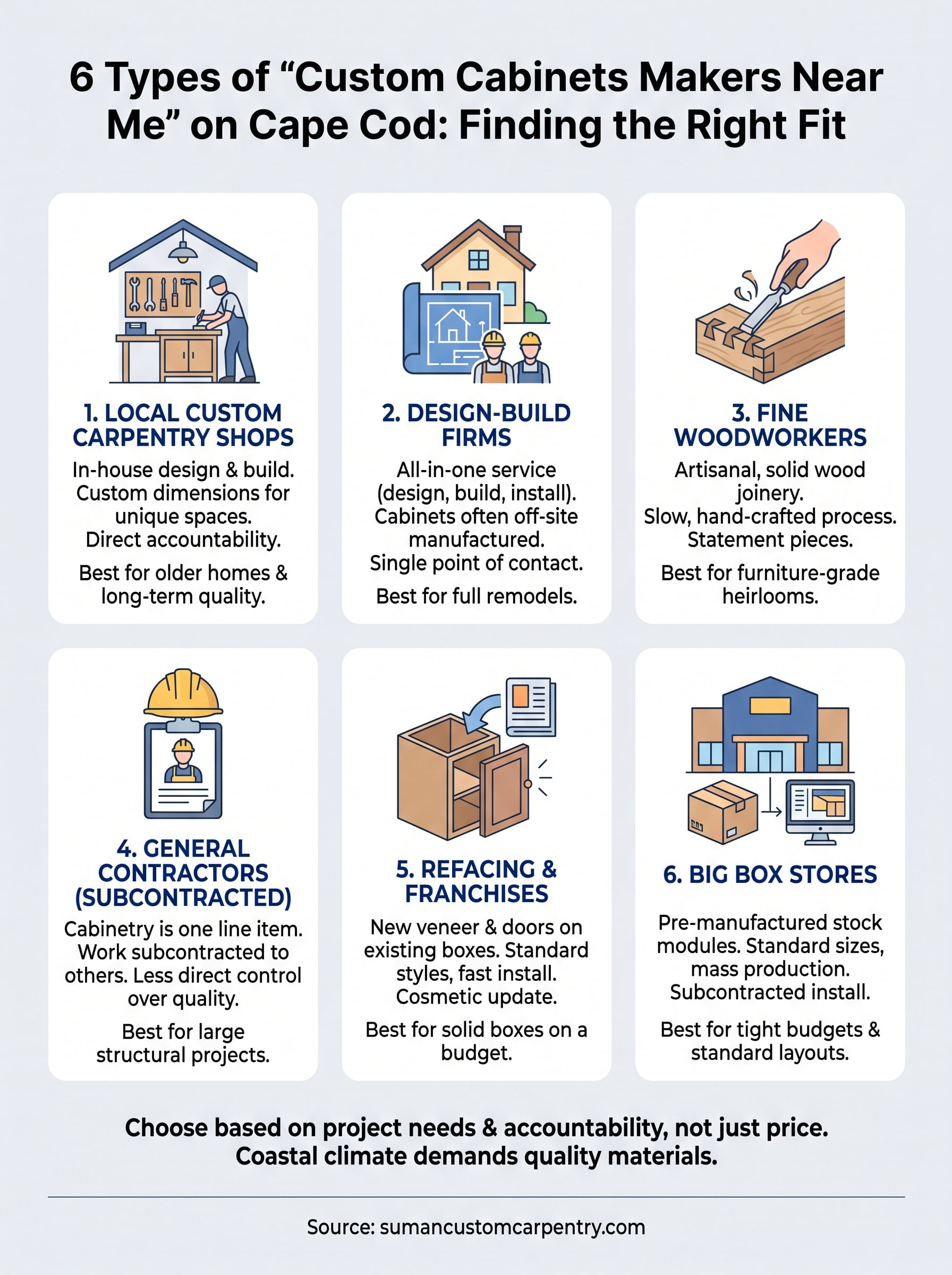
Six options, one decision: match the builder to what your project actually needs. A structural rebuild with an odd layout calls for a local custom shop, not a refacing franchise. A full gut renovation with new plumbing might genuinely need a design-build firm’s coordination. A statement island belongs with a fine woodworker, and a quick cosmetic refresh on solid boxes doesn’t need custom fabrication at all. The mistake most homeowners make is picking based on price alone, then discovering months later that nobody stands behind the warranty when a drawer sticks or a door warps in the salt air.
On Cape Cod, that coastal humidity makes material choice and craftsmanship even more important than in a typical inland kitchen. If you want cabinetry built by the same hands that measure your space, install it, and answer the phone years later, that’s exactly what we do at Suman Custom Carpentry. Schedule a consultation with our Hyannis shop and let’s talk through your project.