
Searching for custom kitchen cabinet makers near me brings up everything from big-box retailers to one-person shops, and the range of quality between them is enormous. Choosing the wrong cabinet maker can mean months of delays, disappointing craftsmanship, or cabinets that start falling apart within a few years. The stakes are too high, and the investment too significant, to leave that decision to chance.
At Suman Custom Carpentry, we’ve been hand-building custom kitchen cabinetry at our Hyannis shop on Cape Cod since 2018. Every project we take on, from design through final installation, is built in-house and backed by a lifetime warranty. That experience has taught us exactly what separates a great cabinet maker from a mediocre one, and we want to share that knowledge with you, whether you hire us or not.
This article breaks down six practical tips to help you find and vet custom kitchen cabinet makers in your area. You’ll learn what questions to ask, what red flags to watch for, and how to tell the difference between true craftsmanship and mass-produced cabinetry dressed up as custom work. By the end, you’ll have a clear framework for making a confident decision about who builds your kitchen.
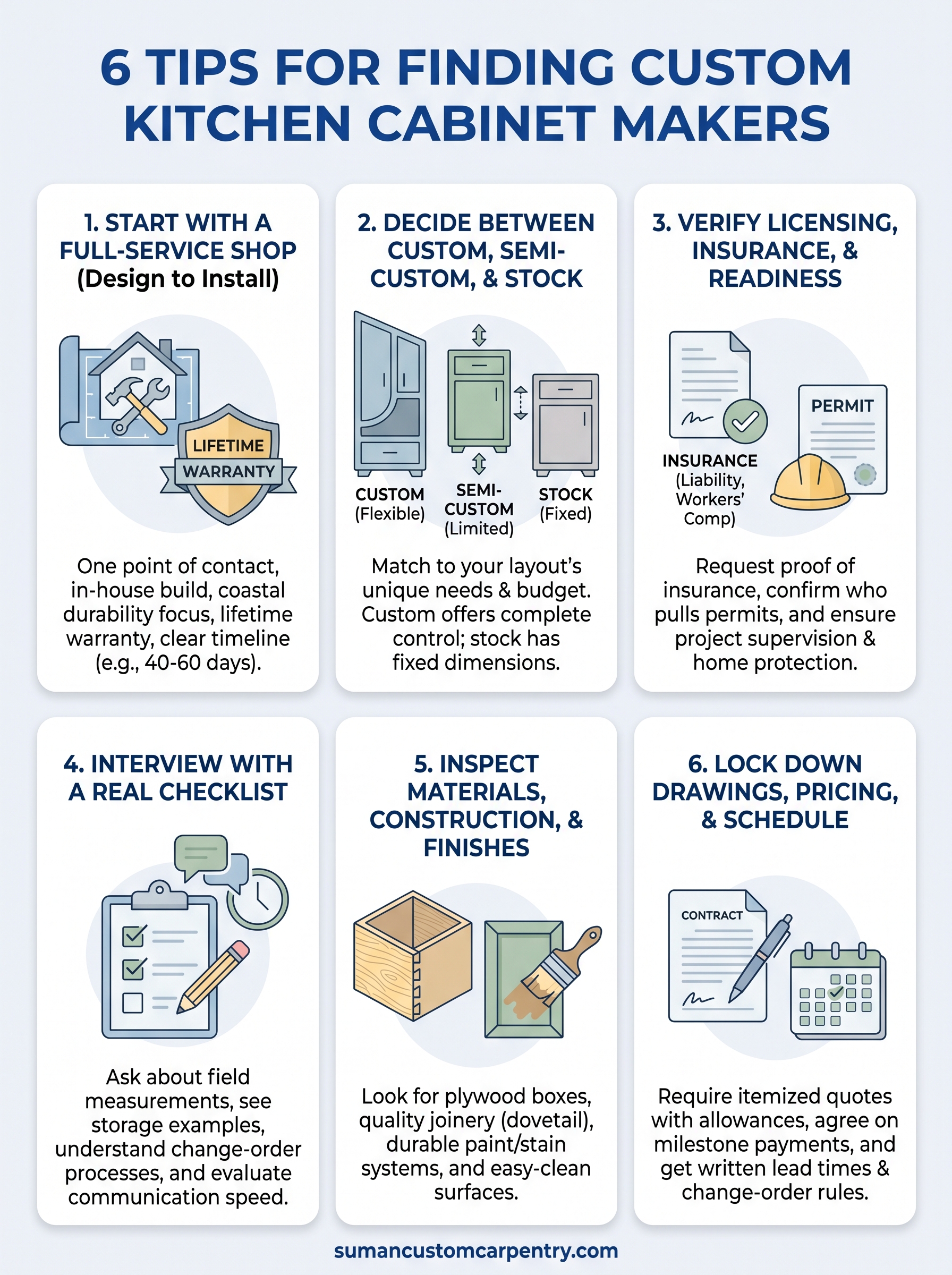
1. Start with Suman Custom Carpentry in Hyannis
When you search for custom kitchen cabinet makers near me, the best starting point is a shop that can handle every phase of your project without handing work off to outside vendors. Suman Custom Carpentry in Hyannis, Massachusetts does exactly that, and understanding what they offer gives you a useful benchmark for evaluating anyone else.
Focus on one shop that handles design to install
Working with one team from concept through installation means fewer miscommunications and a single point of accountability. At Suman, you work directly with owner Dieyson Suman throughout the project. You do not get passed between a salesperson, a manufacturer, and a separate installer. Every decision runs through one experienced set of hands.
Confirm they build everything in-house
Ask any cabinet maker directly where the boxes and doors are physically built. Suman hand-builds every cabinet at their Hyannis shop, which keeps quality control with the people responsible for the outcome. If a shop is reselling factory cabinets under a custom label, you are paying a premium for someone else’s production line, not true craftsmanship.
Building in-house means the people who design your kitchen are the same people cutting, joining, and finishing every piece.
Ask how they plan for Cape Cod coastal wear
Coastal homes face humidity, salt air, and seasonal temperature swings that accelerate wear on cabinetry more than a typical inland home. Ask how the shop selects materials and finishes with these conditions in mind. Suman’s experience working specifically on Cape Cod means they factor coastal durability into material and finish choices from the start, not as an afterthought once problems appear.
Get clarity on warranties and what they cover
Suman backs their work with a lifetime warranty on cabinet boxes and doors and a three-year warranty on painting. Before signing with any shop, get the warranty terms in writing and confirm exactly what is covered, what is excluded, and what actions could void the coverage down the road.
Map the expected build and install timeline
Suman’s custom kitchens follow a 40 to 60 day build and installation window. Knowing this upfront lets you plan around it. Ask your cabinet maker for a written project schedule with defined milestones, so you always know where your kitchen stands in the process.
2. Decide between custom, semi-custom, and stock
Cabinet makers fall into three clear categories, and knowing the difference before you start shopping saves you time and prevents costly mismatches between your expectations and what a shop actually delivers.
Compare the fit, finish, and flexibility you need
Custom cabinets give you complete control over dimensions, materials, and design details. Semi-custom cabinets offer some modification within preset sizes. Stock cabinets come in fixed dimensions and limited finishes, with no real adjustment available. If your kitchen has unusual angles, a sloped ceiling, or specific storage needs, only fully custom work will solve those problems cleanly.
The more unique your layout, the less a stock or semi-custom option can serve you well.
Watch for the hidden limits of big-box options
Big-box stores often market semi-custom lines as flexible and personalized, but the adjustments they allow are narrow. You pick from a set of standard widths, and fillers cover the gaps. When you search for custom kitchen cabinet makers near me, you are looking for a shop that builds to your exact dimensions, not one that adjusts its standard sizes to approximate them.
Use your layout to choose the right cabinet type
Measure your kitchen before any consultation. Odd dimensions, window placements, and appliance locations all influence whether stock or semi-custom can work at all. Bringing accurate measurements to your first meeting helps a cabinet maker give you an honest recommendation faster.
Set a budget range before you meet anyone
Custom work costs more upfront but lasts significantly longer. Knowing your budget ceiling before your first meeting keeps conversations honest and helps cabinet makers propose solutions that actually fit your project.
3. Verify licensing, insurance, and project readiness
When you narrow down your list of custom kitchen cabinet makers near me, verifying licensing and insurance should be your next move before committing. Skipping this step puts both your project and your property at risk if something goes wrong on the job site.
Ask for proof of insurance and coverage limits
Request a certificate of insurance before work begins. You want to see general liability coverage and workers’ compensation. If a worker is injured in your home and the shop carries no workers’ comp, you could face liability for those costs.
Always get the actual certificate, not just a verbal assurance that coverage exists.
Confirm who pulls permits when needed
Some cabinet installations require permits, particularly when structural changes or electrical work is involved. Ask directly who handles the permit process and who is responsible if inspections fail. A reputable shop knows the local requirements and handles this without pushing it onto you.
Check who installs and who supervises the job
Some shops design and build in-house but subcontract the installation to outside crews. Ask specifically who will be on-site installing your cabinets and whether the lead carpenter or project supervisor will be present throughout. Consistency in who does the work matters for quality control and accountability.
Make sure they protect your home during install
Installation creates dust, debris, and foot traffic through your living space. Ask how the crew protects your floors, walls, and adjacent rooms during the job. A professional team brings protective materials and leaves your home in clean condition at the end of each work day.
4. Interview cabinet makers with a real checklist
When you sit down with custom kitchen cabinet makers near me, going in with prepared questions separates serious contenders from shops that talk a good game but underdeliver. A structured interview gives you comparable answers across every shop you speak with, making your final decision much easier.
Ask how they measure and confirm dimensions
Field measurements are non-negotiable before any cabinet is built. Ask the shop how they verify dimensions and whether they revisit the site after rough construction is complete. Errors caught at the measuring stage cost nothing to fix. Errors caught after fabrication are expensive for everyone.
The best shops measure twice, build once, and return to confirm before installation begins.
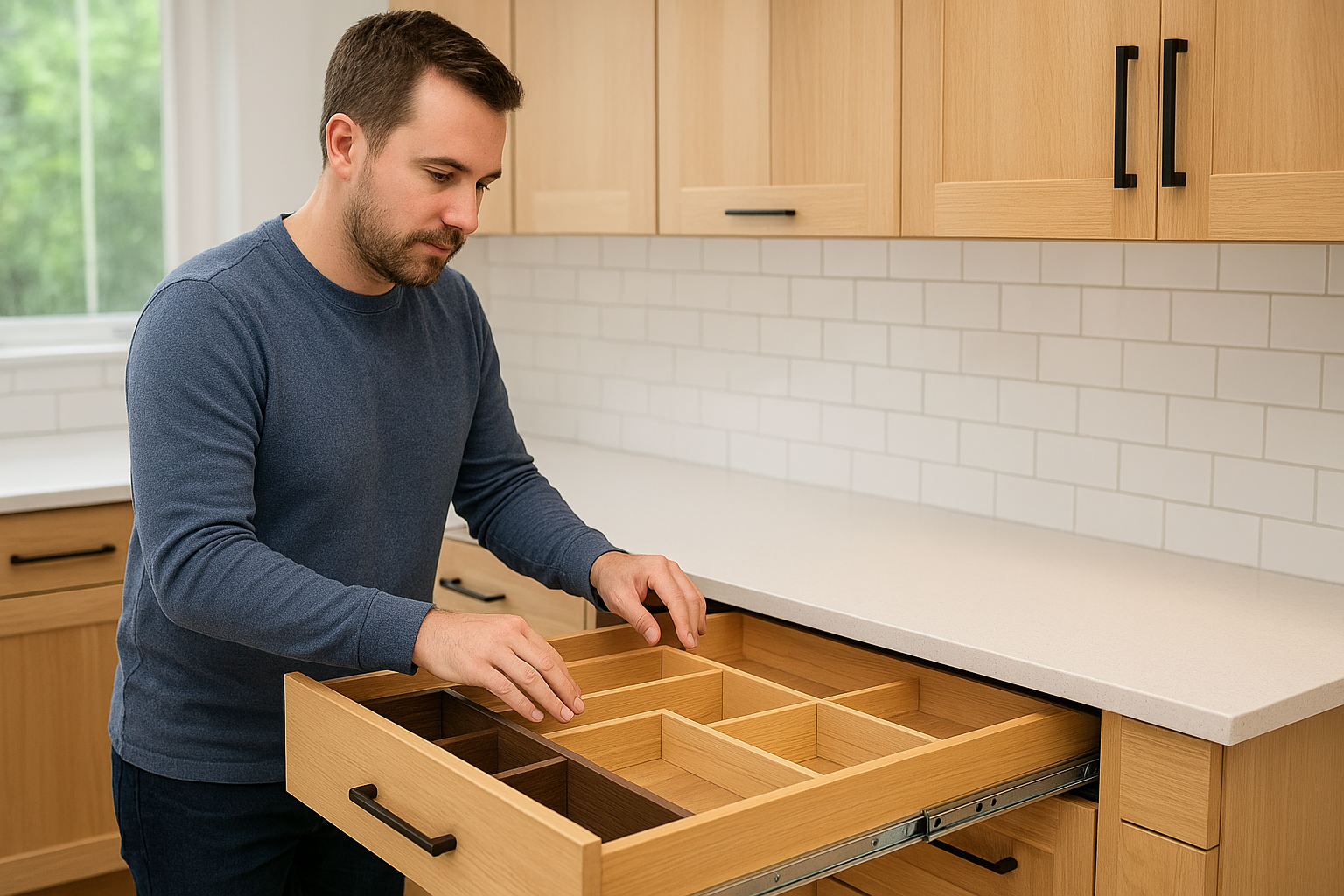
Request examples of common storage solutions
Pull-out shelves, drawer organizers, and custom inserts reveal how well a shop solves real storage problems. Ask to see photos or physical examples of solutions they have built for kitchens with layouts similar to yours.
Confirm how they handle changes and surprises
Ask directly what happens when a measurement is off or materials arrive damaged. You want a shop with a clear change-order process that does not leave you absorbing unexpected costs without prior written agreement.
Evaluate communication and turnaround speed
Response time and update frequency tell you a lot about how a shop operates. Find out how they communicate project progress and what their typical turnaround is on client questions. Slow replies during the sales process usually signal the same delays once your project is underway.
5. Inspect materials, construction, and finishes
Once you have your shortlist of custom kitchen cabinet makers near me, look closely at how they actually build. Material choices and construction details determine whether your cabinets hold up for decades or start showing wear within a few years.
Compare plywood vs particleboard boxes
Plywood box construction resists moisture and holds screws far better than particleboard over time. Ask your cabinet maker what material they use for the cabinet box carcass, and request a sample if possible.
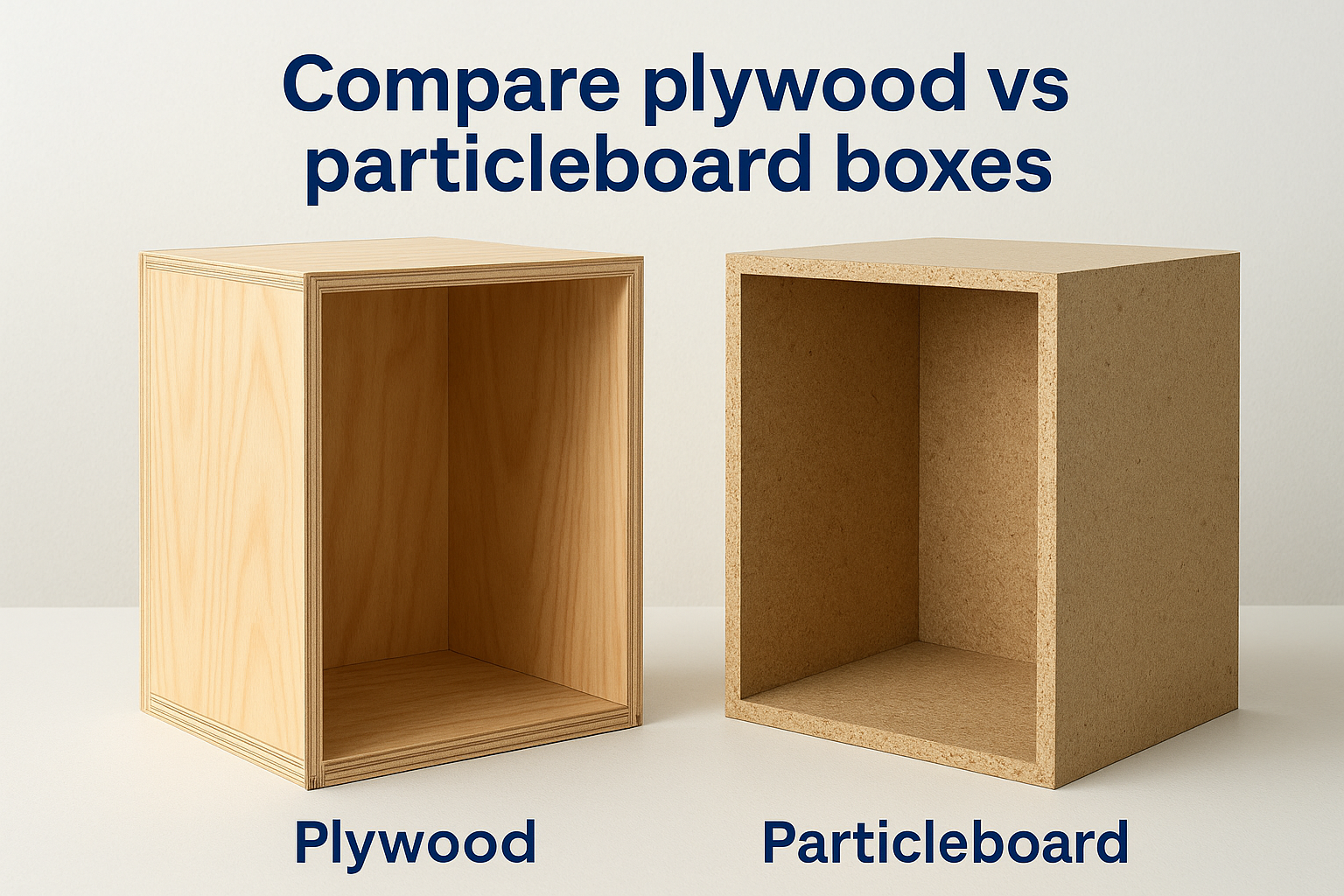
Plywood costs more upfront, but it lasts significantly longer in a kitchen environment where humidity and spills are constant.
Check joinery, drawer slides, and hinge quality
Dovetail or mortise-and-tenon joinery signals hand-built quality, while stapled corners point to production shortcuts. Ask specifically about drawer slide brand and weight rating, and confirm that all hinges are soft-close and fully adjustable.
Look for slides rated for at least 75 to 100 pounds per drawer. Undermount slides stay hidden and outlast side-mount options in heavy daily use.
Understand paint, stain, and clear-coat durability
Paint adhesion and finish quality vary widely between shops. Ask how many coats they apply, whether they use a dedicated primer and topcoat system, and how the finish performs against moisture and common kitchen cleaning products.
Plan for easy cleaning and long-term maintenance
Full-overlay door styles reduce exposed frame surfaces where grease and dust collect. Ask your cabinet maker which finish options wipe clean easily with standard household products, so you are not stuck managing a high-maintenance surface every week.
6. Lock down drawings, pricing, and the schedule
Before any custom kitchen cabinet makers near me starts cutting wood, you need written documentation covering the full scope of work. Verbal agreements create confusion and disputes once the project is underway, and a clear paper trail protects both parties if anything unexpected comes up.
Require itemized quotes with allowances spelled out
Ask for a line-by-line quote that lists every cabinet, hardware component, and finish separately. Allowances for items like handles or countertops should show the exact dollar amount budgeted, so you know immediately if your selections push costs over that figure.
Confirm what the price includes and excludes
Read the quote carefully and flag anything that is not explicitly listed. Common exclusions include demolition of existing cabinets, countertop installation, and touch-up painting after install. Getting these items confirmed in writing before signing prevents surprise invoices at the end of the job.
A clear scope document tells you exactly what you are buying, not just what you hope you are buying.
Agree on payment milestones tied to progress
Never pay the full project cost upfront. Structure payments around defined milestones, such as deposit at signing, a payment at fabrication start, and the final balance upon completed installation. This protects you if the project stalls or does not meet agreed standards.
Get lead times, install dates, and change-order rules
Ask for written lead times and a confirmed installation window before work begins. Confirm in writing how change orders are priced and approved, so any mid-project adjustments do not create billing disagreements later.
Next Steps
You now have a clear framework for evaluating any custom kitchen cabinet makers near me before committing your budget and your home to the process. The six tips above cover every stage, from choosing the right cabinet type to locking down your contract terms, so nothing catches you off guard once the project starts.
Suman Custom Carpentry builds every kitchen cabinet by hand at their Hyannis shop, backs the work with a lifetime warranty, and manages the full project from design through final installation. If you are ready to start planning your custom kitchen on Cape Cod, the next step is a direct conversation about your space, your goals, and your timeline.
Contact the team at Suman Custom Carpentry to schedule your consultation. Bring your measurements, your ideas, and your questions, and leave with a clear plan for your kitchen.