
You keep scrolling past kitchens with open, uncluttered shelving and wonder why yours still feels closed in. Good floating shelves ideas for kitchen spaces solve two problems at once: they free up wall space for display and storage without the bulk of upper cabinets, and they give a kitchen a lighter, more custom feel. But not every shelf idea works for every layout, and the wrong material or spacing can leave them looking like an afterthought.
This list walks through eleven ways to use floating shelves that actually hold up in daily use, from wood species and finish choices to spacing, lighting, and what to display so the shelves look intentional rather than cluttered. Each idea considers coastal humidity and salt air, since that changes what materials and finishes make sense here on Cape Cod.
We build custom cabinetry and millwork out of our Hyannis shop, so these ideas come from what we’ve actually installed in local kitchens, not stock photos. Whether you want a single statement shelf over the stove or a full run replacing your upper cabinets, you’ll find a direction that fits your space and your storage needs.
1. Custom-built floating shelves
Custom-built floating shelves are made to your exact wall dimensions, wood species, and bracket system rather than cut down from a stock plank. That means no visible seams where a standard 36-inch shelf falls short of your run, and no guessing on depth if you need 10 inches for plates versus 6 for spice jars. We design these in our Hyannis shop to match cabinetry you already have or build them as a standalone feature, so the grain, stain, and thickness all read as one cohesive piece rather than a bolted-on add-on.
Design overview
A custom shelf run typically spans one full wall, a run above a stove hood, or the space where an upper cabinet used to sit. Hidden steel bracket systems carry the weight while keeping the underside clean, which is what separates a custom install from a store-bought floating shelf kit. You choose the depth, thickness (we usually recommend 1.5 to 2 inches for a substantial look), and whether ends are square or rounded.
Best kitchen styles
This approach fits almost any style because you’re not limited to a pre-made size or finish. It works especially well in transitional and modern coastal kitchens where homeowners want shelving that matches existing cabinet doors or trim exactly.
Materials & finishes
We build most custom shelves from solid maple, white oak, or walnut, finished to match your cabinetry. For Cape Cod homes, we recommend a marine-grade polyurethane topcoat to handle humidity swings near the water.
Custom shelves earn their price by disappearing into the room instead of looking like an afterthought.
Styling & storage tips
Leave six to eight inches of breathing room between shelves and group items in odd numbers of three for a natural, unforced look.
2. Rustic wood floating shelves
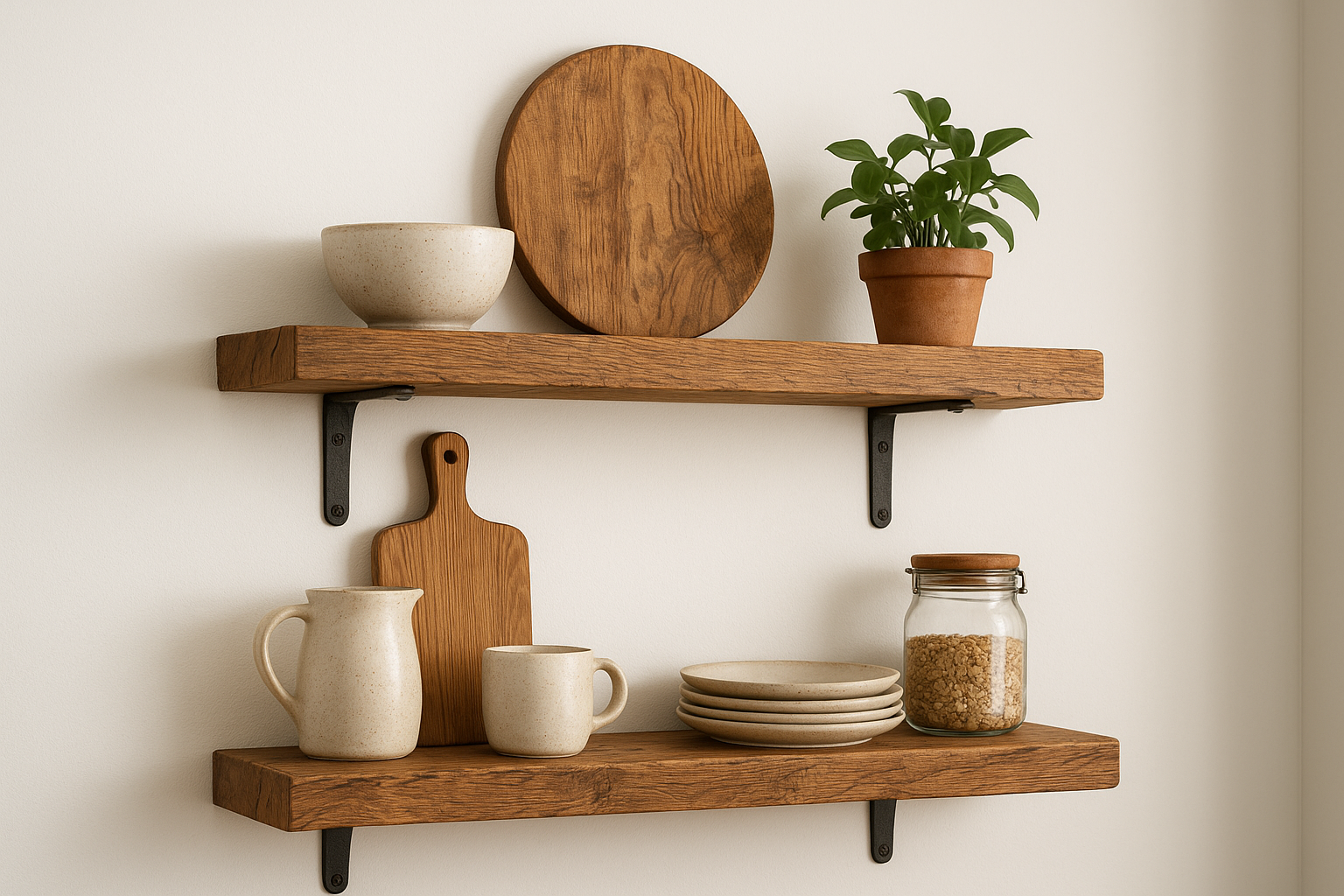
Rustic wood floating shelves lean into visible grain, knots, and rough-sawn edges instead of hiding them under a glossy finish. This look works when you want shelving that feels like it’s been part of the house for decades, not something installed last month. Reclaimed barn wood and live-edge slabs are the two most requested versions we build, and both age well in a working kitchen.
Design overview
Expect thicker stock here, usually 2 inches or more, with edges left natural or lightly rounded rather than squared off. The bracket often shows on purpose, forged iron or blackened steel, since hiding it would fight the whole aesthetic.
Best kitchen styles
This fits farmhouse, cottage, and New England shingle-style kitchens especially well. Cape Cod homes with exposed beams or shiplap walls take to rustic shelving almost automatically.
Materials & finishes
We favor reclaimed oak, pine, or barn wood sealed with a matte oil finish that keeps the texture readable.
Rustic shelving works because it looks lived-in from the day it’s installed.
Styling & storage tips
Mix in stoneware, wood cutting boards, and a few plants. Avoid anything too polished or it clashes with the texture.
3. Minimalist white floating shelves
Minimalist white floating shelves strip the look down to a clean line on the wall, no visible grain, no heavy bracket, just a crisp painted edge holding your favorite pieces. This idea suits kitchens that already lean bright and simple, where the goal is more visual breathing room, not more texture. Painted MDF or poplar is what we reach for here since both take a smooth, chip-resistant finish better than most hardwoods.
Design overview
Shelves run thin, usually one to 1.5 inches thick, with square edges and a flush wall mount that hides any hardware. The whole point is a floating line, not a chunky slab.
Best kitchen styles
This fits Scandinavian, coastal white, and modern minimalist kitchens almost perfectly. It also works well in smaller Cape Cod kitchens where you want the walls to feel open rather than boxed in.
Materials & finishes
We finish these in a durable satin or semi-gloss white paint, which resists fingerprints and wipes clean easily near cooking areas.
White shelves work because they recede, letting your dishware and glass become the visual focus.
Styling & storage tips
Keep displays sparse: a few white plates, clear glassware, and one plant per shelf keeps the minimalist effect intact.
4. Industrial metal floating shelves
Industrial metal floating shelves swap wood for blackened steel or raw iron, giving a kitchen a warehouse-loft edge that plenty of Cape Cod homeowners now want alongside their coastal architecture. This idea suits anyone tired of wood tones everywhere and looking for contrast against white subway tile or butcher block counters. Welded steel brackets double as the shelf surface itself in some builds, so there’s no separate bracket-and-plank assembly to worry about.
Design overview
These shelves usually run thinner than wood, often under an inch, since steel holds weight without needing bulk. Edges stay sharp and square, and the whole piece reads as one continuous metal form rather than a shelf sitting on a bracket.
Best kitchen styles
Industrial metal fits loft-style, modern farmhouse, and contemporary kitchens best. It also works in Cape Cod kitchens that pair exposed brick or concrete counters with black-framed windows.
Materials & finishes
We spec cold-rolled steel with a matte powder coat, which resists the rust that raw iron develops fast near salt air.
Metal shelving earns its place when the rest of the kitchen already leans industrial, not as a lone accent.
Styling & storage tips
Stick to dark ceramics, cast iron, and a few glass jars so the metal stays the visual anchor.
5. Glass floating shelves for display
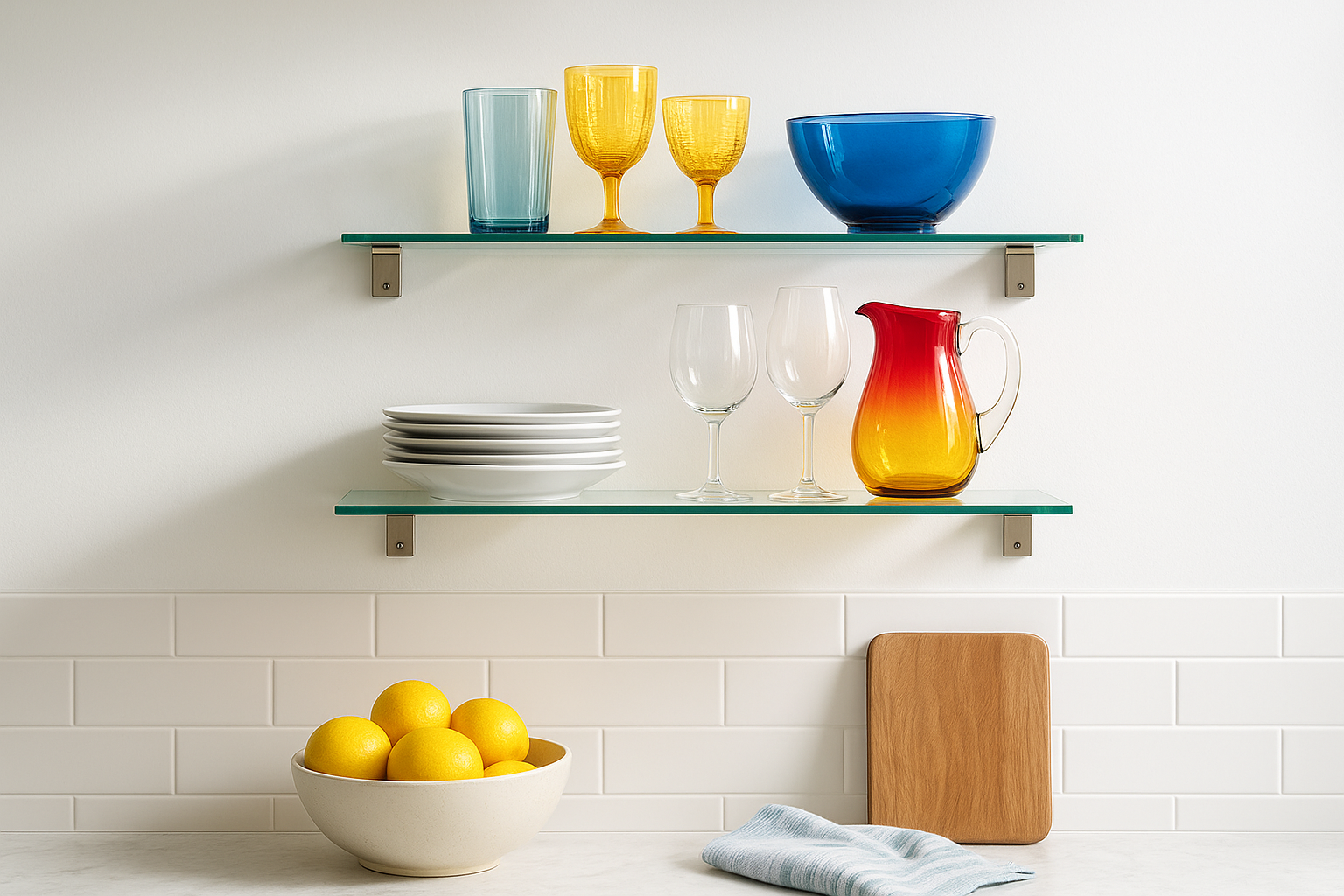
Glass floating shelves swap wood or metal for tempered glass panels, giving your kitchen a shelf that almost disappears against the wall. This idea suits anyone who wants to show off colorful glassware, stemware, or a curated dish collection without the shelf itself competing for attention. Tempered safety glass is the only option we install in a kitchen, since standard glass can crack from heat and daily bumps.
Design overview
Panels typically run half an inch to three-quarters of an inch thick, mounted on discreet metal clips or a routed bracket that keeps the glass looking like it’s floating on air. Edges get polished smooth so there’s no sharp lip to catch a towel or sleeve.
Best kitchen styles
Glass shelving fits modern, contemporary, and light-filled coastal kitchens best, especially where natural light already does a lot of the work.
Materials & finishes
We use tempered glass in clear or lightly frosted finishes, paired with brushed nickel or matte black clips depending on your hardware.
Glass shelves work only when what’s on them is worth seeing.
Styling & storage tips
Light from below with a small LED strip and keep pieces spaced apart so each one reads as intentional.
Finding the right shelf style for your kitchen
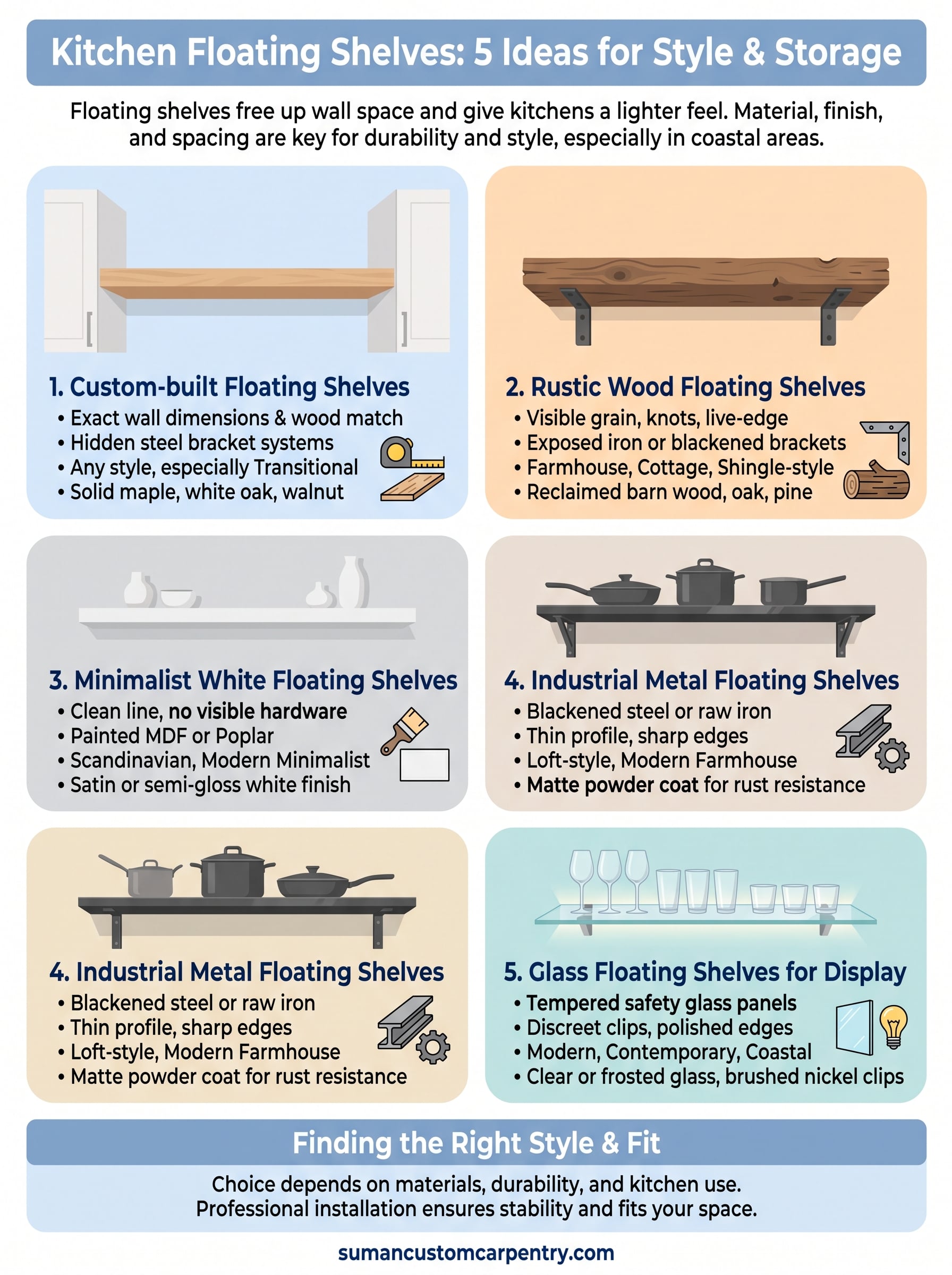
The right choice comes down to how you cook, what you own, and which materials hold up in your kitchen year after year. Custom-built shelves give you exact fit and finish control, rustic wood brings warmth, white minimalist keeps things airy, metal adds edge, and glass lets your dishware shine. None of these ideas work if the wood warps in six months or the bracket sags under a stack of plates, which is why material choice and installation matter as much as the look you’re after.
If you’re picturing one of these styles in your own kitchen but aren’t sure which wood, finish, or bracket system will actually hold up on Cape Cod, that’s exactly what we handle every day. Reach out to Suman Custom Carpentry and we’ll help you design shelving built for your space, not a showroom.