
Walk into most furniture stores and you’ll find the same particleboard shelves in the same three sizes. If your walls, your books, or your closet don’t fit that mold, you’re stuck cutting corners or hiring someone to build what you actually need. That’s where custom shelving wood comes in, and it’s worth understanding before you spend a dollar on it.
At its core, custom wooden shelving means shelves built to your exact measurements, in a wood species and finish you choose, rather than pulled off a warehouse shelf and trimmed to fit. That distinction matters for anything from a single floating shelf to a full custom wall shelving unit spanning an entire room. You get the depth, thickness, and hardware that match your space and your load, not someone else’s average customer.
In this article, we’ll walk through what custom shelving actually involves, from wood choices and joinery to pricing and timelines, so you know what to expect before you order a custom wall shelving units project for your own home.
Why choose custom shelving wood over pre-made shelves
Pre-made shelving is built for an average wall in an average room, and most walls on Cape Cod aren’t average. Older capes have uneven studs, low ceilings, and odd nooks around chimneys and dormers. Custom shelving wood solves that by starting with your actual measurements instead of forcing your space to match a factory spec. If a gap is 34.5 inches wide with a slight taper, a custom shop cuts to that number, not the nearest stock size of 30 or 36 inches.
Built for your exact space
A carpenter measures your wall, your ceiling height, and your load requirements before cutting a single board. That means no shims, no gaps at the ends, and no wasted inches. Custom wall shelving units can also step around obstacles like radiators, outlets, or a window trim that a boxed unit would simply ignore.
Materials that outlast particleboard
Most pre-made shelves use particleboard or MDF wrapped in veneer, which sags under weight and swells if it gets damp, a real concern in coastal Massachusetts homes. Solid wood shelving resists warping better and can be refinished decades later instead of replaced. Here’s how the two options stack up:
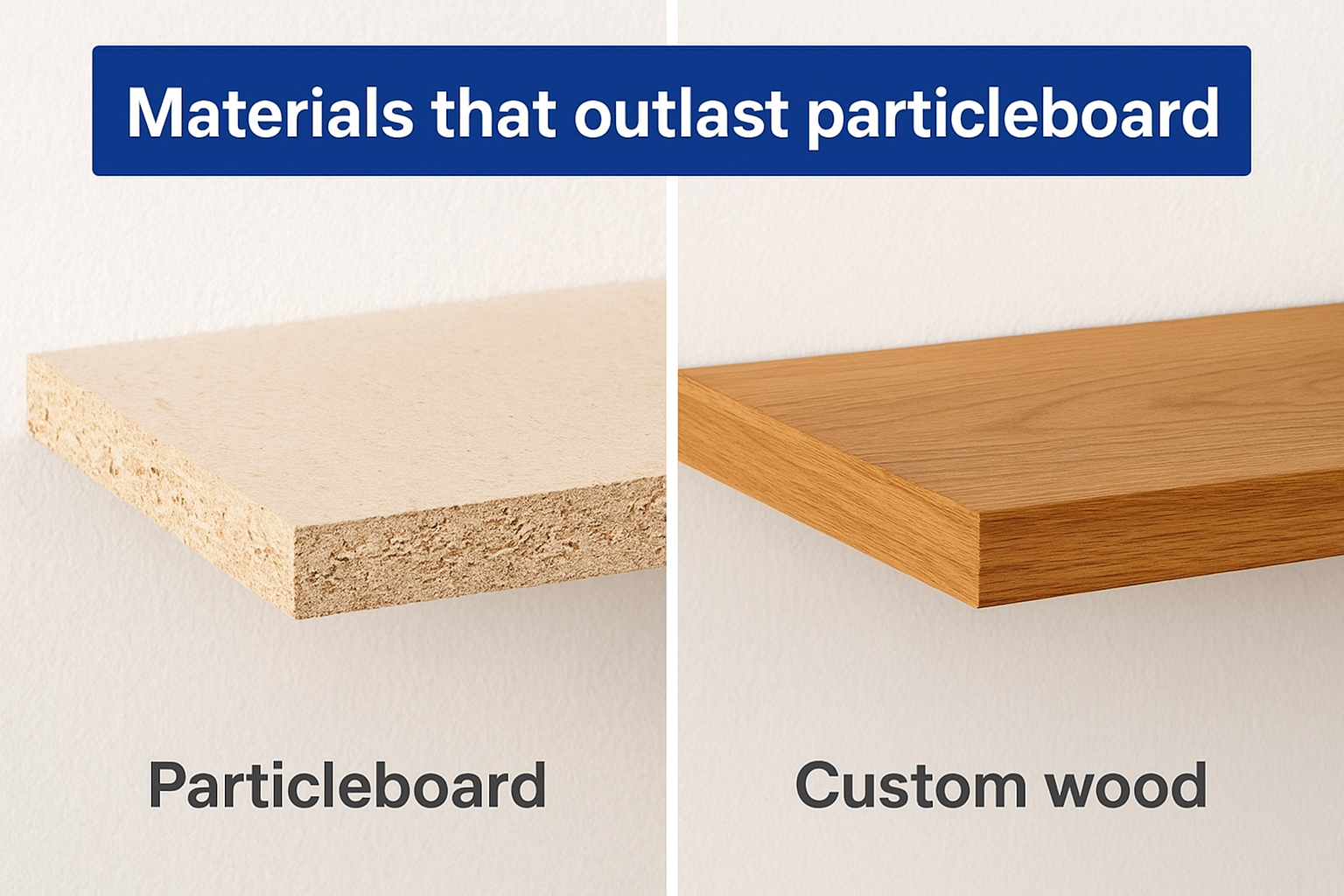
| Feature | Pre-made shelves | Custom wood shelving |
|---|---|---|
| Fit to wall | Standard sizes only | Exact measurements |
| Material | Particleboard/MDF | Solid hardwood or plywood |
| Load capacity | Limited, sags over time | Built for your specific load |
| Lifespan | 5-10 years | Decades, with lifetime warranty options |
| Moisture resistance | Poor | Strong with proper species and finish |
Custom shelving fits the wall you actually have, not the wall a factory assumed you’d have.
Solves problems pre-made can’t
Nothing in a big box store accounts for a heavy record collection, a wall of cast iron cookbooks, or a closet system that needs to double as a linen cabinet. Custom builders size the shelf thickness and support spacing to the actual weight you’re putting on it, so a shelf holding vinyl records gets different bracing than one holding paperbacks. That kind of load-specific engineering is the real reason homeowners upgrade from box-store units to a built-to-order piece that’s still standing straight in twenty years.
How custom wood shelving is designed and built
Building a custom wall shelving unit starts long before anyone touches a saw. The process moves through a handful of predictable stages, and knowing them helps you spot a shop that’s cutting corners versus one that’s doing the work right.
The design and measurement phase
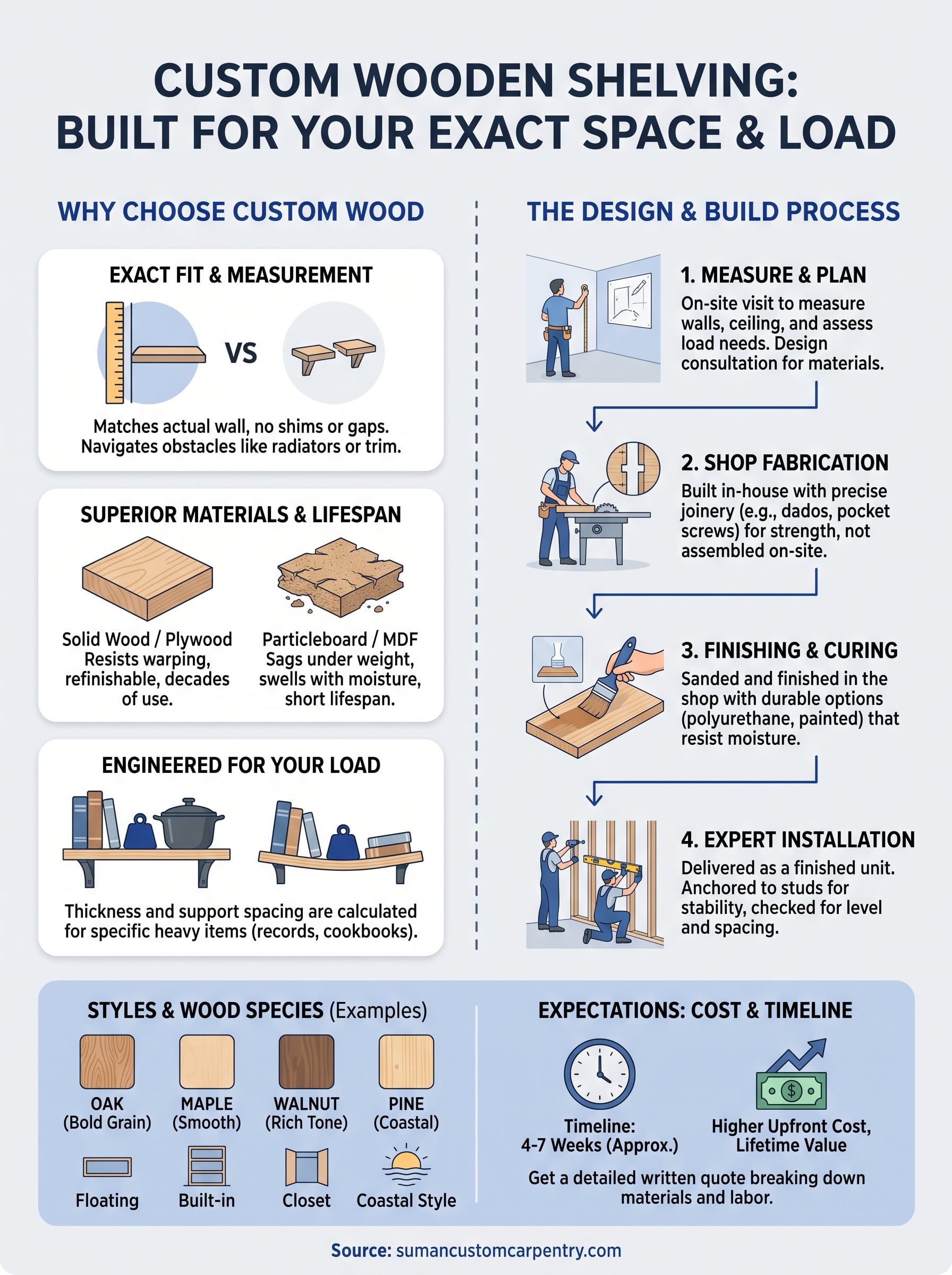
A carpenter visits your space, measures walls, ceiling height, and any obstacles, then sketches a layout that accounts for your actual load. Good shops walk through wood species, finish options, and hardware with you at this stage, not after the boards are cut. Here’s the typical sequence:
- On-site measurement of the wall, floor to ceiling, including any taper or bow
- Design consultation covering wood species, shelf depth, and finish
- Shop drawings showing dimensions, joinery, and mounting points
- Client sign-off before any material gets cut
A shelf built without a site visit is a guess, not a custom piece.
From the shop to your wall
Once the design is approved, the build happens in-house on a table saw and planer, with joinery like dados or pocket screws holding shelves to their supports. Custom wooden shelving built this way gets sanded and finished in the shop, then delivered and installed as a finished unit, not assembled piece by piece in your living room. Installers anchor to studs, not just drywall, so a loaded bookshelf isn’t relying on a few screws in plaster. That final fit-check, leveling each shelf and confirming spacing against your actual furniture and boxes, is what separates a built-in from a shelf that just happens to be in the room.
Styles and wood species for wall shelving units
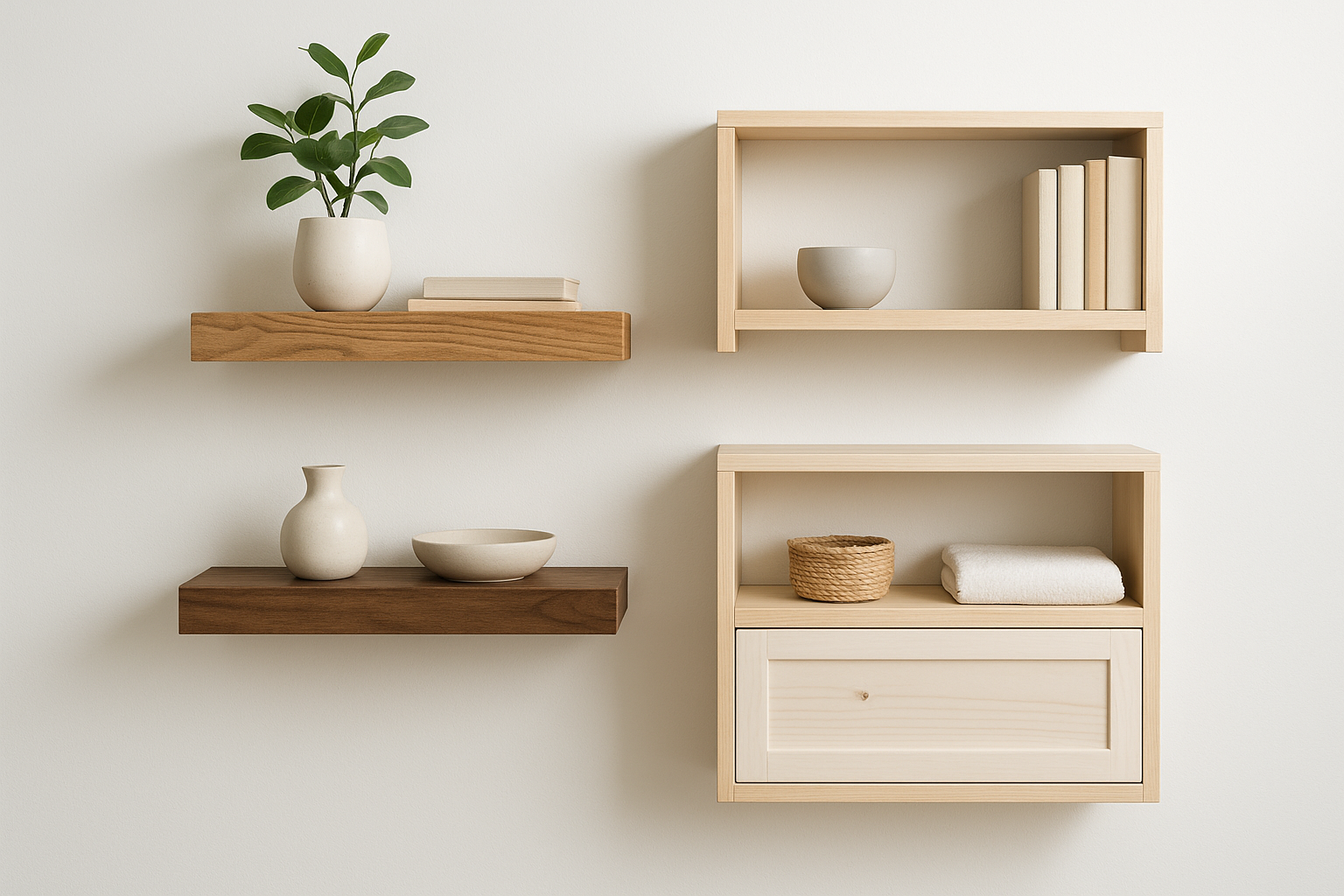
The wood species you pick shapes both the look and the durability of your shelves. Oak shows a bold grain and takes stain well, making it a favorite for custom wall shelving units in living rooms and offices. Maple runs smoother and lighter, which suits a cleaner, modern look in kitchens or bathrooms. Walnut brings a rich, dark tone that works as a standalone feature wall without any extra trim. Pine costs less and fits a casual or coastal look, though it dents easier than hardwoods.
Matching wood to your room
Beyond species, the finish and joinery style change how a shelf reads in a room. A few common pairings:
- Floating shelves: hidden brackets, usually oak or walnut, for a minimal look
- Built-in bookcases: face-frame construction with maple or painted poplar
- Closet shelving: birch plywood, painted or left natural, for budget-friendly durability
- Coastal/Cape Cod style: whitewashed pine or painted shaker-style fronts
The right species isn’t the most expensive one, it’s the one that matches how the shelf gets used.
Finish options that hold up
Finish matters as much as species, especially near Cape Cod’s humidity. A marine-grade polyurethane resists moisture better than a basic lacquer, and matte finishes hide dust and fingerprints longer than high gloss. Painted finishes, typically backed by a multi-year warranty on the paint itself, give you more color flexibility without sacrificing the wood’s structural strength underneath. Talk through these choices with your carpenter before committing, since swapping finishes after installation means refinishing the whole piece rather than a quick touch-up.
What to expect for cost, timeline, and installation
Pricing for custom shelving wood varies more than most homeowners expect, since a single floating shelf and a wall of built-ins involve completely different labor and material costs. Simple floating shelves might run a few hundred dollars each, while a full custom wall shelving unit spanning a living room wall can reach into the thousands once you factor in wood species, finish, and installation. Get a written quote that breaks out materials, labor, and finish separately, so you can see where the money goes before you commit.
Typical timeline from order to installation
Most custom shelving projects follow a similar rhythm, though larger built-ins take longer than a single shelf:
- Design consultation and measurement: 1 to 2 weeks
- Shop drawings and approval: 3 to 5 days
- Fabrication in the shop: 2 to 4 weeks depending on complexity
- Finishing and curing: 3 to 7 days
- Installation: 1 to 2 days on-site
A rushed timeline usually means rushed joinery, and joinery is what keeps a loaded shelf on the wall.
What installation day actually looks like
Installers arrive with the finished pieces already built and cured, not raw lumber to assemble on-site. They locate studs, level each shelf, and anchor hardware rated for your actual load, whether that’s books or cast iron pans. Expect a walkthrough at the end, where the carpenter checks spacing against your furniture and confirms everything sits flush before calling the job done.
Finding the right fit for your walls
Getting shelving right comes down to matching material, joinery, and design to the wall you actually have, not the one a catalog assumes you have. Custom shelving wood costs more upfront than a box-store unit, but it earns that difference back in decades of use, load capacity that won’t sag, and a fit that makes the whole room look intentional rather than improvised. Homeowners who go this route rarely regret skipping the particleboard aisle.
If you’re weighing a single floating shelf against a full built-in system, start with a real conversation about your walls, your load, and your style before you commit to either. Suman Custom Carpentry has been hand-building custom wall shelving units in Cape Cod homes since 2018, backed by a lifetime warranty on cabinet boxes and doors. Reach out to Suman Custom Carpentry to talk through your space and get a quote built around your actual walls.