
Custom Walnut Kitchen Cabinets: Costs, Styles & What to Expect
Walnut keeps coming up in kitchen renovation conversations for good reason. If you’re researching custom walnut kitchen cabinets, you’ve probably noticed the price range online is all over the map, and the photos rarely tell you what you’re actually paying for. That gap between inspiration and reality is where most homeowners get stuck.
This article breaks down what walnut cabinets actually cost, why the wood behaves differently than oak or maple, and which door styles and finishes show off its grain best. You’ll get real numbers, not vague ranges pulled from a national average, plus a clear picture of what a realistic timeline looks like once you move from planning to installation.
We build these cabinets ourselves in our Hyannis shop, so what follows comes from years of sourcing walnut, milling it, and installing it in Cape Cod homes, not secondhand research. By the end, you’ll know what questions to ask any carpenter you’re considering and whether custom cabinetry or a semi-custom line makes more sense for your kitchen and your budget.**
Why custom walnut cabinets are a smart kitchen investment
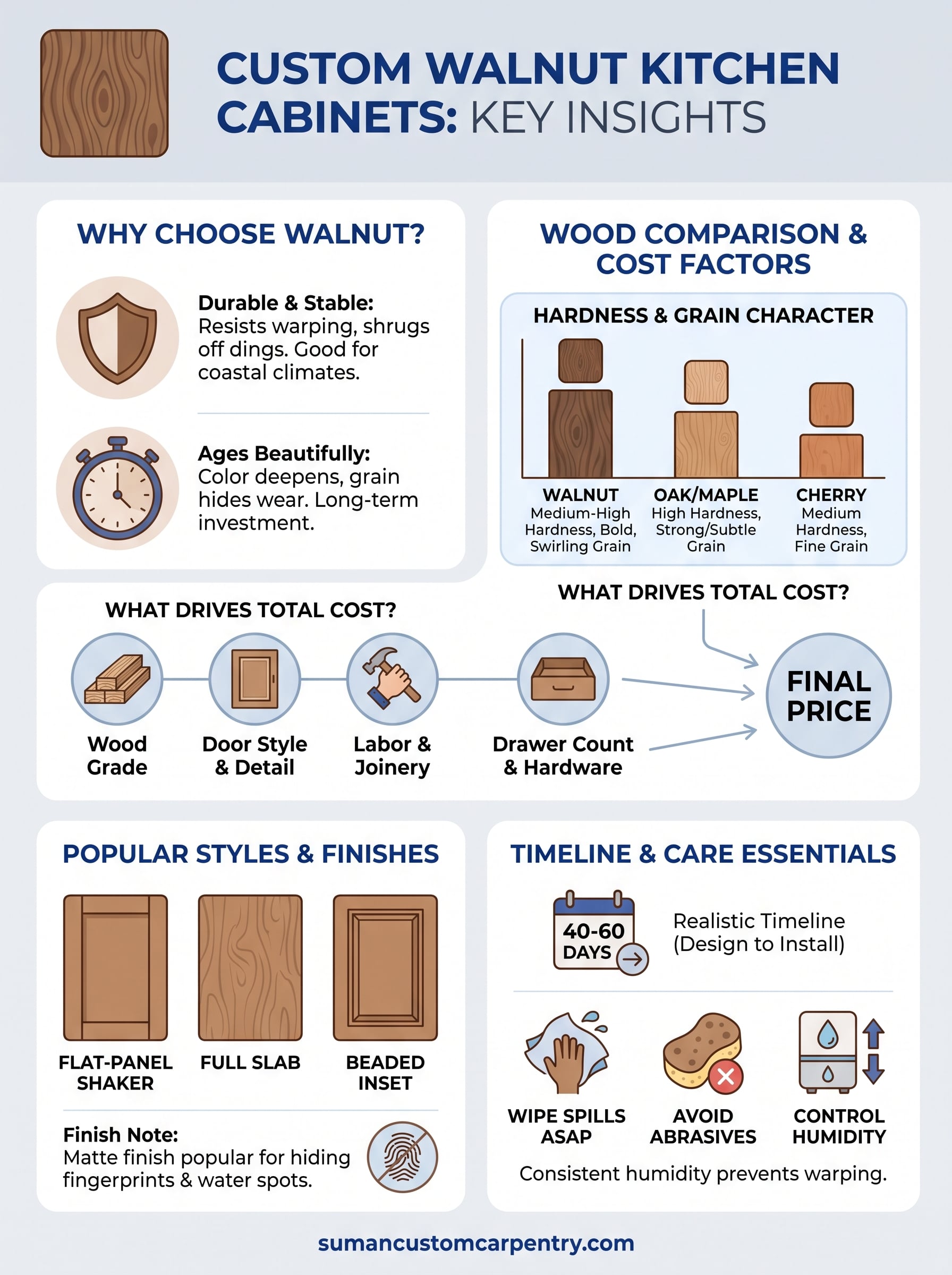
Walnut isn’t just a trend that showed up on design blogs. It’s a hardwood with a track record, and when you invest in custom walnut kitchen cabinets, you’re buying a material that ages better than almost anything else on the market. The color deepens over time instead of fading, the grain hides everyday wear, and the wood itself resists warping in a way that matters a lot in a coastal climate like ours. That combination is why we see so many Cape Cod homeowners choose walnut for kitchens they plan to keep for decades, not just until the next remodel trend.
Walnut’s density and grain work in your favor
Density is the practical reason walnut holds up so well in a working kitchen. It’s harder than pine and cherry, so it shrugs off the dings from pots, dish racks, and daily bumps that show up fast on softer woods. The grain also does real work for you visually. Walnut’s swirling, chocolate-brown patterns naturally camouflage small scratches and fingerprints, which means your cabinets look clean and rich longer between deep cleanings.
Walnut is one of the few hardwoods that looks better the longer you own it.
How walnut compares to other cabinet woods
Homeowners often ask us how walnut stacks up against the oak or maple cabinets they grew up with. Here’s a straightforward comparison based on what we see in our shop:
| Wood | Relative hardness | Grain character | Typical cost vs. walnut |
|---|---|---|---|
| Walnut | Medium-high | Bold, swirling, dark brown | Baseline (premium) |
| Oak | High | Strong, visible grain lines | 15-25% lower |
| Maple | High | Subtle, smooth, light color | 20-30% lower |
| Cherry | Medium | Fine grain, reddens with age | 10-15% lower |
Maple and oak are tougher on paper, but neither develops the warmth and depth that walnut does as it ages. That’s the tradeoff you’re weighing: slightly more upfront cost for a finish that improves with time instead of just holding steady.
The long-term payoff for your home
Buyers notice custom cabinetry built from real hardwood the moment they walk into a kitchen, and walnut in particular reads as a deliberate, high-end choice rather than a builder-grade upgrade. On Cape Cod, where humidity swings and salt air punish cheaper materials, that durability translates into fewer repairs and a kitchen that still looks intentional after fifteen or twenty years. Investing here isn’t just about aesthetics today, it’s about avoiding a second renovation down the road.
How to plan your custom walnut cabinet project
Planning starts long before anyone measures your kitchen. Good custom walnut cabinets begin with an honest look at how you actually cook, store, and move through the space, not just a Pinterest board of finishes you like. We spend the first meeting asking about daily habits, not door styles, because that’s what determines cabinet depth, drawer configuration, and where the walnut should be the star versus a supporting player.
Nail down layout before wood selection
Layout decisions come first for a reason. Once cabinet boxes, islands, and appliance placement are locked in, you can start choosing which walnut grade and cut best suit each piece. Rift-cut walnut, for example, gives you a tighter, more uniform grain that works well on large flat-panel doors, while live-edge or crotch-grain slabs make a striking island but would look busy across an entire wall of uppers.
Get the layout right first; the wood choices only matter once the bones of the kitchen are settled.
What to bring to your first design consultation
A productive first meeting moves faster when you show up prepared. Consider bringing:
- Rough kitchen dimensions or a builder’s floor plan
- Photos of finishes or hardware you’re drawn to
- A realistic budget range, not just a wish list
- Notes on storage frustrations in your current kitchen
Timeline realities for custom work
Homeowners are often surprised that a realistic timeline for custom walnut kitchen cabinets runs 40 to 60 days from signed design to final installation. That window covers sourcing quality walnut, milling and building each piece in-house, finishing, and scheduling the install crew. Rushing this process almost always shows up later as warped panels or uneven finish, so a shop that pushes for a faster turnaround on solid hardwood is worth questioning.
What custom walnut kitchen cabinets cost
Pricing is the question everyone actually wants answered, and walnut sits at the top end of the hardwood spectrum for good reason. Expect custom walnut kitchen cabinets to run higher than oak or maple simply because the raw material costs more and yields less usable lumber per log. Most Cape Cod homeowners we work with land somewhere between a mid-range remodel and a full custom build, depending on kitchen size and how much detail work goes into the doors.
Per-linear-foot pricing breakdown
Here’s what we typically quote, based on cabinet complexity rather than a flat national average:
| Cabinet type | Price per linear foot | Notes |
|---|---|---|
| Basic shaker-style walnut | $650-$850 | Flat panel, simple hardware |
| Custom with inset doors | $900-$1,200 | Tighter reveals, more labor |
| Full custom with detailing | $1,200-$1,600+ | Crown molding, custom pulls, specialty joinery |
What actually drives the total
Square footage matters, but it’s rarely the biggest factor. Grade of walnut, door style, drawer count, and hardware choices swing the final number more than most homeowners expect. A kitchen with a large island in book-matched walnut, for instance, adds real cost because that slab selection is scarce and requires careful milling to keep the grain aligned.
The wood itself is only part of the bill; labor and joinery decide the rest.
Budgeting realistically means asking your carpenter for a breakdown by category, not just a single number. Transparent shops will show you material cost, labor, and finishing separately so you can see where your money is actually going and where you have room to adjust without cutting corners on the custom cabinetry that matters most to daily use.
Popular styles and finishes for walnut cabinets
Style choice matters just as much as wood grade when you’re planning custom walnut kitchen cabinets, because the same wood can read as sleek and modern or warm and traditional depending on the door profile and sheen you pick. Walnut’s natural color range, from deep chocolate to lighter caramel streaks, means two kitchens with identical layouts can look completely different once finish decisions get made.
Door styles that suit walnut
Door profile determines how much of walnut’s grain actually shows. Flat-panel shaker doors keep the look clean and let the wood grain read as the main design statement, which is why they’re our most-requested option for full kitchens. Slab doors go further, showing continuous grain across an entire wall of uppers and lowers for a modern, furniture-like effect. Inset doors with beaded trim work well in more traditional Cape Cod homes, adding shadow lines without hiding the wood underneath. Popular walnut cabinet styles we build most often include:
- Flat-panel shaker
- Full slab modern
- Beaded inset traditional
- Shaker with a shallow raised center panel
Finish options and what they do to the grain
Finishing decisions change walnut’s character more than most homeowners expect going in. A clear or lightly tinted oil finish keeps the grain honest and lets the wood darken naturally with UV exposure over the years. A satin lacquer protects better against kitchen moisture while still showing grain depth. Matte finishes have become the most requested option lately because they hide fingerprints and water spots better than a glossy sheen.
The finish you choose decides whether your walnut cabinets look rustic, modern, or timeless, not just how they’re protected.
Together, door style and finish give you real control over the final look, so don’t rush past these choices just to get to installation faster.
Caring for your walnut cabinets over time
Owning custom walnut kitchen cabinets doesn’t mean babying them, but it does mean understanding what the wood actually needs to keep looking sharp for decades. Walnut is forgiving compared to painted finishes, yet Cape Cod’s salt air and humidity swings still call for a few consistent habits. Skip the harsh chemical sprays sold as “wood cleaners” at the grocery store; most contain silicone or ammonia that dulls the finish and strips natural oils over time.
Daily and weekly upkeep
Keeping walnut cabinets looking their best comes down to a short, repeatable routine rather than deep cleaning sessions:
- Wipe spills immediately with a soft, damp cloth
- Dry surfaces fully after wiping, especially near the sink
- Dust weekly with a microfiber cloth to prevent buildup in the grain
- Avoid abrasive sponges or scouring pads on doors and drawer fronts
- Check hinges and hardware every few months for looseness
Protecting against coastal humidity
Humidity does more damage to cabinetry than daily wear ever will, particularly here on the Cape where indoor moisture levels shift with the seasons. Running a dehumidifier during humid summer stretches keeps wood movement minimal and protects the joinery that holds doors and drawers square. Direct sunlight is the other quiet threat, since walnut darkens naturally over time but uneven exposure creates visible color patches across a wall of cabinets.
Consistent humidity, not heavy cleaning, is what actually keeps walnut cabinets from cracking or warping.
Refreshing the finish down the road
Eventually, even a well-maintained finish loses some sheen, particularly around handles and the sink area. A light re-oiling or a fresh coat of satin topcoat every several years restores depth without requiring a full refinish. Because we build and finish everything in-house, we can match your original sheen exactly when that day comes, so your custom cabinetry keeps its original character instead of looking patched together.
Bringing walnut into your Cape Cod kitchen
Walnut rewards homeowners who plan carefully and choose a shop that builds with real craftsmanship instead of cutting corners on grade or joinery. You now know what drives cost, which door styles show off the grain best, and what it takes to keep custom walnut kitchen cabinets looking sharp through decades of coastal humidity and daily use. None of that changes the fact that the biggest factor in how your kitchen turns out is who builds it.
Dieyson and the team hand-build every cabinet in our Hyannis shop, from initial design through final install, and back it with a lifetime guarantee on the boxes and doors. If you’re ready to talk layout, wood grade, or a realistic budget for your own kitchen, reach out to Suman Custom Carpentry and we’ll walk through it together.