
Every pantry has the same problem. Deep shelves swallow small jars, tall cans tip over, and the back corner turns into a black hole for expired spices. Wire shelving from a big box store bends under weight and never quite fits the space you actually have. Custom pantry shelving solves this because it’s built for your walls, your height, and the way you actually cook.
If you’re searching for ideas, you want options you can actually picture in your own kitchen, not stock photos of someone else’s perfect pantry. Below you’ll find twelve layouts that cover everything from narrow closet pantries to walk-in butler’s rooms, including pull-out drawers, angled corner shelves, and dedicated zones for appliances, baking supplies, and bulk storage.
We built this list from real installs we’ve done across Cape Cod homes, so these aren’t theoretical concepts. Whether you’re leaning toward a DIY weekend project or hiring a pro rather than building it yourself for a custom built pantry shelving system that lasts decades, you’ll walk away with a clear sense of what fits your space and your budget.
1. Custom-built pantry shelving from a local carpenter
This option tops the list because it solves every problem the other eleven can only partially fix. A carpenter measures your actual pantry, not a standard closet size, and builds shelving that uses every inch of wall, corner, and ceiling height you have. Custom pantry shelving built this way accounts for your ceiling slope, that awkward stud placement, or the door swing that eats three inches of usable depth. At Suman Custom Carpentry, we design and build these systems in our Hyannis shop, so the wood, the joinery, and the finish match the rest of your kitchen instead of looking like an add-on.
How it works
The process starts with a walkthrough of your kitchen or pantry closet, where we talk through how you actually cook and shop. Do you buy in bulk from a warehouse club? Do you need a spot for small appliances? That conversation shapes the layout before any wood gets cut. From there, we sketch a design, confirm shelf spacing and depth with you, and build the entire system in-house rather than ordering pre-made components. Installation typically happens as part of a full kitchen renovation timeline, though standalone pantry projects move faster since there’s no demo or plumbing involved.
A pantry built around how you actually shop and cook will outlast any off-the-shelf system by decades.
Most of our pantry builds use solid wood or high-grade plywood with a durable painted or stained finish, and every shelf is set at a height you specify rather than a fixed manufacturer increment. That last detail matters more than people expect. A shelf that’s even two inches too tall wastes space every single day for the life of the pantry.
Best for
This approach suits homeowners who’ve already tried retail shelving and hit its limits, whether that’s sagging under canned goods or simply not fitting an odd-shaped closet. It’s also the right call for anyone doing a kitchen renovation where the pantry is part of a larger design, since a carpenter can match cabinetry, trim, and hardware across the whole space. If you’re searching for custom pantry shelving near me because you want someone local who’ll stand behind the work, how to find custom shelving nearby matters, since this is the option that gives you a real point of contact, not a call center.
Cost range
Pricing depends heavily on pantry size, wood species, and whether the project includes doors, drawers, or lighting. Here’s a general breakdown based on projects we’ve completed across Cape Cod:
| Pantry Type | Typical Cost Range |
|---|---|
| Small reach-in closet pantry | $1,500 – $3,500 |
| Medium walk-in pantry | $3,500 – $7,000 |
| Large walk-in with cabinetry and drawers | $7,000 – $15,000+ |
These figures reflect fully custom, hand-built work with a lifetime warranty on the boxes and doors, which is part of what you’re paying for over a big box retailer’s flat-pack system. If you want a firmer number, our page on custom cabinetry built on Cape Cod walks through how we scope and quote a project before any wood is cut.
2. Adjustable wood shelving for maximum flexibility
Adjustable wood shelving solves a problem that fixed shelving never can: your storage needs change every year. The cereal boxes your kids eat through in third grade turn into bulk protein powder containers by high school, and a pantry that can’t adapt just gets crowded. Custom shelving for pantry spaces built with adjustable brackets or pin systems lets you reconfigure the whole layout in an afternoon, no tools beyond a tape measure and a level.
How it works
Builders install vertical standards or drilled shelf-pin strips along the side walls, then cut individual wood shelves that rest on movable clips or pins. You slide shelves up or down in roughly one-inch increments, so a shelf that held cereal boxes this year can drop three inches next year to fit stacked mason jars. Adjustable pantry shelving systems typically use custom wood shelving in solid stock or plywood with a hardwood edge band, which holds up better than particleboard when you’re repositioning shelves often.
A pantry that adjusts with your life will always beat one that was only right on installation day.
Best for
This style works well for growing families, anyone who buys groceries seasonally, or households that shop in bulk during certain months and lean lighter the rest of the year. It’s also smart for renters with longer leases or homeowners who aren’t sure yet how they’ll use the space long-term. If you’re comparing custom pantry shelving ideas and keep going back and forth on shelf heights, adjustable shelving removes the pressure of getting it perfect the first time.
Cost range
Expect to pay somewhat more than fixed shelving because of the hardware and extra labor for drilling pin holes or installing track systems.
| Pantry Size | Typical Cost Range |
|---|---|
| Small closet pantry | $1,200 – $2,800 |
| Medium pantry | $2,800 – $5,500 |
| Large walk-in pantry | $5,500 – $10,000 |
These numbers assume solid wood construction with quality adjustable hardware, not the plastic clip systems found in most retail kits.
3. Pull-out shelves for easy access
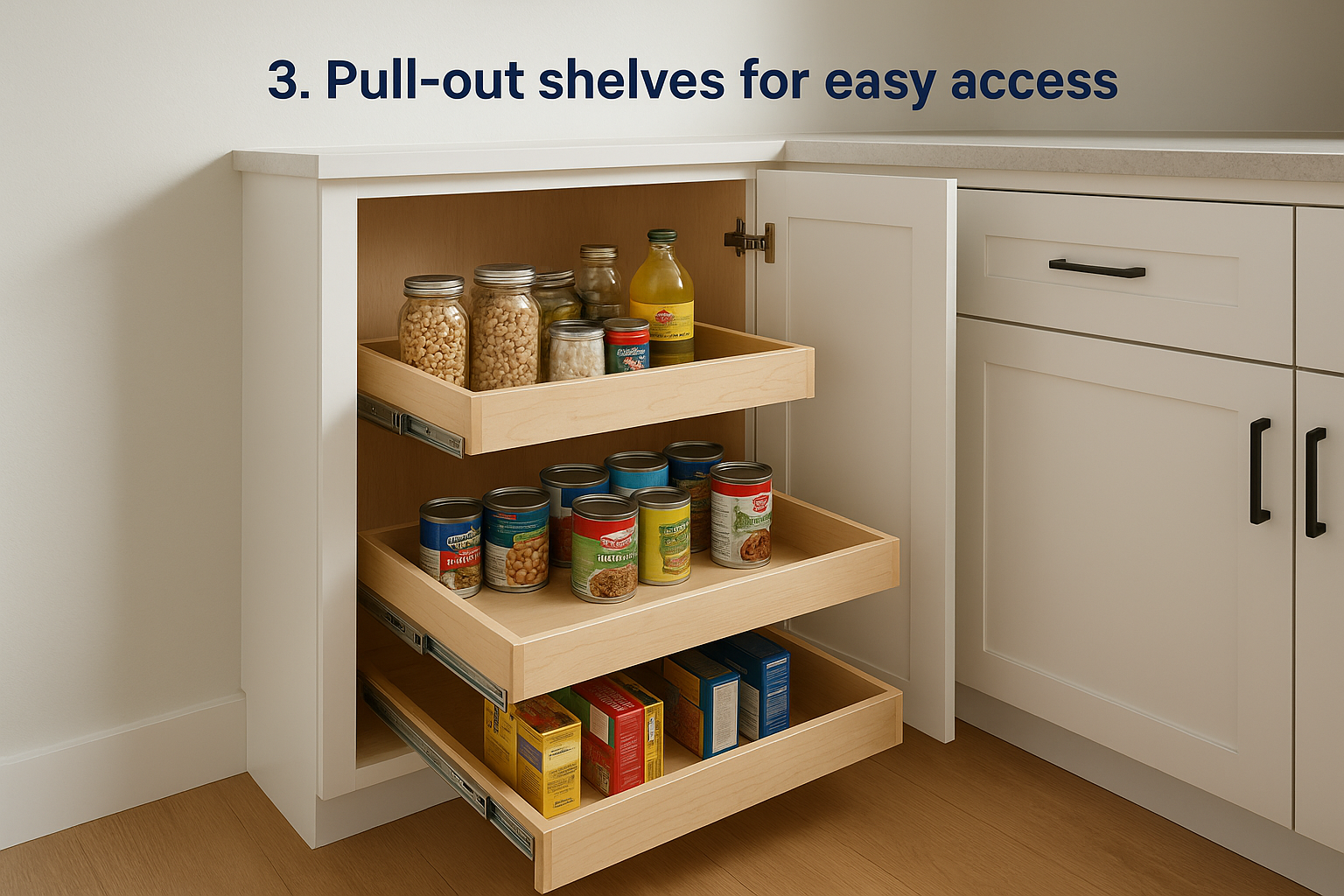
Deep pantries hide food. That gallon of vinegar or the box of pasta pushed to the back wall might as well not exist until you’re digging through everything in front of it with a flashlight. Pull-out shelves fix this by bringing the entire shelf to you instead of asking you to reach into a dark cabinet, one of the most useful built-in smart storage solutions we install. This is one of the most requested custom pantry shelving ideas we hear from clients who inherited a pantry with shelves 20 inches deep or more.
How it works
Each shelf sits on full-extension drawer slides rated for the weight of canned goods, jars, and small appliances, then glides out on a track mounted to the side walls or a cabinet frame. Unlike a fixed shelf, a pull-out shelf lets you see and reach every item at once, front to back, without moving anything else out of the way first. We typically build these with a solid wood base and a raised lip on three sides so jars don’t roll off when you pull the shelf toward you. Depth and spacing get customized to whatever’s stored there, tighter spacing near the top for cans, wider gaps lower down for bulky boxes or small appliances.
If you have to move three things to reach the fourth, your shelving isn’t doing its job.
Best for
Pull-out shelving suits deep reach-in pantries, corner cabinets, and any pantry taller than it is wide, where the back few inches of every shelf usually go to waste. It also works well for anyone with mobility concerns or back issues, since you’re never bending or reaching into a dark cabinet to find what you need. Households that stock a lot of canned goods or bottled items particularly benefit, since nothing gets lost behind something else.
Cost range
Pull-out mechanisms add cost per shelf compared to fixed or adjustable shelving because of the slide hardware and reinforced construction needed to support full extension under weight.
| Number of Pull-Out Shelves | Typical Cost Range |
|---|---|
| 2-3 shelves | $600 – $1,200 |
| 4-6 shelves | $1,200 – $2,500 |
| Full pantry conversion | $2,500 – $5,000+ |
These figures assume commercial-grade slides built to handle the weight of a fully loaded pantry shelf, not the lighter-duty hardware found in most drawer kits.
4. Wall-mounted shelving for small pantries
Some kitchens don’t have room for a closet pantry at all, just a blank wall in the kitchen or a narrow strip next to the fridge. Wall-mounted shelving turns that dead space into real storage without stealing floor area, which matters in older Cape Cod homes where kitchens often run smaller than newer construction. This is one of the most practical custom pantry shelving ideas for anyone renovating a galley kitchen or a cottage-style layout where every square foot counts.
How it works
Shelves attach directly to studs using concealed brackets or a French cleat system, so the wall itself becomes the pantry rather than a separate structure taking up floor space. Builders typically stagger shelf depths, shallower near eye level for spices and small jars, deeper lower down for bulk items and small appliances, which keeps the whole run from feeling like a bulky block on the wall. Because there’s no cabinet box or backing panel needed, wall-mounted pantry shelving costs less in materials than a full built-in, though the labor to locate studs and mount brackets securely still takes real skill.
A blank wall is still pantry space if you’re willing to build up instead of out.
Best for
This option fits small kitchens, condos, and older homes where a dedicated pantry closet was never part of the original floor plan, the same spots where built-ins that look custom in tight spaces pay off. It also works well as a secondary storage spot even in homes that already have a walk-in pantry, giving you overflow space near the coffee station or a baking supply zone closer to the mixer. Anyone renting or planning a future move should also consider this route, since wall-mounted systems are easier to remove and patch than a built-in structure.
Cost range
Material costs stay lower here since there’s no cabinet box, but pricing still depends on the number of shelves, wood species, and finish.
| Shelving Scope | Typical Cost Range |
|---|---|
| 3-4 shelf run (single wall section) | $400 – $900 |
| Full wall coverage, floor to ceiling | $900 – $2,200 |
| Multiple walls or L-shaped layout | $2,200 – $4,000 |
These figures assume solid wood shelving with a painted or stained finish to match existing cabinetry, not raw lumber from a home improvement store.
5. Corner shelving and lazy Susans
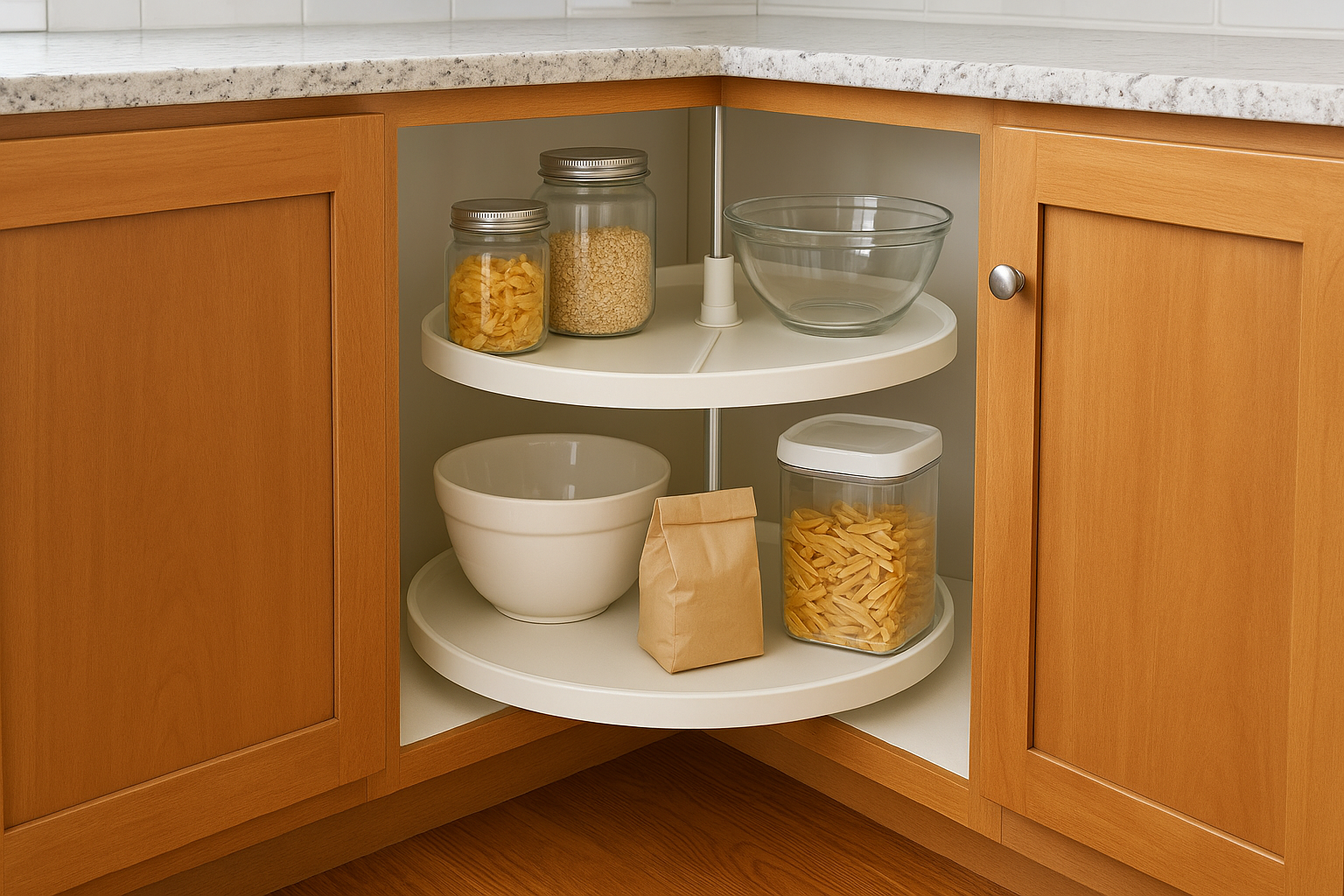
Corners waste more pantry space than any other spot in the room. A standard 90-degree corner cabinet loses roughly a third of its storage to dead space you can’t reach without pulling everything out first. Corner shelving built around a rotating lazy Susan turns that wasted triangle into usable, accessible storage, which is why it’s one of the more requested custom pantry shelving systems we build for L-shaped kitchens here on Cape Cod.
How it works
Generally, a lazy Susan uses a circular or pie-cut shelf mounted on a bearing that spins a full rotation, so you turn the shelf instead of reaching into the back of the corner. Builders fit these into a corner cabinet frame sized to your actual pantry dimensions, then choose between a full circle, a pie-cut with a missing wedge for door clearance, or a D-shaped shelf for tighter corners. Custom pantry shelving ideas for corners often stack two or three lazy Susan tiers, spacing them to fit everything from spice jars up top to bulky bags of flour on the bottom rotation.
A corner you can’t reach isn’t storage, it’s just wasted square footage with a door on it.
Best for
Homeowners with an L-shaped pantry or a kitchen where the pantry closet meets an interior corner benefit most from this layout. It also suits anyone who’s frustrated hunting for a lost item shoved into the back of a blind corner cabinet, since the rotating shelf brings everything back into view. Families who store bulky items like large mixing bowls or bulk pasta containers find the extra swing radius especially useful.
Cost range
Corner mechanisms cost more than flat shelving because of the bearing hardware and the precision cutting needed to fit an irregular space.
| Corner Shelving Type | Typical Cost Range |
|---|---|
| Single lazy Susan tier | $300 – $700 |
| Multi-tier lazy Susan unit | $700 – $1,500 |
| Full custom corner cabinet build | $1,500 – $3,000 |
These figures reflect solid wood construction with a commercial-grade rotating bearing, not the lightweight plastic units sold in most retail kits.
6. Tiered shelving for spices and small jars
Spice jars and small condiment bottles disappear on standard shelving because a single flat surface only shows you the front row. Tiered shelving solves this by stepping each row back and up slightly, so every jar label faces you at a glance instead of hiding behind the one in front of it. This is one of the simpler custom pantry shelving ideas to add to an existing pantry, since it often fits inside a single cabinet or a narrow shelf run without any structural change.
How it works
Builders cut a series of narrow shelves, usually two to four inches deep, and mount them at a slight rise front to back so shorter jars sit up front and taller bottles sit behind without blocking the view. Some versions use a stair-step frame that holds the tiers at a fixed angle, while others rely on individual shelf brackets set at increasing heights along the back wall. Depth and spacing get customized to your actual spice jars and condiment bottles rather than a generic size, which is the part a retail rack can’t match.
If you can’t read every label without moving a jar, your spice storage isn’t finished yet.
Best for
This layout suits home cooks with a large spice collection, anyone who bakes often and needs quick access to small jars of extracts and decorating supplies, or households that keep a lot of condiment bottles on hand. It also works well tucked inside a door-mounted rack or a narrow cabinet next to the stove, since tiered shelving doesn’t need much depth to be useful. If you’re comparing custom pantry shelving ideas for a small kitchen, this is often the highest-value addition per square foot.
Cost range
Tiered shelving costs less than most other options on this list since the shelves are small and don’t require heavy hardware.
| Tiered Shelving Scope | Typical Cost Range |
|---|---|
| Single cabinet insert | $150 – $350 |
| Door-mounted tiered rack | $250 – $600 |
| Full wall of tiered shelving | $600 – $1,400 |
These figures assume solid wood construction sized to your actual jars, not a generic wire rack from a home goods store.
7. Walk-in pantry shelving systems
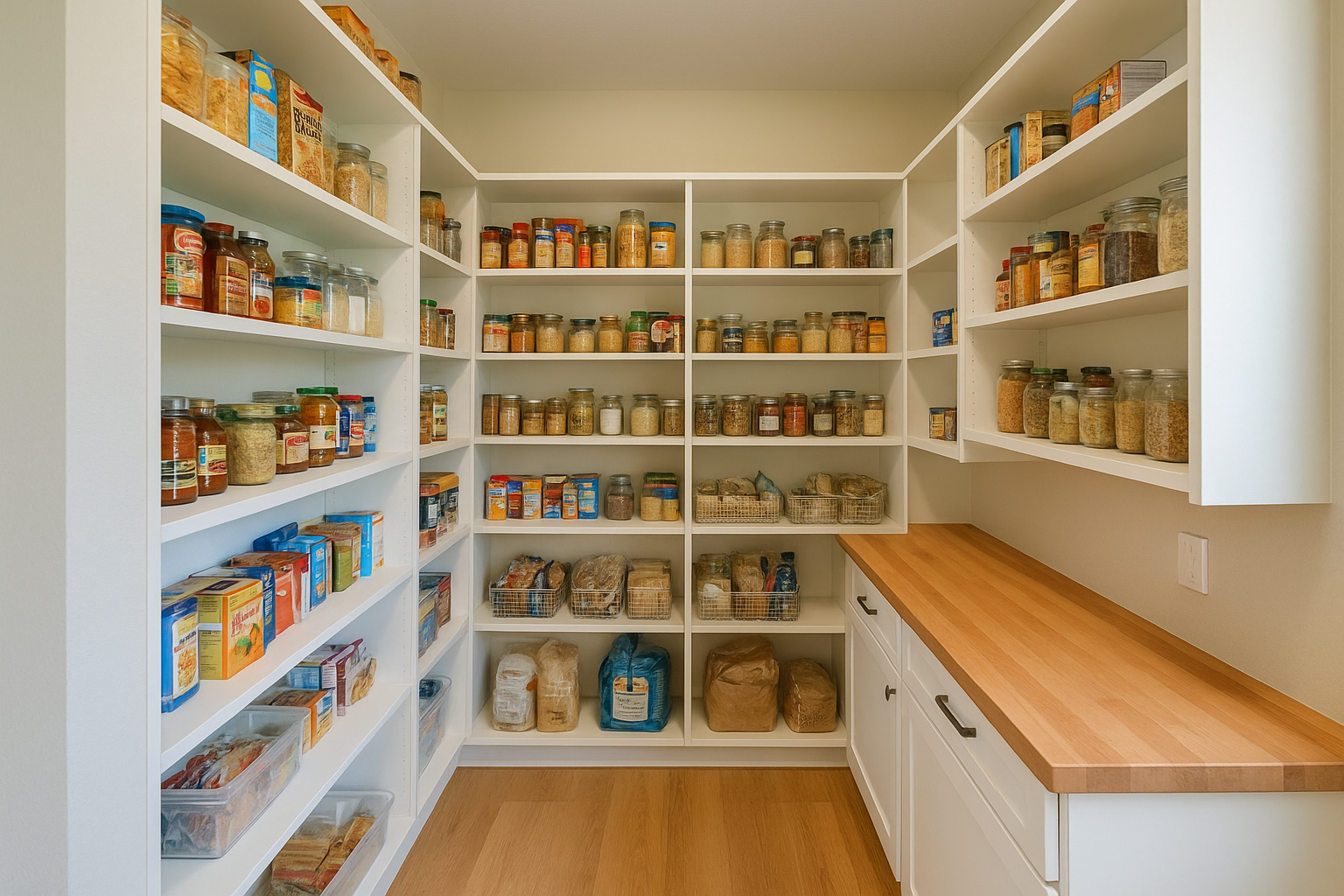
A walk-in pantry gives you room to build a full system instead of squeezing storage into a single closet, but that extra square footage goes to waste without a plan. Walk-in pantry shelving systems treat the whole room as one layout, wrapping shelving around three walls, mixing shelf depths for different goods, and often adding a small counter or landing spot for unloading groceries. This is where a shelving unit built for your exact space shows its value most, since a room this size can easily turn into a junk closet without deliberate zones.
How it works
Builders map the room first, marking where the door swings, where outlets sit, and where natural light comes in, then design shelving that wraps continuously around the usable walls rather than treating each wall as a separate project. Shallow shelves near the entrance hold everyday items you grab without thinking, deeper shelves toward the back handle bulk goods and small appliances, and a lower run near the floor works for bins, pet food, or bulky bags of flour and sugar.
A walk-in pantry only earns its square footage when every wall has a job to do.
Many of these builds add a butcher block counter section for staging groceries or prepping food, plus outlets for a coffee station or a small appliance that doesn’t need counter space in the main kitchen.
Best for
This approach fits homeowners who already have a dedicated pantry room, whether that’s a converted closet, a mudroom nook, or a room built specifically for storage during a kitchen renovation. It suits large families, serious home cooks, and anyone who entertains often and needs backup storage beyond what kitchen cabinets can hold.
Cost range
Pricing scales with the size of the room and how much of it gets built out with cabinetry, counters, and specialty features.
| Walk-In Pantry Scope | Typical Cost Range |
|---|---|
| Basic shelving on 2-3 walls | $2,500 – $5,000 |
| Full wraparound with mixed depths | $5,000 – $10,000 |
| Full build with counter and cabinetry | $10,000 – $18,000+ |
These figures reflect solid wood construction built specifically for the room’s dimensions, not modular units assembled after the fact.
8. Open floating shelves for a modern look
Open floating shelves strip away the cabinet box entirely, leaving just a floating plank fixed to the wall with no visible brackets or support underneath. Floating shelves for kitchen storage have become one of the most requested custom pantry shelving ideas for homeowners renovating a kitchen with a modern or coastal aesthetic, since the shelves read as part of the wall rather than a piece of furniture bolted on top of it. Cape Cod clients working toward a light, coastal kitchen design especially like this style for pantries near a window or open sightline, where a heavy cabinet would block light or feel bulky in a smaller room.
How it works
Builders hide the mounting hardware inside the shelf itself, usually a steel rod or bracket recessed into a routed channel in the back edge, then anchor that hardware directly into wall studs so the shelf carries real weight without sagging. Solid wood, typically two inches thick or more, holds up better here than plywood since the whole point is a clean, thick edge with no visible seams. Depth and spacing get set based on what’s actually stored, since open shelves show everything, so mismatched containers or cluttered stacks stand out more than they would behind a door.
Open shelving only works as storage if you’re willing to keep it as tidy as it looks in a photo.
Best for
This style suits homeowners who already keep a fairly organized pantry, or who plan to invest in matching jars, bins, and labels to keep the open display looking intentional rather than cluttered. It also works well in kitchens with a modern, farmhouse, or coastal design where the shelving needs to blend visually with open cabinetry elsewhere in the room.
Cost range
Floating shelves generally cost less than boxed cabinetry since there’s no cabinet frame, but the concealed hardware and thicker wood stock add labor.
| Floating Shelf Scope | Typical Cost Range |
|---|---|
| 2-3 shelf section | $350 – $750 |
| Full wall run | $750 – $1,800 |
| Multiple walls, thick wood | $1,800 – $3,200 |
These figures assume solid wood with concealed steel supports rated for pantry loads, not the lightweight floating shelves sold pre-cut at most home stores.
9. Wire and metal shelving for ventilation
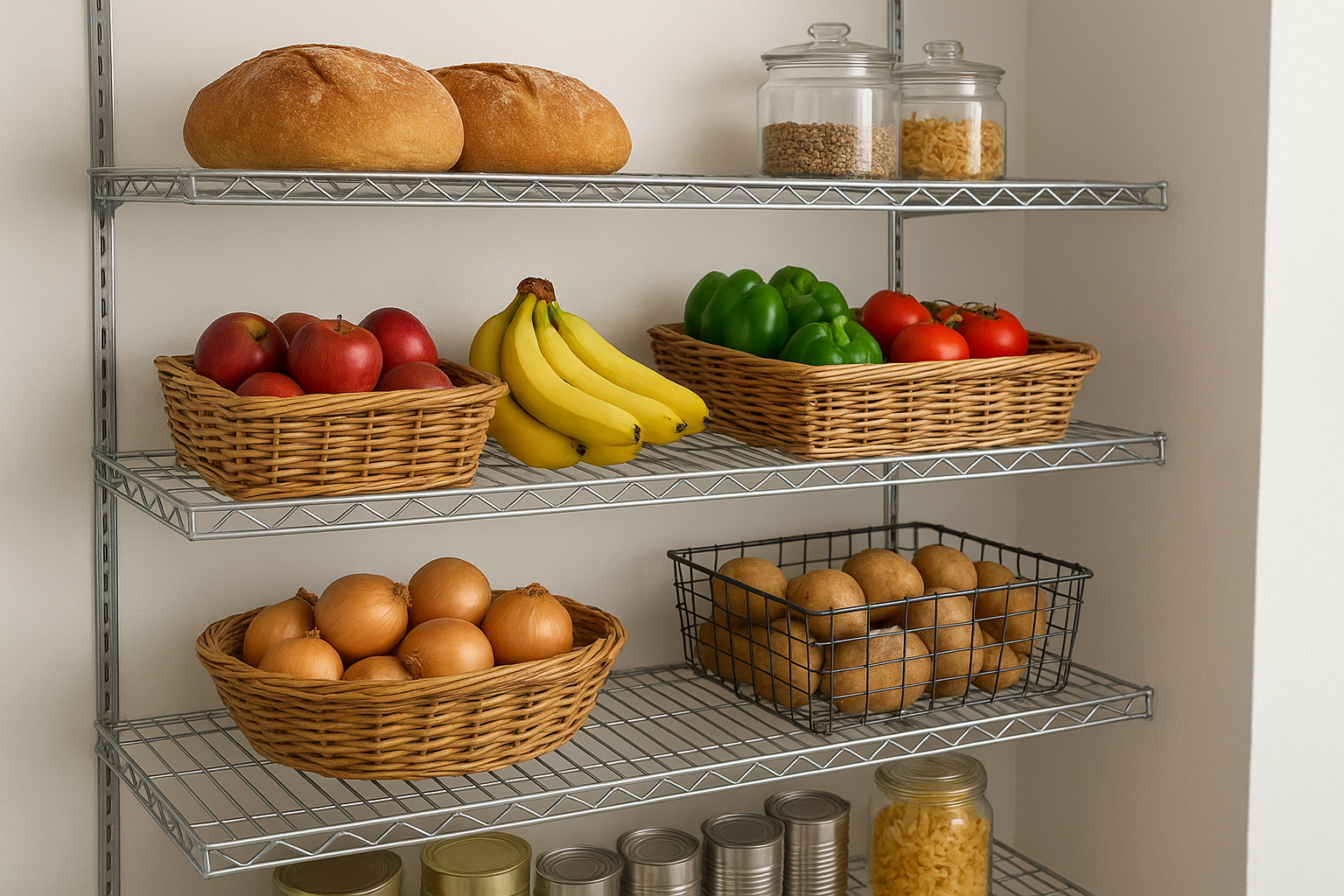
Wire and metal shelving still has a place even in a lineup of custom wood builds, especially anywhere airflow matters more than looks. Wire shelving lets air circulate around produce, bread, and root vegetables that would otherwise sweat or mold on a solid wood surface. It’s also the fastest option to clean, since crumbs and spills fall straight through instead of collecting in corners. For pantries that double as storage for onions, potatoes, or garden harvests, this is one of the few custom pantry shelving ideas where metal actually outperforms wood.
How it works
Builders mount heavy-gauge wire or perforated metal shelves on adjustable brackets or a track system, sized to fit the pantry rather than pulled off a generic rack in a box. Chrome and epoxy-coated finishes resist rust in humid coastal air better than bare metal, which matters in Cape Cod homes near the water where moisture works into everything eventually. Shelf spacing gets set for what’s actually stored, wider gaps for baskets of produce, tighter runs for canned goods, and the open grid pattern means you never lose visibility to a solid shelf edge.
Air moving around your food matters as much as the shelf holding it up.
Best for
This approach suits households that store fresh produce, bread, or garden vegetables in the pantry rather than the fridge, since ventilation slows spoilage in ways solid wood shelving can’t match. It also works well in mudroom pantries, basement pantries, or any humid space where moisture is a bigger concern than furniture-grade finish. Homeowners looking at laundry room cabinet ideas or a garage pantry conversion often land here first, since wire holds up better than wood in damp, unheated spaces.
Cost range
Metal shelving generally costs less than wood per shelf, though heavy-duty coated wire built to a custom size still runs higher than a stock rack.
| Wire Shelving Scope | Typical Cost Range |
|---|---|
| 3-4 shelf unit | $250 – $500 |
| Full pantry conversion | $500 – $1,200 |
| Commercial-grade coated system | $1,200 – $2,000 |
These figures assume rust-resistant, custom-sized shelving rated for pantry loads, not the bent wire units sold flat-pack at most retailers.
10. Built-in cabinetry with closed doors
Closed cabinetry brings a finished, furniture-grade look to a pantry, hiding the mess behind doors instead of putting every can and box on display. Built-in cabinetry works well when a pantry sits in view of a dining room or open-concept kitchen, where open shelving would show clutter to every guest who walks by. This is one of the more traditional custom pantry shelving systems we build, and it remains popular with clients who want their pantry to read as part of the kitchen’s cabinetry line rather than a separate storage zone.
How it works
Carpenters build a full cabinet box with face frames, doors, and hinges, then fit adjustable or fixed shelves inside sized to match your dinnerware, small appliances, and pantry goods. Custom kitchen cabinet doors get matched to your existing cabinetry in wood species, panel style, and hardware, so the pantry looks like it was always part of the original design rather than added later. Interior shelving can mix depths, pull-out trays, or a mix of open bins and closed compartments, depending on what you’re storing behind those doors.
A closed door doesn’t just hide clutter, it makes a pantry look like it belongs to the rest of the kitchen.
Best for
This option suits homeowners with a pantry visible from a dining or living area, or anyone who prefers a tidy, uniform look over an open display of jars and boxes. It also fits households with kids or pets who tend to pull items off open shelves, since a door adds a layer of containment. Buyers focused on resale value often lean here too, since matched cabinetry photographs better than mismatched open shelving.
Cost range
Doors, hinges, and a full cabinet box add real cost compared to open shelving, since there’s more material and labor involved.
| Cabinetry Scope | Typical Cost Range |
|---|---|
| Single cabinet section | $800 – $1,800 |
| Full wall of cabinetry | $1,800 – $4,500 |
| Full pantry with matched kitchen finish | $4,500 – $9,000+ |
These figures reflect solid wood cabinetry with a painted or stained finish matched to existing kitchen cabinets, not stock cabinet boxes ordered off a shelf.
11. Vertical dividers for trays and cutting boards
Baking sheets, cutting boards, and cooling racks never stack well on a flat shelf. Lay them flat and you end up pulling out three pans to reach the one on the bottom. Vertical dividers turn a flat shelf into a row of narrow slots, so every tray, board, and platter stands on its edge with its own dedicated space. This is one of the most overlooked custom pantry shelving ideas for anyone who bakes often or stores a lot of flat cookware that doesn’t fit neatly anywhere else.
How it works
Builders install thin wood or plywood partitions spaced two to four inches apart within a cabinet or open shelf section, sized to the actual width of your baking sheets and cutting boards rather than a generic slot size. Some setups run the full height of a lower cabinet, while others sit within a single shelf as a smaller insert dedicated just to trays. This kind of custom shelving for pantry cabinets often gets paired with a pull-out base, so the whole divider unit slides forward for easy loading instead of forcing you to reach into a fixed slot.
A pan you have to dig for isn’t stored, it’s just misplaced with extra steps.
Best for
This layout suits home bakers, anyone with a large collection of sheet pans and cutting boards, and households that store platters or serving trays used only a few times a year. It also works well tucked next to the oven or stove, keeping bakeware close to where it gets used most.
Cost range
Vertical dividers cost less than most other options here since they use thin material and don’t require special hardware beyond basic joinery.
| Divider Scope | Typical Cost Range |
|---|---|
| Single cabinet insert | $200 – $450 |
| Pull-out divider unit | $450 – $900 |
| Full wall of divided storage | $900 – $1,800 |
These figures assume solid wood or plywood dividers sized to your actual bakeware, not a one-size-fits-all rack from a home store.
12. DIY shelving kits for budget-friendly upgrades
Sometimes a full custom build isn’t the right fit for your budget or your timeline, and that’s fine. DIY shelving kits from home improvement stores give you a way to add real storage over a single weekend without hiring anyone. These kits won’t match the fit or durability of a hand-built system, but they solve the immediate problem of empty walls and disorganized shelves while you save up or plan a bigger project.
How it works
Most kits come as pre-cut boards, brackets, and hardware sized to fit standard closet widths, so you measure your space, trim a shelf or two if needed, and mount everything with a stud finder and a drill. Adjustable pantry shelving systems sold as kits usually include a pin-and-hole track system similar to what a carpenter would install, just made from lighter material and mass-produced dimensions instead of a size cut for your exact walls. Assembly typically takes an afternoon for a small closet pantry, longer if you’re working around an odd angle or an existing baseboard.
A DIY kit buys you organized shelves today, not a system built to last decades.
Best for
Renters, first-time homeowners on a tight budget, and anyone testing out a layout before committing to a permanent build all do well with this option. It also suits smaller pantries where the margin for error is low enough that a slightly imperfect fit still works fine day to day. Homeowners who eventually want something sturdier often start here, then weigh whether to DIY built-in shelving or hire a pro once they’ve lived with a layout and figured out exactly what they need.
Cost range
Kits stay far cheaper than custom work, though quality and weight capacity vary a lot between brands.
| Kit Type | Typical Cost Range |
|---|---|
| Basic wire shelf kit | $50 – $150 |
| Adjustable wood shelf kit | $150 – $400 |
| Full closet pantry system kit | $400 – $900 |
These prices reflect materials only, since most homeowners install these kits themselves without hiring labor.
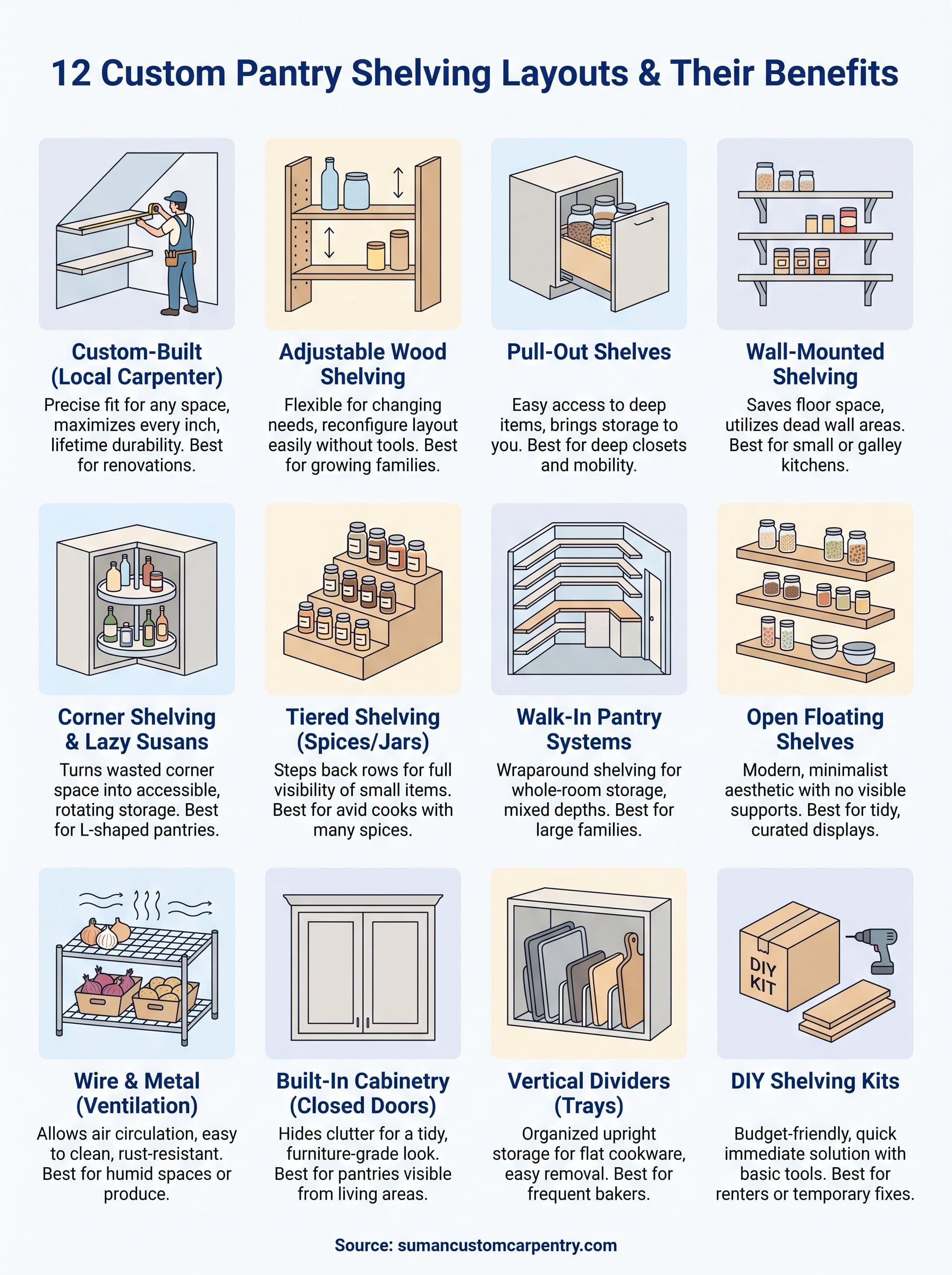
Choosing the right shelving for your pantry
Twelve options is a lot to weigh, so narrow it down by asking one question first: what’s actually going wrong in your pantry right now? If items get lost in deep corners, pull-out shelves or a lazy Susan fix that. If your storage needs shift every year, adjustable shelving keeps up without a rebuild. If you just need something fast and cheap, a DIY kit gets you through the next few months while you plan further ahead.
Whatever you choose, custom pantry shelving should match how you actually cook and shop, not a generic template pulled from a catalog. Retail kits and wire racks solve short-term problems, but they rarely last, and they never quite fit the space you have.
If you’re ready for shelving built around your actual kitchen, walls, and habits, see what to expect from custom kitchen pantry cabinets and talk to our team about what fits your space and budget.