A fireplace anchors a room. But the wall around it? That’s where the real design opportunity lives. If you’ve been searching for built-in shelves around fireplace ideas, you’re probably past the "should I do this?" stage and deep into figuring out exactly what style, layout, and details will make your living space feel intentional. The right built-ins turn a plain fireplace wall into the focal point of your home, the kind that gets noticed the second someone walks in.
The challenge is that most inspiration you find online stops at the photo. It doesn’t tell you what makes a particular design work, what to watch out for, or how the details translate to real life in your home. We build custom shelving and millwork like this regularly at our shop in Hyannis, every project hand-built from scratch for Cape Cod homeowners who want something that fits their space perfectly, not a generic solution forced into place.
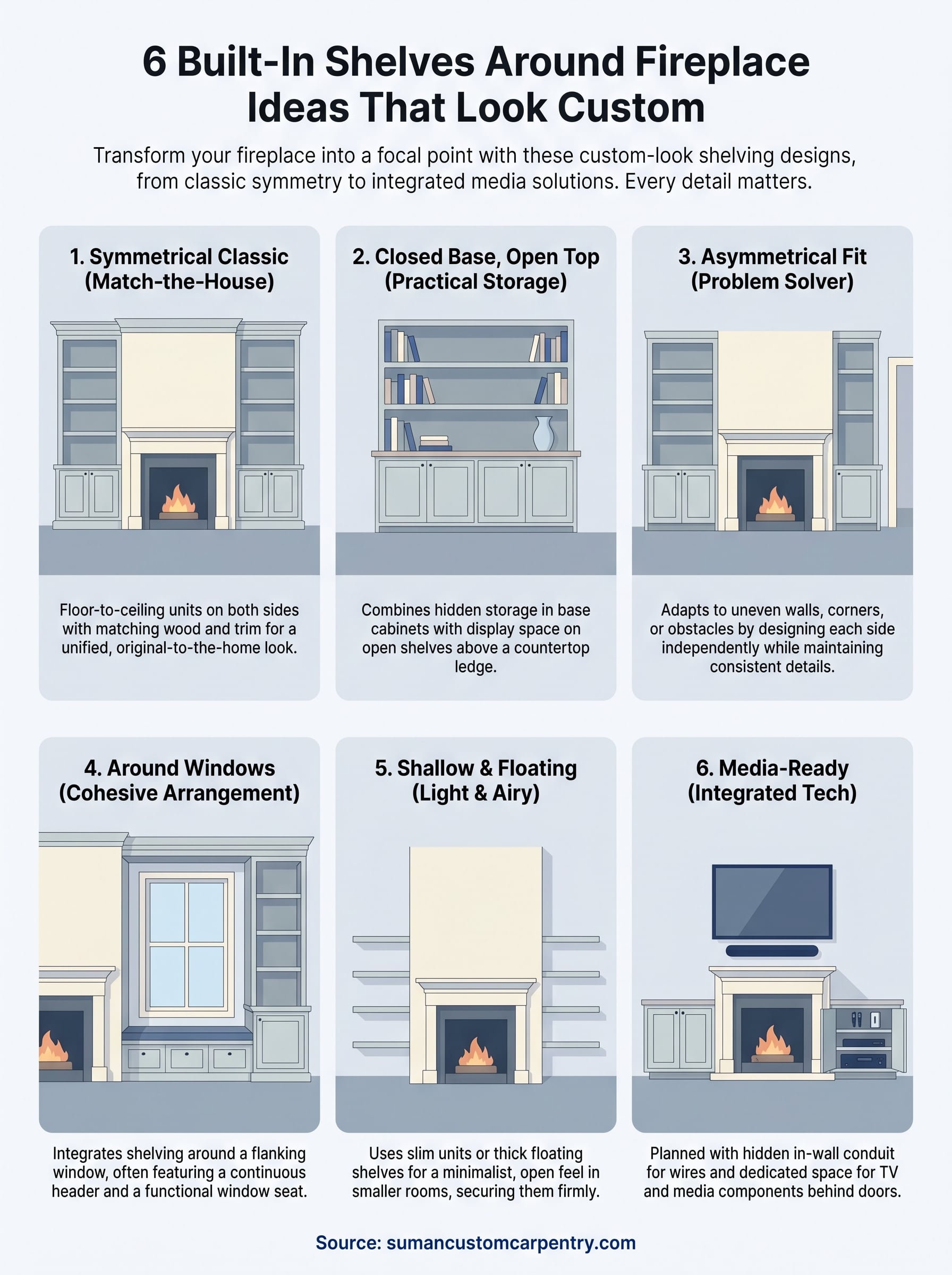
Below, we’re breaking down six distinct built-in shelf designs around fireplaces that genuinely look custom. For each one, we’ll cover what makes the style work, where it fits best, and practical considerations worth knowing before you commit. Whether you’re planning a full renovation or just starting to gather ideas, this list will give you a clear picture of what’s possible, and what’s worth building.
1. Match-the-house custom built-ins on both sides
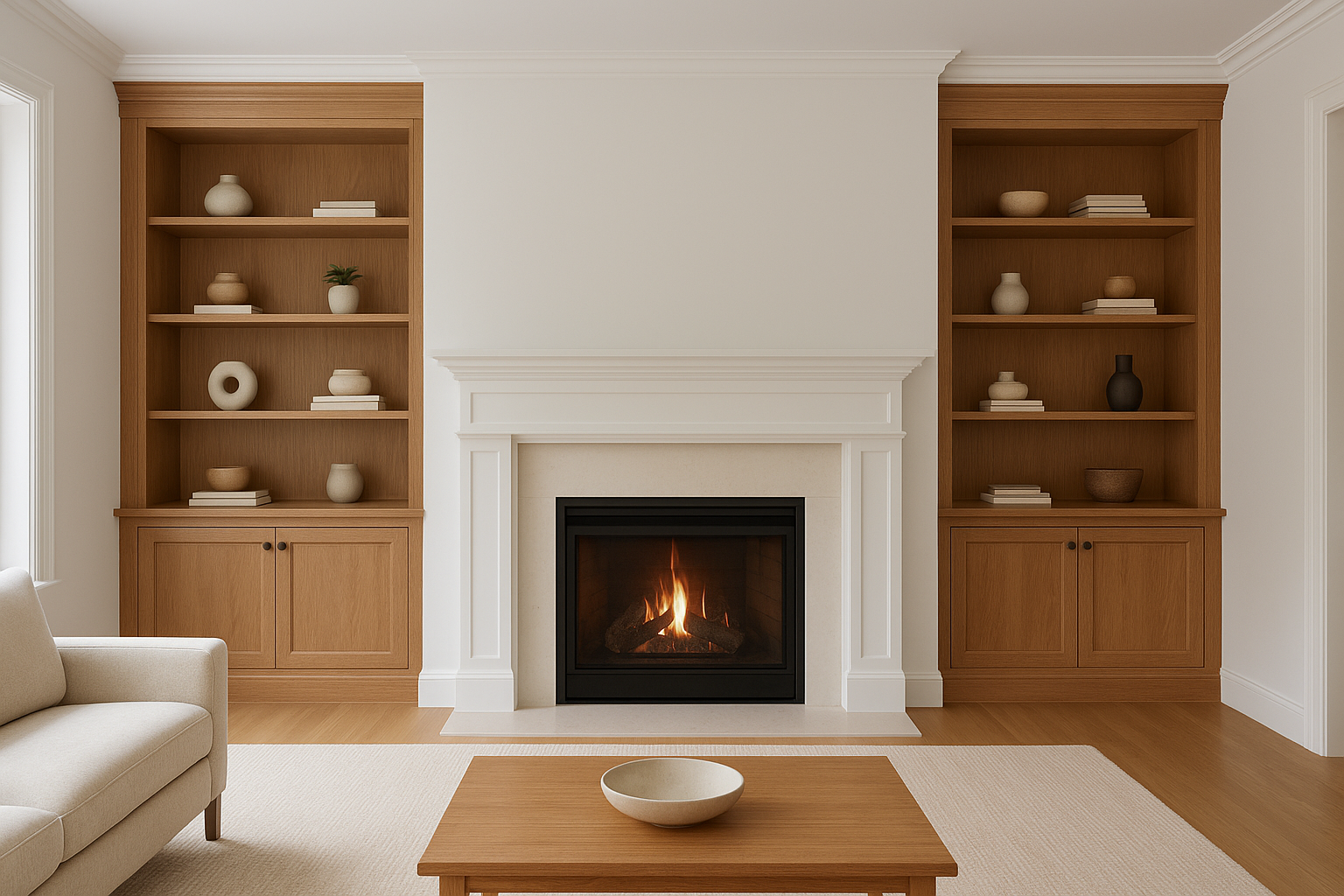
This is the most classic layout for built-in shelves around fireplace ideas: two symmetrical tower units flanking the fireplace, floor to ceiling, built from the same wood species and finish used elsewhere in the room. When done right, the built-ins look like they were always part of the house, not added years later. That’s exactly the point.
How it works
You build two matching cabinet units that run floor to ceiling on either side of the fireplace. The units typically align with the fireplace surround at the base and carry up to the ceiling line, creating a strong vertical frame around the firebox. Crown molding ties the tops of the built-ins into the ceiling, and base molding continues from the room’s existing trim directly into the cabinet bases.
Best for
This layout works best in rooms with enough wall space on both sides of the fireplace, typically at least 18 to 24 inches per side. It’s a strong fit for traditional, transitional, and craftsman-style homes where symmetry is already a theme in the architecture.
If your trim profile, stain color, or paint finish matches the built-ins exactly, the units will read as original to the home rather than as an addition.
Design details that make it look custom
The difference between built-ins that look store-bought and ones that look truly custom comes down to the millwork details. Use the same trim profile as your existing door casings on the shelf edge. Add face frame construction instead of frameless boxes. Build in adjustable shelf pins rather than fixed shelves. Integrated lighting inside the upper open sections adds depth without feeling decorative.
Planning checklist
Before you commit to this layout, work through these points:
- Measure the reveal on both sides of the fireplace to confirm equal depth is available on each side
- Check for ductwork, outlets, or switches hidden in the walls flanking the firebox
- Decide if the units will be painted, stained, or left natural before selecting your wood species
- Confirm ceiling height so crown molding has enough clearance to land cleanly against the ceiling line
2. Add closed base cabinets with open shelving above
This layout splits the built-in into two distinct zones: solid cabinet storage below and open shelving above. It’s one of the most practical built-in shelves around fireplace ideas because it gives you concealed storage for the things you want hidden while still showing off books, art, and objects at eye level.
How it works
The base cabinets sit on the floor and run roughly 36 inches high, similar to kitchen cabinetry. Open shelving starts above that point and continues up to the ceiling. The transition between the two zones is marked by a countertop or a thick shelf, which creates a natural ledge for lamps, plants, or framed photos.
This two-zone approach solves a real storage problem: most living rooms have things that look good on display and things that don’t.
Best for
This design works well for families who need storage for games, media equipment, or everyday clutter. It also suits rooms where you want the built-in to function more like furniture than pure display shelving.
Design details that make it look custom
Use inset doors on the base cabinets rather than overlay doors to get a cleaner, furniture-like look. Match the door style to any existing cabinetry in the home, and add interior lighting on the open upper shelves to draw attention upward.
Planning checklist
- Confirm the depth of the base cabinets fits your available wall space without crowding the room
- Decide whether the countertop between zones will be wood, stone, or painted MDF
- Plan outlet placement inside the lower cabinets if you’re storing media or charging equipment
3. Go asymmetrical to fit doors, corners, and odd walls
Not every fireplace wall is a clean rectangle with equal space on both sides. Doors, hallways, corners, and structural elements often make symmetry impossible. Asymmetrical built-in shelves around fireplace ideas solve this directly by designing each side independently, giving you a layout that fits the actual room rather than an idealized version of it.
How it works
One side of the fireplace might carry a taller, deeper unit with full shelving while the other side accommodates a narrower column of shelves or a single cabinet. The two sides intentionally differ in width, height, or configuration. What ties them together visually is consistent materials, trim profiles, and finish across both units.
Asymmetrical designs often feel more authentic to older homes where walls were never perfectly balanced to begin with.
Best for
This layout fits Cape Cod cottages, older homes, and any room with architectural constraints that make equal-sided units impractical. It also works well when one side of the fireplace runs into a corner or a doorway cuts off available depth.
Design details that make it look custom
Use the same crown molding height across both units even if the cabinets differ in width. Matching the toe kick profile and shelf edge detail on both sides creates visual consistency that makes the asymmetry feel deliberate rather than accidental.
Planning checklist
- Note every obstruction on each side: doors, outlets, vents, and corners
- Confirm the depth available on the shallower side before finalizing cabinet dimensions
- Choose a unifying finish applied consistently across both units
4. Build around windows with shelving or a window seat
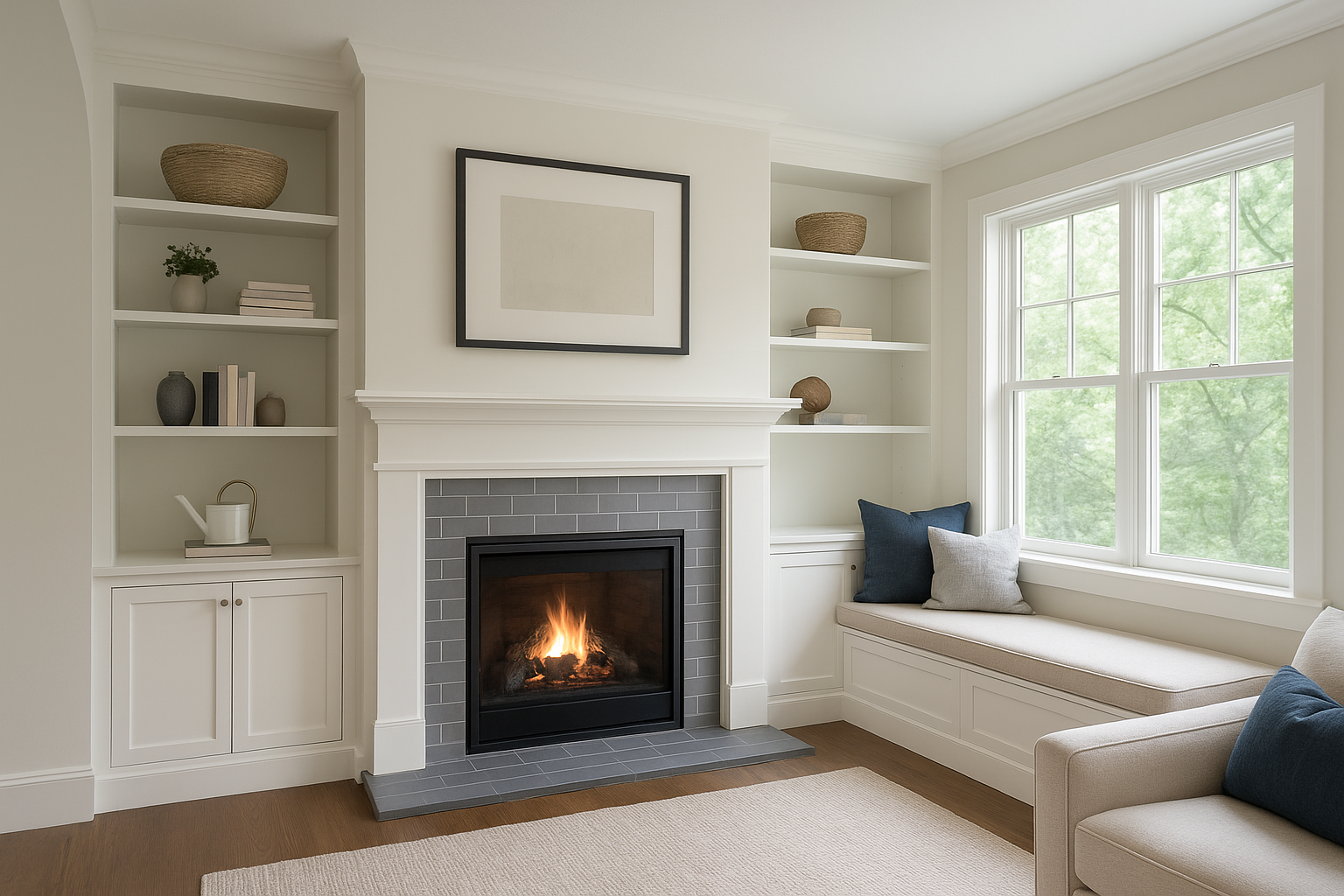
Some fireplace walls include a window on one or both sides, which changes the design completely. Rather than treating the window as an obstacle, you can build around it intentionally, turning the combined fireplace-and-window wall into one cohesive arrangement. This is one of the more nuanced built-in shelves around fireplace ideas, but also one of the most rewarding when the space calls for it.
How it works
The shelving units frame both the fireplace and the window, connecting across the top of the window with a continuous shelf or header detail. Below the window, you have two options: run shelving straight across at a lower height or build a window seat with storage underneath, which adds function and a strong visual anchor to the wall.
Best for
This layout works well in rooms where a window sits within a few feet of the fireplace, particularly in Cape Cod homes where smaller rooms often pack multiple architectural features into one wall. It also suits families who want a reading nook or extra seating without adding separate furniture to the room.
A window seat paired with fireplace built-ins is one of the most requested layouts we see from homeowners who want a room that feels both useful and intentional.
Design details that make it look custom
Match the shelf height above the window to the height of the flanking units so the eye travels evenly across the wall. Adding beadboard paneling inside the window seat base connects the built-in to any coastal or craftsman details already present in your room.
Planning checklist
- Measure the window sill height to confirm a seat depth of 18 to 20 inches fits comfortably
- Check for radiators or baseboard heating beneath the window before enclosing the space
- Decide whether the window seat lid will be hinged for storage access or fixed
5. Keep it light with shallow built-ins and floating shelves
Not every room needs floor-to-ceiling cabinetry flanking the fireplace. If you’re working with a smaller living room or want built-in shelves around fireplace ideas that feel open and airy rather than heavy, shallow built-ins and floating shelf combinations give you the structure of custom millwork without closing in the space.
How it works
Shallow units run roughly 6 to 10 inches deep, compared to the standard 12 to 14 inches for full built-ins. You can combine a shallow cabinet base with floating shelves above, or run floating shelves the full height of the wall on both sides of the fireplace. The result is a lighter visual footprint that still frames the firebox clearly.
Best for
This layout works well in smaller rooms or spaces where natural light is limited, where deep cabinetry would make the room feel boxed in. It also suits homeowners who prefer a clean, minimalist look rather than a traditional furniture-like built-in.
Shallow shelves still benefit from consistent trim details and a finish that matches your room’s existing woodwork.
Design details that make it look custom
Use thick shelf stock, at least 1.5 inches, to prevent the shelves from looking flimsy. Adding a routed edge profile to each shelf transforms a simple plank into something that reads as intentional millwork rather than a basic hardware store solution.
Planning checklist
- Confirm wall anchoring points for floating shelves, especially on plaster walls common in older Cape Cod homes
- Keep shelf spacing consistent across both sides for a balanced, cohesive look
6. Make it media-ready with hidden wiring and a TV plan
Adding a TV above or beside the fireplace is one of the most common requests we get when homeowners plan built in shelves around fireplace ideas. The key is planning the wiring before the cabinets go in, not after, because retrofitting conduit through finished millwork is expensive and often looks sloppy.
How it works
The built-ins are designed with a dedicated TV panel or recessed alcove centered above the fireplace or within one flanking unit. Conduit runs inside the wall during framing to carry HDMI, power, and speaker cables down to the base cabinets, where media equipment sits out of sight behind closed doors.
Best for
This layout works well for living rooms that function as primary media spaces, where watching TV and gathering around the fireplace happen in the same room. It suits any homeowner who wants clean walls without a single exposed cord running down the face of the built-in.
Plan the TV location and mount type before the cabinets are built, because wall blocking and conduit placement cannot be added cleanly after installation.
Design details that make it look custom
Use a recessed outlet box behind the TV panel to eliminate visible plugs entirely. Painting the TV alcove a slightly darker shade than the surrounding cabinets makes the screen read as a purposeful design feature rather than something added after the fact.
Planning checklist
- Confirm conduit runs and outlet placement with your electrician before cabinet installation begins
- Decide whether media equipment sits in vented closed cabinets or open shelving at the base
- Verify the TV mount style and weight rating matches your planned panel thickness
Next steps
You now have six distinct built-in shelves around fireplace ideas to work from, each with enough detail to move past inspiration and into actual planning. The right layout depends on your room’s dimensions, your storage needs, and the architectural details already present in your home. Picking the wrong approach early costs time and money later, so it’s worth getting specific before you start.
Every project we build at Suman Custom Carpentry starts with a conversation about exactly these decisions. We hand-build all our millwork at our Hyannis shop, which means your built-ins are designed for your space from the first measurement, not adapted from a standard cabinet line. If you’re ready to talk through your fireplace wall and figure out which layout fits your home, reach out to start your custom built-in project. We work with homeowners across Cape Cod and take each project from design through final installation.