
Whether you’re planning a kitchen renovation or replacing outdated bathroom vanities, cabinet installation labor cost is one of the first numbers you need to pin down. It’s also one of the hardest to get a straight answer on. Rates vary based on cabinet type, project complexity, your location, and whether you’re working with a general contractor or a dedicated cabinetry specialist. Without clear benchmarks, comparing quotes becomes guesswork.
At Suman Custom Carpentry, we design, build, and install custom cabinetry out of our shop in Hyannis, Cape Cod. We handle every phase in-house, from initial consultation through final installation, so we see exactly where labor costs come from and what drives them up or down. That firsthand experience is what this article draws on. We want you to walk into any estimate, ours included, with realistic expectations and the right questions.
Below, we break down current labor rates per cabinet and per linear foot, explain what factors shift those numbers, and give you a framework for evaluating any installation quote you receive. Whether you’re hiring us or someone else, this guide will help you budget with confidence.
Why cabinet installation labor costs vary so much
Cabinet installation labor cost doesn’t follow a single formula because no two projects are the same. A straightforward swap of stock cabinets in an existing kitchen takes far less time than a full custom build with specialty storage features and complex upper configurations. Installers price their time based on how long a job actually takes, and that time shifts dramatically depending on what you’re asking them to do.
Cabinet type and construction
The cabinets you choose drive a significant portion of labor variation. Stock cabinets from a big-box store are pre-built in standard sizes, which makes hanging them faster and more predictable. Semi-custom and fully custom cabinets often require careful fitting, scribing to walls, and fine-tuning that adds hours to a job. A 10-cabinet kitchen with custom full-overlay doors and built-in pull-outs takes noticeably longer to install than a matching run of standard frameless boxes.
Custom cabinet installation requires more precise on-site adjustments, which directly explains why labor estimates for custom work run higher than stock equivalents.
Inset cabinetry, where doors sit flush inside the frame, demands tighter tolerances than overlay styles. Getting a consistent reveal across an entire run requires extra fitting time that any experienced installer will factor into their rate.
Project scope and site conditions
Size compounds quickly. Each cabinet added to your layout means more measuring, leveling, shimming, and securing. Scope isn’t only cabinet count, though. Awkward room geometry, out-of-plumb walls, sloped floors, or tight clearances around appliances all add time. Installers working in a new construction space with clean, square walls will move faster than those navigating a 1950s Cape Cod kitchen where nothing sits level.
Demolition and disposal of existing cabinets is another factor worth checking line by line. Some installers bundle it into their base quote; many price it separately. Either way, it represents real labor hours you need to account for when building your budget.
Geographic location and contractor type
Where you live shapes what installers charge per hour. Labor rates in coastal Massachusetts run higher than national averages because of local cost of living and a limited pool of skilled tradespeople. Cape Cod also sees seasonal demand spikes that push rates up during peak renovation months. Whether you hire a general contractor who subcontracts the install or a dedicated cabinetry shop that handles everything in-house also affects your final number, often by a meaningful margin.
Common ways installers price cabinet labor
Contractors structure cabinet installation labor cost in a few different ways, and knowing which model you’re looking at helps you compare quotes accurately. A lower per-unit rate doesn’t always mean a lower total bill, especially if the pricing model doesn’t account for the full scope of your project.
Per-cabinet pricing
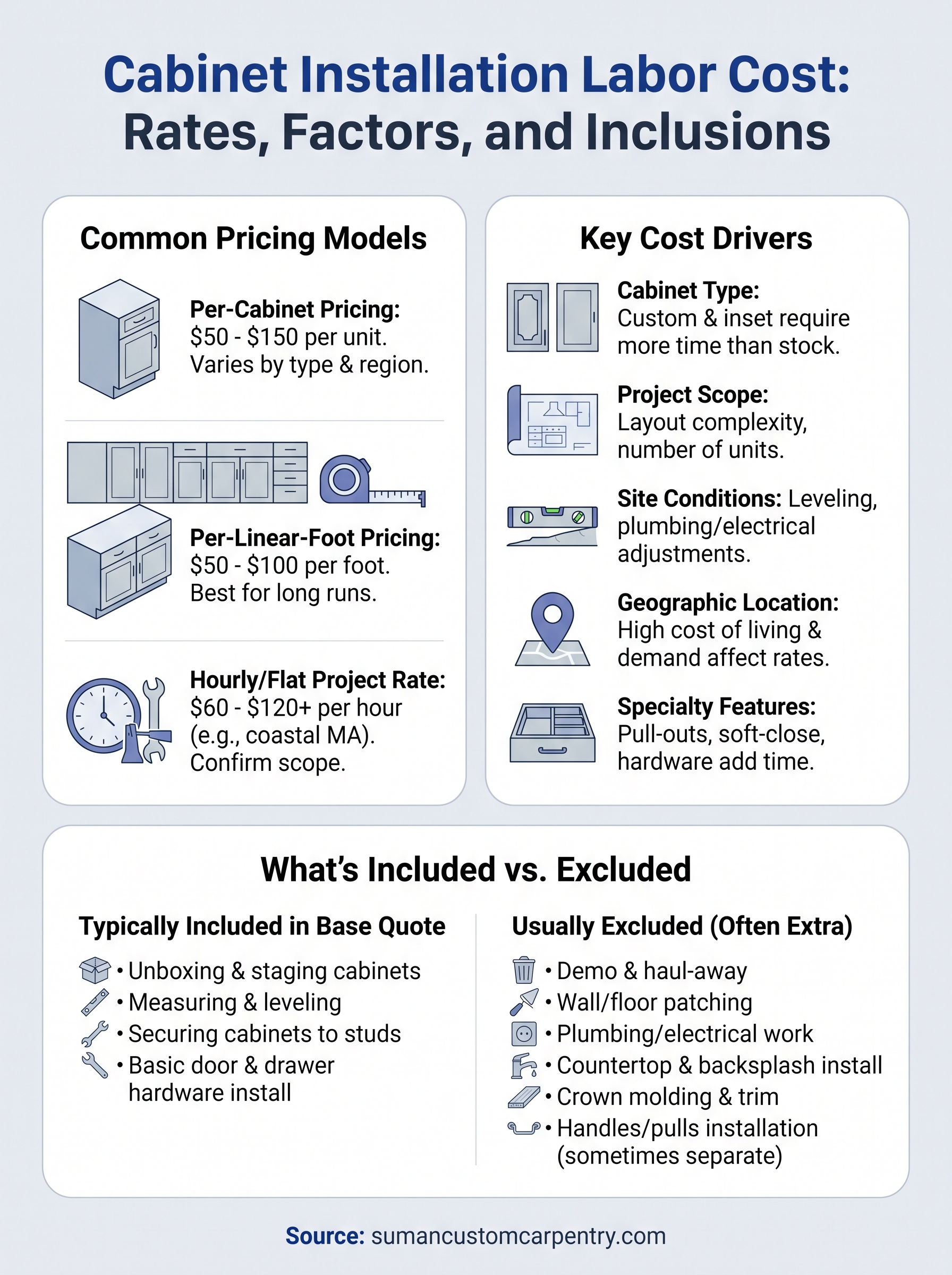
Many installers charge a flat fee per cabinet unit installed, which typically ranges from $50 to $150 per cabinet depending on the cabinet type, complexity, and region. Base cabinets and wall cabinets often carry different rates because the physical demands differ. This model works well for straightforward layouts where cabinet count is easy to verify.
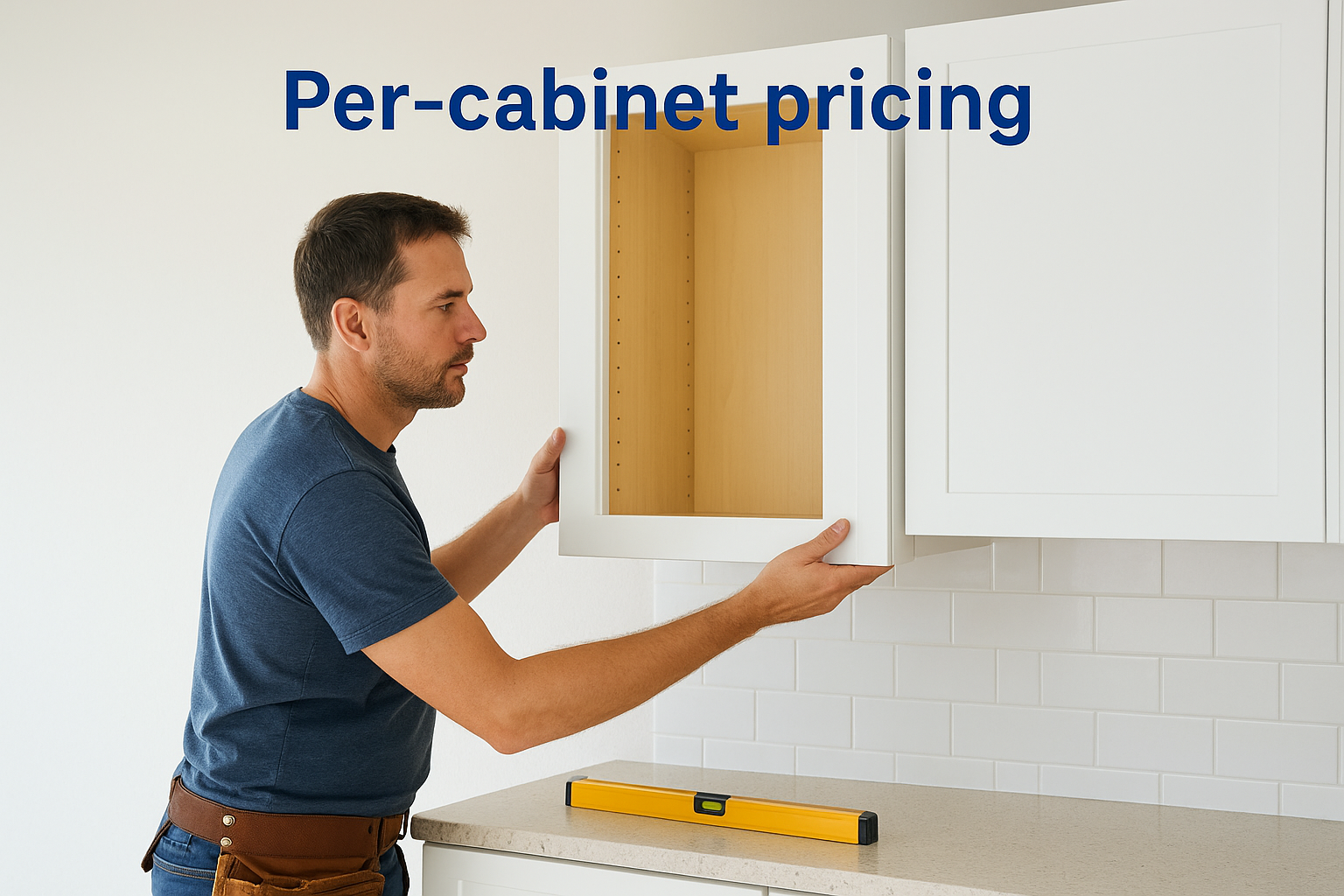
Per-cabinet pricing is the most common model for residential kitchen and bathroom installs because it ties directly to the scope of work.
Per-linear-foot pricing
Some installers price by linear foot of cabinetry run, which typically falls between $50 and $100 per linear foot for standard installations. This model suits projects with long, continuous runs of cabinetry and fewer individual units. Your quote should always clarify whether upper cabinets, lower cabinets, and island sections each carry their own per-foot rate or whether the installer averages across all runs.
Hourly or flat project rate
Smaller jobs or specialty work sometimes come in as an hourly rate, typically $60 to $120 per hour for an experienced installer in a coastal Massachusetts market. Flat project rates bundle everything into one number. Both formats require you to confirm exactly what work is included before signing anything, because the same dollar figure can cover very different scopes.
What cabinet labor usually includes and excludes
When you receive a quote, knowing what’s bundled into the labor line helps you avoid surprises at the end of the project. Most quotes cover the physical installation work, but the boundaries of "installation" vary by contractor. Always ask for a written scope before you agree to anything.
What’s typically included
Standard cabinet installation labor cost quotes generally cover unboxing and staging cabinets, measuring and leveling the run, shimming base cabinets to account for floor variations, securing wall cabinets to studs, and attaching door hinges and drawer hardware that came with the cabinets.
Most installers also include basic scribing where cabinets meet walls or ceilings as part of their standard labor rate. Confirm this in writing before your project starts, because assumptions about what’s "standard" differ from one contractor to the next.
A quote that lists only "cabinet installation" without a written breakdown is a quote worth asking more questions about before you sign.
What usually falls outside the base quote
Several tasks commonly fall outside standard installation pricing. Removing and hauling away old cabinets is one of the most frequently excluded line items, along with patching walls or floors after demo, adjusting plumbing or electrical to accommodate new cabinet positions, and installing countertops or backsplashes. Crown molding and decorative trim pieces often carry their own separate labor charge as well.
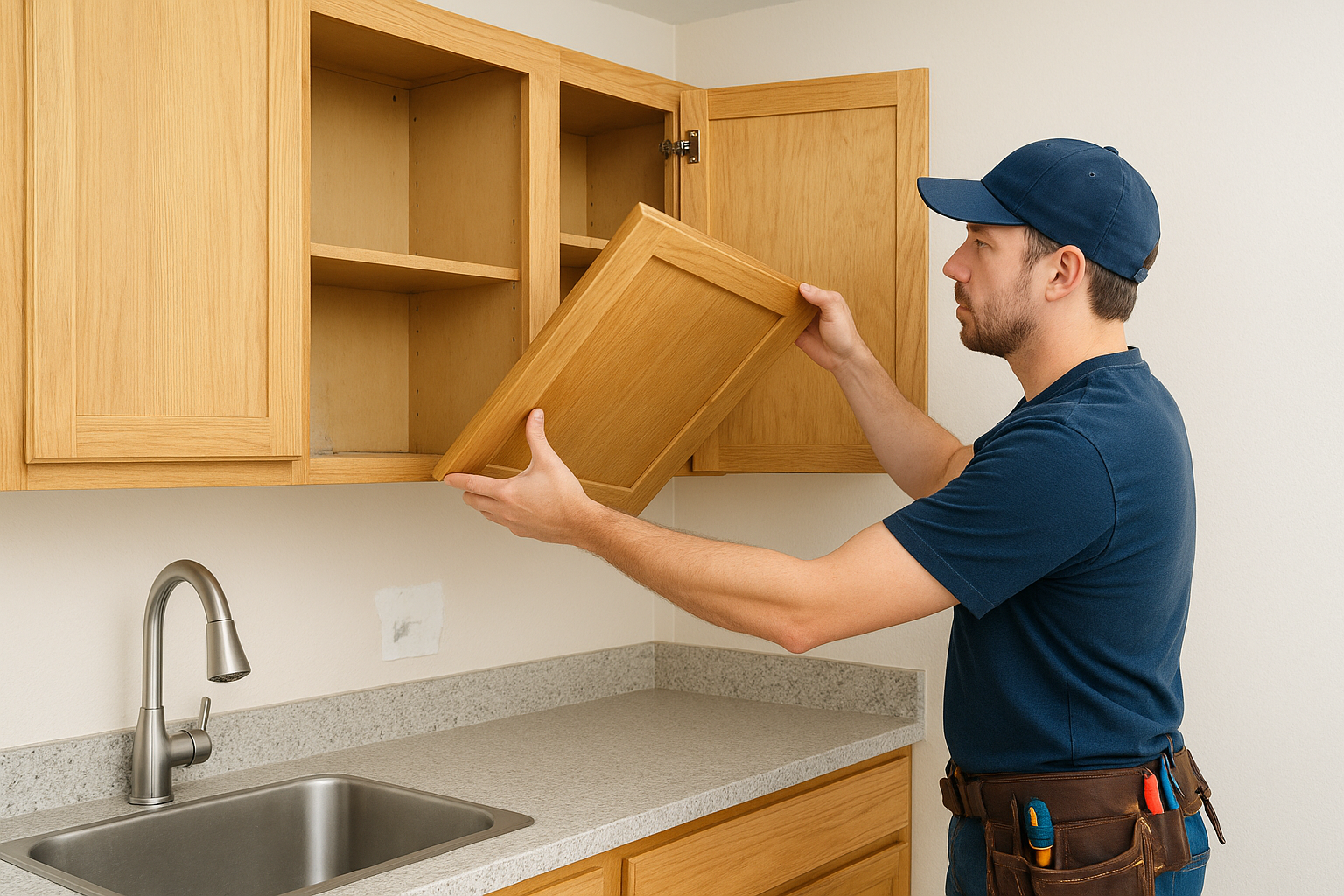
Your quote should also clarify whether hardware installation, specifically handles and pulls, is included or priced per piece. Knowing this before you finalize your hardware selection saves you from unexpected charges appearing on the final invoice.
Cost drivers that change your quote
Several factors push your cabinet installation labor cost above or below the typical ranges, and understanding them helps you predict where your specific project lands. Cabinet complexity and site conditions account for most of the variation you’ll see between quotes on similar-sized projects.
Specialty features and hardware
Cabinets with built-in pull-out shelves, soft-close mechanisms, or custom organizational inserts take longer to install than basic box cabinets. Each specialty component adds fitting and calibration time. Installers quoting a kitchen with many specialty units will factor that additional labor into their estimate, sometimes by a significant margin.
A useful rule of thumb: every custom feature inside a cabinet adds 10 to 20 minutes of installation time. Across a full kitchen, that adds up quickly.
Ceiling height and layout obstacles
Upper cabinets installed above nine feet require scaffolding or extended ladders, which slows progress and adds a safety consideration that experienced installers price into their rate. The following layout factors each carry their own labor premium:
- Island and peninsula configurations require extra leveling and securing steps
- Out-of-square corners demand scribing and custom fitting
- Tight spaces around appliances slow cabinet positioning and alignment
The more your layout deviates from a standard straight run, the more labor time your installer will need to build into their estimate.
Timing and project scheduling
Scheduling your project during peak renovation season on Cape Cod, typically spring through early fall, often means paying a premium because skilled installers are in high demand. Requesting a faster turnaround will frequently add a rush fee on top of standard labor rates. Planning your install during the off-season gives you more scheduling flexibility and can reduce your overall cost.
How to estimate and sanity-check a bid
Before you sit down with a contractor, building your own rough number gives you a baseline to test any bid against. Count your cabinets, measure your linear footage, and multiply by the typical ranges covered earlier in this article. A 20-cabinet kitchen at $100 per unit puts labor somewhere around $2,000 before adjustments for complexity, demo, or site conditions. That number won’t be exact, but it tells you whether a quote is in the right ballpark.
Contractors who give you a firm price without asking about site conditions are likely working from a template, not your actual project.
Build your estimate before the first call
Start with your cabinet count and layout measurements. Note every specialty feature, including pull-outs, soft-close hardware, or corner units, because each one adds installation time.
Feeding those details into your rough estimate before any conversation means you already understand what’s likely driving the labor line in any quote you receive. You’ll also be able to spot when a contractor hasn’t accounted for something real.
What to verify in any written quote
Once you have a quote, confirm the cabinet installation labor cost is broken out separately from materials, demo, and trim work. Compare the per-unit or per-linear-foot rate against the benchmarks in this article. Then check for these specifics in writing:
- Whether demo and haul-away are included
- Whether hardware installation is part of the base labor or priced separately
- Which party is responsible for patching walls after installation
- What the warranty covers on the installation work itself
Asking these questions upfront prevents line items from appearing on your final invoice that you didn’t budget for.
Wrap up and get a firm number
Cabinet installation labor cost lands anywhere from $50 to $150 per cabinet or $50 to $100 per linear foot, with your final number shaped by cabinet type, site conditions, specialty features, and who does the work. Understanding those variables before you receive a quote puts you in a much stronger position to evaluate what you’re actually paying for and where the real labor time comes from.
Knowing the benchmarks matters, but getting a detailed written quote from a contractor who asks the right questions about your specific project matters more. Vague bids lead to unexpected costs at project completion. You deserve a clear scope, a firm labor rate, and a partner who stands behind the work long after installation day.
If you’re on Cape Cod and want a custom cabinetry installation done right, talk to the team at Suman Custom Carpentry and get a quote built around your actual project.