
You’ve decided your closets need an upgrade, maybe you’re tired of the wire shelving that came with the house, or you’ve simply run out of room. Either way, booking a custom closet design consultation is the smartest first step you can take. It’s where your ideas meet real-world measurements, materials, and budget, and it sets the direction for everything that follows.
At Suman Custom Carpentry, we’ve been designing and hand-building custom closet systems at our Hyannis shop since 2018. Every project starts with a consultation, a real conversation about how you use your space, what’s not working, and what you actually need from your closet. Cape Cod homes come in all shapes and sizes, and cookie-cutter solutions rarely fit. That’s exactly why this step matters so much.
This guide walks you through what happens during a custom closet design consultation, how to prepare for it, and what questions to ask so you get the most out of the experience. Whether you’re planning a walk-in master closet, a hallway reach-in, or a full mudroom storage system, you’ll know exactly what to expect before we ever pick up a tape measure.
What happens during a closet design consultation
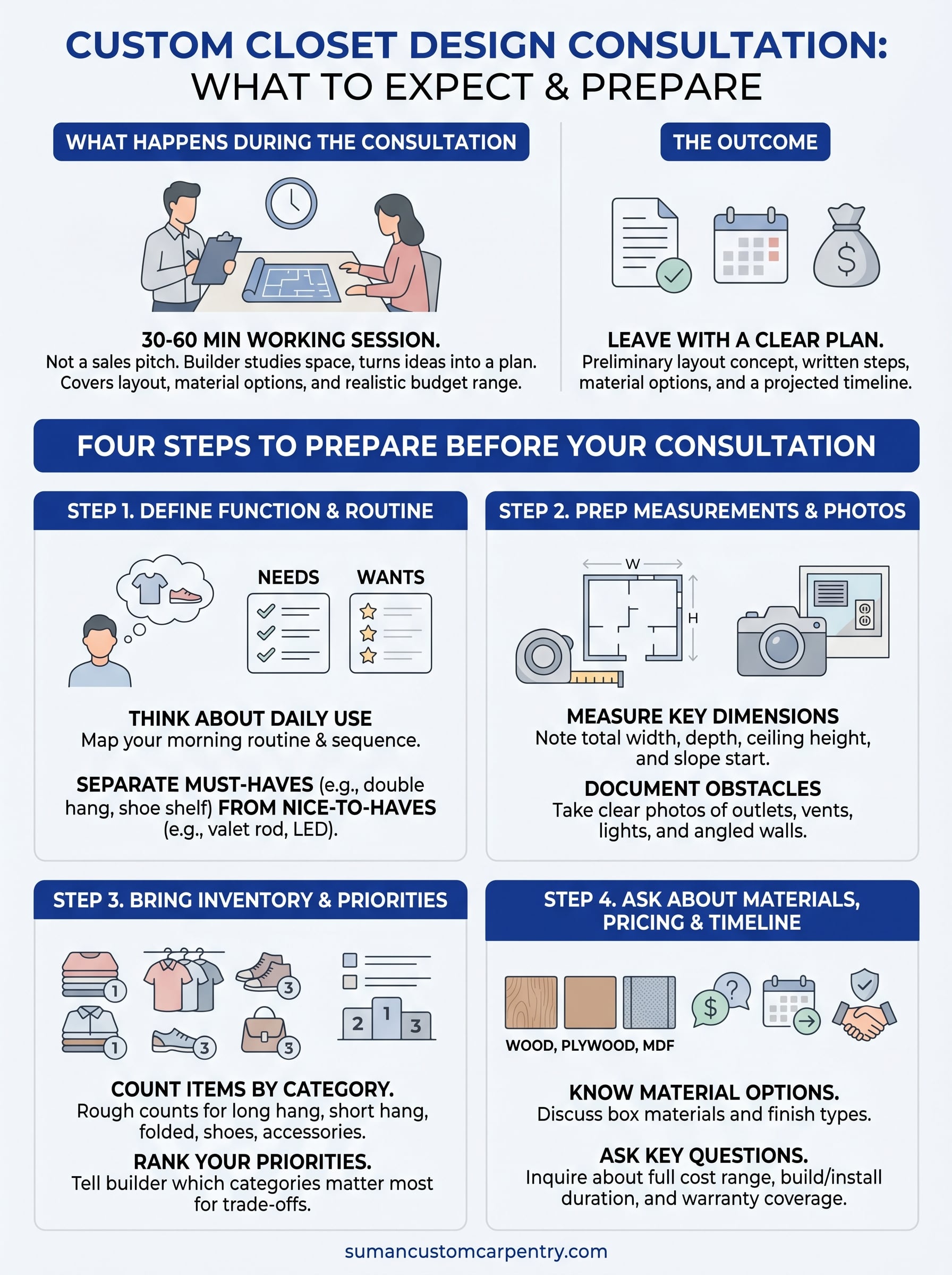
A custom closet design consultation typically runs 30 to 60 minutes and covers far more ground than most people expect. It’s not a sales pitch. It’s a working session where a builder or designer sits down with you, studies your space, and starts turning what you describe into an actual plan. By the end of the meeting, you should have a clear sense of your layout options, material choices, and a realistic budget range.
The walkthrough and discovery phase
The session almost always starts with a physical look at the closet or storage space you want to transform. The builder will check room dimensions, note any structural constraints like outlets, vents, or sloped ceilings, and ask how you currently use the space. Your answers to those questions shape everything that follows.
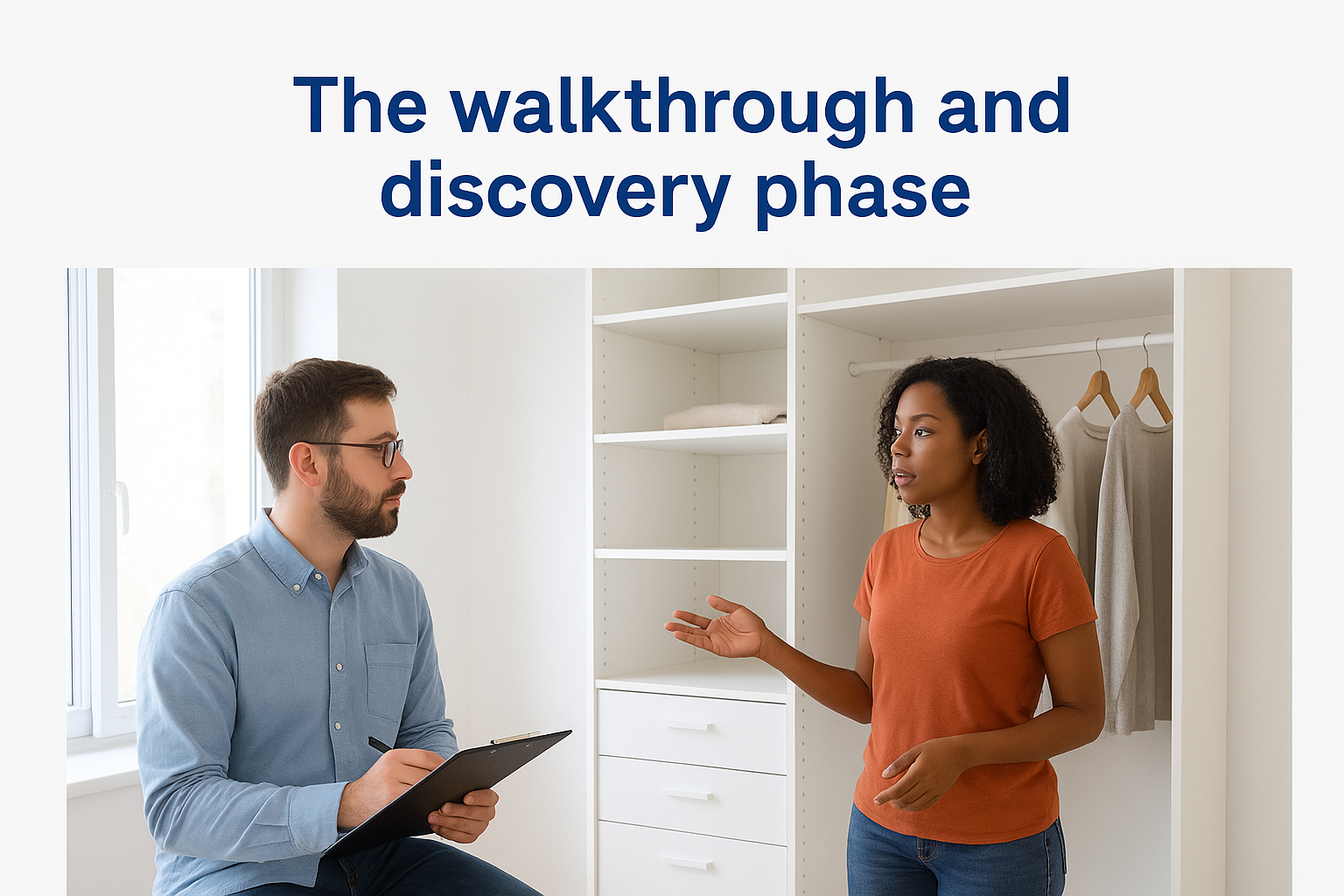
During this phase, a good consultant will typically assess:
- Overall dimensions: floor space, ceiling height, and wall depth
- Fixed obstacles: doors, light switches, HVAC vents, and windows
- Current storage habits: what you hang, what you fold, and what gets piled on the floor
- Shared use: whether the space belongs to one person or two people with different needs
- Lighting: natural light and whether overhead or interior lighting needs to be part of the plan
The walkthrough is where your frustrations become data points, and data points become a design that fits your real life.
What you’ll leave with
At the end of the session, you’ll typically receive a preliminary layout concept or a written summary of next steps, including material options and a projected timeline. This gives you something concrete to react to before any commitments are made. If the design needs adjusting, that conversation happens here, not after the build starts.
At Suman Custom Carpentry, everything we learn during the consultation goes directly into the layout we hand-build at our Hyannis shop. Nothing gets templated or outsourced. The design reflects how you actually live in that space, and that’s what makes the finished system work over the long term.
Step 1. Define how you want the closet to work
Before your custom closet design consultation begins, you need to think about how the closet will actually function day to day. A beautiful system that doesn’t match your habits will frustrate you just as much as the wire shelving you started with. Function comes first, and that means getting specific about how you use the space before anyone picks up a pencil.
Think about your daily routine
Walk through your morning routine in your head. Where do you go first, and what do you reach for? Do you grab shoes before clothes, or the other way around? This sequence tells you a lot about where different storage zones should land in the layout. If you hang most of what you wear, you need more rod space than shelf space. If you fold everything, the opposite is true.
Your daily habits are the blueprint. The design should follow how you already move, not force you to change.
Separate what you need from what you want
Write two short lists before the consultation: what your closet must have to function properly, and what you’d like if the space and budget allow. For example:
- Must-haves: double hang for shirts and pants, a shoe shelf for 20 pairs, a drawer section for folded items
- Nice-to-haves: a mirror, a valet rod, a built-in hamper, LED lighting
Bringing this list to the meeting keeps the conversation focused and helps your carpenter prioritize the features that matter most to your finished design.
Step 2. Prep measurements, photos, and obstacles
Coming to your custom closet design consultation with basic measurements and photos already in hand saves time and keeps the conversation moving. Your carpenter will take official measurements during the visit, but arriving prepared signals that you’ve thought seriously about the project and helps the session stay focused on design decisions rather than basic data gathering.
Measure what you can before the appointment
Pull out a tape measure before the consultation and record the key dimensions of the closet: total width, depth from wall to door, and ceiling height. Also note the height at which any sloped ceiling begins, if applicable, since that directly affects where tall storage units can go. Bring these numbers written down so nothing gets lost during the conversation.
Here’s a simple template to fill out ahead of time:
| Measurement | Value |
|---|---|
| Total width | _____ |
| Total depth (wall to door) | _____ |
| Ceiling height | _____ |
| Slope starts at height | _____ |
| Door swing clearance | _____ |
Document obstacles in photos
Take clear photos of the closet from each corner before your appointment, including shots of any outlets, light fixtures, HVAC vents, or angled walls. These images give your carpenter a visual reference to work from before the in-person visit even starts.
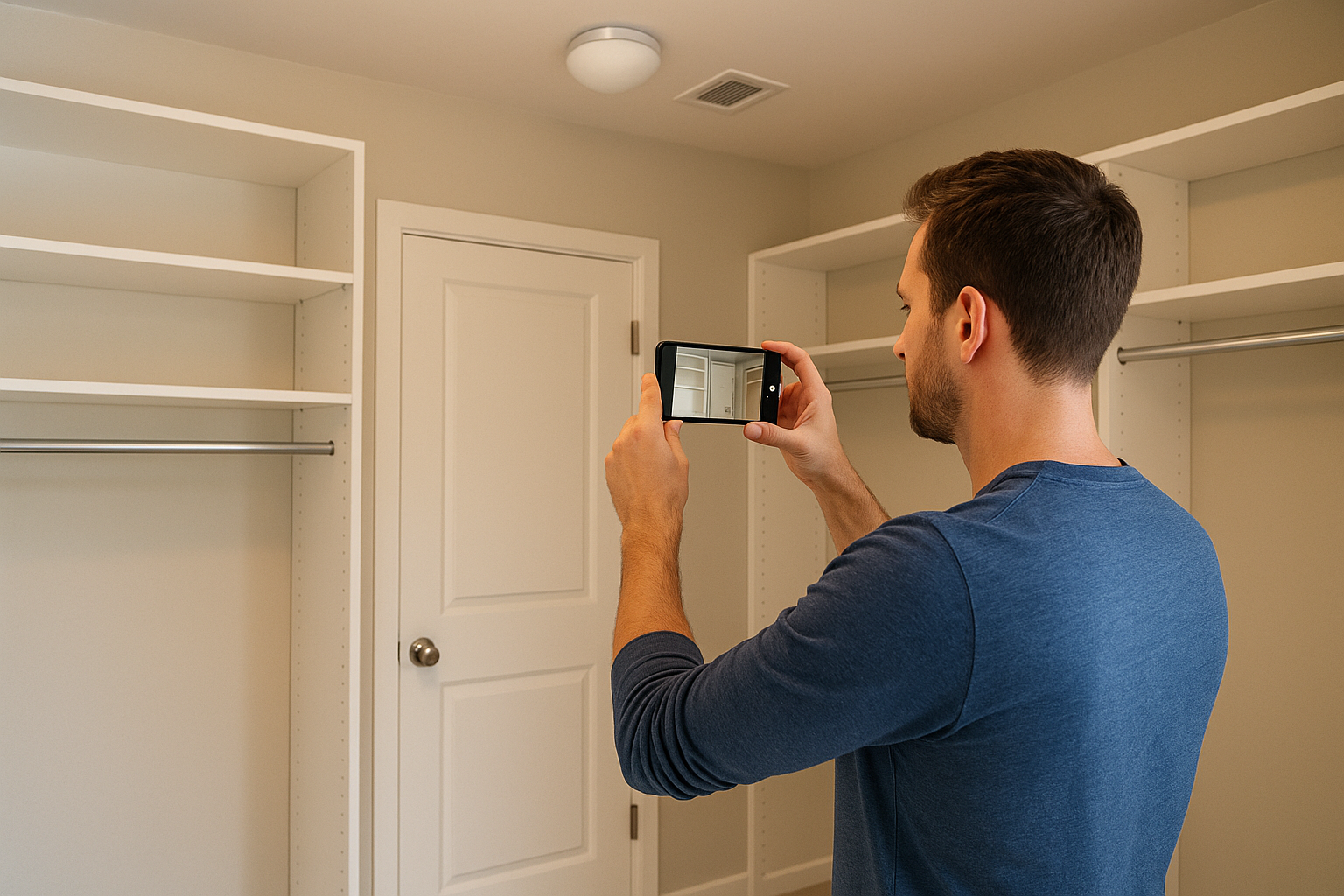
Photos of obstacles save you from discovering mid-design that a vent blocks the exact spot where you wanted a drawer bank.
Scan the space with your phone and capture every detail that might affect the layout, no matter how minor it seems.
Step 3. Bring an inventory and storage priorities
Knowing what you need to store is just as important as knowing your closet dimensions. Before your custom closet design consultation, take a rough count of the items that will live in the space. This gives your carpenter specific numbers to design around rather than vague descriptions like "lots of shoes" or "some hanging clothes."
Count your items by category
Walk through your closet and count what you actually own. Round numbers work fine here; you don’t need a precise spreadsheet. The goal is to give your carpenter a realistic picture of the volume each category takes up so the finished system has room for what you own now, plus a little space to grow.
Use this simple inventory template before your appointment:
| Category | Current Count | Notes |
|---|---|---|
| Long hang items (dresses, coats) | _____ | Full-length rod space needed |
| Short hang items (shirts, jackets) | _____ | Double-hang sections work here |
| Folded items | _____ | Shelves or drawers |
| Shoes | _____ | Pairs, flat or angled shelving |
| Bags and accessories | _____ | Hooks, shelves, or cubbies |
Rank your priorities before you walk in
The clearest thing you can bring to any consultation is a ranked list of what matters most, because trade-offs are part of every design.
Tell your carpenter which categories take priority if the space or budget requires compromises. For example, if shoes are your main concern, say that upfront so the layout reflects it from the start.
Bringing both your inventory count and your priority list means the design conversation moves faster and lands on a layout that genuinely matches how you use the space every day.
Step 4. Ask about materials, pricing, and timeline
The final part of a productive custom closet design consultation is the business conversation. Most people feel awkward bringing up cost and timeline, but your carpenter expects those questions and needs to know your budget to build something that actually works for you. Asking upfront protects you from surprises after the project starts.
Know your material options
Your carpenter will walk you through available materials, but knowing the basics beforehand helps you ask sharper questions. Solid wood, plywood, and MDF are the most common cabinet box materials, and each carries a different price point and durability profile. For example, plywood holds screws better in high-humidity conditions, which is relevant for Cape Cod homes near the water. Finish options like paint, stain, or natural wood also affect both cost and long-term maintenance.
Questions to ask before you commit
Going into the consultation with a written list keeps you in control of the conversation. Bring these questions on paper so nothing slips past you in the moment, and expect clear, direct answers from your carpenter before any agreement is made.
The questions you ask before the contract is signed are far easier to answer than the ones you raise after the build starts.
Use this list as your starting point:
- What materials do you recommend for my space and how I use it?
- What is the full cost range for this project?
- How long does the build and installation take from deposit to completion?
- What does your warranty cover, and for how long?
- Who handles installation, and how many days does it take on-site?
Next steps
You now know what a custom closet design consultation covers, how to prepare for it, and what questions to bring. The prep work takes less than an hour, and it makes a direct difference in how useful the consultation becomes. Arriving organized means more time designing and less time gathering basic information that could have been ready in advance.
Suman Custom Carpentry hand-builds every closet system in our Hyannis shop and backs the work with a lifetime warranty on cabinet boxes and doors. We serve homeowners across Cape Cod and work through every project from the first conversation to final installation. When you’re ready to stop living around a closet that doesn’t work, schedule your custom closet consultation with Suman Custom Carpentry and bring everything from this guide with you. The right system starts with one conversation.