
A dedicated workspace at home works best when everything has a place, and that starts with smart storage. If you’ve been searching for home office built-in ideas, you’re already thinking beyond a basic desk-and-chair setup. Built-ins turn awkward corners, empty walls, and underused closets into functional workspaces that actually fit your routine.
The trick is knowing which configurations give you the most storage without making your office feel cramped or cluttered. Some designs call for floor-to-ceiling shelving. Others rely on hidden compartments and integrated cabinetry to keep the room clean and focused. What works depends on your space, your workflow, and how much stuff you need to keep within arm’s reach, which is exactly the kind of problem we solve every day at Suman Custom Carpentry in our Hyannis shop.
Below, we’re breaking down five built-in designs that prioritize storage. Each one is based on real configurations we’ve built for Cape Cod homeowners, and we’ll walk you through what makes them work so you can figure out which approach fits your home office.
1. Full-wall built-in desk and cabinetry
A full-wall built-in is one of the most popular home office built-in ideas we build at Suman Custom Carpentry, and for good reason. It turns an entire wall into a purposeful work environment by combining a desk surface with upper and lower cabinetry, giving you serious storage without taking over the rest of the room.
Plan the layout and key dimensions
Start by measuring your wall from corner to corner and floor to ceiling before anything else. A standard desk surface sits between 28 and 30 inches high, and you’ll want at least 24 inches of depth for a comfortable work area. Use these dimensions as your baseline:
- Desk height: 28 to 30 inches
- Desk depth: 24 inches minimum
- Gap between desk and upper cabinets: 18 inches
- Upper cabinet depth: 12 inches
Add storage that keeps the desktop clear
The goal is to give every item a dedicated home off the desk surface. Lower cabinets with doors handle files, equipment, and supplies you don’t reach for constantly.
Pull-out drawers near the center of the desk work well for day-to-day essentials like notepads, chargers, and pens. Keep frequently used items at arm’s reach and everything else behind a door.
Keeping the desktop clear is the single biggest factor in whether a built-in actually improves how you work day to day.
Choose materials and finishes that last
High-quality plywood or solid wood holds up far better than particleboard over years of daily use. For Cape Cod homes with variable humidity, a moisture-resistant finish is worth specifying from the start. Soft-close hinges and dovetail drawer joints handle heavy use without wearing out quickly.
Expect budget range and build timeline
A full-wall custom built-in typically runs between $8,000 and $20,000 depending on size, materials, and complexity.
Build and installation usually takes four to eight weeks from design sign-off to final installation, so plan your project start accordingly.
Avoid common design and install mistakes
Plan for electrical outlets and cable management before the build begins. Relocating outlets after cabinetry is in place adds cost and delays. Also, avoid going deeper than 12 inches on upper cabinets; extra depth overhead makes a room feel smaller without adding useful storage.
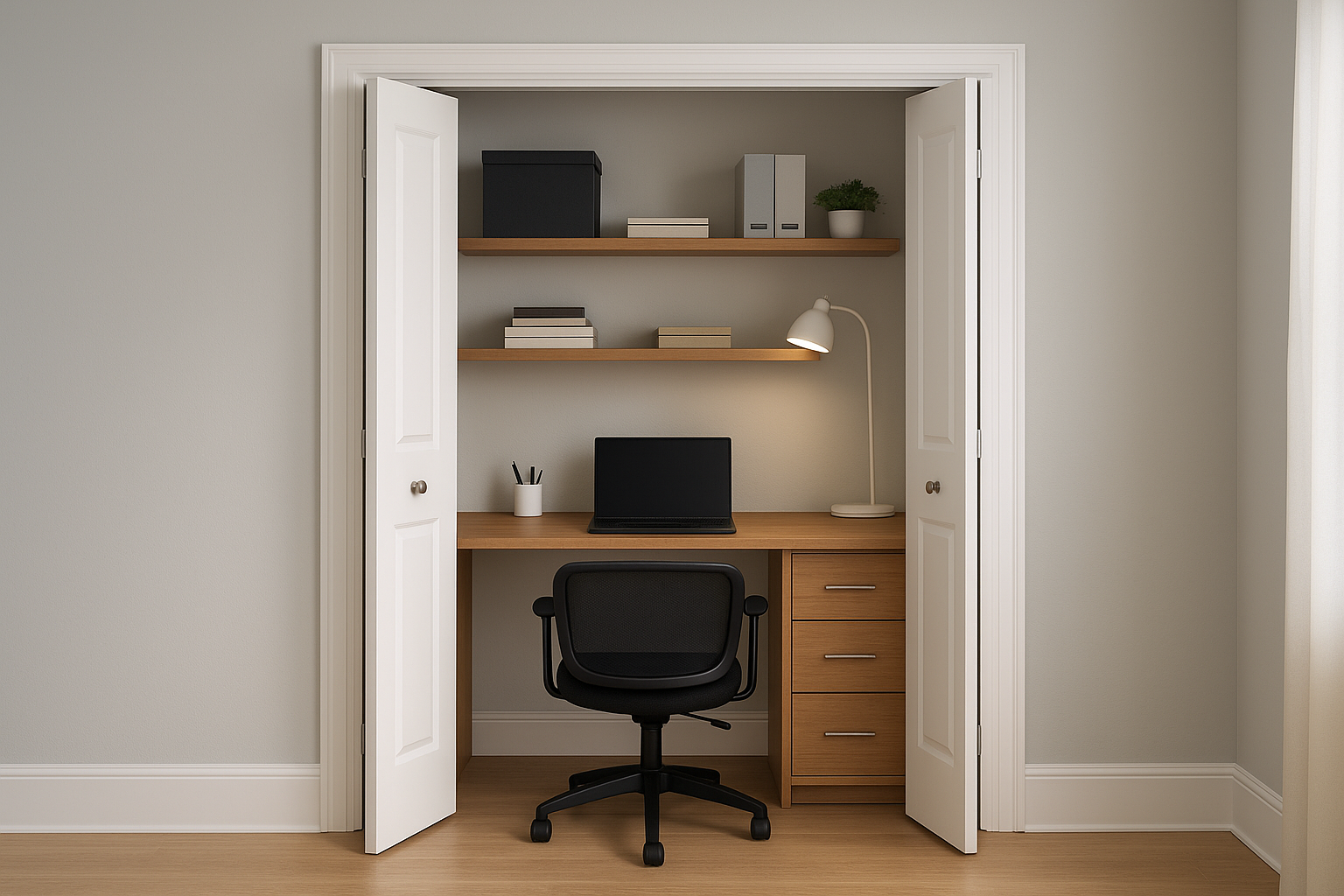
2. Cloffice built-in with hidden storage
A cloffice converts a standard bedroom closet into a compact, fully functional workspace. When the doors close, the room looks completely normal. This approach is one of the most practical home office built-in ideas for homes where dedicated office space is limited.
Plan the layout and key dimensions
Most reach-in closets run 24 to 30 inches deep, which is actually more than you need for a desk. You can safely reduce the desk depth to 20 inches and use the remaining space behind for concealed storage. Keep the desk surface at 28 to 30 inches high.
Add storage that keeps the desktop clear
Vertical wall space above the desk is where cloffice designs earn their value. Floating shelves or shallow upper cabinets above eye level handle books, binders, and supplies without crowding the workspace. Add a small drawer unit below the desk for everyday items you want within reach but out of sight.
The best cloffice designs look like a regular closet when the doors close, which matters if your workspace is in a guest room or main bedroom.
Choose materials and finishes that last
Match your closet door style and finish to the existing trim in the room so the built-in blends naturally into the space.
Expect budget range and build timeline
Cloffice built-ins typically cost between $3,000 and $7,000 and take three to five weeks to complete.
Avoid common design and install mistakes
Always add task lighting inside the closet before the build is finished. Natural light rarely reaches inside a closet, and working under poor lighting strains your eyes quickly.
3. Nook desk built-in for tight spaces
A nook desk built-in fits into small alcoves, under staircases, or between two walls where a standard desk would feel awkward. This is one of the most practical home office built-in ideas for homes where you’re working with a narrow footprint but still need real storage built into the design.
Plan the layout and key dimensions
Measure the width and depth of your nook carefully before designing anything. Most functional nook desks need at least 36 inches of width and 20 inches of depth to work comfortably. If the alcove is shallower, a wall-mounted fold-down desk can recover the usable floor space when you’re done working.
Add storage that keeps the desktop clear
Vertical shelving on both side walls of the nook doubles your storage without eating into the desk surface. Install narrow shelves 12 inches deep on each side to hold books, files, and equipment, keeping the desktop reserved strictly for active work.
A nook desk built-in works best when every inch of vertical wall space above and beside the desk is part of the storage plan.
Choose materials and finishes that last
Use hardwood plywood with a painted or stained finish that matches your existing trim so the built-in looks intentional rather than squeezed in.
Expect budget range and build timeline
Nook desk built-ins typically run between $2,500 and $6,000 and take two to four weeks from design to installation.
Avoid common design and install mistakes
Always spec dedicated task lighting directly above the desk surface. Nooks are naturally darker than open rooms, and overhead ceiling lights rarely reach the work area evenly.
4. Two-person built-in with shared storage
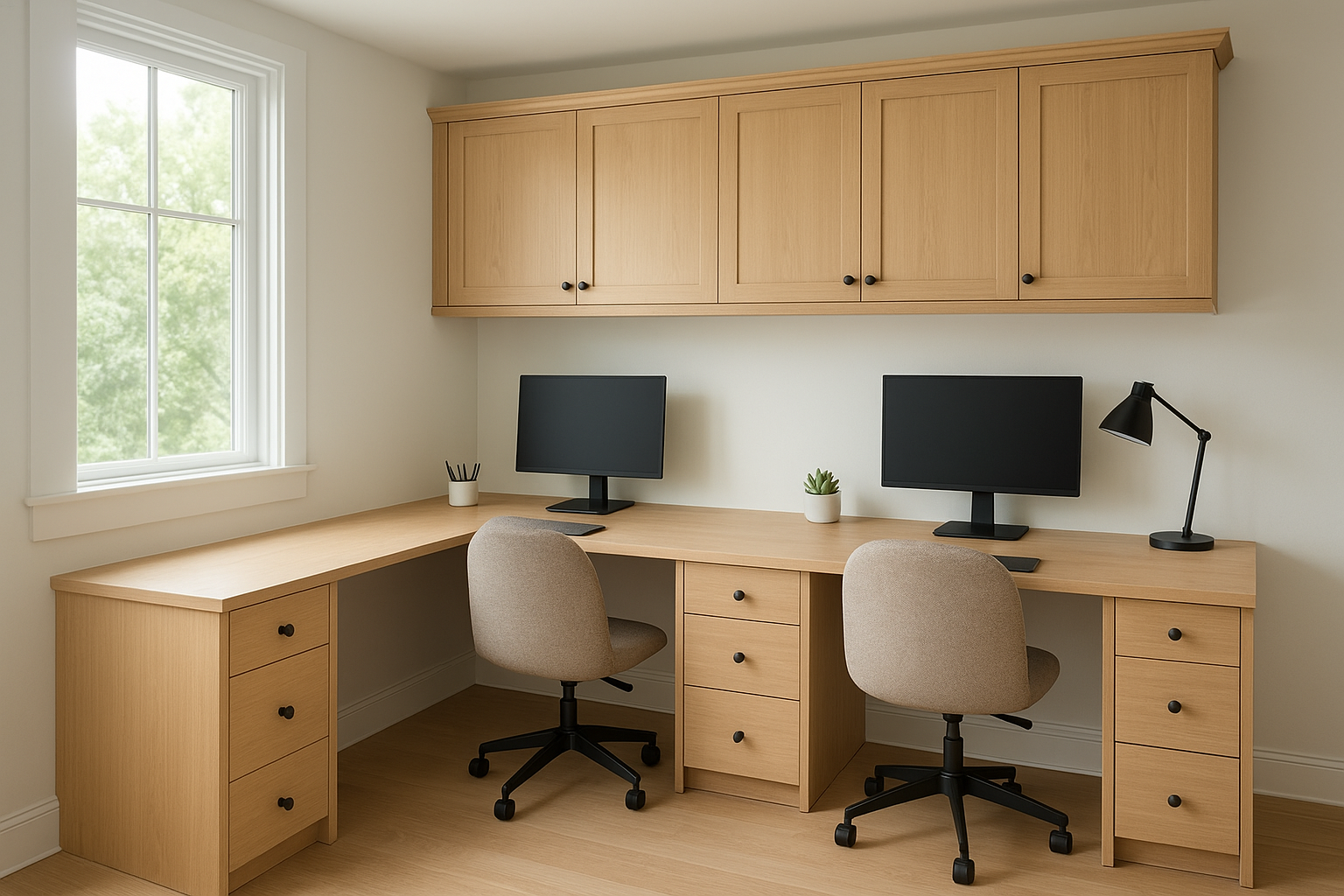
A two-person built-in solves one of the more specific home office built-in ideas challenges: two people sharing one room, each needing dedicated space without crowding the other. This design typically runs along two adjacent walls in an L-shape, with shared cabinetry placed at the junction where both workstations meet.
Plan the layout and key dimensions
The most practical layout uses two separate desk surfaces on adjacent walls, connected at a corner with shared storage above. Each desk should measure at least 48 inches wide to give each person enough room. Keep desk height at 28 to 30 inches and plan a minimum of 36 inches of clearance if you go with a back-to-back configuration instead.
Add storage that keeps the desktop clear
Place shared upper cabinets at the junction point so both people can access them without stepping into the other’s workspace. Each person still needs their own dedicated drawer stack built into their individual desk section to prevent supplies from mixing.
Separating personal storage from shared storage is what keeps a two-person built-in organized after the first week of use.
Choose materials and finishes that last
Use consistent materials and finishes across both sections so the unit reads as one intentional piece rather than two separate desks pushed together.
Expect budget range and build timeline
Two-person built-ins typically run between $10,000 and $22,000 depending on size and materials. Build and installation takes five to eight weeks from design approval.
Avoid common design and install mistakes
Plan separate electrical circuits for each workspace so one person’s equipment doesn’t trip the other’s. Keep shared center cabinets to 12 inches deep maximum so both sides can reach them comfortably.
5. Library-style built-ins with a desk wall
A library-style built-in combines floor-to-ceiling shelving along one or more walls with a dedicated desk surface integrated at one end. This is one of the more striking home office built-in ideas for homeowners who work with large reference collections or want a workspace that feels intentional from every angle.
Plan the layout and key dimensions
Position the desk section at the end of one wall so the library shelving flows uninterrupted beside it. Standard shelf depth runs 10 to 12 inches, which handles most books without making the unit feel heavy in the room.
Add storage that keeps the desktop clear
Closed cabinets below the desk handle files, equipment, and supplies you don’t need on the surface. Keep the shelves directly above reserved for reference materials you reach for regularly so your desktop stays clear during active work.
Library-style built-ins work best when the desk integrates visually into the shelving rather than sitting beside it as a separate piece.
Choose materials and finishes that last
Use solid wood or high-quality hardwood plywood for the shelving, since lighter materials sag over time under book weight. Add a painted or stained finish that matches your existing trim so the unit reads as part of the room rather than furniture placed against a wall.
Expect budget range and build timeline
Library-style built-ins typically run between $12,000 and $25,000 and take six to ten weeks from design approval to final installation.
Avoid common design and install mistakes
Always anchor floor-to-ceiling shelving directly into wall studs. Shelves loaded with books carry significant weight, and inadequate anchoring creates a real safety risk over time.
Next steps
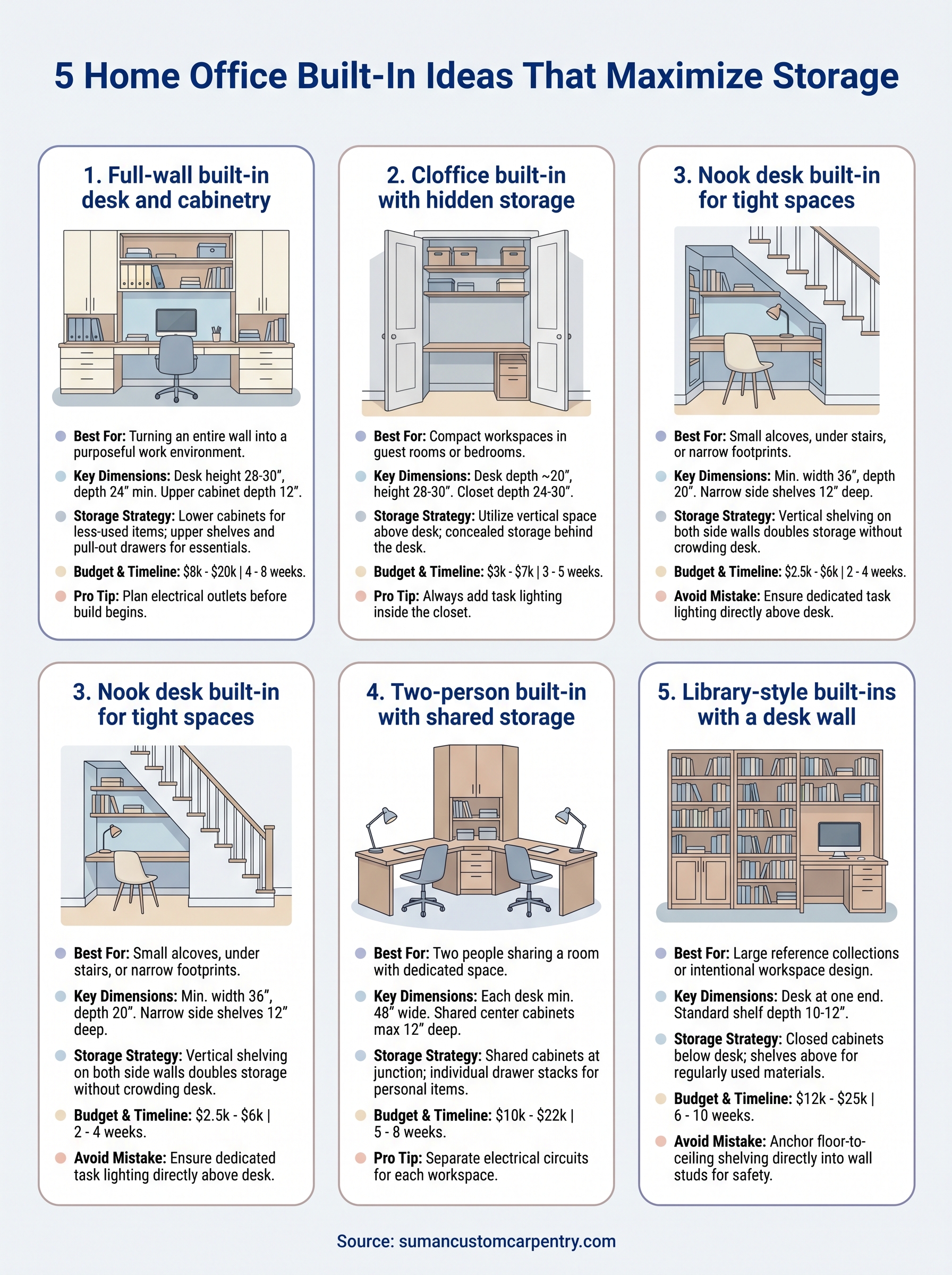
Each of these home office built-in ideas works because the storage is designed around how you actually use the space, not just what looks good in a photo. Whether you’re converting a closet, claiming an awkward nook, or building out a full library wall, the right configuration comes down to your workflow, your room dimensions, and your material choices. Getting those three things right before anything gets built saves time, money, and frustration later.
Your next move is to pick the layout that fits your space and start thinking through the details: wall dimensions, electrical placement, and the finish that matches your existing trim. If you want a second set of eyes on your plan before you commit, Suman Custom Carpentry builds every piece by hand in our Hyannis shop and works with Cape Cod homeowners through every step from first sketch to final installation. Start your custom home office project and let’s figure out what your space needs.