
A kitchen island does more than add counter space, it becomes the spot where your family eats breakfast, where guests gather during a dinner party, and where your kids do homework while you cook. But getting the seating part right takes some thought. The wrong overhang depth, an awkward chair height, or a layout that blocks traffic can turn a great idea into a daily frustration. That’s why kitchen island ideas with seating deserve more than a quick Pinterest scroll. You need to understand what actually works in your specific kitchen before committing to a design.
At Suman Custom Carpentry, we design and build custom kitchen islands at our shop in Hyannis, Cape Cod, so we’ve seen firsthand how the right seating setup transforms a kitchen. Whether you’re working with a compact galley kitchen or a wide-open floor plan, the island’s seating configuration has to match the room and how your household actually uses it.
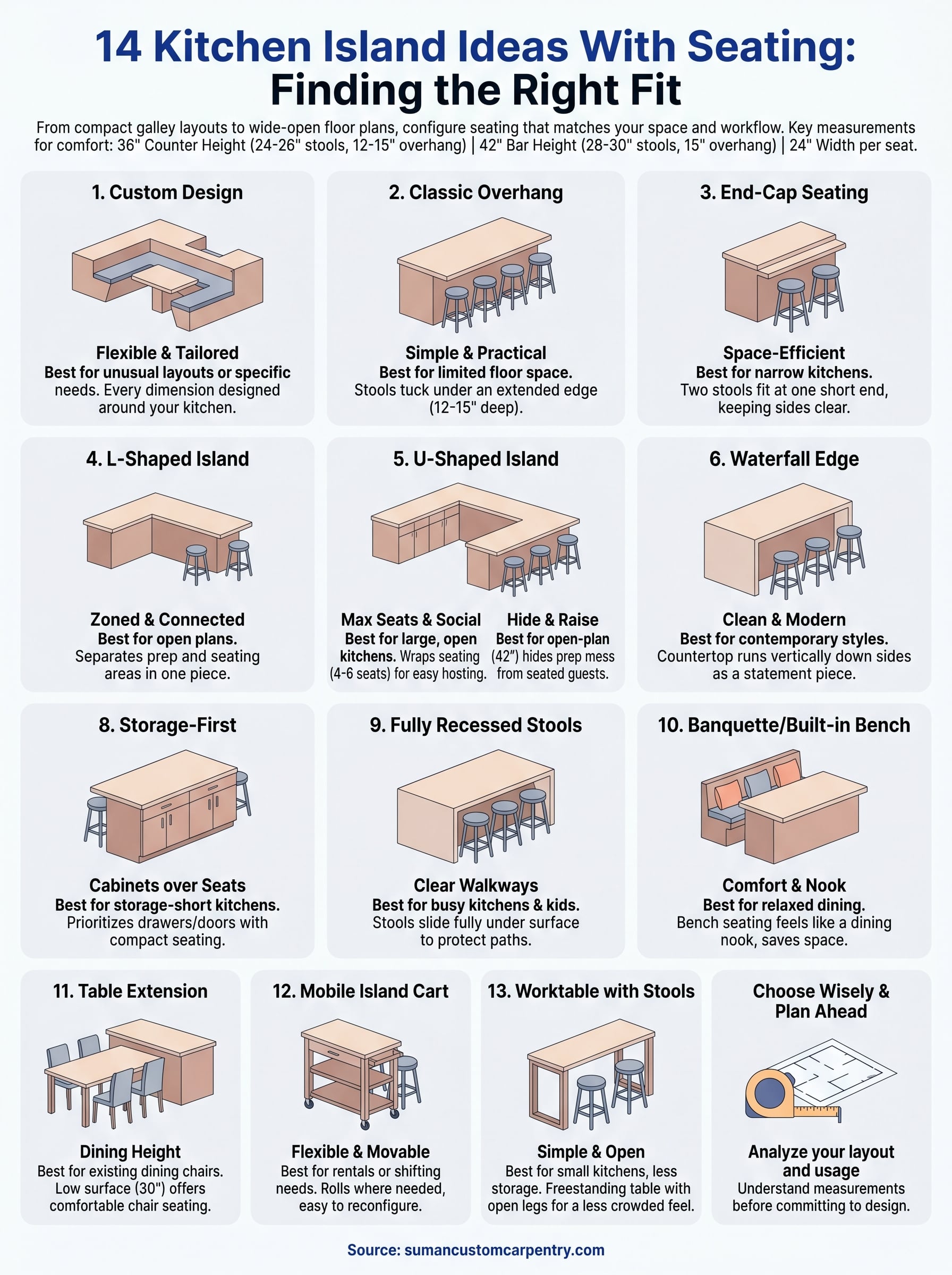
Below, we’ve pulled together 14 kitchen island ideas with seating that cover a range of sizes, styles, and layouts. Each one includes practical details, dimensions, materials, seating capacity, so you can move past the inspiration phase and start making real decisions about your next kitchen project.
1. Design a custom island with seating built for your kitchen
A custom-built island is the most flexible of all kitchen island ideas with seating because every dimension gets designed around your actual kitchen, not a catalog template. A custom build starts with your floor plan, your workflow, and how many seats you need, so the result functions exactly the way your household lives.
What it looks like
Custom islands take nearly any form: a single slab with a clean overhang, a two-level design separating prep from seating, or a built-in bench along one wall. The defining feature is that nothing is predetermined. You choose the countertop material, cabinet style, overhang depth, and seat count from day one.
At Suman Custom Carpentry, we hand-build every island in our Hyannis shop, which means the finished piece fits your room rather than the other way around.
When it works best
A custom island works best when your kitchen has an unusual layout, non-standard dimensions, or specific functional needs that stock islands simply cannot meet. If an angled wall limits your options or you want seating on two sides with storage in between, a custom build is the only reliable path to getting all of it right.
A custom island makes the most sense when you plan to stay in your home long-term and want a piece built to last decades, not a few years.
Key measurements to get right
Seating comfort depends on getting three numbers right before any wood gets cut:
- Counter height (36 in.): pair with 24 to 26-inch stools and a minimum 12-inch overhang
- Bar height (42 in.): pair with 28 to 30-inch stools and a minimum 15-inch overhang
- Per-seat width: allow at least 24 inches per person to avoid a cramped feel
Cape Cod-friendly material tips
Coastal kitchens hold more humidity than inland homes, so solid wood or plywood box construction handles seasonal moisture better than particleboard, which can swell and delaminate over time.
For species, white oak, maple, and poplar all perform well in Cape Cod conditions. Pair any of these with a moisture-resistant primer under your paint for results that hold up through damp winters and humid summers.
Typical cost range
Custom kitchen islands with seating typically run $4,000 to $15,000 or more, depending on size, materials, and build complexity.
At Suman Custom Carpentry, every island comes with a lifetime warranty on cabinet boxes and doors, making this an investment in your home rather than a purchase you’ll need to replace in five years.
2. Add a classic overhang for straight-line bar seating
A countertop overhang is one of the most practical kitchen island ideas with seating you can add to an existing island. You extend one edge of the countertop past the cabinet base, and that extra surface creates a natural bar where stools slide underneath.
What it looks like
The island keeps a standard rectangular footprint, but one side of the countertop extends 12 to 15 inches beyond the cabinet face. Stools sit along that edge, legs tucked under the counter, which keeps the overall footprint compact and the look clean.
When it works best
This layout works best in kitchens where floor space is limited but you still want seating for two to four people. It suits galley-style kitchens and open-plan layouts equally well because it does not change the cabinet footprint or block traffic paths.
If you already have an island and simply want to add seating, upgrading to a deeper countertop is one of the least disruptive ways to make it happen.
Key measurements to get right
Getting the overhang depth right determines how comfortable the seating actually feels. Use these numbers as your starting point:
- 12-inch overhang minimum for bar-height (42 in.) seating
- 15-inch overhang recommended for knee clearance at counter height (36 in.)
- 24 inches of linear space per stool to avoid shoulder-to-shoulder crowding
Cape Cod-friendly material tips
Choose a waterproof or sealed countertop material like quartz or sealed hardwood to handle the coastal humidity common on Cape Cod. Both hold up well against moisture and salt air without warping or staining.
Typical cost range
A countertop overhang addition runs $500 to $2,500, depending on the countertop material and whether the cabinet base needs any modification to support the extended surface.
3. Use end-cap seating to fit two stools in tight layouts
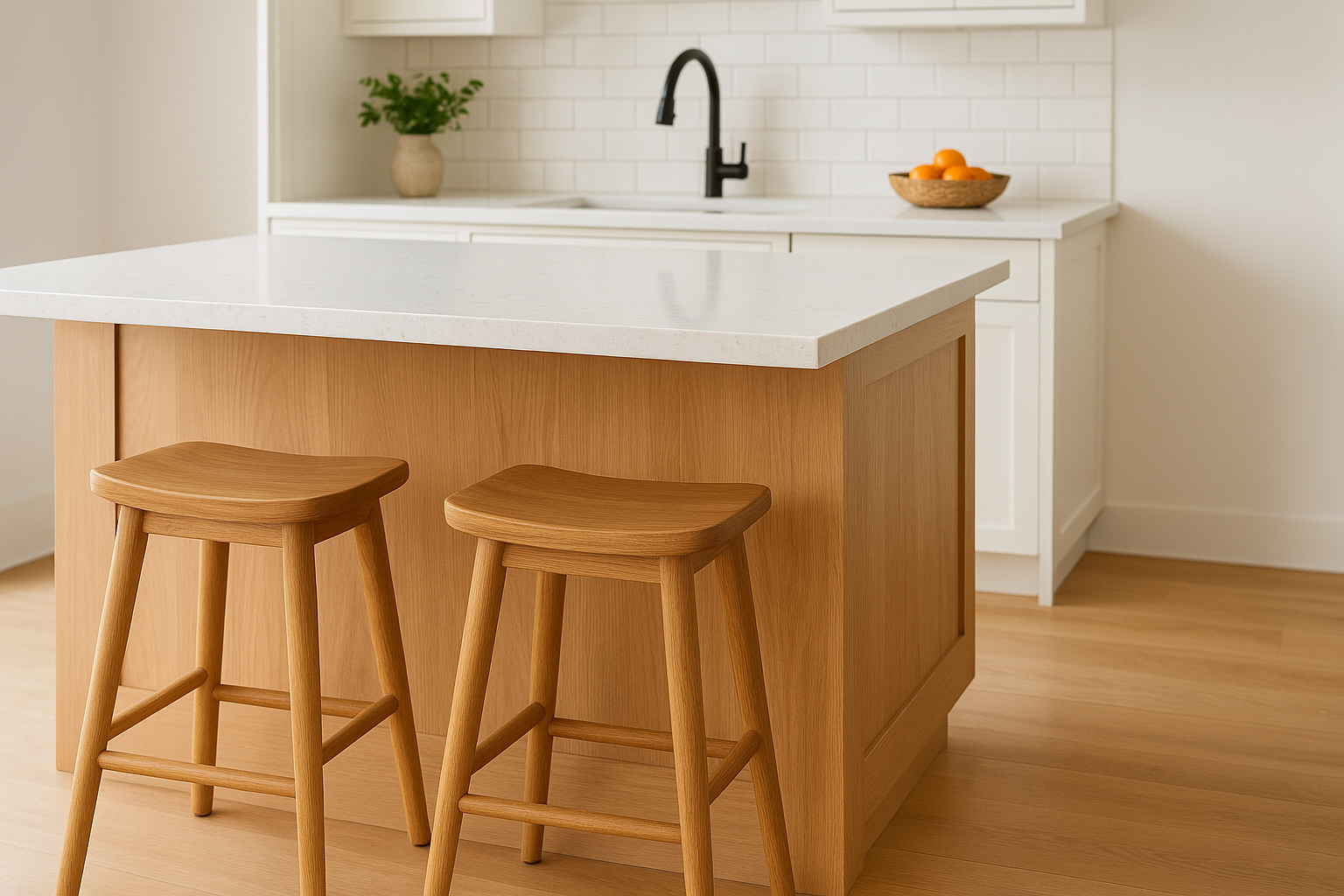
End-cap seating takes a different approach than a side overhang. Instead of extending the countertop along the length of the island, you add a dedicated seating ledge at one short end, keeping the sides of the island clear for movement. This is one of the most space-efficient kitchen island ideas with seating you can choose for a smaller kitchen.
What it looks like
The island holds its standard depth along the sides, but one end extends outward with a narrow overhang at counter or bar height. Two stools tuck neatly underneath, leaving the long sides of the island fully open for prep access and kitchen traffic.
When it works best
End-cap seating works best in narrow kitchens where side clearance is limited and a long overhang would cut into the main walkway. You need at least 42 inches of clear floor space behind the seated person to avoid blocking kitchen traffic.
This setup is especially practical in Cape Cod cottages and beach homes where kitchen footprints tend to run compact.
Key measurements to get right
- Overhang depth: 12 to 15 inches at the end cap
- End-cap width: 24 inches minimum per stool; a two-stool layout needs at least a 48-inch-wide island
- Clearance behind stools: 42 inches to let people move freely around seated guests
Cape Cod-friendly material tips
Use solid wood or plywood construction for the end-cap cabinet section rather than particleboard. Coastal humidity warps particleboard over time, so moisture-resistant finishes on the exposed end panel protect the wood without requiring constant upkeep.
Typical cost range
Adding end-cap seating to an existing island typically costs $800 to $3,000, depending on countertop material and whether structural modifications to the cabinet base are required.
4. Build an L-shaped island to separate prep and seating
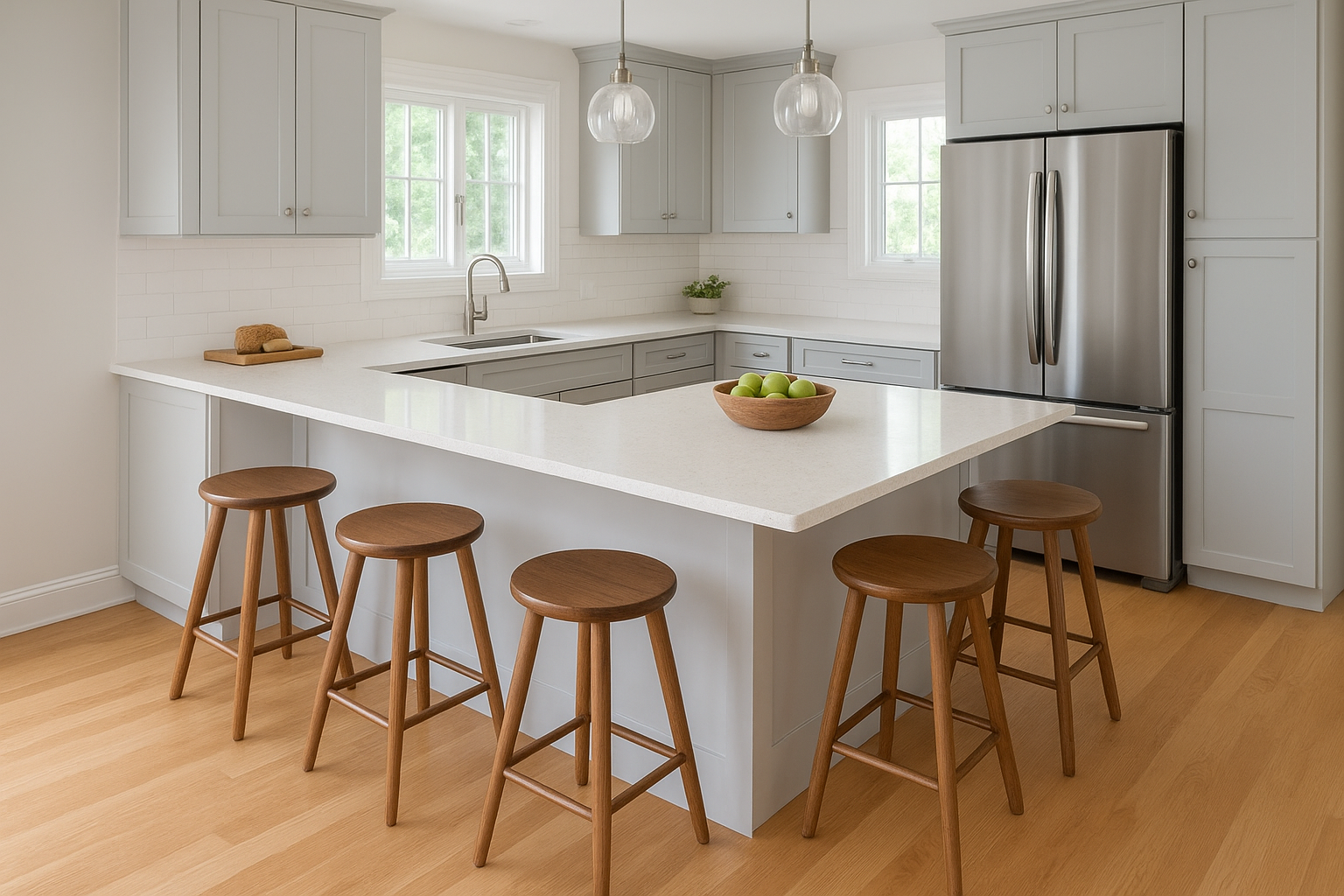
An L-shaped island gives your kitchen two distinct zones in one connected piece: a working prep surface on the longer leg and a dedicated seating area on the shorter leg. This layout is one of the more practical kitchen island ideas with seating for homeowners who want their kitchen to handle both cooking and casual dining without the two activities getting in each other’s way.
What it looks like
The island forms an "L" shape, with one leg running parallel to your kitchen’s main work surface and the shorter leg angling out into the room. Stools line the outer edge of the shorter leg, leaving the longer side completely open for prep, plating, and everyday cooking tasks.
When it works best
This configuration suits open-plan kitchens with generous square footage where the island can anchor the space without cutting off natural traffic paths. You need enough room on all sides to walk around both legs comfortably.
An L-shaped island works especially well when you want to face your guests while you cook, since the seating leg keeps everyone in view.
Key measurements to get right
- Minimum 42 inches of clearance around each leg for comfortable movement
- Seating leg overhang: 12 to 15 inches depending on stool height
- 24 inches of linear space per seat along the seating side
Cape Cod-friendly material tips
In Cape Cod homes, painted maple or poplar cabinets with a moisture-resistant primer hold up well through the humidity swings that come with coastal living. Pair them with quartz or sealed hardwood countertops on both legs for low-maintenance durability year-round.
Typical cost range
An L-shaped custom island typically runs $5,000 to $18,000, depending on materials, overall size, and whether plumbing or electrical work is required within the island itself.
5. Choose a U-shaped island for 4–6 seats and easy hosting
A U-shaped island wraps seating around three sides of the structure, giving you the highest seat count of any of the kitchen island ideas with seating on this list without pushing guests into a separate room. The design keeps everyone at the island together, which makes it a natural fit for households that host regularly.
What it looks like
The island forms a wide U shape, with seating running along two parallel sides and one connecting end. This creates an enclosed seating zone where four to six people can sit comfortably, facing inward or along the perimeter, depending on how you configure the overhang depth.
When it works best
This layout works best in large, open-plan kitchens where the island can sit at least 48 inches away from surrounding cabinetry on all sides. You need enough floor space to let people pull stools in and out without blocking the main kitchen walkway.
A U-shaped island works particularly well for Cape Cod vacation homes where hosting large groups is a regular part of summer living.
Key measurements to get right
- Minimum clearance: 48 inches on all open sides
- Overhang depth: 12 to 15 inches on each seating side
- Linear space per seat: 24 inches minimum to keep guests comfortable
Cape Cod-friendly material tips
Choose marine-grade plywood or solid hardwood for the cabinet boxes, as both handle the coastal humidity Cape Cod kitchens face year-round. Finish the countertops in sealed quartz or hardwood to resist moisture without requiring heavy maintenance each season.
Typical cost range
A U-shaped custom island runs $8,000 to $25,000 or more, depending on its overall footprint, countertop material, and any built-in storage or appliance requirements.
6. Pick a waterfall-edge island for a clean, modern look
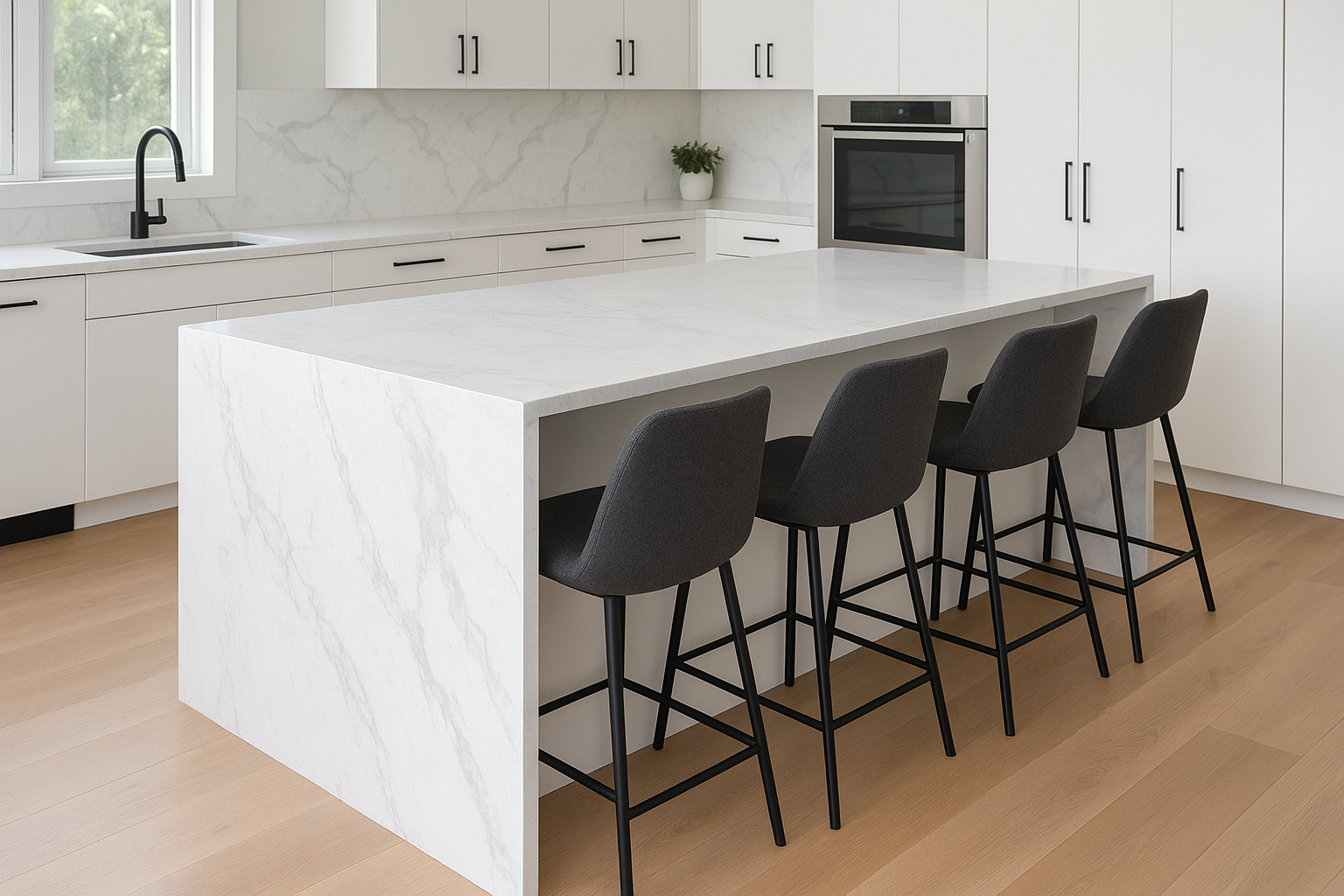
A waterfall-edge island takes the countertop material and runs it vertically down one or both sides, creating a continuous surface that flows from top to floor. This is one of the more visually striking kitchen island ideas with seating because it treats the island as a statement piece rather than a standard cabinet with a lid on it.
What it looks like
The countertop material, typically quartz, marble, or hardwood, wraps over the edge and drops straight to the floor on one or both ends. Stools line the opposite side, where a standard overhang gives you comfortable knee clearance. The vertical face of the countertop becomes the visual focal point of the kitchen.
When it works best
This style fits best in modern or contemporary kitchens where clean lines and minimal ornamentation already define the space. Your cabinetry should have flat-front doors and simple or no hardware for the look to feel cohesive.
A waterfall edge makes the strongest visual impact when your countertop material has a natural grain or veining pattern, since the vertical drop puts the full slab on display.
Key measurements to get right
- Overhang depth: 12 to 15 inches on the seating side
- Linear space per seat: 24 inches minimum
- Slab thickness: 1.25 to 1.5 inches for a substantial presence on the vertical face
Cape Cod-friendly material tips
Quartz handles Cape Cod humidity without seasonal sealing, making it the most practical waterfall-edge choice. If you prefer hardwood, use a closed-grain species like maple with a water-resistant finish on the vertical face to prevent moisture absorption.
Typical cost range
Waterfall-edge islands typically run $6,000 to $20,000, depending on the countertop material and whether your design carries the waterfall detail on one end or both.
7. Try a two-tier island to hide prep mess and raise seating
A two-tier island solves one of the most common complaints homeowners have about open-plan kitchens: guests at the island see every bit of prep clutter the moment they sit down. By raising one section of the countertop higher than the other, you create a visual barrier between the cooking zone and the seating zone without building a wall or closing off the room.
What it looks like
The lower tier sits at standard counter height (36 inches) and handles prep, cooking, and plating. The upper tier rises to bar height (42 inches) on the guest-facing side, where stools line up along the raised edge. This split level is one of the more functional kitchen island ideas with seating because both surfaces serve different purposes at the same time.
When it works best
This layout works best in open-plan kitchens where the island faces a living or dining area and you want to keep a tidy appearance for guests. The raised tier keeps dirty cutting boards and stacked dishes out of your guests’ sightlines while you cook.
A two-tier island is especially practical when you regularly cook and entertain at the same time.
Key measurements to get right
- Lower tier: 36 inches tall, used for prep
- Upper tier: 42 inches tall, paired with 28 to 30-inch stools
- Overhang on raised tier: 12 inches minimum for knee clearance
Cape Cod-friendly material tips
Use sealed hardwood or quartz on both tiers to handle coastal humidity without constant upkeep. A painted poplar or maple base holds up well through Cape Cod’s damp winters and humid summers.
Typical cost range
Two-tier islands typically run $6,000 to $20,000, depending on overall size and countertop material choices.
8. Plan a storage-first island and keep seating compact
Not every kitchen island needs to seat four people. Sometimes you need maximum cabinet storage more than you need extra chairs, and this approach is one of the most practical kitchen island ideas with seating for households that are constantly short on kitchen storage space. You build the island around drawers, doors, and pull-outs first, then add just enough seating to handle daily use.
What it looks like
The island is deep and cabinet-heavy, with most of the perimeter dedicated to storage rather than seating. A short overhang on one end or along a narrow side accommodates one or two stools, keeping the seat count small but functional. The result looks like a working kitchen piece first and a seating surface second.
When it works best
This layout works best when your kitchen lacks a pantry or dedicated storage area and you need the island to carry that load. It also suits households where the kitchen island sees more daily cooking traffic than social gathering.
If your kitchen already has a dining table nearby, compact island seating gives you flexibility without duplicating what you already have.
Key measurements to get right
- Overhang depth: 12 inches minimum for any seating side
- Island depth: 30 to 36 inches to fit full-depth cabinet storage
- Stool clearance: 24 inches of linear space per seat
Cape Cod-friendly material tips
Use solid plywood box construction with a moisture-resistant finish on all interior cabinet surfaces. Cape Cod humidity gets into particleboard quickly, so solid materials protect your storage investment for years without warping.
Typical cost range
Storage-first islands with compact seating typically run $4,500 to $14,000, depending on cabinet configuration and countertop material.
9. Tuck stools fully under the island to protect walkways
Fully recessed stools are one of the most underrated kitchen island ideas with seating because the benefit is immediate the moment you push a stool in: your walkways stay clear even in a busy kitchen. This approach prioritizes traffic flow over seat count, making it ideal for households where the kitchen sees constant movement throughout the day.
What it looks like
The island countertop extends far enough to let stools slide completely underneath the surface when not in use. No legs or seat backs protrude into the walkway. The island looks clean and uncluttered when stools are tucked in, which keeps the kitchen feeling open even in a smaller footprint.
When it works best
This setup works best in kitchens with narrow clearances where a standard overhang would leave stools blocking the main traffic path. It also suits homes with young children or pets, where protruding furniture creates a daily hazard.
Fully recessed stools are particularly useful in Cape Cod vacation homes where several people move through the kitchen at once during summer gatherings.
Key measurements to get right
- Overhang depth: 18 to 20 inches to allow full stool clearance
- Counter height: 36 inches, paired with 24 to 26-inch stools without backs or with low backs
- Linear space per seat: 24 inches minimum along the seating edge
Cape Cod-friendly material tips
Choose backless stools in moisture-resistant materials like metal or sealed hardwood to handle the coastal humidity common in Cape Cod kitchens. Avoid upholstered seats unless the fabric is rated for high-humidity environments.
Typical cost range
Modifying an existing island to accommodate fully recessed stools runs $1,000 to $4,000, depending on countertop replacement needs and cabinet base adjustments.
10. Add banquette or built-in bench seating for comfort
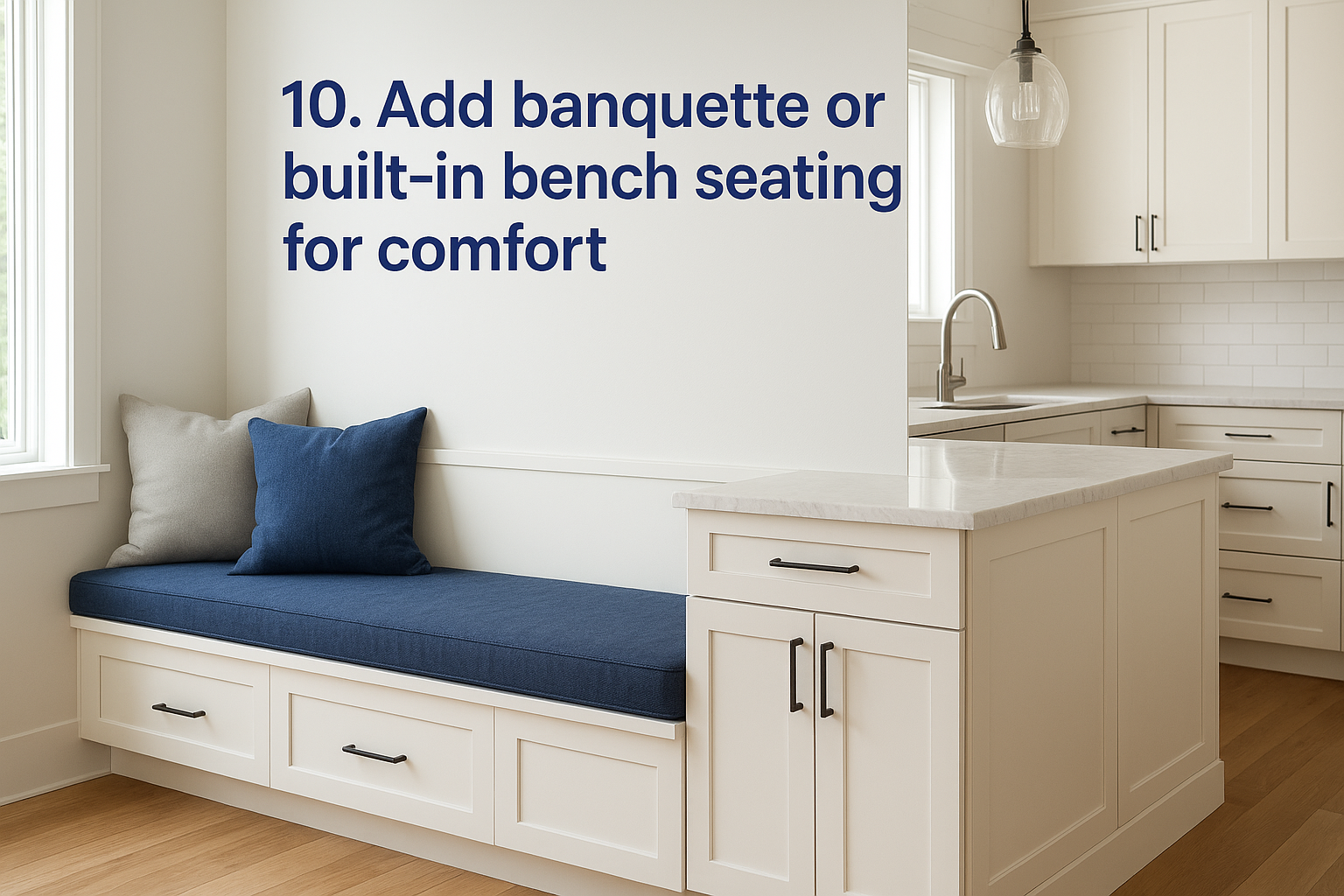
A built-in bench or banquette paired with a kitchen island gives you more seating comfort than a stool while keeping the footprint tighter than a full dining table setup. Among all kitchen island ideas with seating, this one suits households that prioritize long, relaxed meals over quick grab-and-go breakfasts.
What it looks like
The bench runs along one side of the island, either anchored to the wall or freestanding, with the island acting as the table surface. Cushions on the bench add comfort for extended sitting, and the overall look feels more like a built-in dining nook than a standard island arrangement.
When it works best
This layout works best when your kitchen opens into a dining or living area and you want seating that invites people to settle in rather than perch. It suits families with young children well, since benches have no fall risk and no tipping stools to worry about.
A built-in bench integrates naturally into a kitchen remodel if you plan the island and bench as a single cohesive unit from the start.
Key measurements to get right
- Bench seat height: 18 inches to pair with a 36-inch counter height island
- Seat depth: 18 to 20 inches for comfortable, supported sitting
- Knee clearance: 12 inches minimum between bench and island face
Cape Cod-friendly material tips
Use marine-grade plywood for the bench box and choose moisture-resistant upholstery fabric rated for high-humidity environments to handle Cape Cod’s coastal conditions without mold or warping.
Typical cost range
A built-in bench paired with a custom island typically adds $1,500 to $5,000 to the overall project cost, depending on bench length and upholstery material.
11. Attach a table extension for dining-height island seating
A table extension is one of the more versatile kitchen island ideas with seating because it brings full dining-height seating to an island that was never designed for it. You attach a lower surface, typically at 30 inches tall, to one side of the island, and standard dining chairs replace bar stools entirely.
What it looks like
The extension projects outward from one side or end of your island at standard dining table height (30 inches). Regular dining chairs pull up to the extended surface, giving seated guests more comfort and back support than a stool provides. The island retains its full counter height on the working side.
When it works best
This setup works best when your household already owns a set of dining chairs you want to use and you prefer sitting at a table rather than perching at a bar. It also suits kitchens where older family members or young children find bar stools uncomfortable or difficult to use safely.
A table extension is particularly practical when your kitchen lacks a separate dining area and the island needs to serve as both prep surface and dining table.
Key measurements to get right
- Extension height: 30 inches to match standard dining chairs (18-inch seat height)
- Extension depth: 18 to 24 inches for comfortable knee clearance
- Linear space per seat: 24 inches minimum per person along the extension
Cape Cod-friendly material tips
Match the extension surface to your island’s countertop material to keep the look cohesive. Sealed hardwood or quartz both handle Cape Cod humidity without warping or requiring seasonal maintenance.
Typical cost range
Adding a table extension to an existing island typically costs $1,200 to $4,500, depending on material and whether the cabinet base needs structural support added beneath the extension.
12. Use a mobile island cart when you need flexibility
A mobile island cart is one of the most adaptable kitchen island ideas with seating for households whose needs shift regularly. You roll the cart where you need it, add a couple of stools, and move the entire setup out of the way when you need the floor space back.
What it looks like
A mobile island cart looks like a compact freestanding cabinet on locking casters, typically 24 to 36 inches wide. Some include a butcher-block top, open shelving below, and hooks along the sides. Stools tuck under a short overhang on one or both long sides when the cart is in use.
When it works best
This setup works best in rental kitchens or smaller homes where a permanent island is not an option. It also suits households that regularly reconfigure their space for entertaining, since you can push the cart against a wall when you need open floor space.
A mobile cart works particularly well in Cape Cod vacation rentals where kitchen layouts vary and owners want a seating option that travels easily between properties.
Key measurements to get right
- Cart height: 36 inches to match standard counter-height stools (24 to 26 inches)
- Overhang depth: 8 to 12 inches minimum for stool clearance
- Clearance behind seated guests: 42 inches so people can move freely around the cart
Cape Cod-friendly material tips
Choose a cart with a sealed butcher-block or stainless-steel top to handle coastal humidity without warping. Avoid unfinished wood tops, which absorb moisture quickly in damp Cape Cod conditions.
Typical cost range
A quality mobile island cart runs $300 to $1,500, depending on size, materials, and storage configuration.
13. Swap the bulky island for a worktable with stools
A worktable is one of the simplest kitchen island ideas with seating for kitchens where a full cabinet island would eat up too much floor space. You get a functional prep surface and casual seating in a footprint that leaves your kitchen feeling open and easy to move through.
What it looks like
A worktable looks like a narrow freestanding table, typically 30 to 36 inches tall and 24 to 30 inches deep, with two to four stools tucked along one or both long sides. Unlike a cabinet island, a worktable has open legs and no base cabinetry, which makes the kitchen feel less crowded visually.
When it works best
This setup works best in smaller kitchens where storage is handled elsewhere and you mainly need extra surface area and a spot for people to sit. It also suits homeowners who want a more relaxed, informal kitchen atmosphere rather than a built-in look.
A worktable works particularly well in Cape Cod cottages where the kitchen is compact and the goal is comfort over cabinet count.
Key measurements to get right
- Table height: 36 inches for counter-height stools (24 to 26 inches) or 30 inches for standard dining chairs
- Depth: 24 to 30 inches to allow comfortable prep space without crowding the room
- Linear space per seat: 24 inches minimum per person along the seating side
Cape Cod-friendly material tips
Choose a worktable with a sealed hardwood or stainless-steel top to handle coastal humidity without warping. Open-leg frames in powder-coated steel or solid wood hold up well in Cape Cod conditions year-round.
Typical cost range
A quality worktable with stools runs $400 to $2,500, depending on materials and whether you purchase them as a set or separately.
Your next step
The 14 kitchen island ideas with seating in this guide cover a wide range of layouts, sizes, and budgets, but the right one for your kitchen depends on your specific floor plan and how your household actually uses the space day to day. A mobile cart solves a different problem than a custom two-tier build, and knowing the difference before you commit to anything saves you from costly changes later.
If you’re ready to move from inspiration to a real plan, Suman Custom Carpentry designs and hand-builds custom kitchen islands at our Hyannis shop on Cape Cod, with a lifetime warranty on every cabinet box and door. You get a piece built precisely around your kitchen, not a catalog option retrofitted into a space it was never designed for. Reach out to start your custom kitchen island project and we’ll walk through your layout together from the start.