
Small rooms don’t have to feel small, especially when you build up instead of out. Built in bunk bed ideas keep popping up in our shop conversations with Cape Cod homeowners who need to squeeze more sleeping space out of tight guest rooms, kids’ rooms, or seasonal cottages. The trick is making them look intentional, not like an afterthought bolted to the wall.
At Suman Custom Carpentry, we’ve designed and built custom bunk beds in our Hyannis shop for families across the Cape, so we know what works structurally and what actually looks good once it’s installed. We pulled together five designs that make small rooms feel bigger, sleep more people, and still carry that clean, built-in look that adds real value to your home.
Whether you’re planning a DIY project or considering a fully custom build, these ideas will give you a strong starting point. We’ll cover layout options, material choices, and the small details that separate a basic bunk from one that looks like it belongs in the room.
1. Wall-to-wall custom bunks by Suman Custom Carpentry
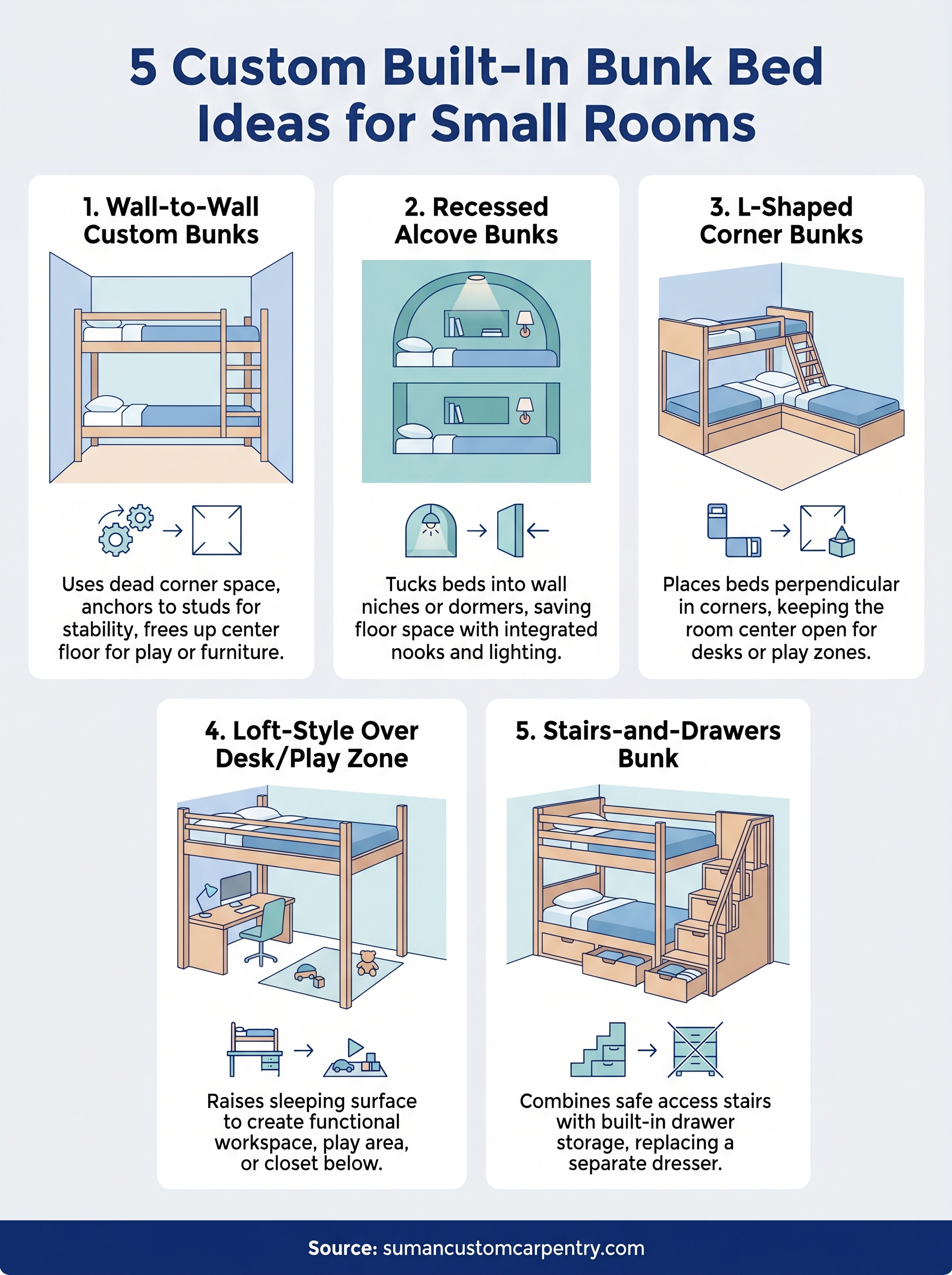
Wall-to-wall bunks are one of the most requested built in bunk bed ideas we build at our Hyannis shop. By running the frame from one wall to the other, you create a structure that feels permanent, stable, and completely integrated into the room rather than placed inside it.
Why this layout works in tight rooms
A wall-to-wall bunk uses dead corner space that a freestanding bed completely wastes. The frame anchors to studs on both ends, which eliminates wobble and frees up the center of the room for play, storage, or a second furniture arrangement.
Smart sizing for mattresses, bedding, and headroom
Most builds use a twin XL mattress (38" x 80") on each level. Plan for at least 33 inches of clearance between the sleeping surface and the frame or ceiling above. That number gives a child room to sit up without issue and keeps overnight adult guests comfortable.
Skimping on headroom is the most common mistake in custom bunk builds; measure twice before you finalize the frame height.
Structural approach for a solid built-in feel
The frame should be built from 3/4" solid plywood or hardwood lumber with the side rails dadoed into the posts for rigidity. Every connection point gets glued and screwed before installation, so the finished structure feels like part of the house rather than furniture sitting against the wall.
Custom details that elevate the look
Beadboard panels and integrated shelving pull a bunk from utilitarian to genuinely designed. Small additions like a routed edge profile or a built-in reading ledge make a visible difference once the room is complete.
Budget range and timeline expectations
A wall-to-wall custom bunk typically runs between $3,500 and $7,000 depending on material grade and added features. At Suman Custom Carpentry, our standard build and installation window is four to six weeks from approved design to final walkthrough.
2. Recessed alcove bunks with nooks and sconces
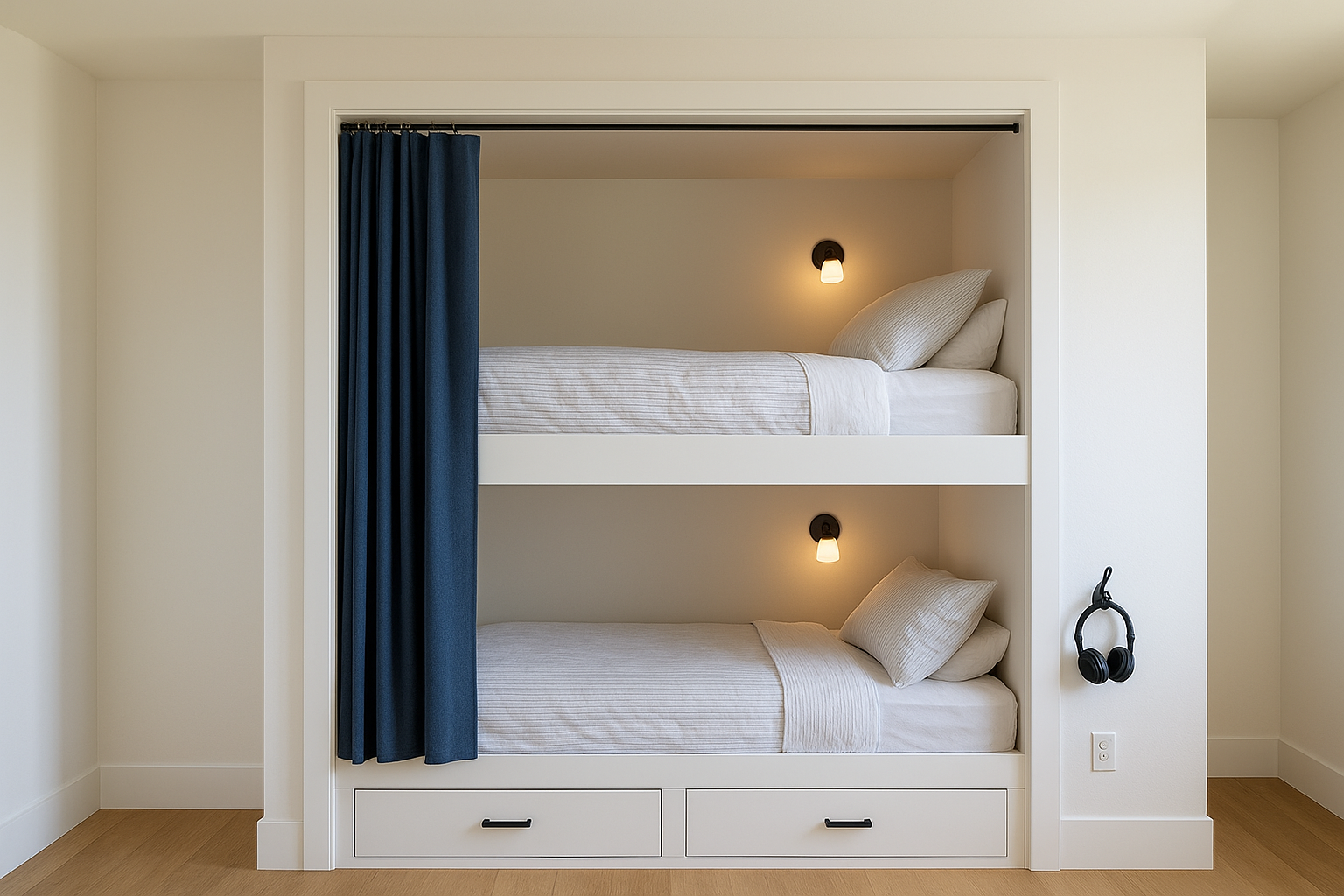
A recessed alcove bunk tucks sleeping spaces into the wall rather than in front of it, freeing real floor space. This ranks among the more visually intentional built in bunk bed ideas for rooms with existing niches or thick interior walls.
Best room shapes for an alcove bunk setup
Rooms with dormers or bump-outs are natural fits for this layout. A 16-to-24-inch recess carves out a defined sleeping zone without shrinking the walkable area of the room.
Built-in storage and bedside nook options
Each alcove can carry a shallow shelf at shoulder height for a phone or book. Common additions that fit cleanly inside the recess include:
- A pull-out drawer under the mattress platform
- A small ledge for a water glass or lamp
- A hook rail for headphones or a bag
Lighting and outlet planning for each bunk
Rough in a recessed sconce or puck light before the walls close. Each level also benefits from a USB outlet to keep cords off the mattress.
Plan wiring before framing closes; adding it later costs more and damages finished surfaces.
Privacy upgrades like curtains or partial walls
A curtain panel on a tension rod across the opening gives your sleeper light control and a personal boundary. Partial side walls create a stronger sense of enclosure if the room allows.
Budget range and finishing options
Alcove bunks typically run $4,500 to $8,500 depending on recess depth, lighting, and trim complexity.
3. L-shaped corner bunks to open up floor space
An L-shaped corner bunk places two sleeping surfaces perpendicular to each other, tucking both beds into a corner rather than stacking them vertically. This layout ranks among the most practical built in bunk bed ideas for oddly shaped rooms where a traditional stacked design would block a window or closet door.
When an L-shape beats a standard stacked bunk
A standard stack makes sense in a narrow room with one usable wall. An L-shape works better when you have two adjacent walls available and want to keep the center of the room open for play, a desk, or a third sleeping option.
Key measurements for safe access and clearance
The upper bunk needs at least 33 inches of clearance to the ceiling. The lower bed in an L-layout typically sits at standard bed height (about 18 inches), which leaves enough room underneath for storage drawers.
Confirm your ceiling height before committing to an L-shape; low ceilings cut into upper bunk comfort faster than most people expect.
Ladder vs stairs in a corner layout
A corner layout often fits a short angled ladder against the joint wall without eating extra floor space. If your room has room to spare, three-step stairs with pull-out drawers integrate cleanly on the open side.
Guardrails, panels, and sightline tricks
Solid side panels on the upper bunk create a finished, furniture-grade look and block light from the lower sleeper. A low horizontal guardrail on the open face keeps the safety barrier from looking heavy or institutional.
Budget range and material choices
Expect to spend $3,800 to $7,500 for a custom L-shaped build, depending on wood species, finish grade, and integrated storage options.
4. Loft-style built-in bunk over a desk or play zone
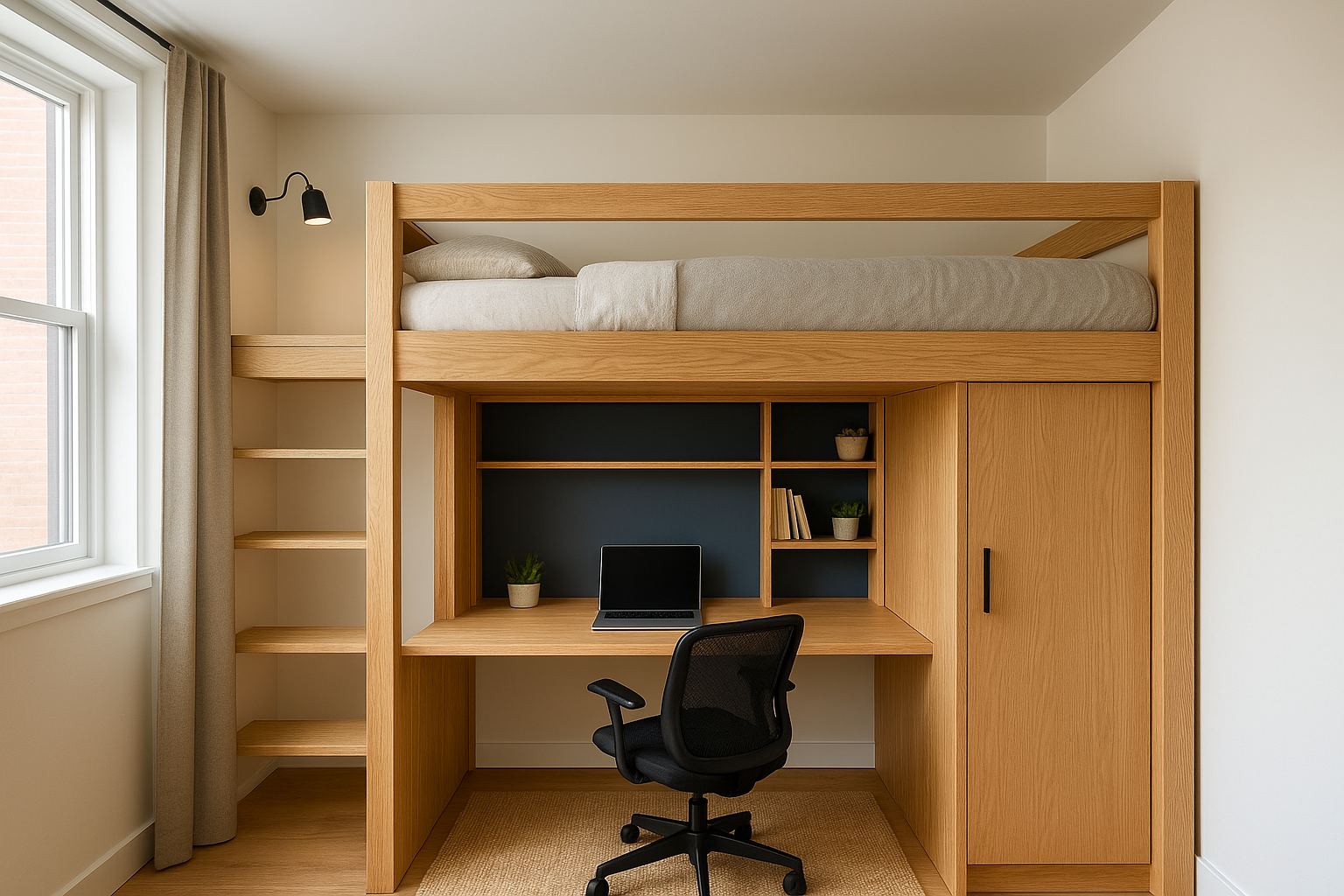
A loft bunk raises the sleeping surface and turns everything below into functional square footage. Among built in bunk bed ideas, this layout solves two problems at once: where to sleep and where to work or play.
Who this layout fits best
This layout works best for a single child or student who needs a dedicated workspace in a tight room. It also suits guest rooms that double as a home office when visitors aren’t staying over.
Headroom targets for sleeping and the zone below
Plan for at least 33 inches above the mattress surface to the ceiling. The zone below needs 48 inches of clearance to fit a standard desk chair comfortably.
Measure your ceiling before committing; anything under nine feet requires careful planning to make both zones livable.
Built-in desk, shelving, and closet integration
You can build a full desk surface and open shelving into the lower zone without touching the room’s walls. Keep desk depth at 24 inches for a comfortable workspace.
Noise, lighting, and ventilation considerations
Install a reading light at the sleeping level and a task lamp outlet at the desk below. Leave small ventilation gaps in solid side panels to prevent heat from collecting at the top.
Budget range and durability tips
Expect costs between $3,500 and $7,000 depending on lower zone features and material grade. Hardwood frames outlast MDF in high-use spaces, so material choice matters for long-term durability.
5. Stairs-and-drawers bunk that replaces a dresser
A stairs-and-drawers bunk combines access stairs with built-in drawer storage, effectively replacing a separate dresser. This is one of the most practical built in bunk bed ideas for rooms where every square foot matters.
Why stairs make sense in small bedrooms
Stairs feel safer than a ladder for younger children and overnight guests. Each stair tread doubles as a drawer front, so you get dedicated storage without adding another piece of furniture to your room.
Drawer sizing that actually holds kid and guest gear
Build each drawer at 12 to 14 inches deep and 18 inches wide to fit folded clothes, spare linens, or toys without wasted space inside.
Safety details for stair landings and railings
Each tread needs a non-slip surface, and the top landing should connect to a solid guardrail at least 15 inches high above the mattress platform.
Never skip the guardrail on a stair-access bunk; it’s the single most important safety element in the build.
Design moves that keep it from looking bulky
Recessed drawer pulls and clean vertical lines on the stair panels keep the structure looking trim. Painting the stairs the same color as your walls helps the frame blend rather than dominate.
Budget range compared to ladders and open bases
Stairs-and-drawers builds typically run $4,000 to $8,000, roughly 20 to 30 percent more than a ladder version, but that premium includes storage that replaces a separate dresser entirely.
Quick next steps
Each of these built in bunk bed ideas gives you a real starting point, but the right design depends on your specific room dimensions, ceiling height, and how you plan to use the space. Before you build anything, measure your room carefully and sketch out where the bunk will sit relative to windows, doors, and vents.
If you want a fully custom build that fits your exact space and carries a lifetime warranty on cabinet boxes and doors, Suman Custom Carpentry builds every piece by hand at our Hyannis shop. Your project gets handled from the initial design conversation all the way through final installation on Cape Cod. Reach out to Suman Custom Carpentry to talk through your room, get honest feedback on which layout makes sense, and walk away with a realistic timeline and budget for what you have in mind.