
If you’re planning a kitchen project on Cape Cod, one of the first questions you’ll ask is how much does cabinet installation cost. The answer isn’t as straightforward as most homeowners hope. Pricing depends on the type of cabinets, the complexity of your layout, labor rates in your area, and whether you’re going with stock, semi-custom, or fully custom cabinetry, and the range between those options is significant.
At Suman Custom Carpentry, we design and hand-build custom cabinets at our shop in Hyannis, then handle the full installation ourselves. That gives us a clear picture of what drives costs up, what keeps them reasonable, and where homeowners tend to get surprised by their estimates. We’ve seen every kind of kitchen project over the past seven-plus years, from straightforward cabinet swaps to full-scale custom builds with specialty millwork.
This guide breaks down current cabinet installation pricing for 2026, including average costs per linear foot, per cabinet box, and per project, along with the specific factors that shape your final number. Whether you’re comparing quotes or just starting to budget, this will give you a realistic framework to work from before you commit to any contractor or cabinet supplier.
Why cabinet installation costs vary so much
When people ask how much does cabinet installation cost, they often expect a single clean number. The reality is that cabinet installation pricing reflects a combination of product quality, job site conditions, and installer skill level, and each of those variables can shift your total by thousands of dollars. Understanding what drives those differences helps you read quotes more accurately and make smarter decisions about where to spend your budget.
Cabinet type and construction method
The cabinets themselves play the biggest role in determining how complex, and how long, an installation takes. Stock cabinets from a big-box store come in fixed sizes and are faster to install because they require less custom fitting. Semi-custom and fully custom cabinets, on the other hand, involve tighter tolerances, more intricate joinery, and components that need to fit precisely to your space. An installer working with hand-built custom cabinetry will spend significantly more time on each run than someone dropping in pre-assembled stock boxes.
Custom cabinetry requires more installation time because it’s built to fit your exact space, not the other way around.
Material grade matters too. Solid wood frames and doors behave differently than plywood or MDF alternatives, and an experienced installer adjusts their process accordingly to protect the material and ensure the finished result holds up for decades.
Layout complexity and project scope
Your kitchen layout and the condition of your walls, floors, and ceiling all affect how much labor goes into the job. A straightforward galley kitchen with standard ceiling heights installs faster than an L-shaped or U-shaped layout with soffits, angled ceilings, or uneven walls. Out-of-level floors and walls that are not plumb add meaningful time because the installer needs to shim, scribe, and adjust each cabinet run before securing it properly.
Project scope extends beyond hanging boxes too. Most jobs include removing old cabinetry, patching walls, cutting and fitting filler pieces, installing hardware, and coordinating with countertop templating. Contractors price those additional labor hours differently depending on their experience, their overhead, and how straightforward your existing conditions are, which is why two quotes for the same kitchen can differ by several thousand dollars.
Typical cabinet installation cost ranges in 2026
When you’re trying to answer how much does cabinet installation cost, starting with broad benchmarks gives you a useful anchor before you dig into specifics. In 2026, most homeowners across the country spend somewhere between $2,000 and $15,000 for a full kitchen cabinet installation, though high-end custom projects in markets like Cape Cod can run well above that range.
Cost ranges by cabinet type
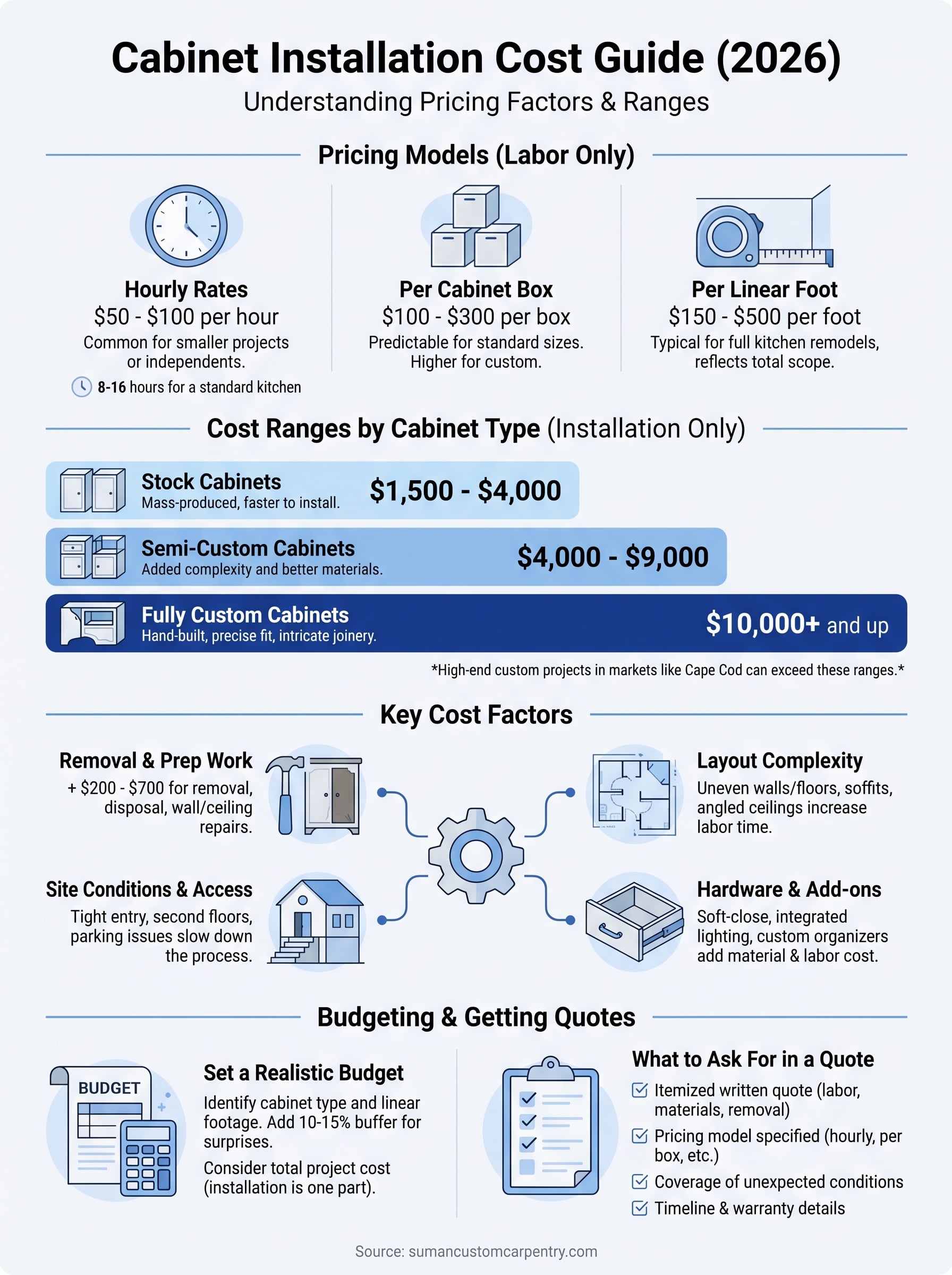
Your cabinet type sets the floor and ceiling on what you’ll pay. Stock cabinet installation typically runs $1,500 to $4,000 for a standard kitchen, since the products are mass-produced and fit into predetermined sizes. Semi-custom installations generally fall between $4,000 and $9,000, reflecting the added complexity of modified sizing and better materials. Fully custom cabinetry, where every component is hand-built to your exact space, often starts at $10,000 for installation alone and climbs from there based on scope.
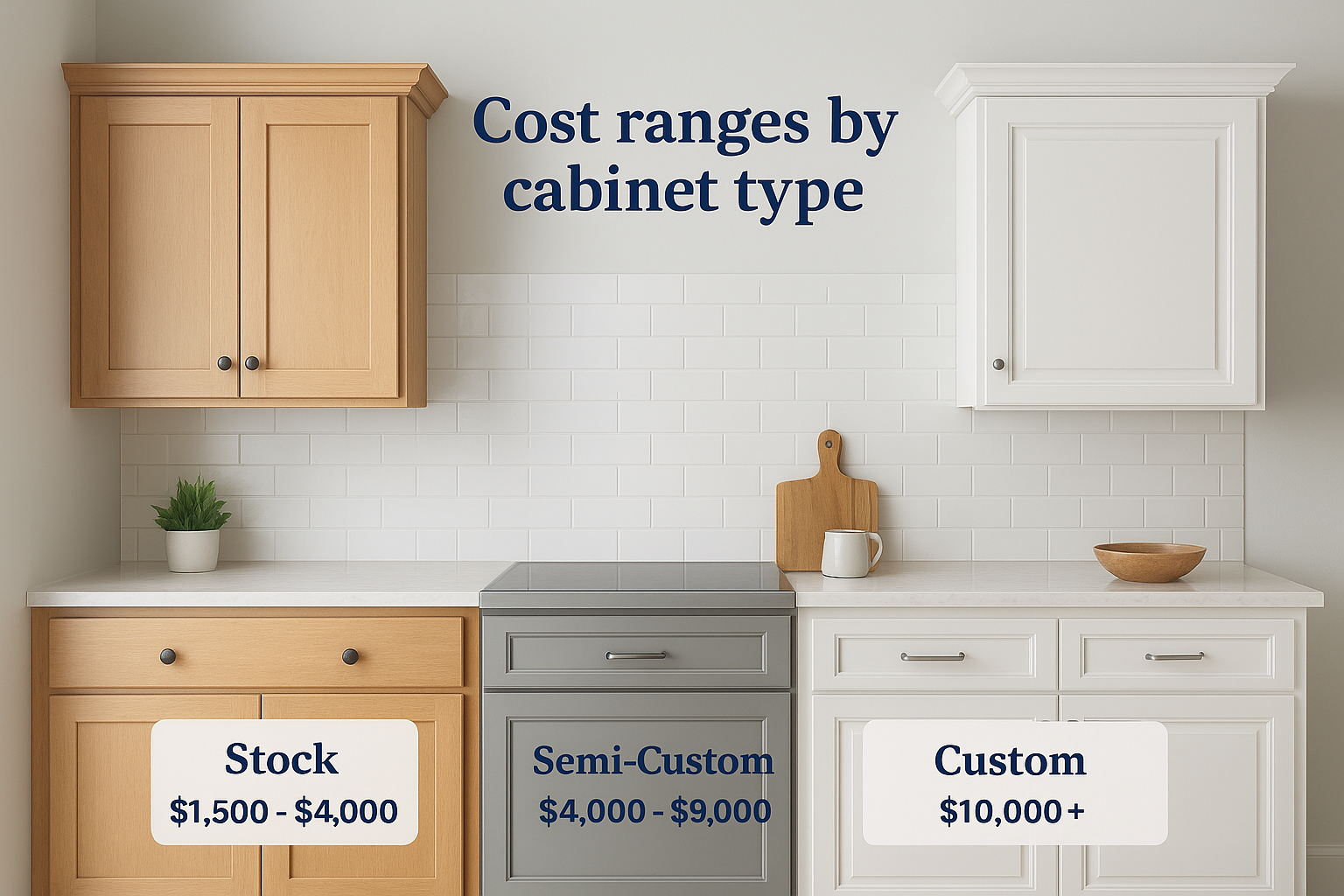
Custom cabinet installation costs more upfront, but the fit, finish, and longevity justify the investment for most homeowners who plan to stay in their home long-term.
Full project cost benchmarks
Installation labor is only one piece of your total project budget. When you factor in the cabinets themselves, hardware, removal of existing cabinetry, and any finish carpentry, a mid-range kitchen renovation in the Northeast typically falls between $20,000 and $45,000. High-end custom kitchens in coastal Massachusetts frequently exceed $60,000. Bathroom vanity installations are considerably more modest, averaging $500 to $2,500 in labor depending on configuration and complexity.
Labor pricing explained by hour, cabinet, and linear foot
When you ask how much does cabinet installation cost, the way a contractor structures their quote tells you a lot about how they work. Installers use three common pricing models: hourly, per cabinet box, and per linear foot, and each one affects how you compare bids.
Hourly rates
Most independent carpenters and small crews charge $50 to $100 per hour for cabinet installation in the Northeast. A standard kitchen runs eight to sixteen hours of labor, depending on layout and complexity. Experienced custom cabinet installers often sit at the higher end of that range because their work requires more precision and problem-solving than dropping in stock units.
Hiring a lower hourly rate doesn’t always mean a lower final bill – a slower or less experienced installer can easily cost you more in total hours.
Per cabinet box and per linear foot
Some contractors quote $100 to $300 per cabinet box, which makes budgeting more predictable when you know your cabinet count. This model works well for straightforward installs with consistent sizing. Custom cabinetry projects with specialty pieces, tall pantry units, or complex corner solutions often push per-box rates toward the upper end of that range.
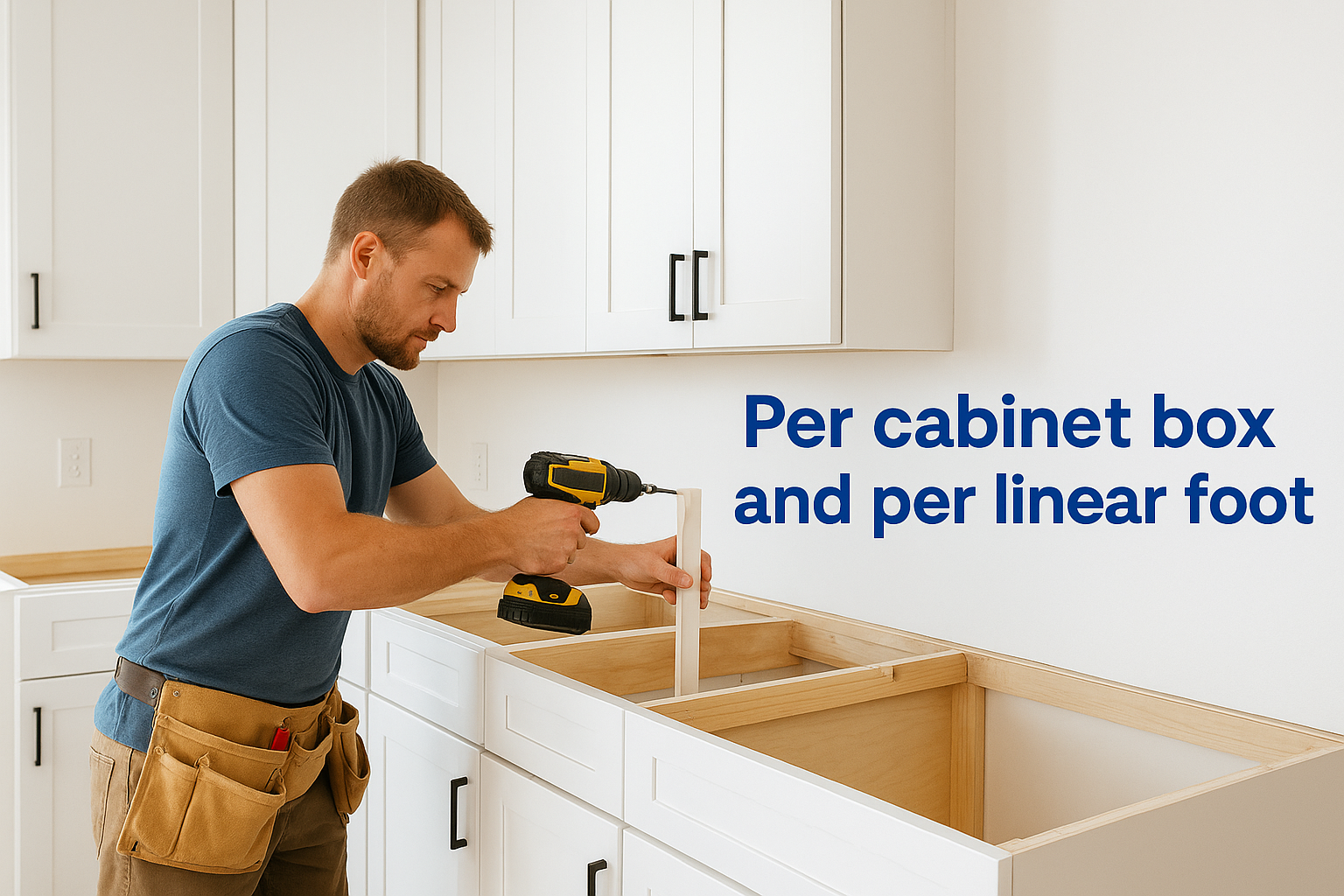
Linear foot pricing typically runs $150 to $500 per foot for full installation, covering both upper and lower cabinet runs. This model is common for full kitchen remodels because it reflects the total scope of your layout. Your final per-foot cost climbs with taller ceiling heights, detailed molding, and built-in features like pull-out shelving or integrated lighting.
Cost factors that raise or lower your estimate
Several variables push how much does cabinet installation cost above or below the typical ranges. Knowing which factors apply to your project helps you anticipate where your quote will land before you ever meet with a contractor.
Removal and prep work
If you have existing cabinets, removing and disposing of them adds $200 to $700 to most project totals depending on the size of the kitchen and whether your contractor hauls the material away. Beyond removal, wall and ceiling conditions matter considerably. Patches, plumbing relocations, and electrical adjustments all add labor hours that raise your final number before a single new cabinet goes up.
Access and job site conditions
Your home’s layout affects how quickly an installation crew can work. Tight doorways, second-floor kitchens, or limited parking slow down material delivery and movement, which translates directly into additional labor time. Coastal homes on Cape Cod sometimes present structural quirks from age or salt air exposure that require extra attention during installation, particularly when securing cabinets to older wall framing.
A crew that finds unexpected conditions mid-install will either absorb the time or charge for it – clarifying this upfront in your contract protects you either way.
Hardware, finishes, and add-ons
Soft-close hinges, pull-out drawer systems, and integrated lighting each add to your installation cost, both in materials and in the extra time required to fit them correctly. Custom interior accessories like pull-out trash enclosures or built-in spice racks increase complexity and should be itemized separately in any quote you receive.
How to budget and get an accurate quote
Before you start collecting bids, having a clear budget range gives you something to measure quotes against rather than guessing whether a number is fair. Setting your range before you shop keeps conversations with contractors more productive and helps you identify quickly when a quote is unusually low or high. Understanding how much does cabinet installation cost in your specific situation comes down to three things: your cabinet type, your layout complexity, and the experience level of the installer you hire.
Set a realistic budget range first
Start by identifying your cabinet type and total linear footage, since those two numbers anchor your estimate better than any rule of thumb. A rough calculation using local per-foot rates gives you a working floor and ceiling before you contact anyone. Add 10 to 15 percent on top of your baseline to account for prep work, material adjustments, and the inevitable surprises that surface during installation.
Building a buffer into your budget from the start prevents the stress of mid-project decisions made under financial pressure.
What to ask for in every quote
Request an itemized written quote from every contractor you consider, not a single lump sum. A proper quote breaks out labor, material handling, removal costs, and any add-ons separately so you can compare contractors accurately. Ask each one to specify their pricing model (hourly, per box, or per linear foot), what their quote covers, and how they handle unexpected conditions discovered mid-install.
When you collect multiple bids, the lowest number rarely tells the full story. Look at what each quote includes and excludes, and ask follow-up questions about timeline, warranty coverage, and who handles the physical work on site.
Final thoughts
Figuring out how much does cabinet installation cost gets easier once you understand what actually drives the number. Your cabinet type, layout complexity, job site conditions, and installer experience each pull the total in different directions, and knowing where your project lands on those variables puts you in a stronger position when you evaluate quotes. No single benchmark covers every situation, but the ranges and pricing models in this guide give you a realistic framework to budget from and ask better questions before signing anything.
If you’re on Cape Cod and want a custom cabinet installation built and installed by the same hands that designed it, that matters for both quality and accountability. At Suman Custom Carpentry, we handle the full process from initial design through final installation at our Hyannis shop, with a lifetime warranty on every cabinet we build. Reach out to start your custom cabinet project and get a clear, itemized quote from a team that’s been doing this work for over seven years.