
Searching for a kitchen renovation contractor near me brings up dozens of options, and that’s exactly where the problem starts. Not every contractor who shows up in your search results has the skills, experience, or integrity to handle what’s likely the biggest investment in your home. A kitchen renovation on Cape Cod can easily run into the tens of thousands, so the person you hire matters more than almost any other decision you’ll make during the project.
At Suman Custom Carpentry, we’ve been designing and hand-building custom kitchens from our Hyannis shop since 2018. We’ve seen firsthand what happens when homeowners rush into hiring, and we’ve been called in more than once to fix the results. That experience gave us a clear picture of what separates reliable contractors from the ones who cut corners. We want to share that knowledge with you, whether you end up working with us or not.
This article breaks down seven practical tips to help you evaluate, compare, and confidently choose the right kitchen renovation contractor for your project. No fluff, just honest guidance from people who do this work every day on Cape Cod and the surrounding areas.
1. Decide if you need custom, semi-custom, or stock work
Before you contact any kitchen renovation contractor near me, you need to know what type of cabinetry your project actually calls for. Stock cabinets come pre-built in fixed sizes from a factory, and any big-box store can supply them. Semi-custom options give you more size configurations and finishes, but they’re still factory-made to a catalog. Custom cabinets are designed and built specifically around your kitchen, your dimensions, and your needs. Getting clear on which tier fits your goals will immediately filter out contractors who are not the right match.

What to look for in a contractor for your cabinet needs
The right contractor for stock installation is completely different from the right one for custom millwork. If you want custom cabinetry, look for someone who either builds in-house or works directly with a dedicated cabinet shop, not a contractor who orders from a supplier and simply shows up to install. Review their portfolio for kitchens that match your project in complexity and style. A contractor who specializes in hand-built cabinetry brings a level of attention to layout, proportion, and storage that pre-built factory units cannot replicate.
You also want someone who walks you through a real design process before anything gets built. That means sitting down with you to review dimensions, discuss how you actually use your kitchen, and make material decisions together rather than handing you a catalog and asking you to pick.
Questions to ask about in-house build, materials, and finish quality
Ask these questions directly before you commit to any contractor:
- Where are your cabinets built? In-house workshop, local shop, or outsourced factory?
- What wood species and hardware do you use, and can you show physical samples?
- How do you handle finishing, whether painting, staining, or a specialty finish?
- What warranty do you offer on cabinet boxes, doors, and painted surfaces?
A contractor who cannot answer these questions specifically does not control their own quality process.
Red flags that lead to regrets and rework
Watch out for contractors who produce a quote within minutes of seeing your kitchen. A fast quote without detailed questions almost always means they are slotting your space into a standard configuration rather than designing around it. Be equally cautious of contractors who claim to do custom work but source everything from a single catalog supplier and cannot show you a real in-progress shop photo or finished project. Vague answers about where cabinets are built and what materials are used consistently lead to disappointment long after installation day.
2. Build a shortlist from trustworthy local sources
Once you know what type of work you need, the next step is finding real, vetted candidates rather than just clicking whatever ranks highest. Searching "kitchen renovation contractor near me" generates a long list fast, but search rankings do not equal quality. Building your shortlist from reliable sources gives you a much stronger starting point.
Where to search and why each source helps
Google Business Profile reviews show verified customer feedback tied to a real location, which makes them harder to fabricate than testimonials on a contractor’s own website. Start there, then cross-reference with these additional sources:
- NKBA (National Kitchen and Bath Association): Lists professionals with verified industry credentials
- Houzz: Shows real project photos linked to specific contractors with location filters
- Personal referrals: Ask neighbors or friends with recent kitchen work done, since firsthand experience from someone you trust outweighs any online profile
How to confirm the business is real and active near you
After you have a few names, verify that each contractor actually operates in your area and is not just running regional ads from a distant office. Check that the address listed is a real shop or office, not just a P.O. box. Review recent activity on their Google profile, including photos posted and reviews left within the last year, to confirm the business is actively working.
A profile with no new reviews or photos in over 12 months may indicate the contractor is not currently taking on projects.
Red flags in listings, profiles, and contact details
Profiles using stock photography instead of actual project photos should raise concern immediately. Be equally cautious of listings with no physical address, brand-new profiles loaded with generic five-star reviews, and any contractor who does not respond to your initial contact within a reasonable timeframe.
3. Verify licensing, insurance, and permits before you talk design
Skipping this step is one of the most common and costly mistakes homeowners make when searching for a kitchen renovation contractor near me. You want to confirm a contractor is legally qualified to work in your home before you spend any time discussing layouts or finishes.
What to verify and what documents to request
Massachusetts requires contractors to hold a valid Home Improvement Contractor (HIC) registration through the Office of Consumer Affairs and Business Regulation. Beyond that, ask for proof of general liability insurance and workers’ compensation coverage before any work begins. Request copies of both documents and verify them directly with the issuing agencies. A legitimate contractor will hand these over without hesitation.
If a contractor stalls, makes excuses, or tells you to trust them without producing documents, that is your answer.
Questions to ask about permits, inspections, and code compliance
Permits protect you, not just the contractor. Ask these questions directly:
- Who pulls the permits for the project, you or the contractor?
- Which inspections are required for your specific scope of work?
- Will the contractor be on-site and available during inspections?
- How do they handle any code corrections that come up during the process?
A contractor who handles permit pulling on your behalf and stays accountable through inspections shows they understand the full scope of their responsibility.
Red flags that expose you to liability and failed inspections
Be cautious of any contractor who suggests skipping permits to save money or time. Unpermitted work can create serious problems when you sell your home or file an insurance claim. Also avoid contractors who carry no workers’ compensation coverage, because if a worker gets injured on your property, you could be held responsible for the costs.
4. Check kitchen-specific experience, not just general remodeling
A kitchen renovation contractor near me search will surface plenty of general contractors who list kitchens among many services. General remodeling experience does not automatically translate into kitchen expertise. Kitchens involve plumbing, electrical, cabinetry, countertops, and often structural changes, all sequenced tightly together. You need someone who has done this specific work repeatedly, not someone treating your kitchen as a learning opportunity.
What to look for in kitchen portfolios and project scope
Ask to see a dedicated kitchen portfolio, not just a general gallery. Look for projects with comparable scope to yours, including full cabinet replacements, layout changes, or appliance upgrades. Pay attention to the quality of finish details like trim alignment, cabinet door spacing, and countertop edge work, because these reveal how much care goes into the final result.
A portfolio with only one or two kitchen projects is a sign the contractor lacks the specialized depth this work demands.
Questions to ask about layout changes, structural work, and trades
If your project involves moving walls, relocating plumbing, or upgrading electrical service, you need a contractor who coordinates directly with licensed tradespeople. Ask these questions before moving forward:
- Who handles plumbing and electrical work on your projects?
- Have you managed projects that required structural modifications or load-bearing wall removal?
- How do you sequence trades to avoid delays between phases?
Red flags that signal gaps in planning and execution
Be cautious of contractors who cannot show completed kitchen projects with before-and-after photos. A contractor should walk you through specific examples of how they managed trade coordination on past jobs without hesitation.
- No photos of actual finished kitchens in their portfolio
- Inability to name the licensed tradespeople they work with regularly
- No clear answer on how countertop templating fits into the build sequence
5. Compare estimates the right way so you can pick the best value
Getting multiple estimates from a kitchen renovation contractor near me sounds straightforward, but comparing them accurately takes more attention than most homeowners expect. A low number on a quote means nothing if it covers less scope than the others, and a high number may reflect better materials and complete labor coverage rather than a contractor padding their margin.
What a clear, comparable estimate includes
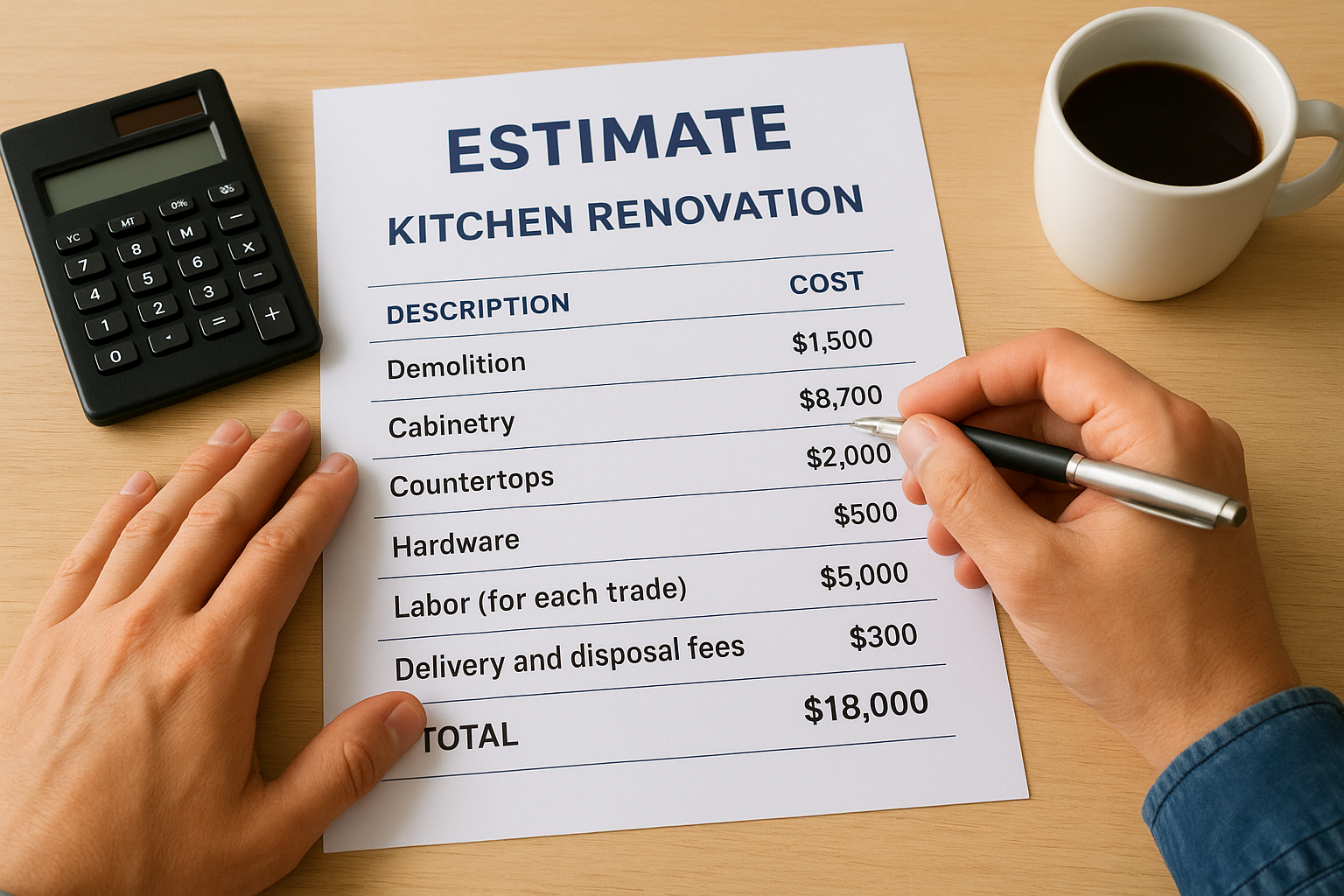
A trustworthy estimate breaks the project into specific line items: demolition, cabinetry, countertops, hardware, labor for each trade, and any delivery or disposal fees. Each line item should list the product, brand, or material specification so you know exactly what you are paying for. Vague categories like "kitchen work" or "materials allowance" leave room for the contractor to substitute cheaper options later without telling you.
Questions to ask to prevent scope gaps and surprise change orders
Ask every contractor these questions before you accept their estimate:
- What is and is not included in the quoted price?
- How are change orders priced, and do they require written approval before work proceeds?
- Are countertop templating, appliance installation, and final punch-list repairs included or billed separately?
Contractors who welcome these questions upfront are showing you exactly how they operate throughout the entire project.
Red flags in pricing, allowances, and vague line items
Watch closely for estimates that rely heavily on broad allowance figures rather than actual product costs. An allowance for countertops or fixtures gives the contractor flexibility to reduce quality without technically breaking the contract. Be equally cautious of any contractor offering a significantly lower price than everyone else on your list, because that gap usually reflects missing scope, not better efficiency.
If a contractor cannot explain exactly what drives the cost difference between their quote and a competitor’s, ask them to walk through each line item with you before you move forward.
6. Lock in the process, timeline, and communication plan
A kitchen renovation without a clear process is just construction with a deadline nobody intends to meet. Before you sign anything with a kitchen renovation contractor near me, confirm they can give you a written timeline, a sequencing plan for each trade, and a clear point of contact for daily communication.
What to look for in scheduling, sequencing, and site protection
Reliable contractors map out each phase of the project before work starts, from demolition through final installation. Look for a schedule that accounts for cabinet lead times, countertop templating windows, and trade inspections, since these are the spots where poorly organized jobs stall for weeks.
A contractor who cannot show you a phased schedule before work begins will not suddenly become organized once your kitchen is torn apart.
Site protection matters too. Ask how the contractor plans to contain dust, protect adjacent rooms, and keep your home livable throughout construction.
Questions to ask about who manages the job day-to-day
You need one named person accountable for your project, not a rotating crew of subcontractors who each claim someone else is in charge. Ask these questions before you commit:
- Who is your primary contact throughout the build?
- How often will they update you on progress and any changes?
- What is the best way to reach them if something comes up on-site?
Red flags that predict delays and messy coordination
Contractors who give you a vague start date with no specific schedule are signaling that your project competes with others they have already overcommitted to. Watch for anyone who cannot name which subcontractors handle plumbing and electrical work.
Those who dismiss your questions about communication as unnecessary always create problems mid-project when decisions need fast answers and nobody is available to give them.
7. Put everything in a detailed contract and warranty you understand
The contract is your last line of protection before any kitchen renovation contractor near me picks up a single tool in your home. A verbal agreement means nothing once a dispute starts, and a vague written contract is only slightly better. Read every page before you sign anything.
What to look for in the contract and payment schedule
Your contract should clearly state the full project scope, materials specified, start date, and completion milestone. The payment schedule matters as much as the total price. Avoid any structure that requires you to pay more than 10-15% upfront. Progress-based payments tied to completed phases protect you if work stalls or quality falls short.
Questions to ask about workmanship warranties and product coverage
Warranties tell you exactly how much confidence a contractor has in their own work. Ask these questions before you sign:
- How long is the workmanship warranty, and what does it specifically cover?
- Are cabinet boxes, doors, and hardware covered under separate warranty terms?
- Who handles a warranty claim, the contractor or the manufacturer directly?
A contractor who offers a lifetime warranty on custom-built work is putting real accountability behind their craftsmanship.
Red flags in deposits, lien releases, and unclear change orders
Watch for contracts that ask for large upfront deposits over 30% with no clear payment milestones tied to progress. Any contract without a signed lien release requirement at final payment leaves you exposed to claims from suppliers or subcontractors the contractor failed to pay. Change orders should require written approval with pricing confirmed before any additional work starts. Verbal change order agreements almost always end in billing disagreements.
Make the call with confidence
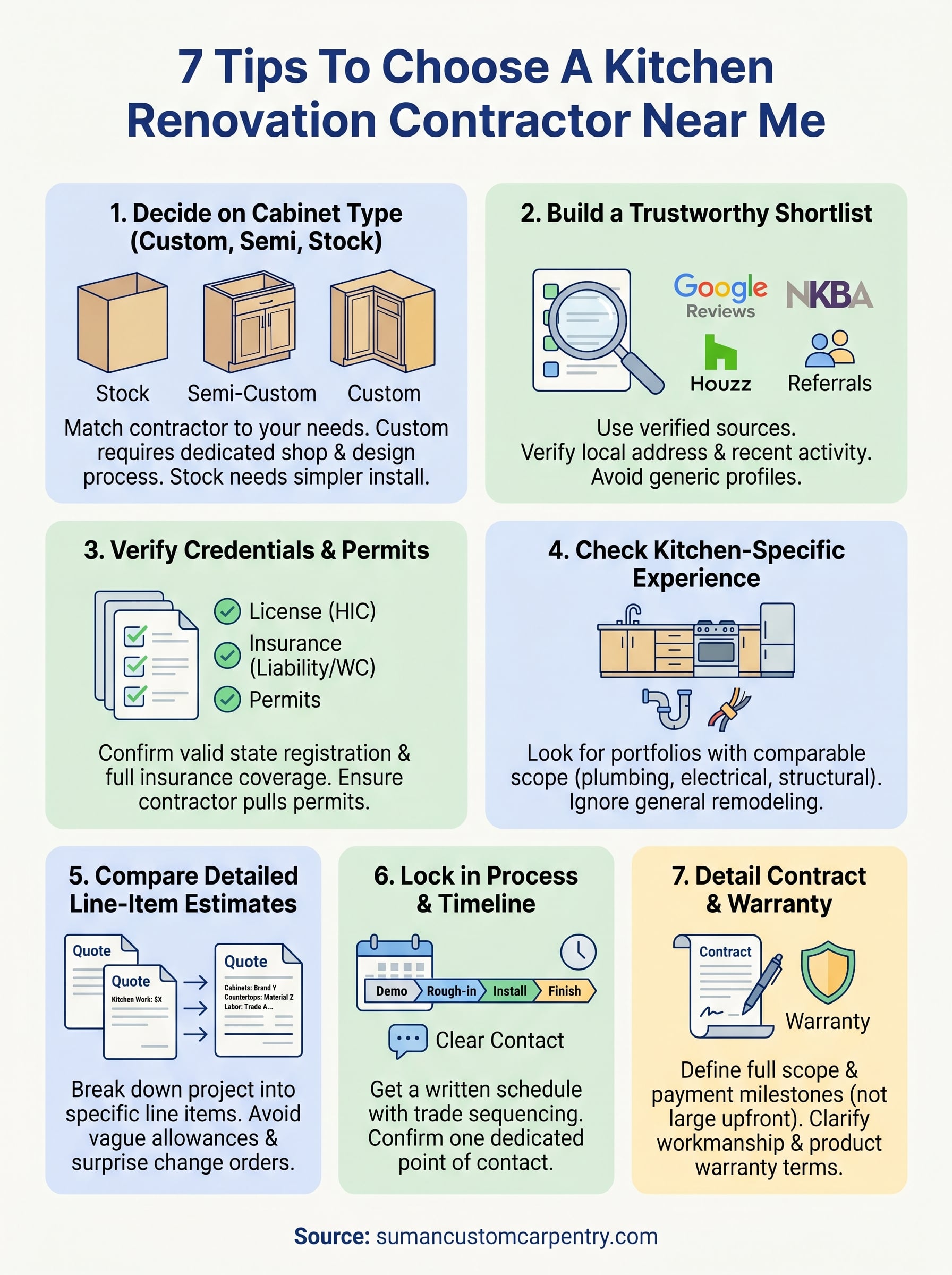
You now have a clear framework to filter out the wrong contractors and identify the right one for your kitchen. Every tip in this list comes back to the same principle: verify everything in writing before you commit a single dollar. The contractor who communicates clearly, shows their credentials without hesitation, and backs their work with a real warranty is the one worth hiring.
Finding a trustworthy kitchen renovation contractor near me takes more than a quick search, but the work you put in upfront protects your investment for decades. If you are on Cape Cod and want custom cabinetry hand-built in-house, backed by a lifetime warranty, and managed by a team that treats your kitchen like it is their own, contact Suman Custom Carpentry to start the conversation. Bring your questions, your measurements, and your ideas, and we will take it from there.