
If you’ve ever walked into a home and noticed the cabinetry, trim, or shelving looked like it was made specifically for that space, it probably was. That’s the short answer to what is custom millwork: woodwork that’s designed, built, and installed to fit a specific room, wall, or purpose. It’s the opposite of pulling something off a shelf at a big-box store and hoping it works. Custom millwork is made to order, from the measurements to the materials to the finish.
The term covers a wide range of wood products, crown molding, baseboards, cabinetry, built-in shelving, vanities, wainscoting, and more. What ties them together is that each piece is crafted to exact specifications rather than mass-produced in a factory. For homeowners on Cape Cod, where older homes have quirky dimensions and coastal properties demand durable materials, the difference between custom and stock is often the difference between something that fits perfectly and something that almost works.
At Suman Custom Carpentry, we design and hand-build custom millwork at our shop in Hyannis, everything from kitchen cabinetry to trim packages to one-of-a-kind built-ins. So when we explain what custom millwork is, we’re drawing from years of actually making it. This article breaks down the full definition, walks through common examples you’ll find in homes and commercial spaces, and explains why custom millwork adds value that factory-made alternatives simply can’t match.
What custom millwork means in plain terms
Millwork refers to any wood product that’s been shaped, profiled, or finished at a woodworking shop or mill. Historically, mills were the places where raw lumber became finished architectural components like doors, trim, cabinetry, and window casings. The word stuck, and today millwork covers the full range of interior and exterior wood products built to specific shapes and profiles. When you add "custom" in front of it, you’re specifying that the work is made to order for a particular space, not pulled from a catalog or assembled from pre-made parts.
Where the term "millwork" comes from
The word "mill" traces back centuries to when waterpower and later steam power drove the large saws and planers that shaped raw timber into usable building components. Towns built mills specifically to produce the trim, flooring, and framing that went into homes and commercial buildings. By the 1800s, millwork had become shorthand for all finished wood products produced at those facilities, from window casings to stair parts.
Today, the process happens in smaller, specialized shops rather than large industrial facilities. A woodworking shop like ours in Hyannis follows the same core idea: raw wood goes in and finished architectural components come out, built to exact drawings and specifications. What’s changed is the precision. Modern tools combined with skilled hand craftsmanship produce results that are tighter, more consistent, and built to last far longer than older mass production methods could achieve.
The difference between custom and stock millwork
Stock millwork is manufactured in standard sizes and profiles, produced in bulk, and sold through distributors or home improvement stores. You pick from what’s available. If your walls aren’t square or your ceiling height doesn’t match the standard crown molding run, you work around it. Stock works for basic builds on a budget, but it rarely fits perfectly, and material quality is often lower because the process is optimized for cost and volume rather than longevity.
Custom millwork is built around your space, not the other way around.
Understanding what is custom millwork versus stock comes down to who controls the specifications. With custom work, you set the dimensions, the wood species, the profile, and the finish. Nothing gets adjusted to fit a factory template. For older Cape Cod homes where room dimensions rarely follow modern standards, that level of control isn’t optional, it’s the only reliable way to get a result that looks deliberate and holds up over time.
Examples of custom millwork in real spaces
Once you understand what is custom millwork, you start noticing it in the spaces around you. Kitchens, bathrooms, living rooms, and entryways all offer opportunities for custom woodwork that stock products can’t address the same way. The examples below cover the most common applications we build at Suman Custom Carpentry and what makes each one worth doing right.
Kitchen and bathroom cabinetry
Kitchen cabinetry is probably the most recognizable form of custom millwork in a home. When you commission custom cabinets, every cabinet box, door panel, and drawer run is built to your exact ceiling height, wall layout, and storage preferences. You’re not trimming filler pieces to cover gaps or working around a corner that doesn’t match a standard cabinet width.
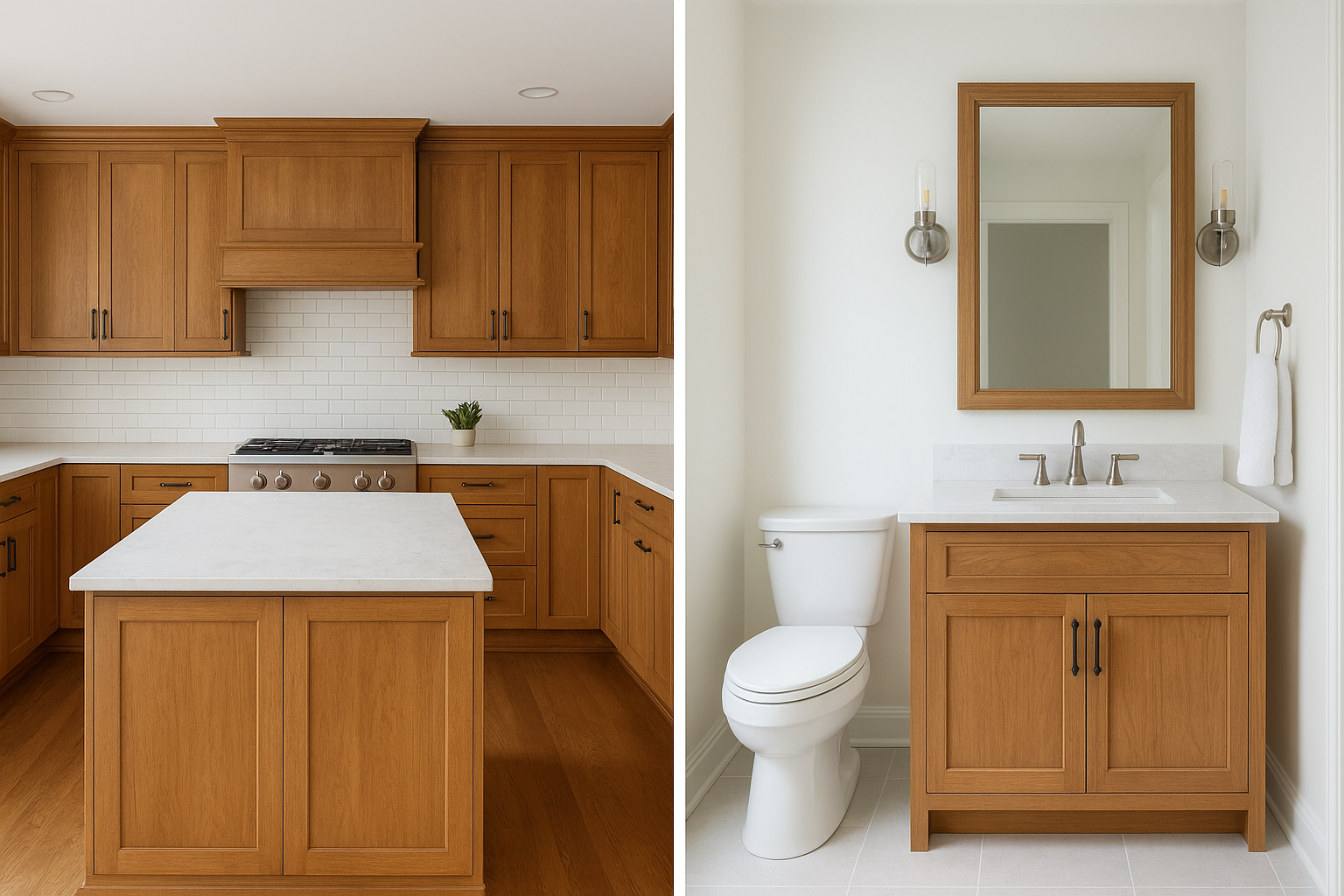
The difference becomes obvious the moment you open a custom cabinet door versus a stock one. The weight, the fit, and the finish tell the story immediately.
Bathroom vanities follow the same logic. Custom vanities let you choose the depth, height, and drawer configuration that works for your specific plumbing layout. A vanity built to your counter height is also far more comfortable than one pulled from a showroom floor.
Built-ins, trim, and architectural details
Built-in shelving and entertainment centers give you storage that looks like part of the architecture rather than furniture sitting against a wall. On Cape Cod, where homes often have awkward alcoves or sloped ceilings, built-ins are frequently the only practical way to use that space well.
Trim work including crown molding, wainscoting, baseboards, and window casings also falls squarely under custom millwork. These details tie a room together visually, and getting the profile and scale right for your specific ceiling height and room proportions is something only custom work delivers consistently.
Why custom millwork is worth considering
Once you understand what is custom millwork and what it covers, the next question is whether it’s actually worth the investment over stock alternatives. The answer depends on your priorities, but for homeowners who want woodwork that performs well for decades, custom millwork consistently outperforms factory-made options on every measure that matters long-term.
It fits your space exactly
Custom millwork is built to your room’s actual dimensions, not to a standard size that someone else decided works for most situations. That precision eliminates the gaps, filler strips, and awkward seams that signal a stock install. When a cabinet run or a built-in reaches from wall to wall and floor to ceiling without modification, the result looks intentional because it is.
A piece of woodwork that fits perfectly reads as part of the architecture, not furniture placed against it.
It holds up longer and performs better
The material quality in custom millwork is typically far higher than what you’ll find in stock products at the same price point. When you’re building to order, there’s no incentive to cut corners on wood species, joinery, or finish. At Suman Custom Carpentry, for example, every cabinet box and door carries a lifetime warranty because we build with that standard in mind from the start.
Stock cabinetry is engineered to look acceptable in a showroom. Custom millwork is built to hold up in your kitchen, your bathroom, or your living room for the life of the house. The structural integrity of hand-built joinery outlasts the particleboard and staples common in mass-produced alternatives by a wide margin. For a coastal property on Cape Cod where humidity and salt air accelerate wear, that difference in durability is not small.
How the custom millwork process works
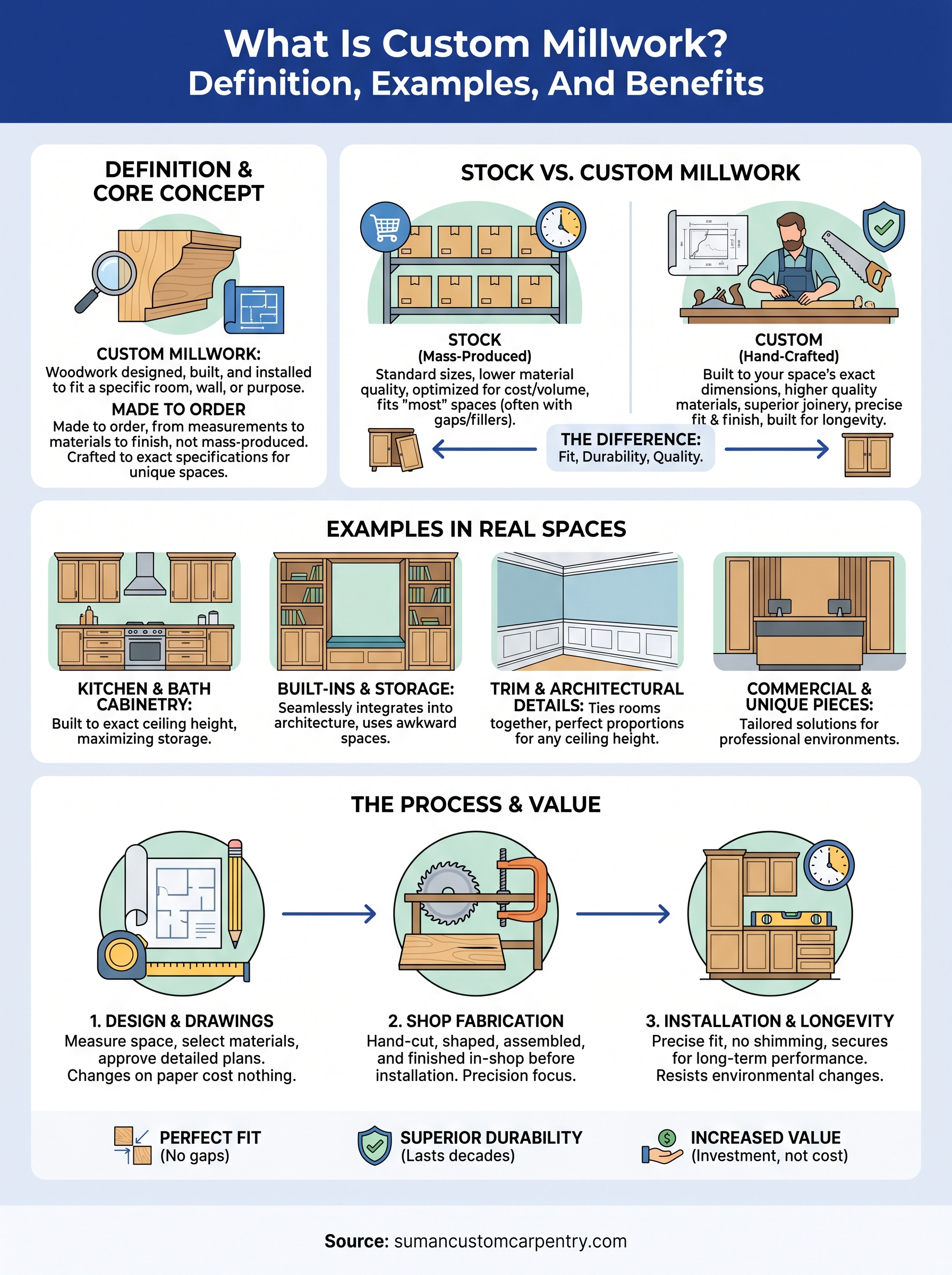
Understanding what is custom millwork is one thing; knowing what happens between your first conversation and the finished installation is another. The process follows a clear sequence: design, fabrication, and installation. Each phase depends on the one before it, so good communication early on saves significant time and prevents costly changes later.
From design to approved drawings
Your project starts with a conversation about the space, your goals, and any constraints like ceiling height, existing plumbing, or unusual wall angles. A skilled millworker measures the space carefully and translates those numbers into detailed drawings. At this stage, you also select wood species, door profiles, finishes, and hardware, all decisions that shape both the look and the long-term durability of the finished product.
Once the drawings are in front of you, this is the moment to refine dimensions or adjust a profile. Changes on paper cost nothing; changes after fabrication starts cost real time and material. Reviewing the drawings closely before approving them is the single most valuable step you can take to protect your budget and your timeline.
Shop fabrication and installation
After you approve the design, fabrication begins at the shop. Each component is cut, shaped, and assembled by hand rather than pulled from a warehouse shelf. The joinery, door fitting, and finish preparation all happen here, well before anything arrives at your home. Checking fit in the shop means fewer surprises on installation day.

What gets built in the shop is only as good as the measurements and decisions made in the design phase.
Installation is the final step, and it’s where precision pays off. Pieces built to exact dimensions drop into place without the shimming and gap-filling that stock products typically require. Properly secured cabinetry and trim also resist seasonal humidity changes far better than loosely fitted stock alternatives, which matters considerably on Cape Cod.
Cost, timelines, and what drives the price
One of the first questions homeowners ask once they understand what is custom millwork is what it actually costs. The honest answer is that price varies significantly based on the scope of the project, the materials selected, and the complexity of the design. Custom millwork costs more than stock alternatives upfront, but the gap narrows considerably when you account for longevity, fit, and the rework you won’t need to do to force stock pieces into a space they weren’t built for.
What affects the final price
Wood species is the most direct driver of material cost. Painted millwork built from poplar or maple runs less than stained work in white oak or cherry, where every detail of the grain will show. Door style and profile complexity also affect price considerably: a flat-panel door costs less to produce than a raised-panel or beaded inset door with the same dimensions. Other variables that shift the number include:
- Hardware selections and brand tier
- Number of drawers versus doors in a cabinet run
- Specialty features like pull-out storage or built-in lighting
- Painted finishes, which require multiple coats and sanding between layers
Choosing your wood species and finish early in the process gives your millworker the most accurate estimate before fabrication begins.
How long the process takes
At Suman Custom Carpentry, kitchen projects typically run 40 to 60 days from approved drawings to completed installation. Smaller scopes like a single vanity or a trim package move faster, but any custom work requires lead time for design review, material sourcing, and shop fabrication.
Planning ahead is the most reliable way to keep your renovation on schedule. Rushing the design phase to save a week almost always creates problems later, either in fabrication or on installation day when a dimension is off and nothing fits the way it should.
Next steps for your space
Now that you understand what is custom millwork and how it differs from stock alternatives, the practical question is where to start in your own home. Think about which space bothers you most: a kitchen with cabinets that don’t close properly, a bathroom with a vanity built to the wrong height, or a living room with storage that never quite works. That’s usually the right place to begin.
From there, the design process moves quickly once you have a skilled millworker measuring your space and translating those dimensions into drawings you can review and refine before anything gets built. At Suman Custom Carpentry, we handle every step at our Hyannis shop, from initial design through final installation, and our lifetime warranty on cabinet boxes and doors backs every project we complete. If you’re ready to talk through what your space needs, reach out to Suman Custom Carpentry to schedule a consultation.