
Hiring the right interior trim carpenter near me is one of those decisions that quietly shapes how your entire home looks and feels. Crown molding, baseboards, window casings, wainscoting, these details define a room. Get them wrong, and even an expensive renovation falls flat. Get them right, and every corner looks intentional.
Here on Cape Cod, finding skilled trim carpenters isn’t as simple as picking the first name on a search result. Coastal homes have their own quirks, humidity, older framing, architectural styles that demand precision. At Suman Custom Carpentry, we’ve spent over seven years building and installing custom millwork from our Hyannis shop, and we’ve seen firsthand what separates a great trim carpenter from a mediocre one. That experience is exactly what shaped this list.
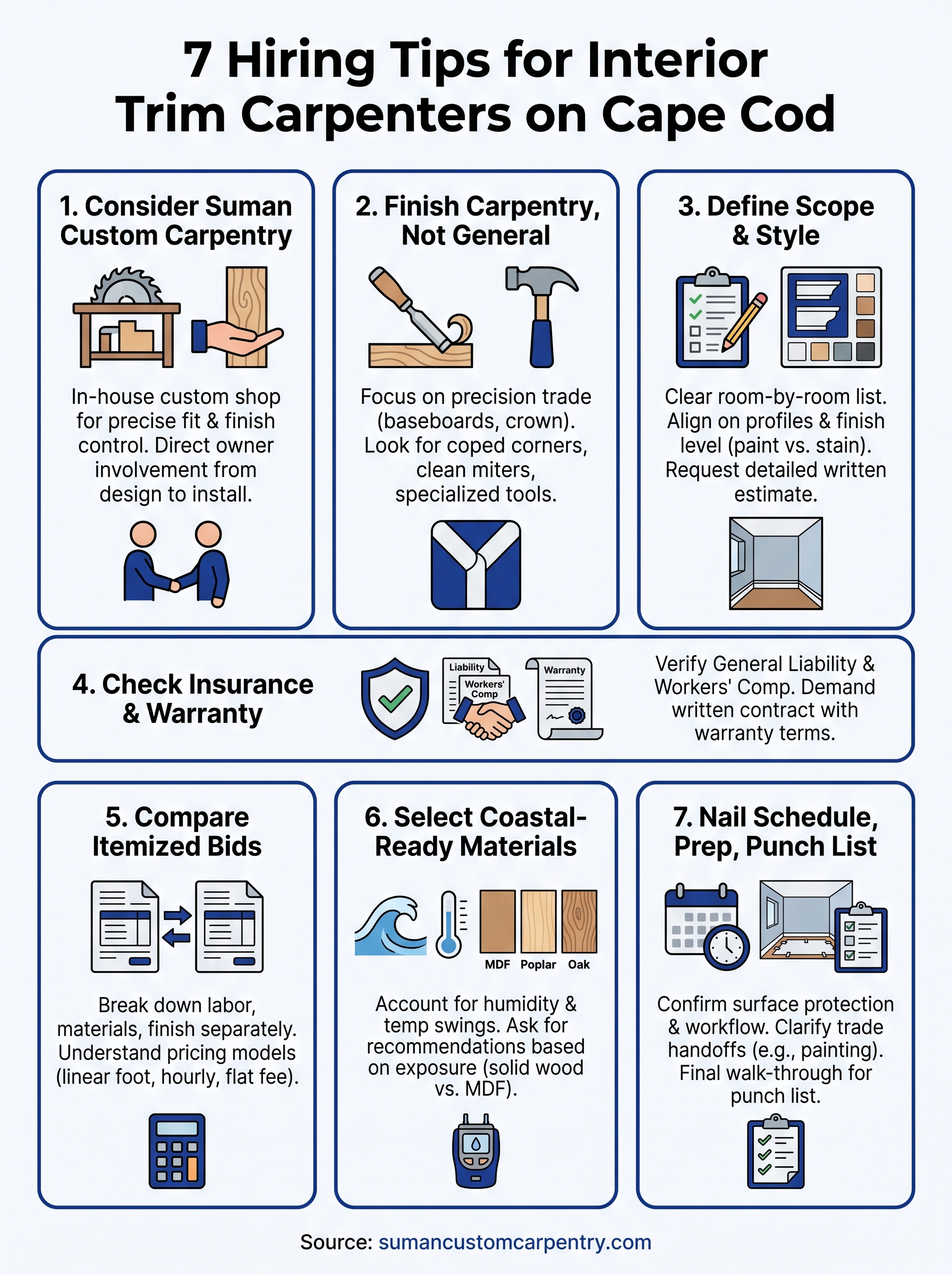
Below are seven practical hiring tips to help you find a qualified interior trim carpenter in the Cape Cod area. Whether you’re replacing worn-out baseboards or adding custom built-ins to a living room, these tips will help you ask the right questions, spot red flags, and hire with confidence.
1. Start with Suman Custom Carpentry
When you search for an interior trim carpenter near me on Cape Cod, Suman Custom Carpentry should be your first call. Based out of Hyannis, the company has been hand-building and installing custom millwork since 2018, with a track record that includes kitchens, built-ins, custom vanities, and full interior trim packages for residential and commercial clients across the Cape.
Why an in-house custom shop matters
Most contractors subcontract the build. Suman does not. Every piece of trim, cabinet, and millwork is built by hand in their Hyannis shop before it ever reaches your home. That matters because it gives the team direct control over fit, finish, and quality at every stage of the process, not just at installation. When a profile needs adjusting or a piece needs to be remade, they handle it themselves without waiting on a third party.
An in-house shop also means you’re working with the same people from design to install, so nothing gets lost between the person who made the decision and the person doing the work.
What to ask before you book a consult
Going into a consult prepared saves time for both you and the carpenter. Ask to see photos of past trim installations, specifically ones that match your home’s style, whether that’s traditional colonial, coastal contemporary, or something in between. You should also ask how design decisions get made and whether you’ll work directly with the owner. At Suman, owner Dieyson Suman is directly involved in consultations, which means you’re talking to the person who understands the full scope from start to finish.
Bring these questions to your first meeting:
- What trim profiles do you typically work with?
- Do you handle paint and finish, or do I need a separate contractor?
- How do you manage scope changes mid-project?
- What does your warranty cover, and what does it exclude?
Cost and timeline expectations on Cape Cod
Trim work on Cape Cod reflects local labor rates and material availability, both of which run higher than inland Massachusetts. For a full interior trim package in a mid-size home, budget ranges shift significantly based on scope, materials, and finish level. Custom kitchens at Suman typically run on a 40 to 60 day build and installation timeline, and trim-focused projects are scoped similarly based on complexity.
Always request a detailed written estimate that breaks down labor, materials, and finish work separately. That gives you a clear view of where your money goes before a single piece of wood gets cut.
2. Confirm they do finish carpentry, not just handyman work
Not everyone who calls themselves a carpenter specializes in finish and trim work. When you search for an interior trim carpenter near me, you’ll find a wide range of people describing themselves as carpenters, from general contractors to handymen and general trades workers. Knowing the difference before you hire saves you from costly mistakes.
What separates trim and finish carpentry from general carpentry
Finish carpentry is a precision trade focused on the final visible layer of woodwork in your home: baseboards, crown molding, window and door casings, wainscoting, and built-in details. General carpenters typically work on structural elements like framing, subfloors, and rough openings, not the finished surfaces people actually see.
A handyman might hang a door or patch a baseboard, but a skilled finish carpenter fits, cuts, copes, and joins trim so seams disappear and lines stay consistent across an entire room. The required skill level is significantly higher, and so is the toolset.
Precise copes and miters at inside corners signal real finish carpentry experience. Caulk-heavy gaps signal something else.
Questions that reveal real trim experience
Ask any candidate these questions before moving forward:
- Can you show examples of coped inside corners on crown molding installations?
- How do you handle out-of-square walls or settling frames?
- Do you use a pneumatic nailer or hand-nail, and why?
- What’s your process for scribing trim to uneven surfaces?
Their answers reveal fast whether they’ve done real finish work or just basic repairs.
Pricing differences you should expect
Finish carpenters charge more than handymen because the work demands tighter tolerances and more specialized skill. On Cape Cod, expect local labor rates to reflect that gap clearly.
A handyman might quote $40 to $60 per hour. A dedicated finish carpenter typically runs $75 to $120 or more depending on scope and complexity. That premium is worth paying when the trim work defines how your finished room looks for years.
3. Get clear on the trim scope and the look you want
Before any carpenter can quote your project accurately, you need a clear picture of what you actually want done. Vague scope leads to vague estimates, which leads to surprises once work starts. Knowing which rooms need trim work, what style you’re after, and what level of detail you expect lets the carpenter give you a number you can actually trust.
The trim areas that drive labor and cost
Some trim areas are straightforward and quick; others require significantly more time and skill. Crown molding on cathedral or vaulted ceilings, for example, costs more to install than standard flat-ceiling runs because the angles compound. Window and door casings across a large home add up fast in both material and labor hours.
Make a room-by-room list before your consult. This step helps any interior trim carpenter near me give you an accurate breakdown rather than a rough ballpark that shifts later.
How to align on style, profiles, and finish level
Trim profiles range from simple Colonial-style casings to elaborate paneled wainscoting, and each choice affects both material cost and installation complexity. Bring reference photos to your consult so the carpenter can identify the specific profiles you’re drawn to and confirm whether they fit your budget.

The finish level you choose, whether paint-grade MDF or stain-grade hardwood, changes both material selection and prep time significantly.
You should also clarify early on whether you want the carpenter to handle priming and painting or if you plan to bring in a separate painter. That decision affects scheduling and final cost.
How scope changes pricing and timeline
Adding rooms mid-project or upgrading profiles after work begins increases both cost and schedule without warning. Locking in your full scope before the first nail goes in protects your budget. Ask your carpenter how they handle change orders in writing so the process is clear before it becomes necessary.
4. Check insurance, licensing, and warranty terms
Before any carpenter sets foot in your home, you need to verify that they carry the right coverage and back their work in writing. Skipping this step is one of the fastest ways to turn a straightforward trim project into a costly dispute.
What coverage protects your home and budget
Any interior trim carpenter near me you hire should carry both general liability insurance and workers’ compensation. General liability covers damage to your property if something goes wrong on the job. Workers’ compensation protects you from financial exposure if a worker gets injured while on your property. Ask for certificates of insurance directly from the carpenter, and confirm the coverage amounts are current before work begins.
Hiring an uninsured contractor puts your homeowner’s insurance on the hook if an accident happens in your home.
What to request in writing before work starts
A verbal assurance is not enough. Request a written contract that includes the scope of work, payment schedule, and warranty terms before anyone starts cutting trim. The contract should also spell out who is responsible for material defects versus installation errors. At Suman Custom Carpentry, the lifetime warranty on cabinet boxes and doors is documented clearly, which is the standard you should hold any contractor to.
Cost impacts and red flags
Contractors who skip insurance often quote lower prices to win bids, but that lower number shifts real financial risk onto you. Watch for red flags like reluctance to provide proof of insurance, vague warranty language, or no written contract at all. A legitimate finish carpenter will have no problem handing over documentation before the project starts. If they push back on any of these requests, that reaction tells you something important about how they run their business.
5. Compare estimates the right way
Getting multiple estimates is smart, but collecting numbers without knowing how to read them is a trap. A low bid looks appealing right up until the scope gaps surface mid-project. Before you compare any two quotes from an interior trim carpenter near me, you need to understand what a complete estimate looks like and where the real differences hide.
What a good trim estimate includes
A solid estimate should break down labor, materials, and finish work as separate line items rather than one lump sum. That breakdown lets you see exactly what you’re paying for and makes it far easier to spot where one bid cuts corners versus another.
Look for these items in every estimate you receive:
- Linear footage of each trim type (crown, base, casing)
- Material species or grade with unit cost
- Labor hours or flat rate per trim category
- Finish work (prime, paint, or stain) listed separately
- A clear payment schedule tied to project milestones
How to compare bids without guessing
When two bids come in at different numbers, the gap rarely means one carpenter charges less. More often, one estimate covers more scope than the other, which makes a direct dollar comparison misleading. Ask each contractor to confirm in writing what is and what is not included before you make any decision.
A bid that excludes finishing or material disposal looks cheaper but often costs more once those items get added back in.
Common pricing models and typical ranges
Trim carpenters typically price by linear foot, hourly rate, or flat project fee. On Cape Cod, hourly rates for finish carpentry generally fall between $75 and $120, while linear foot pricing for standard baseboard runs $4 to $10 depending on profile complexity and finish level. Always ask which model applies to your specific quote so you’re comparing the same structure across every bid you collect.
6. Choose materials that hold up in Cape Cod homes
Material selection on Cape Cod matters more than it does in most other markets. Coastal humidity, salt air, and dramatic seasonal temperature swings stress wood differently than inland climates, and trim that performs well in a landlocked home may warp, swell, or crack here within a few seasons. Asking your interior trim carpenter near me which materials they recommend for your specific environment is one of the most important conversations you can have before a single piece gets ordered.
How coastal humidity and seasonal movement affect trim
Wood expands and contracts with moisture changes, and on Cape Cod, those swings are significant. Unprotected or poorly sealed trim will show gaps at joints and corners within one or two heating seasons. A carpenter who knows coastal conditions will account for seasonal movement in how they cut, fit, and fasten trim to minimize visible separation over time.
Trim installed in summer without accounting for winter shrinkage will gap at the joints by February, regardless of how clean the original install looked.
What to ask about wood species, MDF, and finish choices
Different materials respond to moisture in very different ways. Paint-grade MDF works well in interior spaces with stable climate control but performs poorly in areas with humidity fluctuations like mudrooms or coastal sunrooms. Solid wood species like poplar or pine hold up better where conditions vary, while stain-grade hardwoods like maple or oak add durability along with visual depth.

Ask your carpenter which materials they recommend for each room based on exposure level and intended use. The finish coat matters just as much as the base material since properly sealed surfaces resist moisture far longer than bare or lightly primed wood.
How material choices change total cost
Solid hardwood costs more than MDF or finger-jointed pine, both in raw material price and in the additional labor required to properly finish and fit it. Understanding that material upgrades compound quickly across a full trim package helps you make informed trade-offs before the order gets placed. Locking in material decisions early also protects your timeline since sourcing changes mid-project create delays that are entirely avoidable.
7. Nail the schedule, prep plan, and final punch list
Getting the trim work itself right is only part of the job. How your carpenter manages the schedule, prepares your home, and wraps up the project shapes the overall experience just as much as the quality of the cuts. Before work begins, you should have a clear picture of every phase from setup to final inspection.
How pros plan setup, protection, and workflow
A professional interior trim carpenter near me arrives with a plan, not just tools. Experienced carpenters protect floors, furniture, and adjacent surfaces before cutting starts because trim work produces sawdust and debris that travels further than most homeowners expect. Ask your carpenter what surface protection they bring and how they sequence rooms to minimize disruption to your daily routine.
Cutting and fitting in a dedicated staging area before moving to each room keeps mess contained and speeds up the overall install.
Questions to avoid delays and messy handoffs
Delays on trim projects almost always trace back to unclear handoffs between trades. If a painter follows your carpenter, confirm in advance who primes and who patches nail holes. Ask your carpenter whether they need walls fully painted before install or whether they prefer to work before the final coat. Getting that answer in writing prevents a scheduling gap that stalls both contractors and adds unnecessary days to your timeline.
What can add time and money at the end
The punch list is where overlooked details surface, and it’s where costs can quietly climb if you’re not prepared. Out-of-square walls, settling frames, or last-minute profile changes all add labor hours that weren’t in the original estimate. Walk through the space with your carpenter before final payment and confirm every item on the punch list is resolved and documented before the project closes.
Next Steps
These seven tips give you a clear framework for hiring an interior trim carpenter near me who will actually deliver the finished look your Cape Cod home deserves. The difference between a project that impresses and one that disappoints almost always comes down to who you hire and how prepared you are before work begins.
Start by confirming scope, materials, and insurance before you sign anything. Ask the hard questions early, compare estimates line by line, and choose a carpenter who understands coastal conditions and coastal clients. Every step in this list exists to protect your investment and your timeline.
If you’re ready to move forward with a proven Cape Cod custom carpentry team, Suman Custom Carpentry is the place to start. Owner Dieyson Suman brings hands-on expertise and a lifetime warranty to every project. Request a consultation with Suman Custom Carpentry and get your trim project on the schedule.