
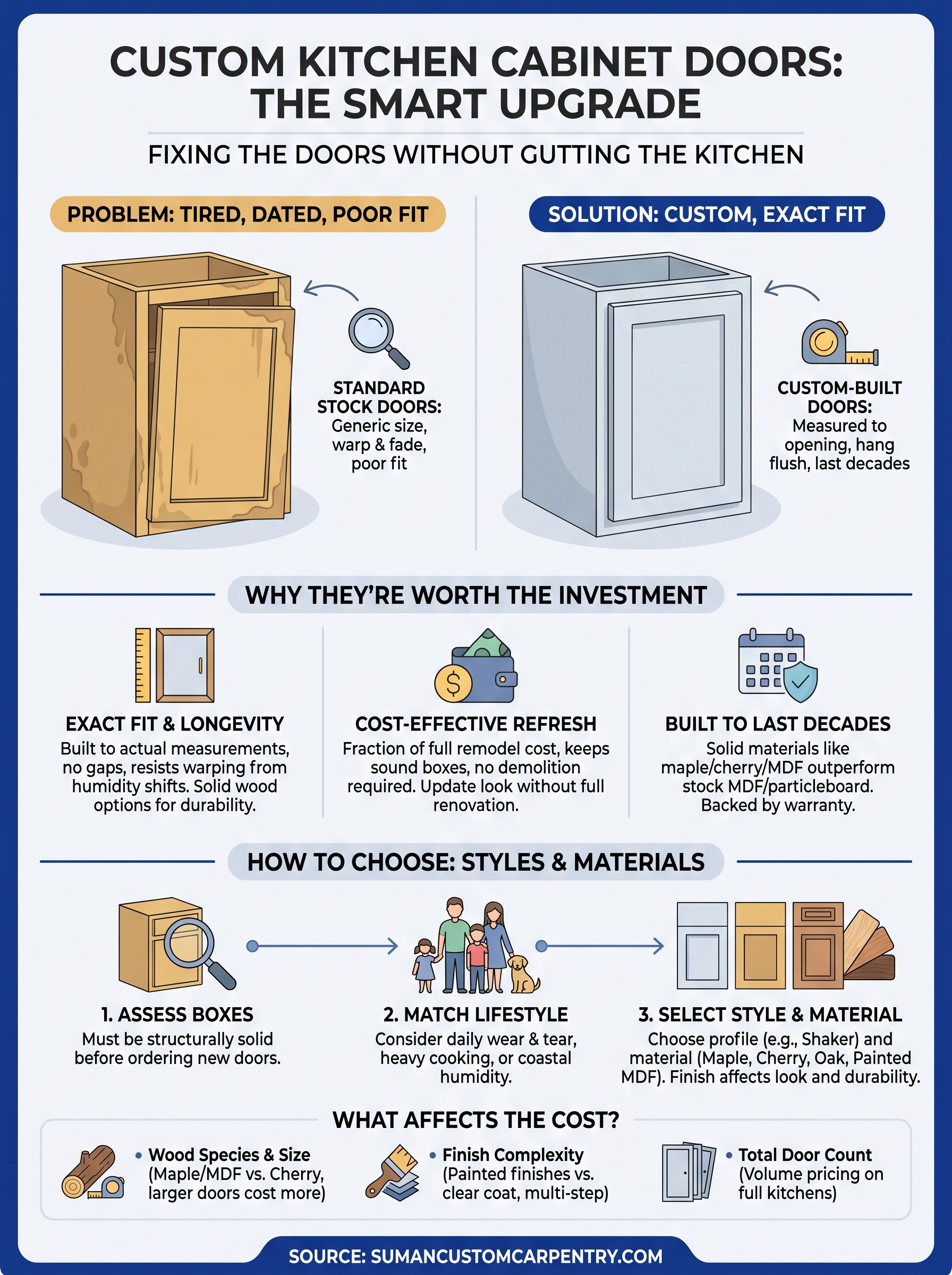
You’ve got cabinet boxes that are still solid, but the doors look tired, dated, or just don’t fit right anymore. Before you gut the whole kitchen, it’s worth understanding what custom kitchen cabinet doors actually are and whether they solve your problem. Short answer: they’re doors built to your exact openings, in the wood species, style, and finish you choose, rather than pulled off a shelf in a standard size and stained to match whatever’s popular that year.
That distinction matters because standard-sized doors rarely fit older Cape Cod homes with cabinets built decades ago, and cheap replacements warp or fade within a few years. Custom doors, by contrast, are made to your measurements from materials like solid maple, cherry, or painted MDF, so they hang flush and hold up. If you’re weighing a full renovation against a cabinet door refresh, this is the option that gets you a new look without tearing out boxes that still work fine.
In this article, we’ll break down what goes into custom cabinet doors, the material and finish choices you’ll face, how pricing typically works, and what separates a door that lasts decades from one that needs replacing again in five years.
Why custom cabinet doors are worth the investment
Swapping tired doors for custom-built ones isn’t just cosmetic. It’s one of the few kitchen upgrades that pays for itself in both looks and longevity, especially when the cabinet boxes underneath are still structurally sound.
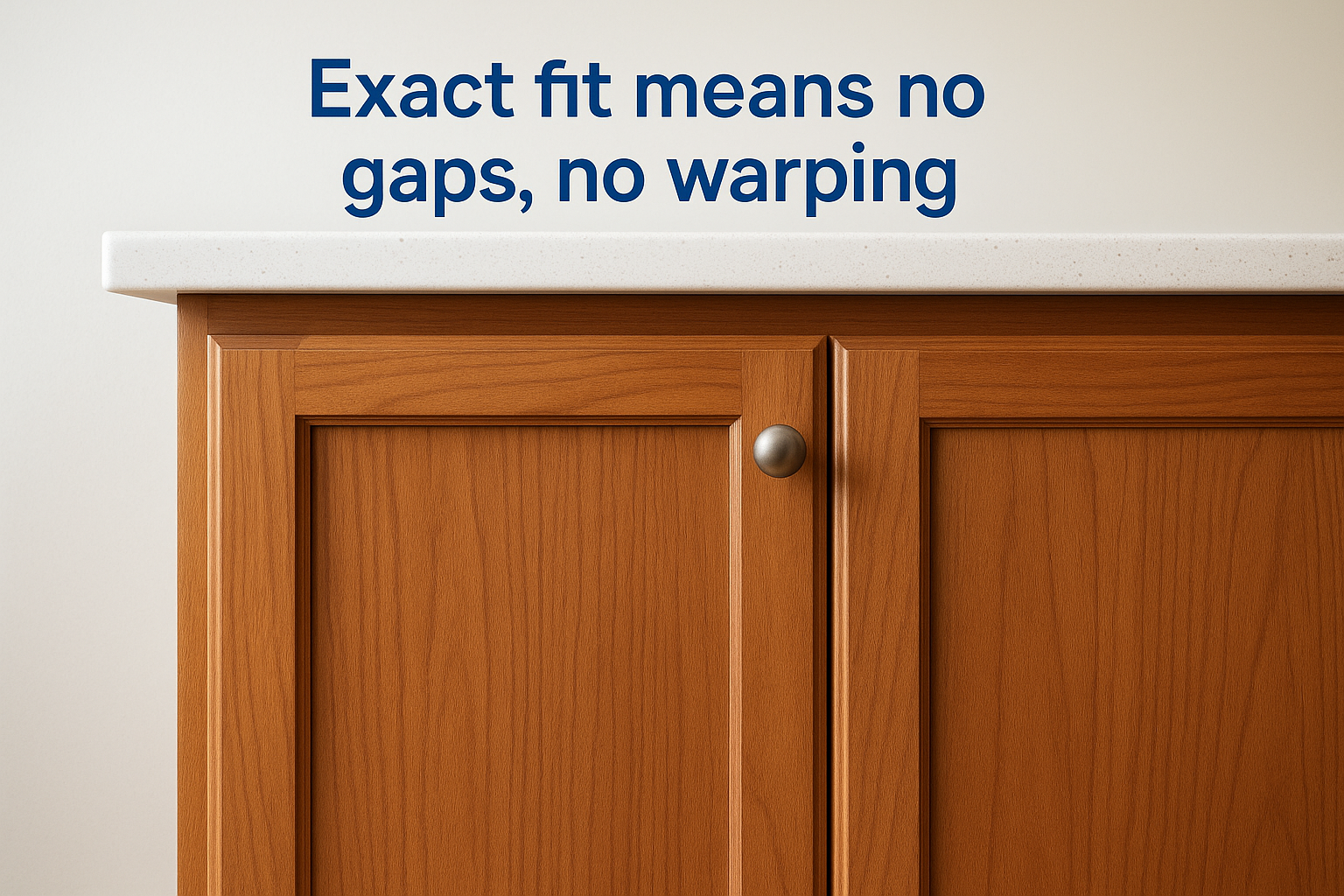
Exact fit means no gaps, no warping
Older Cape Cod homes rarely have square, standard-sized cabinet openings. Decades of settling shift frames by a quarter inch here, half an inch there. Custom-built doors are measured to your actual openings, not a factory template, so they hang flush without gaps or rubbing. Stock doors forced into an off-size opening warp faster because they’re fighting the frame every time humidity shifts, which happens constantly near the coast.
They cost less than a full renovation
Replacing doors while keeping your existing cabinet boxes typically runs a fraction of a full kitchen remodel. You skip demolition, new box construction, and re-plumbing or re-wiring that a full gut job triggers. A door-only refresh lets you update the entire look of your kitchen, new wood species, new hardware, a different finish, without touching what already works.
Replacing doors on solid boxes gets you a new kitchen look for a fraction of what a full remodel costs.
Built to last decades, not years
Big-box replacement doors are often MDF or thin veneer over particleboard, built to a price point rather than a lifespan. Solid wood custom doors, whether maple, cherry, or oak, hold up to daily use, moisture swings, and slamming toddlers for 20 to 30 years when built and finished correctly. That’s why a reputable custom shop backs its work with a real warranty instead of a 90-day return policy. According to the U.S. Department of Housing and Urban Development’s guidance on home improvements, durable materials consistently outperform low-cost alternatives in lifecycle cost, which is exactly the case with hand-built cabinet doors versus mass-produced ones.
Investing in custom doors also protects the value of the renovation itself. A kitchen with doors that hang straight, close quietly, and resist warping tells a buyer the whole space was maintained with care, not patched together with the cheapest fix available.
How to choose custom cabinet doors for your kitchen
Picking new custom kitchen cabinet doors starts with an honest look at what’s actually bothering you about the current ones. Are they sagging on the hinges, peeling at the edges, or just outdated in color and style? That answer shapes whether you need a full material change or just a finish update.
Start with your cabinet boxes
Walk your kitchen and check the boxes before you fall in love with a door style. Solid, square boxes can take almost any door profile. Boxes with visible water damage, loose joints, or bowing sides need a closer look from a carpenter before you spend money on doors that will outlast the frame holding them.
Match the door to how you actually live
A family with young kids needs different durability than a couple who cooks twice a week. Think through your daily habits before choosing a wood species or finish.
- Heavy daily cooking: solid maple or oak, painted or clear-coated
- Coastal humidity exposure: solid wood over MDF, sealed on all sides
- Kids and pets: darker finishes that hide fingerprints and scuffs
- Resale in mind: classic shaker or flat-panel profiles
The right door choice starts with how your kitchen gets used every day, not just how it looks in a showroom.
Get exact measurements before ordering
Skipping precise measurements is the most common mistake homeowners make. A carpenter who measures each opening individually, rather than assuming a standard size, is the difference between doors that hang flush for decades and ones you’re adjusting every season.
Styles, materials, and finishes to consider
Choosing a door style shapes the whole kitchen more than paint color ever will. Shaker doors dominate Cape Cod kitchens for good reason: clean lines, a recessed center panel, and a look that ages well over decades without feeling trendy. Flat-panel and raised-panel doors work too, but each reads differently once installed in a full run of cabinets.
Shaker, flat-panel, or raised-panel
Raised-panel doors suit traditional colonial-style homes, while flat-panel slab doors lean modern and are easier to keep clean since there’s no recessed groove collecting grease. Shaker-style doors split the difference, which is why most custom shops build more of them than any other profile.
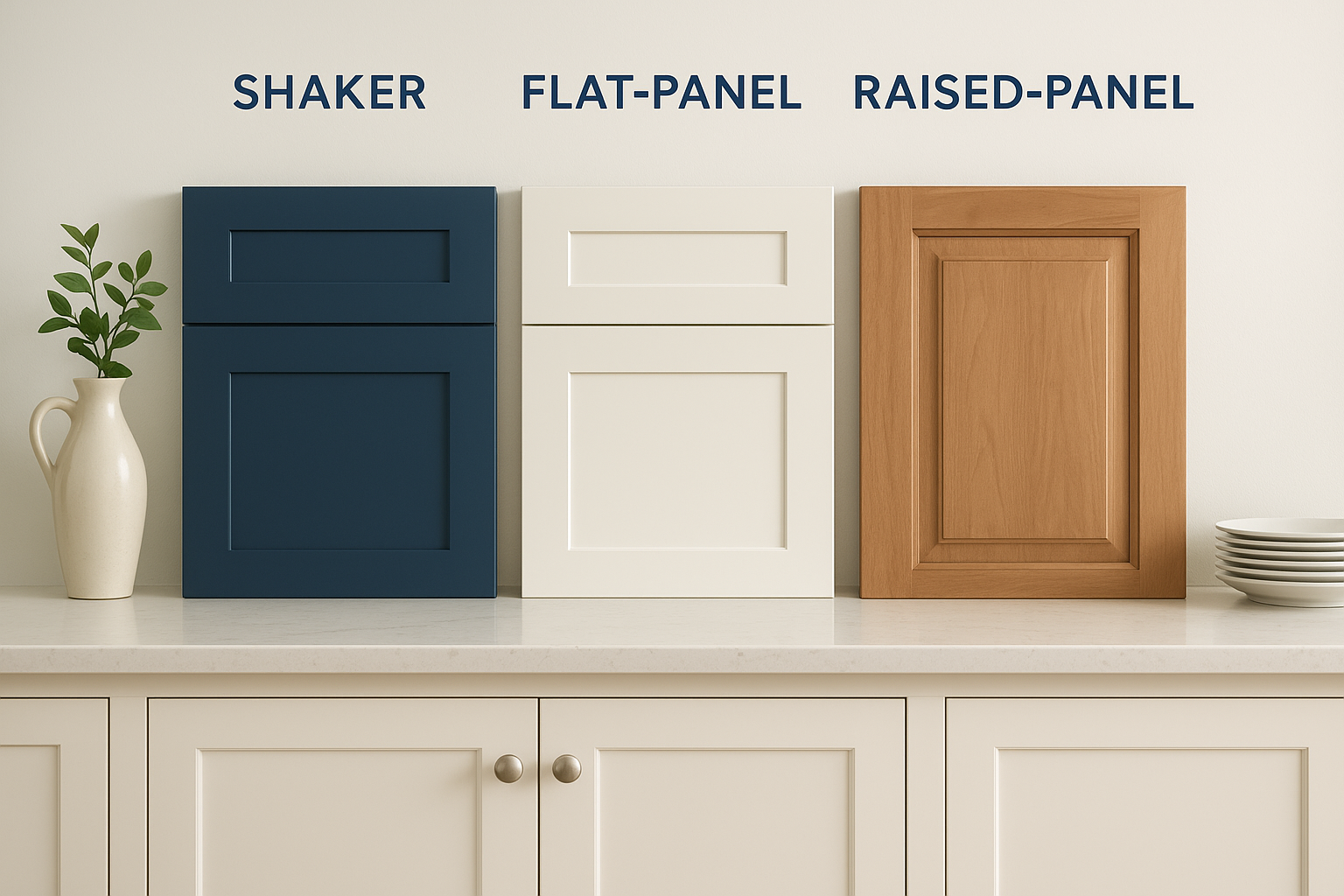
A door profile should match your home’s architecture first, and trends second.
Wood species and finish options
Material choice affects both looks and how the door handles Cape Cod’s humidity swings. Here’s how the common options compare:
| Material | Best Trait | Consideration |
|---|---|---|
| Solid maple | Smooth for paint or stain | Higher cost |
| Solid cherry | Rich grain, ages darker | Sensitive to sun fading |
| Solid oak | Heavy grain texture | Less common in modern kitchens |
| Painted MDF | Consistent smooth finish | Needs solid wood core for durability |
Finish matters as much as species. Painted finishes hide seasonal wood movement better, while clear coats show off natural grain but demand more careful sealing against moisture.
What affects the cost of custom cabinet doors
Custom kitchen cabinet doors don’t come with a flat rate, and that catches a lot of homeowners off guard when quotes vary by hundreds of dollars between shops. Material, size, and finish complexity drive most of the price difference, so understanding each factor helps you budget accurately before you call for quotes.
Wood species and door size
Solid maple and painted MDF sit at the lower end of custom pricing, while cherry and specialty hardwoods push costs up because the raw material itself costs more per board foot. Larger doors, like the oversized panels on modern pantry cabinets, also cost more simply because they require thicker, more stable wood to resist warping over a bigger surface.
Number of doors and finish complexity
A full kitchen with 20 or more doors benefits from per-unit pricing that a five-door bathroom vanity project won’t see. Finish adds another layer: a simple clear coat costs less than a multi-step painted finish with sanding between coats.
Material and finish complexity, not the shop’s hourly rate, usually explain the biggest swings in your quote.
- Wood species (maple, cherry, oak)
- Door size and panel thickness
- Finish type (paint, stain, clear coat)
- Total door count
- Hardware and hinge upgrades
Getting quotes from a shop that hand-builds doors in-house, rather than outsourcing to a factory, usually means fewer markups hidden in the final price.
A final word on custom cabinet doors
Custom kitchen cabinet doors solve a specific problem: cabinet boxes that still work but doors that don’t. You get exact-fit doors built from real wood, in the style and finish that suits how your kitchen actually gets used, without the cost or mess of a full remodel. The trade-off is worth it when you consider how long a well-built door lasts compared to a stock replacement that warps within a few seasons.
If your boxes are solid and your doors are the problem, don’t gut the kitchen to fix them. Get measurements taken, pick a species and finish that matches your daily life, and let a shop that builds in-house handle the rest. That’s exactly the kind of project we take on every week here on Cape Cod, from single vanity doors to full kitchen door replacements. Reach out to Suman Custom Carpentry for a quote on your kitchen.