
You have seen the photos on Pinterest, the glossy magazine spreads, the neighbor’s kitchen that suddenly looks brand new. Now you want proof that cabinet refacing before and after results are real, not just marketing spin. You want to see actual kitchens, actual cabinets, and the actual work that turned tired boxes into something you would be proud to cook in every day.
That is exactly what this article delivers. We pulled together eight real transformations that show what happens when old cabinet frames get new doors, fresh finishes, and updated hardware instead of a full teardown. You will see dated oak kitchens turned bright and modern, dark cabinetry lightened up, and layouts improved without moving a single wall. Each example shows the kind of detail and craftsmanship that separates a rushed refacing job from one built to last.
We build custom kitchens by hand here in Hyannis, so we know what quality refacing actually looks like up close, not just in a before-and-after slider. Scroll through these transformations, then decide if refacing makes sense for your own kitchen.
1. Suman custom carpentry’s full kitchen rebuild in Hyannis
The transformation
This Hyannis kitchen arrived on our doorstep with dated oak cabinets from the 1990s, yellowed varnish, and a layout that boxed in the cook instead of welcoming them. Rather than a simple door swap, the homeowners chose a full custom rebuild, since the old boxes were warped and the island no longer fit how the family used the space. We tore everything down to the studs, redesigned the footprint to open up sightlines to the living room, and hand-built new cabinetry in our Hyannis shop from start to finish. The result is a kitchen with a large center island, floor-to-ceiling pantry storage, and clean shaker doors finished in a soft warm white that reflects natural light instead of absorbing it.
A full rebuild lets you fix a bad layout, not just a bad finish.
Best for this type of space
Homeowners with structural or layout problems, not just cosmetic ones, get the most value from this approach. If your cabinets are water-damaged, your boxes are out of square, or your kitchen simply doesn’t work for how you cook, refacing alone won’t solve it. This route suits:
- Kitchens where the island, sink, or appliance placement needs to move
- Homes with warped, water-damaged, or particle-board boxes
- Owners planning to stay long-term and wanting a kitchen built to last decades
- Families who want more storage than the existing footprint allows
Materials and finish used
We built the cabinet boxes from furniture-grade plywood and finished the shaker doors in a hand-sprayed white paint, backed by our standard warranty structure.
| Component | Material | Finish |
|---|---|---|
| Cabinet boxes | Furniture-grade plywood | Painted interior |
| Doors and drawer fronts | Solid wood shaker style | Sprayed warm white |
| Island | Hardwood frame | Painted, contrasting tone |
| Hardware | Brushed brass pulls | N/A |
Every box and door carries our lifetime guarantee, with a 3-year warranty on the painted finish specifically.
Typical cost and timeline
Full kitchen rebuilds like this one take longer than standard refacing because everything is custom-built rather than adapted from existing boxes. Our typical process runs 40 to 60 days from signed design to final installation, and here’s how that breaks down:
- Design consultation and measurements: 1 to 2 weeks
- Shop fabrication of boxes and doors: 3 to 5 weeks
- On-site installation and finishing touches: 3 to 7 days
Pricing for a full custom rebuild sits well above simple refacing since you’re paying for new construction, not a facelift, but you get a kitchen designed around your life rather than someone else’s floor plan.
2. Dark wood cabinets refaced to bright white shaker
The transformation
This Cape Cod kitchen came to us with heavy espresso-stained cabinets that swallowed up light in a room with only one small window. The homeowners didn’t need a new layout, they needed the existing boxes stripped of that dark, dated look and rebuilt with fresh doors. We removed every door and drawer front, kept the sound original boxes, and replaced the fronts with crisp white shaker doors paired with new soft-close hinges. Refinished box interiors and new end panels finished the look so nothing dark peeked out from the edges.
A dark-to-light refacing job can make a small kitchen feel twice its size without moving a single wall.
Best for this type of space
Smaller kitchens and rooms with limited natural light benefit most from this kind of transformation. Consider this approach if:
- Your cabinet boxes are structurally sound but visually outdated
- Dark finishes make your kitchen feel smaller or dimmer than it is
- You want a dramatic visual change without a full renovation budget
Materials and finish used
We used solid wood shaker doors finished in a bright white lacquer, chosen for its durability against daily wear and easy cleanup near the stove and sink. New brushed nickel pulls replaced the old brass hardware, and matching end panels covered any exposed original wood.
Typical cost and timeline
Because the boxes stayed in place, this project moved faster than a full rebuild. Fabrication of new doors and drawer fronts took roughly 3 weeks in our Hyannis shop, followed by a 1 to 2 day on-site installation once everything was ready. Refacing projects like this typically cost significantly less than a full custom rebuild, making it a smart middle ground for homeowners who want new-kitchen looks on a tighter timeline.
3. Oak kitchen updated with modern slab-front doors
The transformation
This kitchen had the classic 1980s look: honey oak cabinets with raised panel doors and heavy trim that clashed with the homeowners’ newly renovated open-concept living space. Instead of chasing another traditional style, they wanted something contemporary that would age well and match their updated flooring. We stripped the raised panel doors, kept the original boxes, and installed flat slab-front doors in a rich walnut veneer that reads modern without feeling cold. Clean, handle-less hardware and a matching walnut island wrap tied the whole room together.
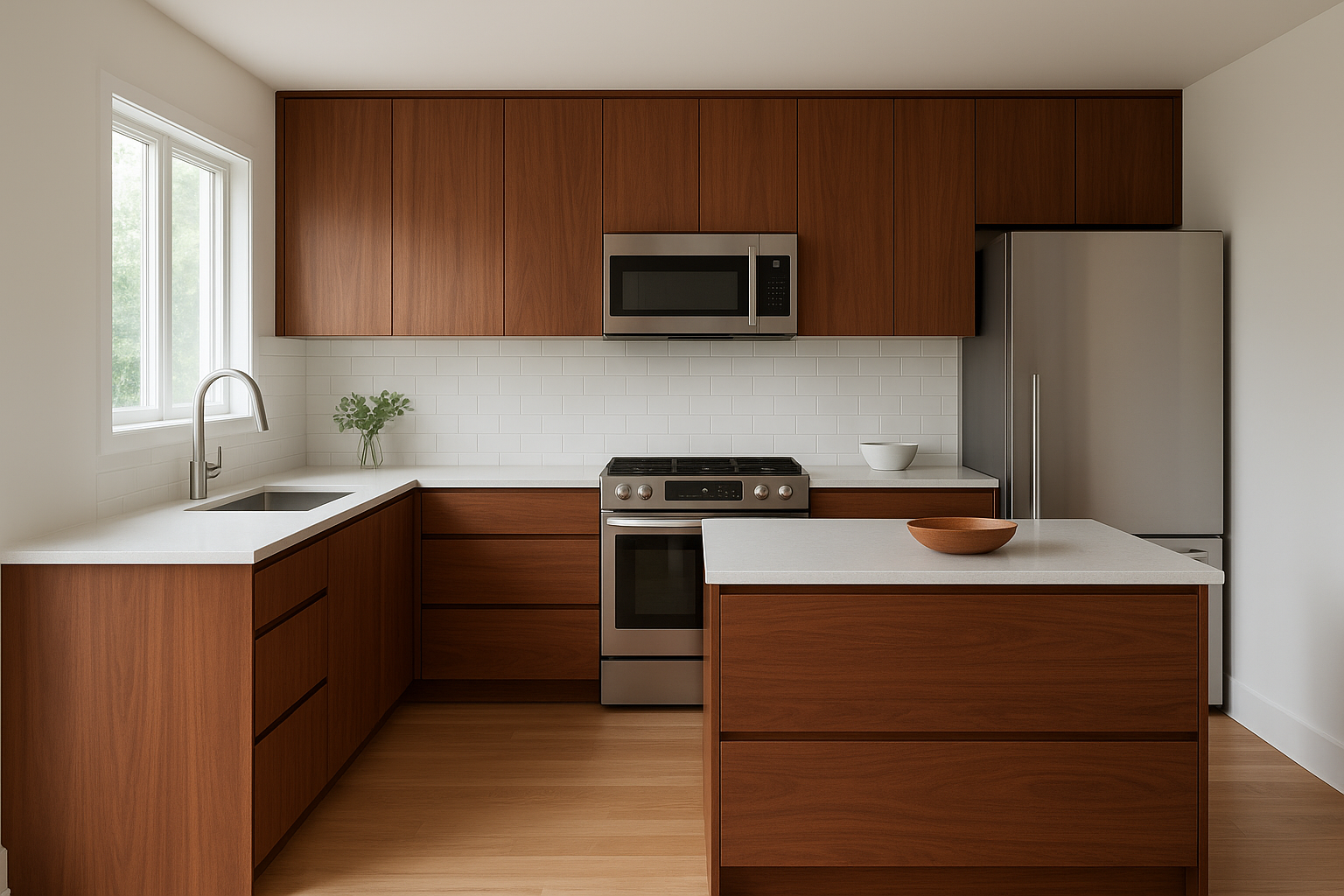
Swapping raised panels for slab fronts is often the fastest way to make an oak kitchen feel current again.
Best for this type of space
Homeowners moving toward a modern or transitional aesthetic get the biggest visual payoff from this style of refacing. It works well when:
- Existing boxes are square and in good structural condition
- You want to shift from traditional to contemporary without gutting the room
- The rest of your home has already moved toward cleaner, minimalist lines
Materials and finish used
We used walnut veneer over engineered wood cores for the slab doors, which resists warping better than solid wood in a busy kitchen. A matte polyurethane topcoat protects against grease and water splashes near the sink and stove, and integrated finger-pull edges eliminated the need for visible hardware.
Typical cost and timeline
Slab-front refacing runs close to shaker-style projects in cost, since the labor to remove old doors and rebuild boxes is similar. Door fabrication took about 3 weeks, with installation wrapped up in a single weekend. Homeowners looking for a modern update without a full remodel budget find this one of the more cost-effective transformations available.
4. Two-tone island refacing for a custom look
The transformation
This kitchen had solid maple cabinets in decent shape, but the homeowners wanted their island to stand out instead of blending into the perimeter cabinetry. Rather than refacing the whole kitchen in one uniform color, we kept the surrounding cabinets in a soft warm white and rebuilt the island doors and panels in a deep navy blue. The contrast turned a plain workhorse island into the visual centerpiece of the room, and new brass hardware on the island doors picked up the warm tones already present in the pendant lighting overhead.
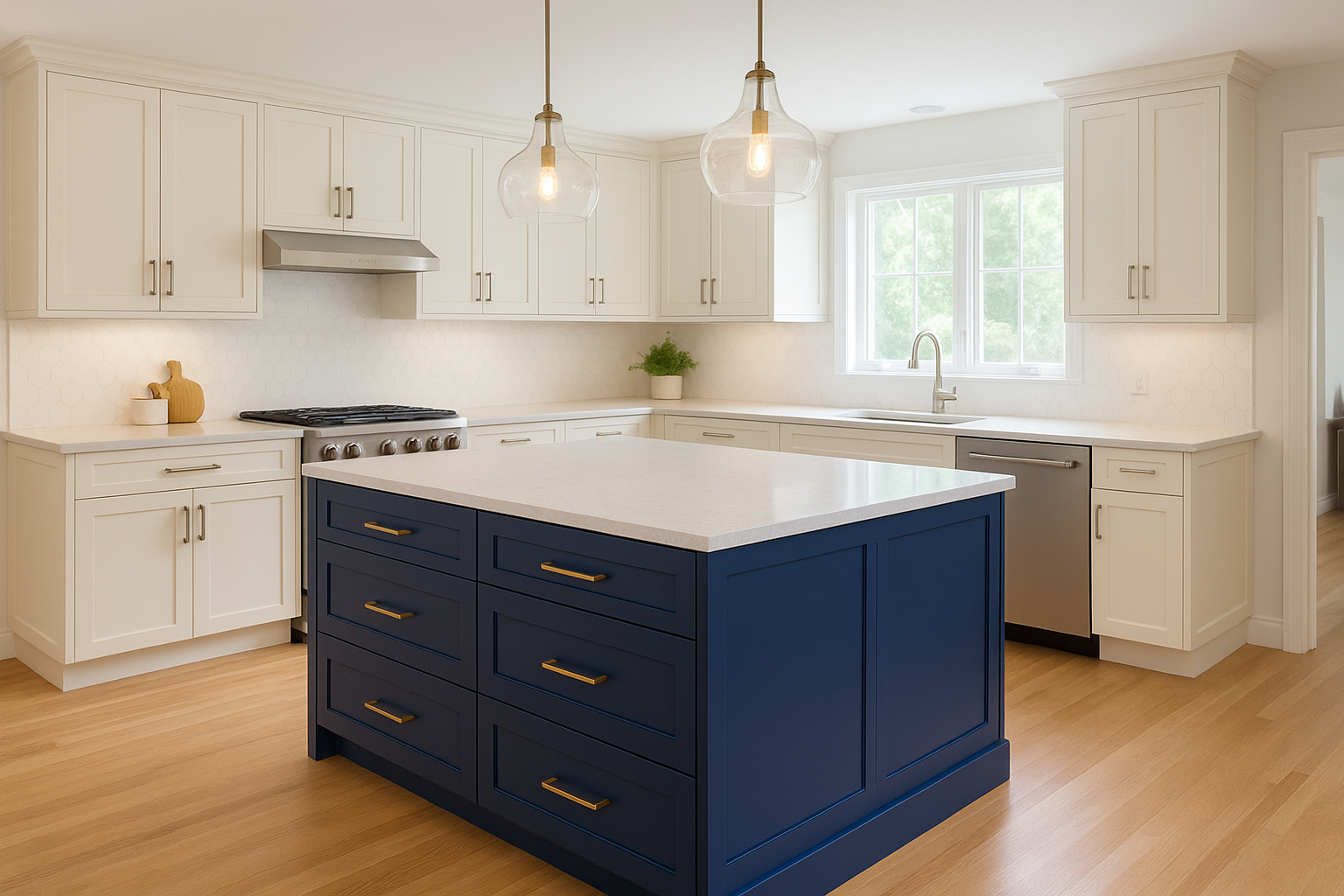
A two-tone refacing job turns your island into a focal point instead of just extra counter space.
Best for this type of space
Open-concept kitchens where the island is visible from the living or dining area benefit most from this approach. It suits homeowners who:
- Want a custom, designer look without repainting every cabinet in the kitchen
- Already have an island large enough to serve as a visual anchor
- Like the idea of updating finishes again later without touching the perimeter cabinets
Materials and finish used
We used solid maple doors for both the island and perimeter cabinets, sprayed in two separate finishes to keep sheen and color consistent within each zone.
| Area | Color | Hardware |
|---|---|---|
| Perimeter cabinets | Warm white | Brushed nickel |
| Island | Deep navy blue | Brushed brass |
Typical cost and timeline
Two-tone refacing adds a bit more time than a single-color job since the shop has to run two separate finishing batches instead of one continuous run. Expect fabrication to take about 3 to 4 weeks, with installation completed in 2 to 3 days on site. Costs land slightly above a standard single-color refacing project, but far below a full rebuild, which makes this a popular pick for homeowners chasing a custom look on a moderate budget.
5. Dated bathroom vanity refaced with coastal style
5. Dated bathroom vanity refaced with coastal style
The transformation
A guest bathroom in this Hyannis home still had its original builder-grade vanity from the 1990s, complete with dark cherry doors and gold hardware that clashed with every towel the homeowners tried to match. Nothing about the plumbing or cabinet boxes needed to change, so we kept the structure intact and refaced the doors and drawer fronts in a light driftwood-gray finish that fits the coastal look so many Cape Cod homeowners want. New woven-look ceramic knobs and a fresh countertop rounded out the update, and the whole vanity now looks like it belongs in a beach house rather than a rental unit.
This kind of cabinet refacing before and after shows how much a small vanity update can change the feel of an entire bathroom.
Best for this type of space
Bathroom vanities are usually smaller than kitchen cabinet runs, which makes refacing an especially efficient fix. This approach works well when:
- The vanity box is solid but the finish feels outdated or mismatched
- You want a coastal or beachy style without replacing plumbing fixtures
- The bathroom is used by guests and doesn’t need a full remodel budget
Materials and finish used
We used engineered wood doors with a driftwood-gray wood grain finish, chosen for its resistance to the humidity that bathrooms deal with daily. Ceramic knobs and a moisture-sealed drawer interior finished the project so nothing warps from steam over time.
Typical cost and timeline
Because vanities are small, this refacing job wrapped up fast. Door fabrication took about 2 weeks, and installation took a single afternoon. Bathroom vanity refacing typically costs a fraction of a kitchen project, making it one of the most budget-friendly ways to update a home before selling or hosting guests.
6. Built-in shelving refreshed with custom millwork
The transformation
This living room had a pair of outdated built-in bookshelves flanking the fireplace, boxy units with plain plywood shelves and no trim to speak of. The homeowners weren’t looking to add cabinets, they wanted the existing built-ins to actually match the character of their older Cape Cod home. We rebuilt the face frames with custom crown molding and added beadboard backing to the open shelves, then wrapped the lower cabinet doors in a matching painted finish that ties into the room’s trim work. What used to look like an afterthought now reads as a designed feature of the room.
Built-ins gain the most value when the trim and molding match the rest of the house, not just the shelf itself.
Best for this type of space
Homes with plain or builder-grade built-ins benefit the most from this kind of millwork upgrade. Consider this route if:
- Your built-ins lack trim, molding, or architectural detail found elsewhere in the home
- The shelving structure is solid but the finish or style feels mismatched
- You want a custom carpentry look without tearing out existing woodwork
Materials and finish used
We used solid poplar for the new face frames and crown molding, since it takes paint smoothly and holds detail better than MDF over time. Beadboard panels lined the shelf backs, and everything received a hand-sprayed finish matched to the home’s existing trim color.
| Component | Material | Finish |
|---|---|---|
| Face frames | Solid poplar | Painted to match trim |
| Shelf backing | Beadboard | Painted |
| Lower doors | Solid wood | Painted, soft-close hinges |
Typical cost and timeline
Millwork projects like this depend heavily on how much trim detail you’re adding, but most built-in refreshes take 2 to 3 weeks in the shop plus 2 to 3 days for on-site installation and paint touch-up. Costs typically fall below a full kitchen refacing project since the scope is smaller, making this a practical way to upgrade a single room without a full-home renovation budget.
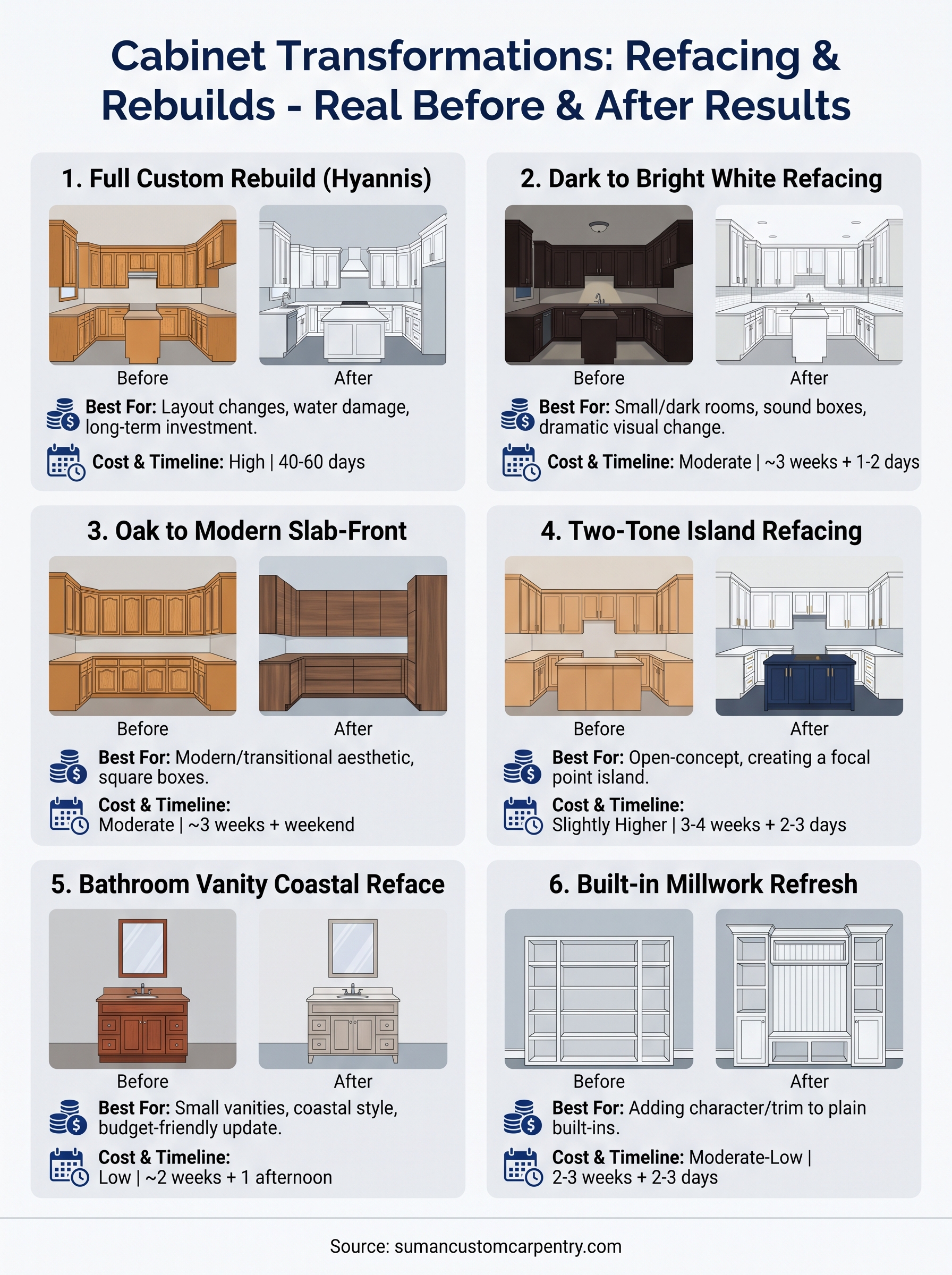
Choosing the transformation that fits your home
Eight kitchens, eight different starting points, and eight ways to get from tired to transformed. What ties them together isn’t a single style or price point, it’s sound craftsmanship applied to the right project for the space. A full rebuild fixes layout problems that refacing never will. A door swap on solid boxes saves money and still delivers a dramatic change. A two-tone island or a refreshed built-in proves you don’t need to touch every surface in the room to make it feel new again.
The right call depends on your boxes, your budget, and how long you plan to stay in the house. If you’re still weighing cabinet refacing before and after options against a full rebuild, the honest answer is usually specific to your kitchen, not a blanket rule. Reach out to Suman Custom Carpentry and we’ll walk your space with you before you commit to either one.