
Searching for a custom closet builder near me can feel overwhelming when every result claims to be the best. Cape Cod homeowners know that closet space in coastal homes is often limited or awkwardly shaped, and a generic shelving system from a big-box store rarely solves the problem. A custom-built closet does.
But not all builders deliver the same level of craftsmanship, communication, or long-term value. The difference between a closet that transforms your daily routine and one that disappoints often comes down to the questions you ask before signing a contract. Knowing what to look for, from material quality to warranty terms, puts you in control of the outcome and protects your investment.
At Suman Custom Carpentry, we’ve been designing and hand-building custom closet systems at our Hyannis shop since 2018. We hear these questions from clients regularly, and frankly, we think you should be asking them. Below are seven questions to bring to any custom closet builder you’re considering, including us, so you can hire with confidence and get exactly what your home needs.
1. Do you build everything in-house?
Where your closet gets built matters as much as how it gets built. Many companies that market themselves as custom builders actually outsource cabinet boxes or components to third-party manufacturers, then assemble the pieces on-site. You deserve to know exactly who is building what and where the work happens before you commit to a project.
Why this question matters in 2026
Supply chain disruptions and rising material costs have pushed more contractors to rely on outside fabricators to cut overhead. When a builder outsources production, quality control shifts away from the person you hired, and your ability to hold anyone accountable for a defect shrinks considerably. A shop that builds everything in-house keeps every decision under one roof, from wood selection to the final coat of finish.
If a builder can’t tell you exactly where the components are made, that’s a meaningful gap in accountability you should not overlook.
What a strong answer should include
A confident builder will tell you the location of their shop, what equipment they use, and who does the actual fabrication. They should describe the process from raw material to finished piece without hesitation. Bonus points if they invite you to see the shop or share photos of work in progress. At Suman Custom Carpentry, every closet system is hand-built at our Hyannis shop, which means we control every detail from start to final install.
Follow-up questions to ask on the spot
Push a little further once you have the initial answer. These follow-ups reveal how well the builder actually knows their own process:
- Who cuts and assembles the cabinet boxes?
- Do you use any prefabricated components from outside suppliers?
- Can I see your shop or photos of work in progress?
Red flags to watch for
Be cautious if a custom closet builder near me search turns up a company that gives vague answers about fabrication or pivots quickly to talking about design without addressing where production actually happens. Another warning sign is a very short lead time that seems inconsistent with true custom work. Genuine custom carpentry takes time, and any builder who rushes past that reality is worth questioning.
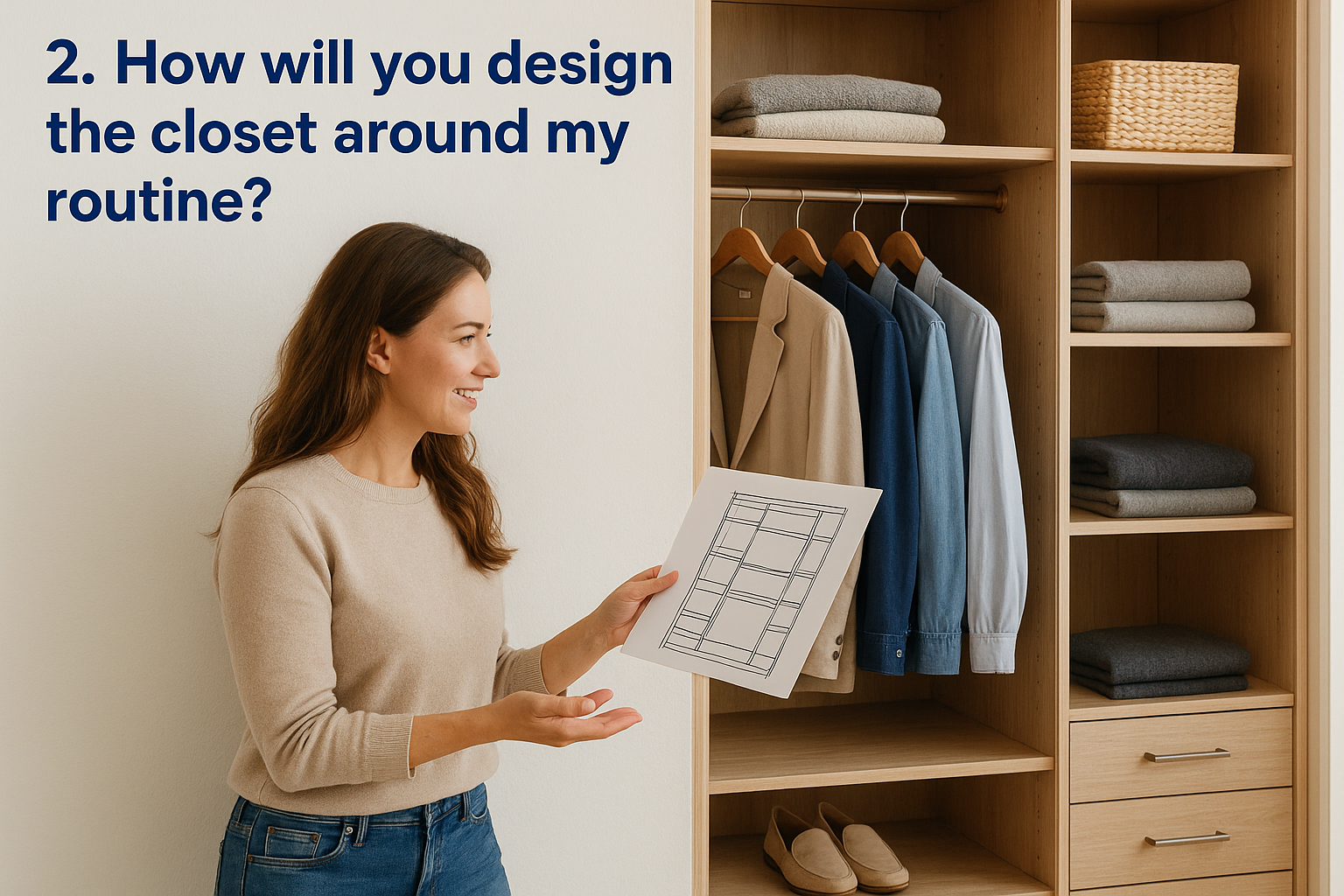
2. How will you design the closet around my routine?
A closet that looks great in a photo but fails in daily use is a missed opportunity. The best custom closet builder near me is one who asks about how you actually live before making a single design decision. Your shoes, folded clothes, hanging garments, accessories, and daily habits should all shape the final layout.
Why this question matters in 2026
Design trends shift, but your routine stays relatively consistent. In 2026, more homeowners work from home and need closets that double as functional storage hubs for gear, work bags, and seasonal items. A builder focused on real-world use will create a closet that works better on day 1,000 than it does on day one.
The right builder treats your habits as the design brief, not as an afterthought.
What a strong answer should include
A skilled builder will ask about your wardrobe breakdown (how many hanging items versus folded), your morning routine, and who shares the space. They should explain how those answers translate directly into shelf heights, rod placement, and drawer counts rather than defaulting to a standard template pulled from a catalog.
Follow-up questions to ask on the spot
- Do you offer a design consultation before the quote?
- Can you show examples of layouts built around specific client routines?
- How do you handle two people sharing the same closet?
Red flags to watch for
Watch out for builders who jump straight to aesthetics without asking a single question about how you use the space. If the first conversation focuses entirely on cabinet styles or color palettes, that builder is designing for appearance rather than function, and you will likely feel that trade-off every morning.
3. Which materials and finishes do you recommend here?
Cape Cod’s coastal climate creates specific demands that inland builders often overlook. Humidity, salt air, and seasonal temperature swings can warp inferior materials and cause finishes to peel within a few years. Asking about local material recommendations tells you immediately whether a builder understands your environment or is simply applying a one-size-fits-all approach.
Why this question matters in 2026
Material costs have shifted significantly, and some builders quietly substitute lower-grade components without telling clients. A builder who proactively recommends moisture-resistant plywood, solid wood frames, or specific finish coatings for coastal conditions is showing you that their recommendations are driven by your situation, not their profit margin.
The right material choice protects your closet for decades; the wrong one shows up as warping or peeling within a few years.
What a strong answer should include
A knowledgeable builder will explain why they choose specific materials for coastal homes and walk you through finish options with honest trade-offs. They should mention durability, maintenance requirements, and how each option holds up to humidity, not just how it looks on a sample board.
Follow-up questions to ask on the spot
- Do you recommend different materials for closets near exterior walls?
- What finish do you use, and how does it hold up to moisture?
- Can I see a material sample before the build starts?
Red flags to watch for
Be cautious if a custom closet builder near me you’re vetting only discusses aesthetics and never brings up material performance. A builder who can’t explain the difference between particleboard and plywood, or who dismisses your climate concerns, is not the right fit for a coastal home.
4. Can you give an itemized quote and scope of work?
A vague quote is a setup for disputes. Before any work begins, you need a document that breaks down exactly what you’re paying for, line by line. Itemized quotes protect you from unexpected charges and give you a clear benchmark for comparing multiple builders side by side.
Why this question matters in 2026
Material prices have fluctuated sharply in recent years, and some builders bundle everything into a single lump sum to obscure where costs concentrate. In 2026, a detailed scope of work matters more than ever because it pins down exactly what’s included before a single board gets cut.
A quote without line items is just a number; a scope of work is a commitment.
What a strong answer should include
A solid quote breaks out labor, materials, hardware, and installation as separate line items. The scope of work should describe the dimensions, number of shelves and drawers, specific materials used, and any prep work the space requires. No line should be ambiguous.
Follow-up questions to ask on the spot
Push for specifics once you have the draft quote in hand. These questions surface hidden costs and confirm the scope is complete before you sign anything.
- What happens to the price if material costs rise before the build starts?
- Is installation included in this quote?
- What triggers a change order?
Red flags to watch for
Any custom closet builder near me who resists giving an itemized quote is a risk. If a builder tells you the price is "all-in" without written documentation, walk away before you commit.
5. What will the timeline look like from measure to install?
Understanding the timeline upfront helps you plan your life around the project and sets a realistic expectation for when your closet will be ready to use. A vague "a few weeks" answer is not good enough. You need specific milestones from the first site visit through final installation so you can coordinate with other contractors, deliveries, or household schedules without unnecessary disruption.
Why this question matters in 2026
Custom work takes time, and rushing the build compromises quality. In 2026, many builders are managing full project loads alongside tighter material lead times, which means your place in the queue matters. Any custom closet builder near me worth hiring will give you a clear, phase-by-phase timeline rather than a single vague completion date you have no way to hold them to.
A builder who can’t give you a phase-by-phase timeline probably hasn’t thought the project through yet.
What a strong answer should include
A reliable builder breaks the timeline into distinct phases: measurement, design approval, fabrication, and installation. They should tell you how long each phase takes and what you need to do at each step to keep things on track without delays caused by missing decisions or approvals on your end.
Follow-up questions to ask on the spot
- How long does fabrication take after design approval?
- What could push the timeline back, and how do you handle that?
- Will I get updates during the build?
Red flags to watch for
Be cautious when a builder promises an unusually fast turnaround without explaining how they maintain quality at that pace. If the timeline feels too compressed for genuine custom work, trust that instinct and ask more questions before moving forward.
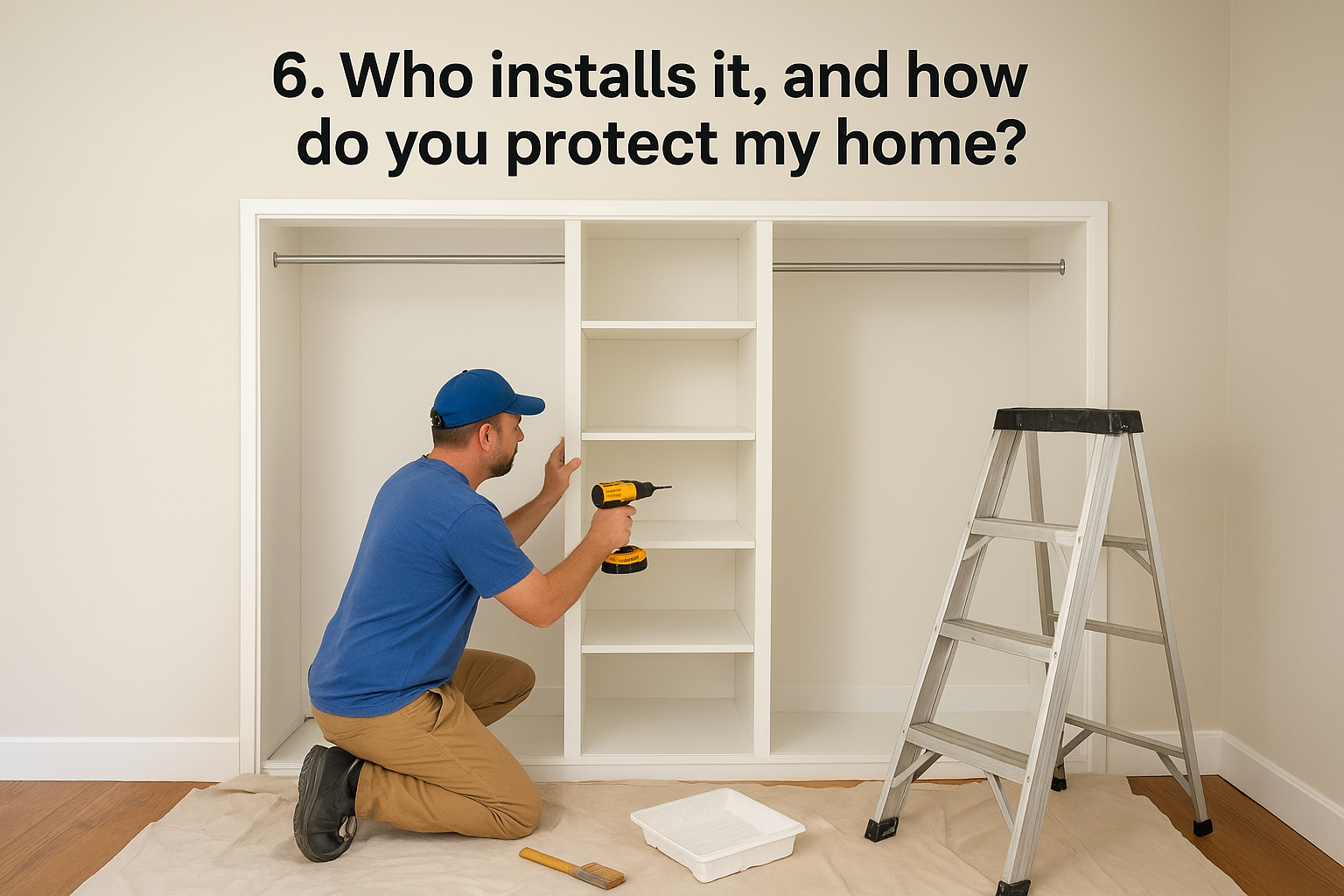
6. Who installs it, and how do you protect my home?
The person who builds your closet and the person who installs it are not always the same. Some builders hand off installation to subcontractors who have no connection to the original fabrication. Knowing who physically comes into your home and how they operate protects you from miscommunication, damage, and accountability gaps.
Why this question matters in 2026
Installation is where most closet projects go wrong. Gaps, misaligned panels, and damaged walls often result from installers who didn’t build the piece and don’t fully understand the design intent. Any custom closet builder near me worth hiring keeps fabrication and installation under the same team.
The builder who built it should have a direct hand in installing it.
What a strong answer should include
A good builder will tell you exactly who shows up on installation day and whether they are employees or subcontractors. They should also explain how they protect your floors, walls, and surrounding surfaces during the process, including drop cloths, corner guards, and cleanup expectations before they leave.
Follow-up questions to ask on the spot
- Are your installers employees or subcontractors?
- What surface protection do you use during installation?
- Who do I contact if something is damaged during install?
Red flags to watch for
Walk away if a builder can’t name who handles installation or deflects the question entirely. Subcontracted installation without disclosure is a sign that accountability ends the moment the builder leaves your driveway.
7. What warranty do you offer and what does it cover?
A warranty tells you everything about how much a builder stands behind their work. Asking this question upfront separates builders who are confident in their craftsmanship from those who hope you never call them back with a complaint.
Why this question matters in 2026
Custom closets represent a significant financial investment, and you need to know that investment is protected past installation day. In 2026, more homeowners are prioritizing long-term value over upfront savings, which means warranty terms have become a real differentiator when comparing any custom closet builder near me. A builder who won’t commit to clear warranty coverage is signaling that they expect problems down the road.
A strong warranty is not a marketing add-on; it is proof that the builder trusts their own work.
What a strong answer should include
A reliable builder will give you specific warranty terms in writing, covering cabinet boxes and doors separately from any painted or finished surfaces. They should explain what voids the warranty, how you file a claim, and how quickly they respond when something needs attention.
Follow-up questions to ask on the spot
- Does the warranty cover hardware like hinges and drawer slides?
- What is excluded from coverage?
- Is the warranty transferable if I sell the home?
Red flags to watch for
Avoid any builder who offers only a vague verbal commitment or a warranty loaded with exclusions that provide no real protection. Written terms with specific coverage periods are the minimum standard you should accept before signing anything.
Before you hire
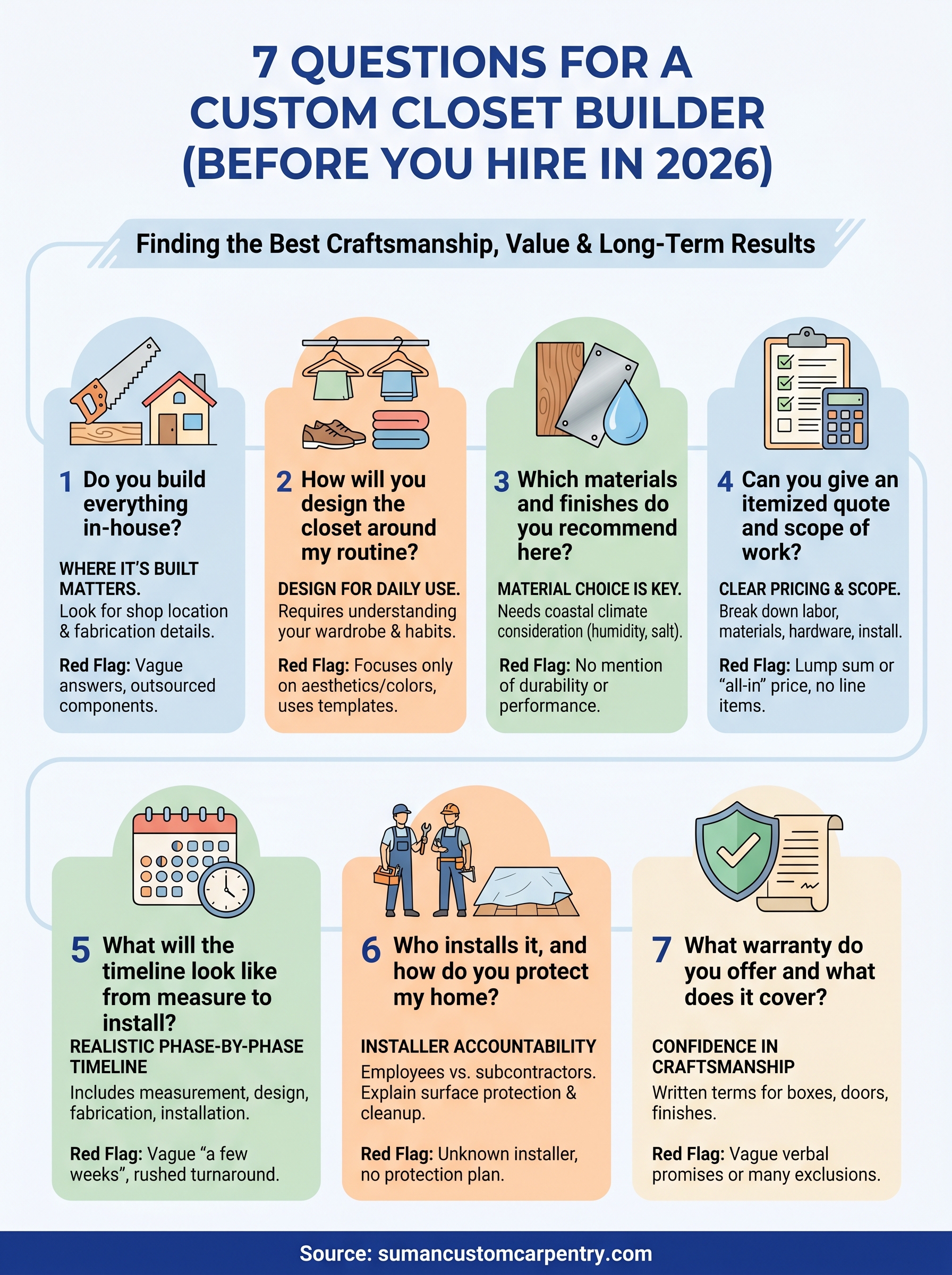
These seven questions give you a real framework for evaluating any custom closet builder near me before you commit to a contract. The right builder will answer every one of them clearly and confidently, without deflection or vague promises. If a builder stumbles on more than one of these, that hesitation tells you something important about how the project will go.
Your closet should work for your life, not just look good in a photo. Quality materials, transparent pricing, a clear timeline, and a written warranty are not extras you negotiate for. They are the baseline you should expect from any builder asking for your trust and your investment.
At Suman Custom Carpentry, every closet is hand-built in our Hyannis shop with a lifetime guarantee on cabinet boxes and doors. If you’re ready to start the conversation, reach out to our team for a custom closet consultation.