
A single flat countertop can only do so much. If you’re planning a kitchen remodel and want your island to handle cooking, seating, and storage without everything colliding, two-tier kitchen island ideas are worth a serious look. That raised or stepped second level creates a natural separation between workspace and gathering space, a detail that makes a real difference in how your kitchen functions day to day.
At Suman Custom Carpentry, we design and hand-build custom kitchen islands at our shop in Hyannis, Cape Cod. We’ve built plenty of two-tier islands for homeowners across the Cape, so we know what works in practice, not just on a mood board. The dimensions, material choices, and layout all matter more than most people expect.
Below, we break down five two-tier island designs that pair seating with smart storage. For each one, you’ll get a clear picture of what it looks like, how it functions, and whether it’s a practical fit for your kitchen remodel.
1. Custom-built two-tier island for your kitchen
A custom-built island is one of the most flexible two-tier kitchen island ideas you can choose. Unlike stock or semi-custom options, every dimension, material, and detail is built around your specific kitchen layout and how you actually use the space.
Why this design works
This design lets you set the exact height split between your work surface and your seating tier. Most homeowners choose a 36-inch prep level paired with a 42-to-44-inch raised bar, which keeps food prep hidden from guests sitting at the island. That separation is the core functional benefit of this layout.
A raised second tier blocks the mess of active cooking from the seating side, so your kitchen looks composed even mid-prep.
Seating and storage layout
You can fit three to four bar stools along a raised rear overhang while keeping full cabinet runs below the prep tier. Pull-out drawers, deep base cabinets, and even a built-in trash or recycling pullout all tuck cleanly under the lower level.
Dimensions and clearances to plan
Plan for at least 42 inches of clearance on all working sides of the island. The prep tier typically runs 25 to 30 inches deep, with the raised seating overhang adding 12 to 15 inches on the back edge for comfortable legroom.
Materials and finish ideas
Painted shaker-style base cabinets with a quartz or hardwood prep surface are a popular combination. You can carry the same finish as your perimeter cabinets or use a contrasting color on the island base to make it a focal point in the room.
Budget and build considerations
A fully custom two-tier island typically starts around $8,000 to $12,000 depending on size, materials, and complexity. Working with a local carpenter means you get accurate lead times and direct communication at every stage of the build.
2. Two-tier island with sink and prep tier
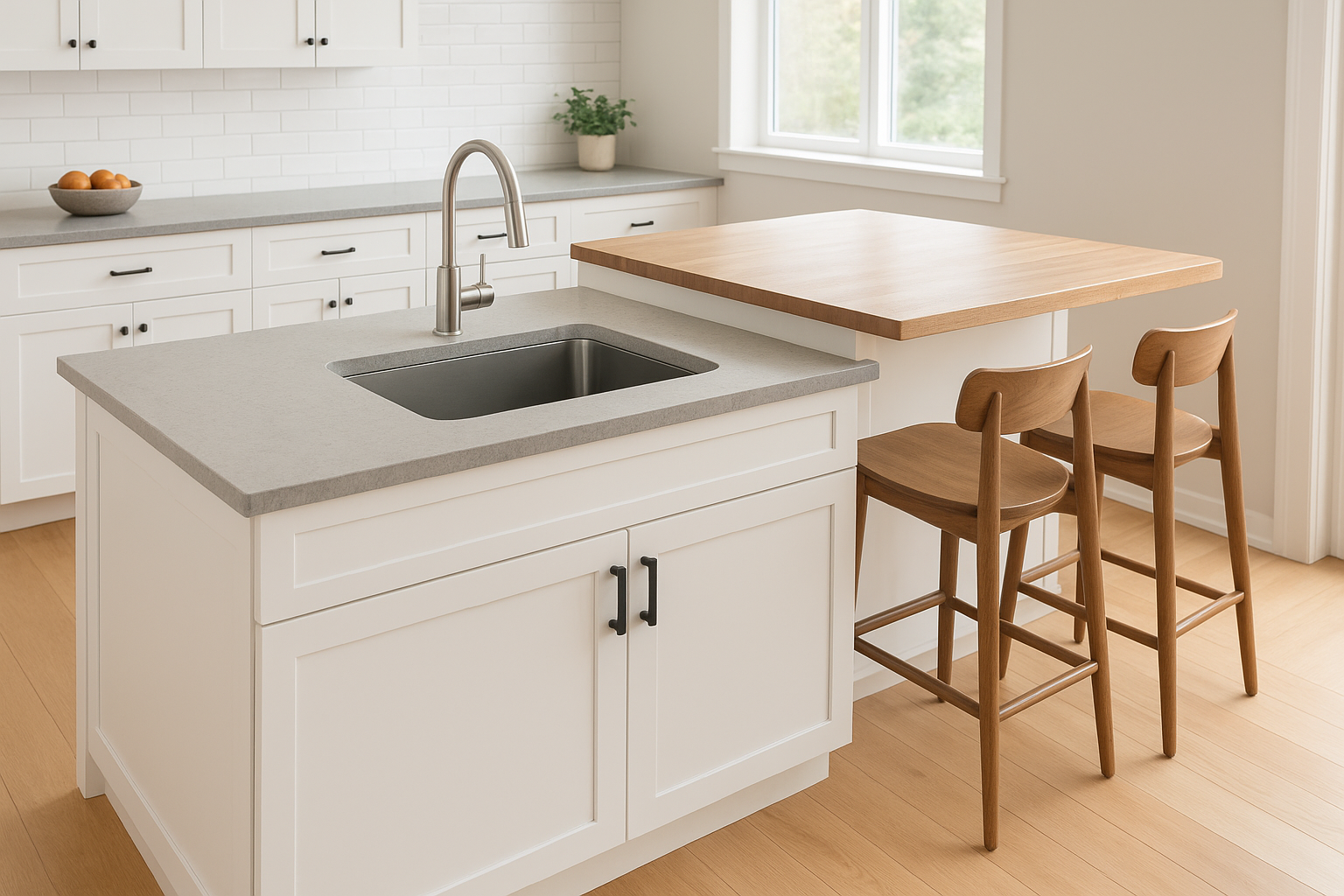
Adding a sink to your lower prep tier changes how the whole island functions. This layout separates the wet work zone from the raised eating surface, keeping cleanup away from where guests sit.
Why this design works
Placing the sink in the lower tier keeps rinsing and washing below the sightline from the seating level. You get a dedicated prep and cleanup zone on one surface and a clean raised counter for serving.
This layout makes the island feel like two distinct spaces in a single footprint.
Seating and storage layout
The raised tier holds two to three bar stools, while the lower cabinet run houses your under-sink plumbing, pull-out trash, and base drawers for prep tools.
Dimensions and clearances to plan
Plan the lower tier at 36 inches for comfortable sink use. Leave at least 24 inches between the sink centerline and the raised support to allow elbow room during prep.
Materials and finish ideas
A stainless or composite undermount sink pairs well with quartz on the lower tier. Use a contrasting hardwood or stone on the raised level to separate the two surfaces visually.
Budget and build considerations
Plumbing rough-in adds $500 to $1,500 to your project cost. Factor this into your total remodel budget early so the cabinetry layout can plan around it correctly.
3. Two-tier island with mixed materials
Mixing two different materials across your island tiers is one of the most visually striking two-tier kitchen island ideas you can take into a remodel. The contrast does more than look appealing; it gives each tier a clear visual identity that reinforces how each surface gets used.
Why this design works
Using different countertop materials on each tier signals to everyone in the room which surface is for work and which is for gathering. A hardwood prep surface paired with a polished quartz or marble-look raised tier creates an immediate visual separation.
This contrast makes the island read as a deliberate design choice rather than a standard cabinet box with an overhang.
Seating and storage layout
The raised tier handles two to three stools comfortably, while base cabinets and drawers run the full length below the prep surface.
Dimensions and clearances to plan
Keep the lower tier at 36 inches and the raised tier at 42 to 44 inches. Standard clearances of 42 inches on working sides still apply.
Materials and finish ideas
Butcher block or white oak on the lower prep tier pairs well with honed quartz or leathered granite on the raised level.
Budget and build considerations
Two countertop materials mean two fabrication and installation costs. Budget an additional $600 to $1,200 depending on the stone or hardwood you select.
4. Two-tier island with a table-height end
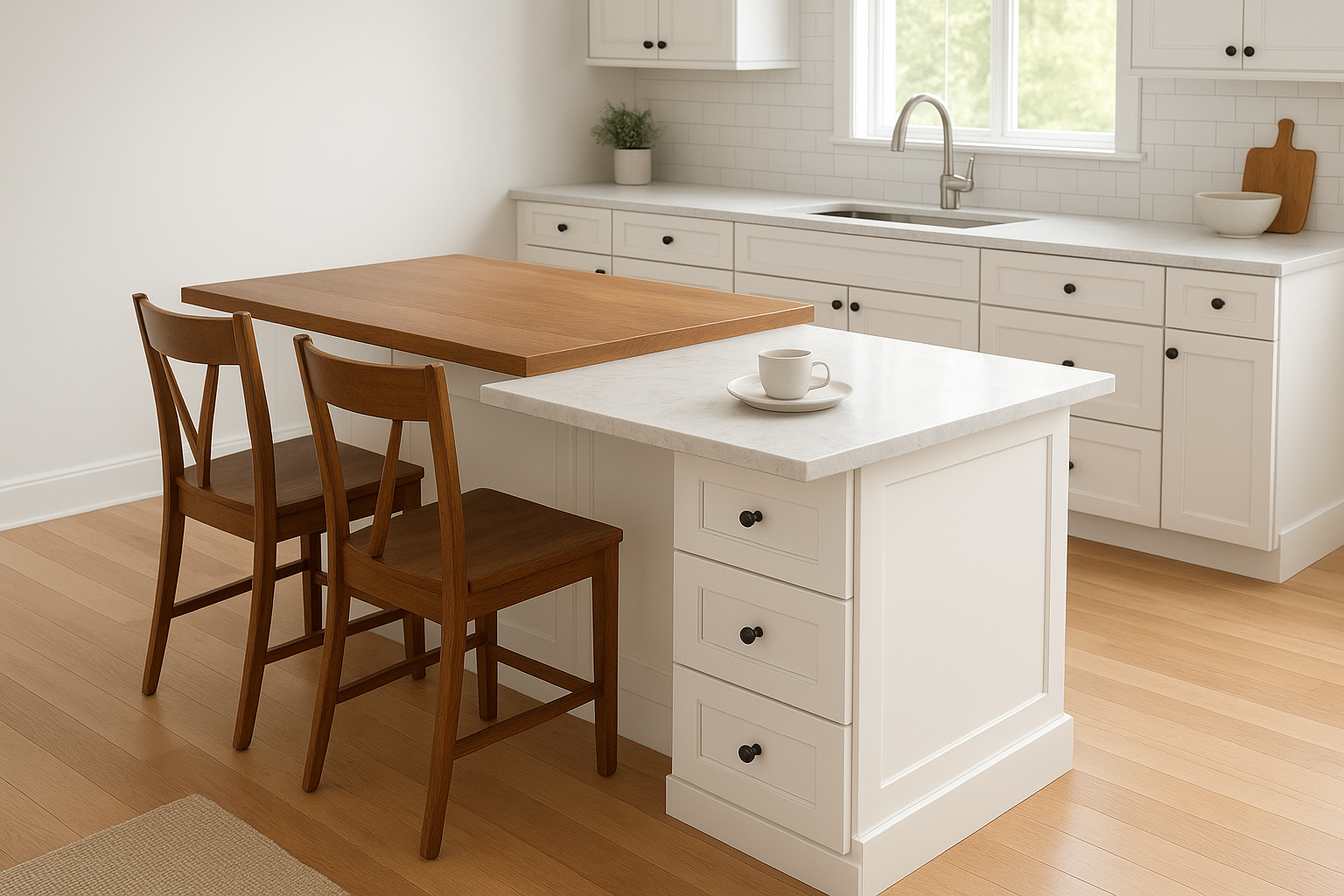
This design adds a table-height section at one end of the island, typically dropping to 30 inches. It’s one of the more practical two-tier kitchen island ideas for households that want a casual dining spot without a separate table taking up floor space.
Why this design works
The lower table-height end invites standard dining chairs instead of bar stools, which many people find more comfortable for longer meals. You keep the full 36-inch prep surface on the main body of the island while the dropped end handles everyday dining.
This layout removes the need for a separate breakfast nook without shrinking your prep space.
Seating and storage layout
The table-height end seats two to three people with standard chairs. Below the main prep tier, you still have room for full-depth base cabinets and drawers across the longer run.
Dimensions and clearances to plan
The dropped end typically measures 24 to 30 inches deep and 30 inches high. Allow 32 to 36 inches of clearance around the seating end for chairs to pull out comfortably.
Materials and finish ideas
Match the table-height surface to your prep tier material or use a contrasting wood top to define the dining area visually.
Budget and build considerations
The stepped framing adds modest complexity to the build, usually adding $500 to $800 over a standard flat-top custom island.
5. Compact two-tier peninsula with seating
A peninsula is one of the most practical two-tier kitchen island ideas for smaller kitchens. It connects to your wall or perimeter cabinetry on one end, which cuts your clearance requirements and still gives you a clear step-up between prep and seating.
Why this design works
This layout anchors to your existing cabinetry, shrinking the overall footprint without giving up the functional separation you get from a full island. If your kitchen does not have room for four open sides, a peninsula solves that directly.
A peninsula gives you the two-tier layout without requiring clearance on all four sides.
Seating and storage layout
The raised overhang seats two to three people comfortably. Base cabinets on the lower tier store pots, pans, and prep tools without cluttering the work surface.
Dimensions and clearances to plan
Keep at least 42 inches of clearance on the two open sides. Most peninsulas run six to eight feet in length, which stays proportionate in tighter kitchens.
Materials and finish ideas
Match the peninsula base to your perimeter cabinets for a cohesive look, then select a contrasting countertop on the raised tier to define the seating zone clearly.
Budget and build considerations
A custom peninsula typically starts around $5,000 to $8,000, since one end ties into existing cabinetry and reduces the overall build complexity.
A simple way to choose your best option
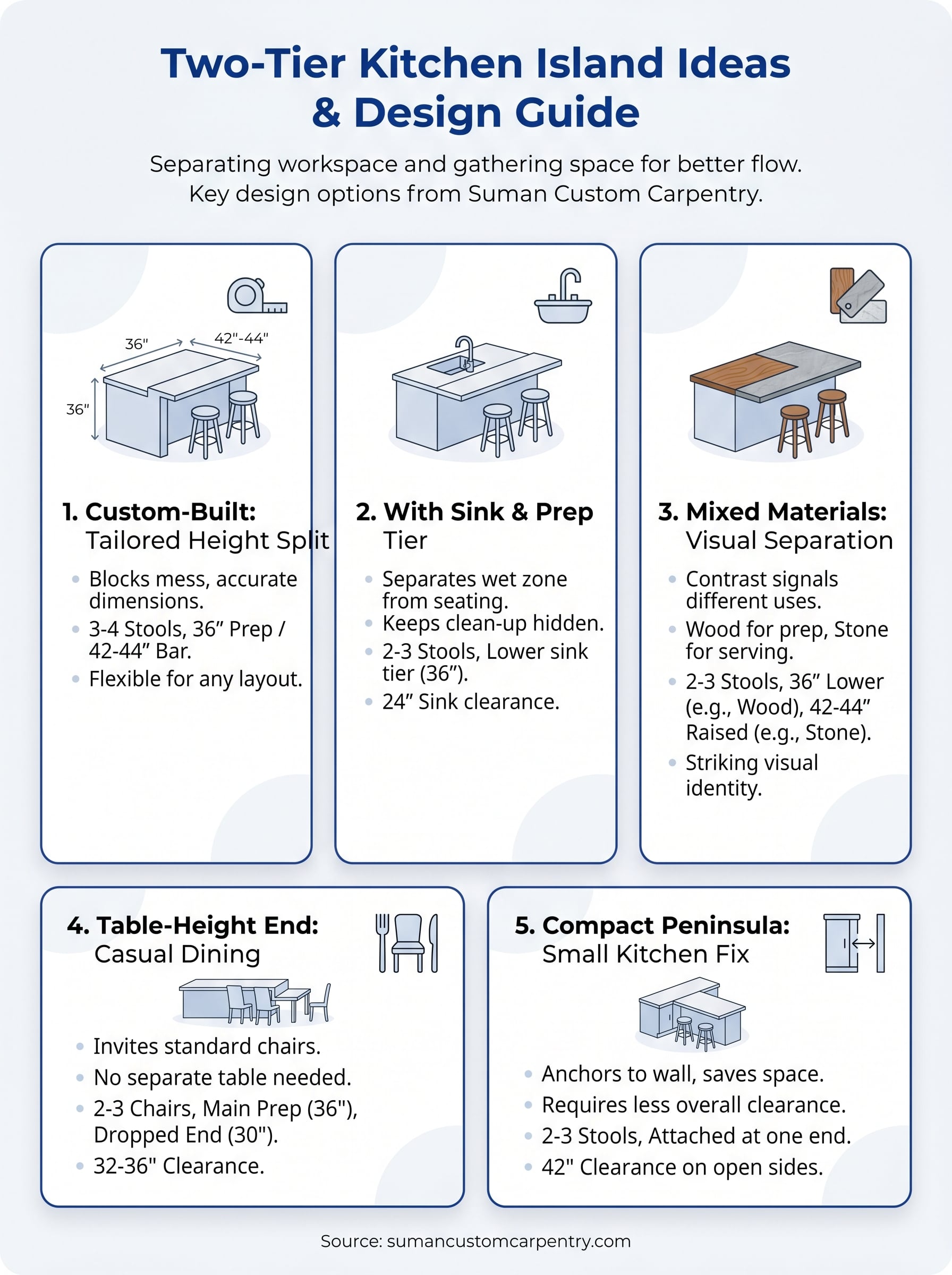
The five two-tier kitchen island ideas above cover different kitchen sizes, budgets, and priorities. Start by identifying what your kitchen actually needs most: if you want a clear separation between prep work and seating, the custom-built or mixed-material options address that directly. If your space is tight, the compact peninsula delivers the same functional split without requiring clearance on all four sides.
Your budget shapes the decision as much as your layout. A custom island with a sink adds cost but gives you a more complete workspace. A table-height end or peninsula keeps the build simpler while still delivering practical seating for everyday use.
If you’re ready to move from ideas to an actual plan, Suman Custom Carpentry hand-builds every island at our Hyannis shop. Talk to us about your custom kitchen island and get a clear picture of what your project will cost and how long it will take.