
Living on Cape Cod means your kitchen should feel like it belongs here, bright, open, and connected to the coast just outside your door. If you’re searching for coastal kitchen design ideas, you’re probably ready to move past generic Pinterest boards and start thinking about what actually works in a Cape Cod home. Salt air, natural light, seasonal shifts, these all matter when you’re choosing materials, colors, and layouts. The right design choices make a kitchen feel effortlessly coastal without turning it into a theme park.
At Suman Custom Carpentry, we build custom kitchens out of our Hyannis shop, and we’ve spent years turning Cape Cod homeowners’ design visions into handcrafted reality. From shaker-style cabinetry in soft coastal tones to open shelving that shows off collected stoneware, we see what works (and what doesn’t) across dozens of kitchen builds each year. That hands-on experience shaped every idea on this list.
Below, you’ll find eight design ideas grounded in real coastal living, covering color palettes, cabinetry styles, materials, hardware, and layout strategies. Whether you’re planning a full kitchen renovation or just want to refresh the space you have, these ideas will help you build a kitchen that looks and feels like Cape Cod.
1. Commission hand-built coastal cabinetry
Your cabinetry sets the tone for everything else in the kitchen. If you start with mass-produced boxes that weren’t designed for your space, no amount of styling will fully compensate. Hand-built cabinetry, sized to your exact dimensions and finished with materials suited to Cape Cod’s coastal climate, gives you a foundation that stock cabinet lines simply can’t match. This is the single most impactful coastal kitchen design idea on this list because it shapes every other decision you make.
The look to aim for
Coastal kitchens on Cape Cod tend to share a few visual traits: clean shaker-style doors, soft painted finishes in off-whites or pale blue-greens, and simple hardware that doesn’t compete with the overall lightness of the room. You want the cabinetry to feel relaxed and intentional at the same time. Think less "nautical theme" and more quiet confidence in well-chosen materials and proportions.
The best coastal kitchens don’t announce themselves. The materials and proportions do that work quietly.
Materials and finishes that work on Cape Cod
Cape Cod homes face salt air, humidity, and seasonal temperature swings that stress lower-quality cabinet finishes over time. For painted cabinets, a catalyzed lacquer or conversion varnish holds up far better than standard latex paint applied over raw wood.
Solid wood face frames and plywood box construction (rather than particleboard) resist moisture warping over the long run. When you commission hand-built cabinetry, you specify these material choices up front rather than accepting whatever a stock cabinet line includes by default.
Layout and storage moves
A well-designed coastal kitchen accounts for how you actually use the space. Deep base drawers replace lower cabinet doors so you’re not crouching to dig through pots and pans. Tall pantry columns handle dry storage without stealing counter space. If your kitchen connects to a back porch or mudroom, a built-in drop zone with hooks and shelving right at the cabinetry line gives sandy gear a home before it reaches the main kitchen floor.
Quick do and don’t list
Getting these details right separates a truly functional kitchen from one that simply looks the part.
- Do specify plywood box construction over particleboard
- Do ask for soft-close hinges and drawer glides on every opening
- Don’t choose high-gloss cabinet finishes that show every fingerprint and scratch
- Don’t skip interior cabinet lighting, it makes deep cabinets far more usable day to day
2. Build a bright white foundation
White kitchens remain one of the strongest coastal kitchen design ideas because they reflect natural light and keep the space feeling open. On Cape Cod, where morning light off the water shifts throughout the day, white cabinetry and bright walls act as a neutral canvas that lets the changing light do the work. This approach suits both older shingle-style homes and newer builds.
The look to aim for
You want warm whites and off-whites rather than stark bright white, which reads harsh under direct afternoon sun. Pair white uppers and lowers with natural wood accents or linen-toned textiles to keep the room from feeling clinical.
Warm white reads as coastal without effort; stark white pushes a kitchen toward showroom territory.
Materials and finishes that work on Cape Cod
For painted cabinets, a satin or eggshell sheen cleans more easily and holds up better than matte finishes in a high-use kitchen. Stick with solid wood for face frames where moisture and wear are highest, and reserve primed MDF for door panels if you need to manage cost.
Layout and storage moves
White kitchens show clutter more than darker ones, so built-in organization matters more here. Pull-out shelves, drawer dividers, and dedicated zones for daily items keep counters clear and the room looking as intentional as it should.
Quick do and don’t list
These small decisions have an outsized effect on how your white kitchen holds up over time, both visually and physically.
- Do test white paint samples under your kitchen’s natural light before committing
- Do use white upper cabinets to visually lift lower ceilings
- Don’t cover every surface in pure white without warm contrast material
- Don’t skip under-cabinet lighting, white kitchens look flat at night without it
3. Add a sea-glass island color
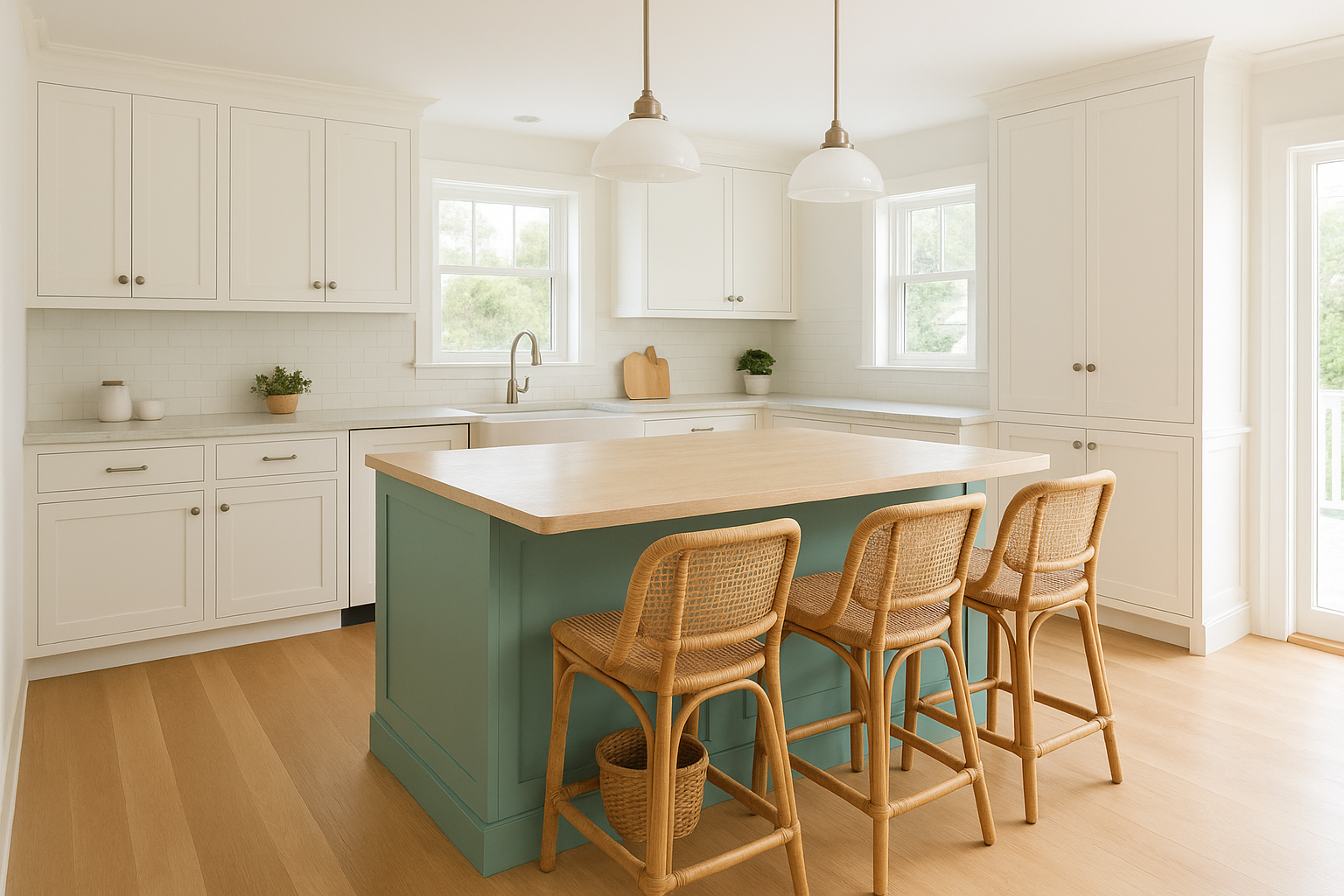
A painted island in a soft sea-glass tone is one of the most effective coastal kitchen design ideas you can execute without touching your main cabinetry. Colors like sage green, muted teal, or pale aqua give the island a grounded, collected feel that reads as coastal without leaning into obvious beach-house territory.
The look to aim for
You want the island to read as a quiet anchor in the room, not a bold statement piece. Pair a sea-glass tone with white or cream perimeter cabinets so the contrast feels considered rather than jarring. Natural wood barstools or rattan seating alongside a painted island keeps the palette grounded and relaxed.
The island color works best when it echoes something outside your window, water, marshgrass, or aged shingles.
Materials and finishes that work on Cape Cod
Choose a catalyzed paint finish on the island rather than standard latex, which chips and scuffs faster under daily use. Your cabinetmaker should apply the color over a properly primed surface to ensure even coverage and long-term adhesion, especially in a kitchen that sees heavy traffic year-round.
Layout and storage moves
Use the island to handle overflow storage that your perimeter cabinetry can’t absorb. Deep drawers on both sides and built-in shelving on the back panel keep frequently used items close without cluttering your counters or your sightlines.
Quick do and don’t list
- Do sample the island color against your countertop material before committing
- Do keep hardware simple, brushed nickel or unlacquered brass both work well
- Don’t match the island color exactly to your backsplash tile
- Don’t choose a trendy color that you’ll tire of in three years
4. Mix in natural wood for warmth
An all-white coastal kitchen can start to feel cold if nothing pulls the eye toward warmth and texture. Introducing natural wood, whether through open shelving, a butcher block section, or exposed ceiling beams, is one of the most grounding coastal kitchen design ideas you can layer into an otherwise light palette. Wood reads as organic and coastal without requiring any themed decor to make it land.
The look to aim for
You want wood tones that feel collected and unstudied, not matched and polished. White oak, lightly oiled walnut, or even reclaimed pine alongside painted cabinetry gives a room the kind of layered character that takes time to develop in older Cape Cod homes. Keep the wood elements limited to two or three focal points so the room stays cohesive.
Wood doesn’t compete with white cabinetry; it gives your eye a place to rest.
Materials and finishes that work on Cape Cod
In a coastal kitchen, an oil or hardwax finish protects open wood shelving better than film-forming finishes that peel when exposed to moisture or frequent wiping. For butcher block counters, food-safe mineral oil applied regularly keeps the surface protected and looking fresh through heavy seasonal use.
Layout and storage moves
Use open wood shelving in the upper zone to display everyday ceramics or glassware that you reach for often. This keeps the shelves purposeful rather than decorative.
Quick do and don’t list
- Do choose one consistent wood species across all your natural wood elements
- Do leave some open space on wood shelves so the grain stays visible
- Don’t mix too many wood tones, it fragments the palette
- Don’t use wood near a sink without applying a proper moisture-resistant finish
5. Use shiplap or beadboard with restraint
Shiplap and beadboard are two of the most referenced coastal kitchen design ideas, and they genuinely work when you use them in the right places and the right amounts. The problem is overuse. Cover every wall surface with either treatment and the kitchen stops feeling like a coastal home and starts feeling like a stage set.
The look to aim for
Pick one focal zone for your shiplap or beadboard rather than applying it throughout the room. A single accent wall behind open shelving, or beadboard on a kitchen island’s base panel, gives you the texture and character you’re after without overwhelming the space. Pair it with smooth painted cabinetry so the two surfaces balance each other visually.
Shiplap earns its place in a coastal kitchen when it contrasts with something smooth, not when it covers everything in sight.
Materials and finishes that work on Cape Cod
In a kitchen exposed to moisture, steam, and coastal humidity, primed and painted pine or MDF shiplap holds up well when finished correctly. Use a satin sheen paint rated for high-moisture environments, and seal all edges and seams during installation to prevent moisture from working behind the boards over time.
Layout and storage moves
Beadboard works particularly well on the lower kick panel of a kitchen island or inside a built-in hutch surround, where it adds texture without competing with your primary cabinetry. Keeping the shiplap application below the sightline when possible anchors the room rather than fragmenting it.
Quick do and don’t list
- Do prime and seal all cut edges before installation
- Do limit the treatment to one surface or zone per room
- Don’t mix shiplap and beadboard in the same kitchen
- Don’t leave gaps unsealed where moisture can collect behind the boards
6. Choose durable counters and a simple backsplash
Your countertops and backsplash take more daily abuse than almost any other surface in the kitchen. In a coastal home, you also need to account for salt air, humidity, and the grit that follows sandy flip-flops inside. Choosing the right surfaces here is one of the most practical coastal kitchen design ideas you can act on.
The look to aim for
You want surfaces that feel calm and grounded, not busy. A clean white or light gray quartz countertop paired with a simple subway tile or large-format ceramic backsplash keeps the room from competing with itself. The counter and backsplash should read as a unified backdrop, not two separate design statements.
Simple surfaces let your cabinetry and natural light carry the room without interference.
Materials and finishes that work on Cape Cod
Quartz and quartzite both perform well in coastal kitchens because they resist staining and don’t require the regular sealing that natural marble demands. For the backsplash, 3×6 glazed subway tile or a plain large-format ceramic stays clean easily and won’t trap moisture inside complex grout patterns that are harder to maintain.
Layout and storage moves
Run the backsplash all the way to the underside of your upper cabinets rather than stopping partway up the wall. This keeps the surface easier to wipe down after cooking and gives the room a finished, intentional look even in a compact kitchen.
Quick do and don’t list
Getting these surface choices right keeps your kitchen performing well through heavy seasonal use without constant upkeep.
- Do choose a matte or honed counter finish over high polish to hide everyday scratches
- Do use a light-toned grout that won’t visually dominate the backsplash field
- Don’t select a busy stone pattern that competes with your cabinetry
- Don’t install a backsplash material near the sink that requires regular sealing
7. Layer lighting with glass and warm metals
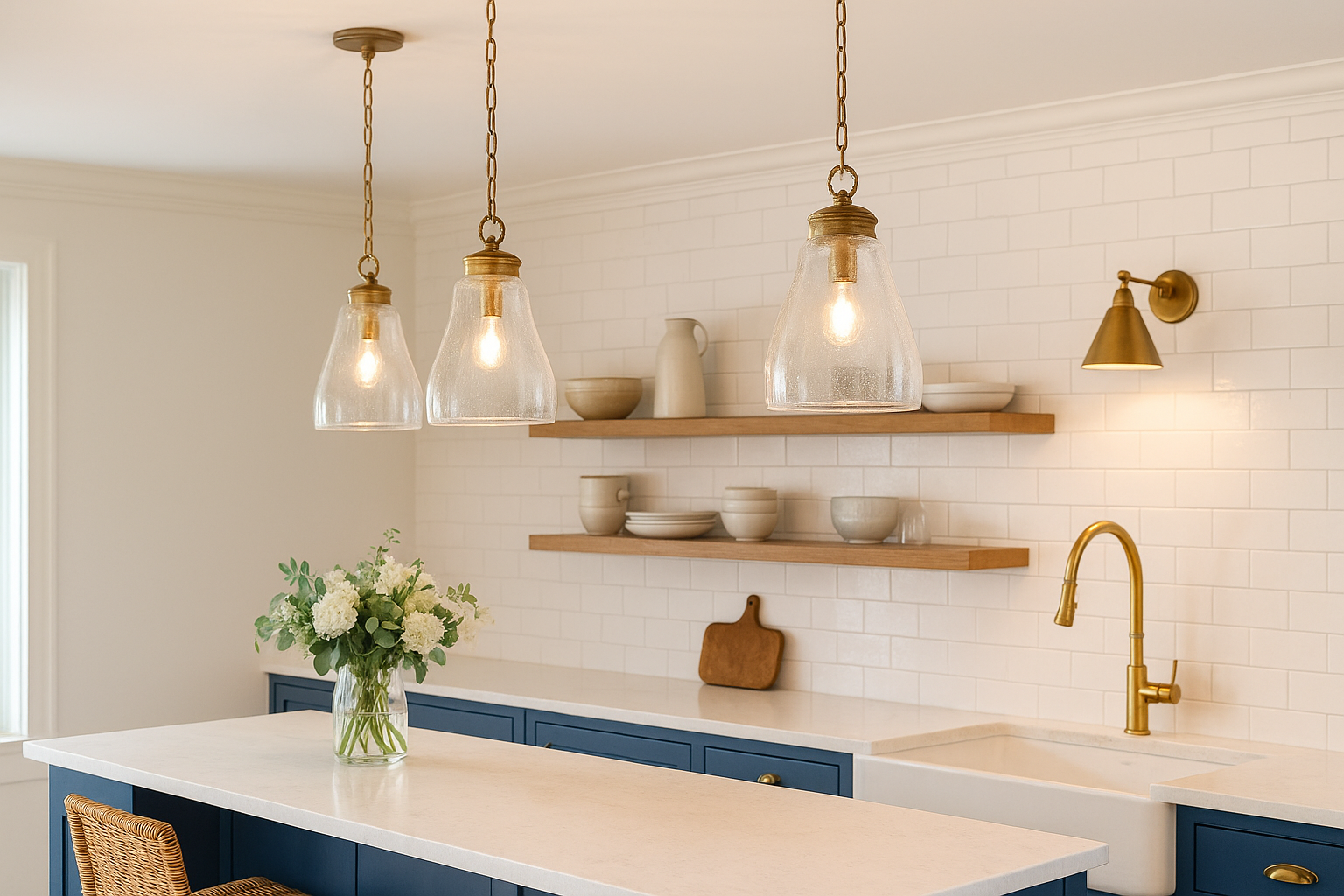
Lighting is one of the most overlooked coastal kitchen design ideas, yet it shapes how every other element reads once the sun goes down. A single overhead fixture can’t carry the room on its own. You need multiple light sources at different heights to give the kitchen a layered, warm glow that feels lived-in rather than staged.
The look to aim for
You want pendant lights with clear or seeded glass shades over the island, paired with warm-metal sconces near the sink or open shelving. Brushed brass, unlacquered brass, or aged bronze all bring a slightly weathered quality that suits a Cape Cod kitchen without looking overly formal.
The right pendant over an island does more for the mood of a coastal kitchen than almost any other single fixture.
Materials and finishes that work on Cape Cod
Avoid chrome and polished nickel near coastal humidity, since both finishes show water spots and fingerprints far more than warmer alternatives. Choose moisture-rated fixtures for any zone near the sink or exterior-facing windows where condensation collects during winter months.
Layout and storage moves
Install under-cabinet lighting on a dimmer that runs separately from your overhead circuit so you can reduce brightness during evening meals without losing task light at the counters. Recessed fixtures work best when they sit on a dedicated zone so you can control each area of the kitchen independently.
Quick do and don’t list
Good lighting decisions compound across the whole room, so getting these details right is worth the extra planning time.
- Do layer at least three light sources: overhead, task, and accent
- Do choose warm-toned bulbs (2700K to 3000K) throughout
- Don’t rely on a single large overhead fixture as your only source
- Don’t mix more than two metal finishes in one kitchen
8. Create a kitchen that invites people to sit
The best coastal kitchen design ideas don’t stop at cabinetry and surfaces. A kitchen that draws people in and keeps them there needs seating, scale, and a layout that welcomes gathering, not just cooking. On Cape Cod, where kitchens often serve as the social center of the home from Memorial Day through Labor Day, this matters more than in most places.
The look to aim for
You want a mix of counter-height seating at the island and a casual dining zone nearby, not one or the other. Rattan barstools, wood chairs with simple upholstered seats, or even a built-in bench along a window wall all give people a reason to pull up and stay.
The kitchen earns its place as the center of the house when sitting in it feels as natural as cooking in it.
Materials and finishes that work on Cape Cod
Choose seating materials that clean up quickly after a day at the beach. Outdoor-grade fabric on seat cushions handles moisture and sandy clothes without deteriorating. For built-in bench seating, solid wood with a durable painted finish holds up through heavy seasonal use without needing constant refinishing.
Layout and storage moves
Position any built-in bench or banquette near a window to capture natural light and a view outward. Add storage drawers beneath bench seating to handle linens, trays, or overflow kitchen items without adding furniture to the room.
Quick do and don’t list
- Do leave at least 36 inches between the island and any seating zone for comfortable movement
- Do choose barstools with footrests so sitting at counter height stays comfortable
- Don’t overcrowd the seating area, two to four seats at an island is enough for most kitchens
- Don’t select cushion fabric that traps sand or requires dry cleaning
Bring it all together
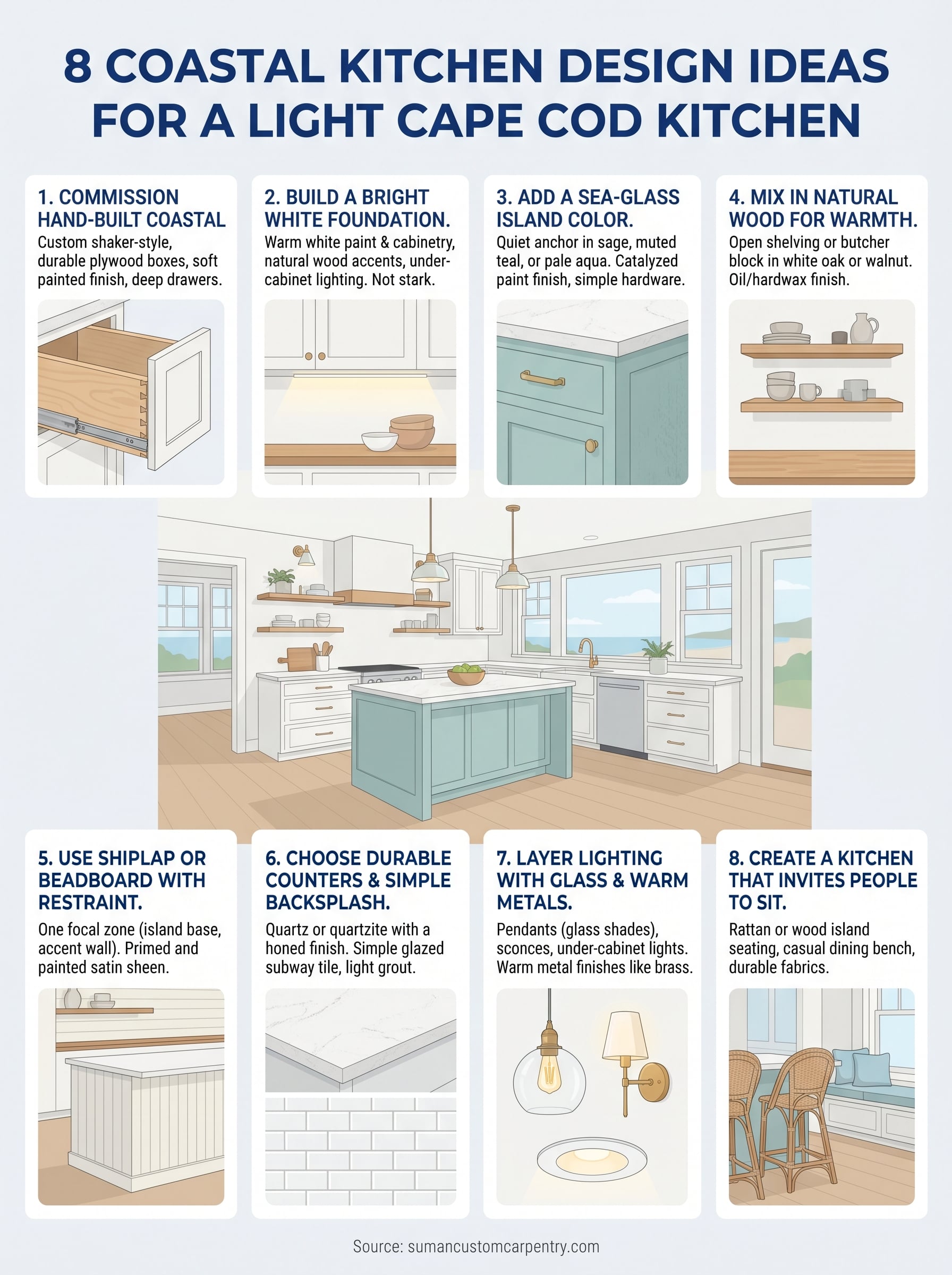
These coastal kitchen design ideas work best when you treat them as a system rather than a checklist. Your cabinetry sets the foundation, your colors and materials build on it, and your lighting, seating, and surface choices pull everything into a room that feels cohesive and genuinely suited to Cape Cod living. You don’t need to apply every idea here, pick the ones that fit your home’s scale, your budget, and how you actually use the space.
Starting with hand-built cabinetry sized to your exact kitchen gives you more control over every other decision that follows. When the bones of the room are right, the rest of the design falls into place far more easily. If you’re ready to start planning a kitchen that reflects the coast and holds up to it, talk to the team at Suman Custom Carpentry to discuss your project from the ground up.