
A kitchen remodel on Cape Cod involves more than picking out countertops and paint colors. Between custom cabinetry, plumbing, electrical, and flooring, you’re coordinating multiple trades and timelines, and each one needs to work together. Understanding the specific kitchen renovation services involved helps you plan smarter, budget accurately, and avoid the kind of surprises that stall projects for weeks.
The challenge most homeowners face isn’t finding contractors. It’s knowing which services they actually need before the first wall gets touched. A full gut renovation requires a very different lineup than a cabinet-and-countertop refresh, and the Cape Cod market has its own quirks, from older home framing to coastal moisture considerations that affect material choices.
This article breaks down seven core services that go into a Cape Cod kitchen remodel, from design and custom cabinetry to finishing trades. At Suman Custom Carpentry, we handle the custom millwork side of kitchen renovations from our shop in Hyannis, designing, building, and installing cabinetry by hand. We’ve seen firsthand how these services fit together, and that perspective shapes every recommendation below.
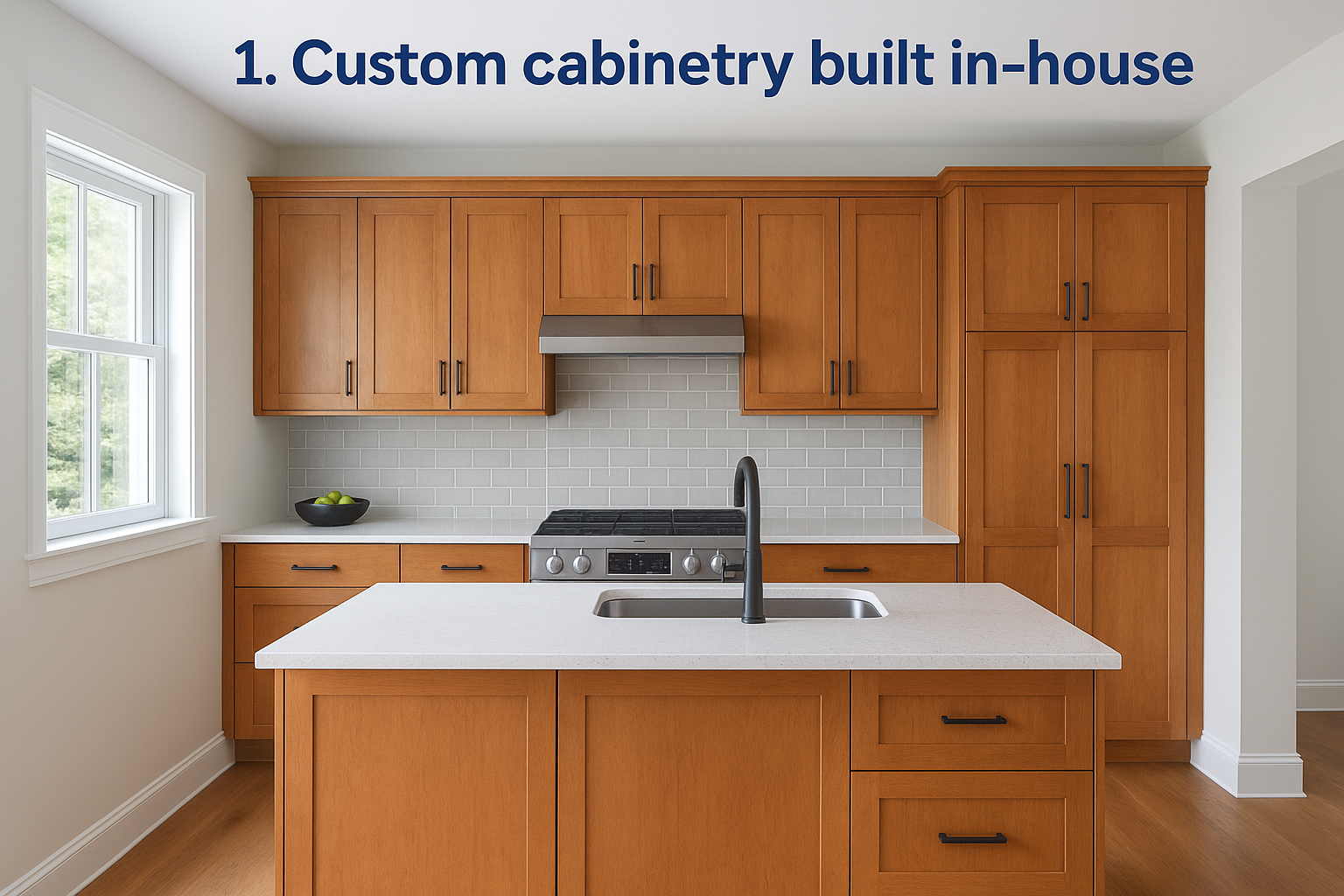
1. Custom cabinetry built in-house
Custom cabinetry is often the anchor of any kitchen renovation. The cabinets determine how the space looks and functions, and when they’re built in-house rather than ordered from a distributor, you get a product made to your exact dimensions. That distinction matters more than most homeowners realize until they’re standing in a kitchen with gaps stuffed with filler strips.
What this service includes
In-house custom cabinetry covers the full process: design consultation, material selection, hand-building in the shop, and final installation at your home. At Suman Custom Carpentry, every cabinet box and door gets built at our Hyannis shop, which means we control quality at every step rather than relying on a third-party manufacturer. You also work directly with the builder on details like interior hardware, door profiles, and finish options that stock cabinetry simply can’t accommodate.
When to choose custom cabinetry over stock options
Stock cabinets come in fixed sizes, which means installers fill gaps with filler strips and workarounds that are visible up close. Custom cabinetry eliminates those compromises by fitting the actual dimensions of your kitchen. On Cape Cod, where older homes often have walls that aren’t perfectly plumb or square, custom-built cabinets are frequently the only option that produces a clean, finished result.
Custom cabinetry also adds measurable resale value, which matters in a market like Cape Cod where buyers pay close attention to finish quality.
Timeline and sequencing with the rest of the remodel
Custom cabinets typically take 40 to 60 days to build and install, so they need to be ordered before most other trades begin work. Countertop templating happens after cabinet installation, and appliance delivery should be scheduled after both are complete. Starting cabinetry early is the single best way to keep the rest of the project on schedule and avoid a costly chain of delays.
Cost drivers and typical budget range
Cabinet cost scales with material quality, door style, and specialty features like pull-out shelves, built-in organizers, or custom paint finishes. A full custom kitchen in the Cape Cod market typically runs between $15,000 and $50,000 or more depending on kitchen size and the level of detail involved.
Questions to ask your cabinet maker before you sign
- Who builds the cabinets? Confirm work happens in-house, not at a third-party factory.
- What warranty covers the boxes, doors, and painted finish?
- How do you handle uneven walls or out-of-level floors?
- What does your installation process include, and who performs it?
2. Kitchen design and space planning
Kitchen design and space planning is often treated as optional, but skipping it leads to expensive changes mid-build. Professional kitchen designers translate your priorities into a workable plan that accounts for traffic flow, storage needs, and appliance placement before a single cabinet gets built or a wall gets opened.
What this service includes
Design and space planning typically covers floor plan development, cabinet layout, and material specification. A designer maps out where every cabinet, appliance, and fixture lands relative to each other. Many custom shops include design as part of their kitchen renovation services package, so the person designing your layout is the same person building your cabinets.
Layout decisions that change cost and usability
The relationship between your sink, stove, and refrigerator directly affects how functional your kitchen feels every day. Relocating the sink or range often requires moving plumbing or gas lines, which adds real cost to the project. Keeping those fixtures in their current locations while improving cabinet layout and storage is frequently the better value decision for most remodels.
Your layout determines more about long-term satisfaction than any finish material you choose.
How measurements and site conditions affect the plan
On Cape Cod, older homes bring uneven floors, out-of-plumb walls, and non-standard ceiling heights that affect how cabinets install. Accurate field measurements taken before the design is finalized catch these conditions early. Correcting a layout mid-build costs far more than getting precise measurements upfront.
Cost drivers and typical budget range
Design fees typically range from $500 to $3,000 depending on scope. Fees are often lower or waived when design is bundled with cabinetry work.
Questions to ask a kitchen designer
Before you commit, ask a few direct questions to confirm they can handle your specific project.
- Do you take field measurements yourself before finalizing the plan?
- How do you handle design revisions after the plan is approved?
3. Countertop fabrication and installation
Countertops are one of the most visible surfaces in your kitchen, and fabrication and installation require more precision than most homeowners expect. Choosing the right material and fabricator is a key part of any kitchen renovation services package, because a poorly templated countertop creates problems that are expensive to fix after the fact.
What this service includes
Fabrication covers material selection, templating, cutting, edge profiling, and final installation. After your cabinets are set and level, a fabricator visits to take exact measurements and build a template, which drives all shop cuts before the slab returns for installation.
- Sink cutouts and edge profiles are completed at the shop
- Seams are planned and polished before delivery
- Final installation includes leveling and sealing at your home
Material choices that fit Cape Cod living
Coastal kitchens face humidity swings and frequent use, so material durability is a real consideration. Quartz resists moisture and staining without annual sealing, making it a practical pick for most Cape Cod kitchens. Granite adds character and holds up well with periodic sealing, while butcher block works for accent zones but needs more maintenance near water.
Quartz is low-maintenance and durable, but your best choice depends on how much upkeep you’re willing to commit to long-term.
Timeline from template to install
Most fabricators complete the full process in one to two weeks from template to installation. Cabinets must be fully installed and level before templating starts, so rushing this step causes poor-fitting seams and gaps at the wall.
Cost drivers and typical budget range
Countertop costs range from $50 to $200 per square foot installed, depending on material and edge complexity. A typical kitchen runs $2,500 to $8,000 for full countertop replacement.
Questions to ask a countertop fabricator
Ask these questions before you sign a contract to avoid surprises during installation.
- How do you handle seams on longer countertop runs?
- What warranty covers fabrication defects?
- Do you seal the surface after installation, or is that your responsibility?
4. Backsplash and tile installation
Backsplash and tile work is one of those kitchen renovation services that looks straightforward but fails fast without proper prep. A well-installed backsplash protects the wall from moisture and grease while visually tying together your cabinets and countertops.
What this service includes
Tile installation covers surface prep, layout planning, setting, grouting, and sealing. Your installer measures the coverage area and cuts tiles to fit around outlets and cabinet edges before any adhesive goes on.
- Grout color and joint width affect the finished look as much as the tile itself
- Sealing the grout after installation protects against moisture and staining
How to pick tile that stays timeless
Subway tile, glazed ceramic, and large-format porcelain hold their appeal longer than heavily patterned options. On Cape Cod, moisture-resistant materials like porcelain outperform natural stone that requires frequent resealing to stay protected year-round.
The tile you pick should complement your countertop material rather than compete with it.
Prep work that prevents cracked grout and uneven tile
Poor prep causes most tile failures. Walls need to be flat, clean, and properly primed before any tile goes up. If the substrate has moisture damage or uneven sections, those issues require fixing first because tile installed over a compromised surface will crack and shift over time.
Cost drivers and typical budget range
Backsplash costs depend on tile material, square footage, and pattern complexity. A standard kitchen backsplash typically runs $800 to $3,000 installed, with handmade, natural stone, or mosaic tiles pushing costs higher.
Questions to ask a tile installer
- How do you handle cuts around outlets and cabinet edges?
- What grout product do you use, and does it require sealing after installation?
- Can you show examples of completed backsplash projects in kitchens similar to mine?
5. Kitchen flooring installation
Kitchen flooring is one of the most overlooked kitchen renovation services in a remodel plan, yet it affects sequencing for nearly every other trade. Getting flooring sequenced correctly prevents costly complications with cabinet installation, appliance placement, and doorway transitions throughout the rest of the project.
What this service includes
Flooring installation covers subfloor inspection and repair, material delivery and acclimation, cutting and laying, and final finishing or sealing. Before any material goes down, your installer should assess the condition of the subfloor and fix any soft spots or uneven sections that would cause problems down the line.
Best flooring picks for kitchens near the coast
Cape Cod kitchens deal with moisture and humidity year-round, which narrows the field when choosing a durable material. Porcelain tile and luxury vinyl plank handle coastal conditions without warping or requiring heavy maintenance. Hardwood can work but needs proper sealing and benefits from a dehumidifier in summer months to stay stable.
Luxury vinyl plank offers the look of hardwood with significantly better moisture resistance, making it a practical choice for most Cape Cod kitchens.
How flooring impacts cabinets, appliances, and transitions
Flooring thickness directly affects cabinet toe kick height and appliance fit, so your cabinet maker needs to know the finished floor height before building begins. Transitions between the kitchen and adjacent rooms also require advance planning, particularly in older homes where flooring materials and subfloor levels differ from room to room.
Cost drivers and typical budget range
Your total flooring cost typically runs $5 to $20 per square foot installed, depending on material and subfloor condition. A standard kitchen floor replacement lands between $1,500 and $6,000 for most Cape Cod homes.
Questions to ask a flooring contractor
Before you hire, ask a few direct questions to confirm they understand your project scope.
- How do you handle subfloor issues discovered after demo?
- What acclimation time does the material require before installation?
- How do you manage transitions to adjacent rooms with different flooring?
6. Plumbing and fixture upgrades
Plumbing work is one of the kitchen renovation services that most homeowners underestimate until they are mid-remodel and facing unexpected costs. Getting a licensed plumber involved early keeps your project on schedule and prevents surprises once walls are open.
What this service includes
Plumbing scope in a kitchen remodel covers supply line and drain rough-in, fixture installation, and any required code upgrades. Your plumber coordinates with the cabinet and countertop schedule since sink installation happens after both are fully set in place.
- Faucet and sink installation
- Dishwasher supply and drain connections
- Shut-off valve replacement if existing valves are aging
Common plumbing scope in a kitchen remodel
Most kitchen remodels involve sink and faucet replacement along with dishwasher connections. Adding a sink to a kitchen island requires running new supply and drain lines, which adds meaningfully to both labor time and material cost.
When you should move plumbing and when you should not
Relocating your sink or adding a second water source significantly increases project cost because it requires cutting into finished floors or walls to route new lines. Keeping plumbing in its current location and directing your budget toward fixture quality and storage layout is the smarter choice for most remodels unless the existing location genuinely limits how the kitchen functions.
Moving plumbing even a few feet can add $1,000 to $3,000 or more to your total, so confirm the decision is worth it before committing.
Cost drivers and typical budget range
Plumbing costs in a standard kitchen remodel run $500 to $3,500 depending on whether lines stay in place or move. Fixture quality also drives cost, with faucets ranging from $150 to over $800.
Questions to ask a plumber before rough-in
- Does your schedule align with cabinet and countertop installation milestones?
- Are there local code requirements that affect fixture placement or supply line materials in my area?
7. Electrical, lighting, and ventilation
Electrical, lighting, and ventilation are kitchen renovation services that often get scheduled last but need to be planned first. Rough-in work for outlets, circuits, and ventilation ducting happens before walls close, so coordinating with your electrician and HVAC contractor early prevents costly rework later in the build.
What this service includes
This service covers outlet placement, dedicated circuit installation, lighting layout, and range hood or ventilation fan installation. Your electrician handles all panel work and wiring, while an HVAC contractor manages duct routing and exhaust systems for cooking ventilation. Both trades need to be on-site before drywall goes up.
Lighting layers that make the kitchen work better
Good kitchen lighting uses three layers: ambient, task, and accent. Recessed ceiling lights handle general illumination, under-cabinet lights cover prep and cooking zones where you need clear visibility, and pendant lights add visual interest over an island or peninsula.
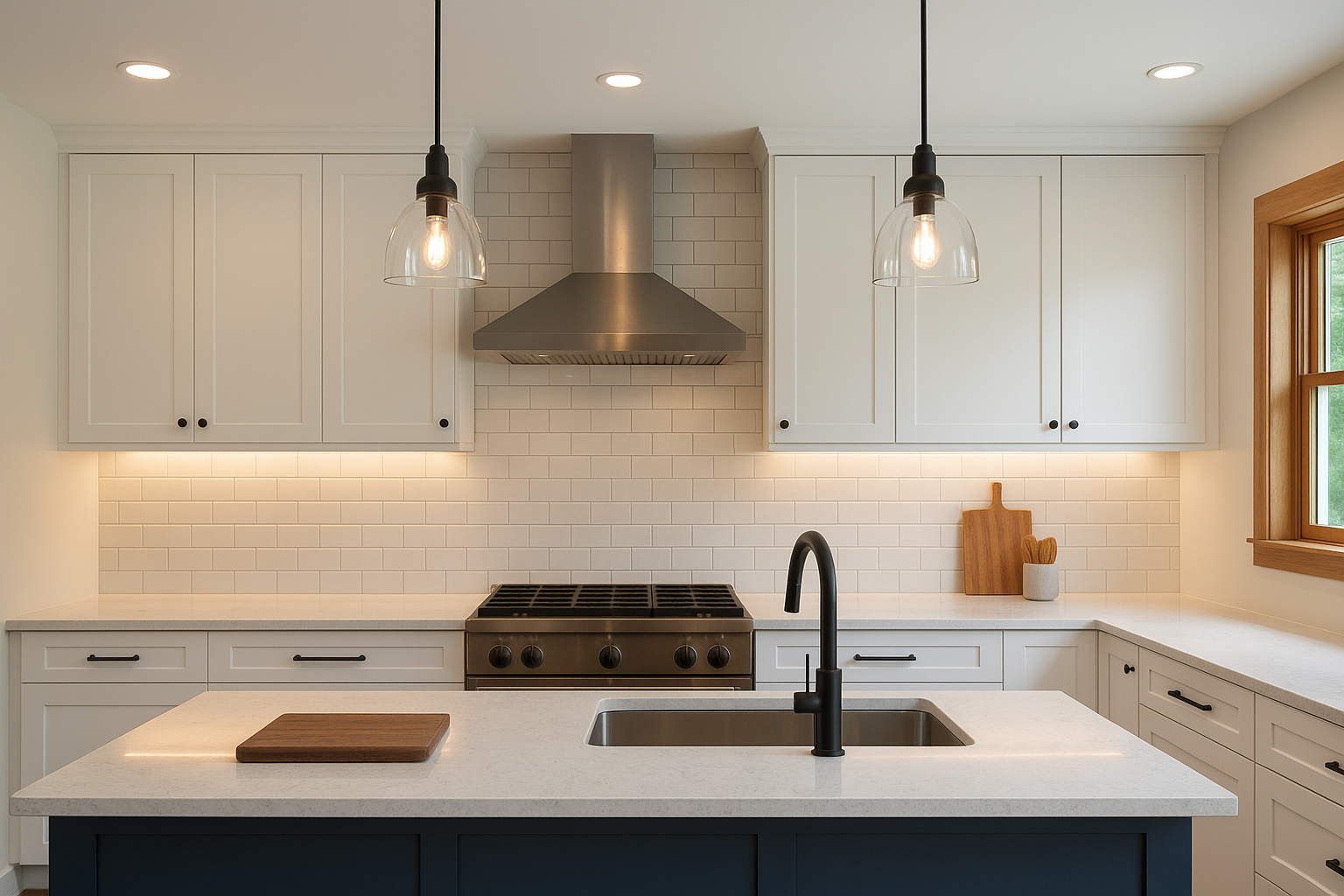
Skipping under-cabinet lighting is the single most common kitchen lighting regret homeowners report after a remodel is complete.
Ventilation basics for cooking and indoor air quality
A properly sized range hood removes grease, smoke, and moisture at the source before they reach your walls and cabinets. For Cape Cod homes, where coastal humidity is already elevated year-round, good ventilation directly protects your investment in cabinetry and finishes over time.
Cost drivers and typical budget range
Typical electrical and ventilation costs run $2,000 to $8,000, depending on how many circuits need upgrading and whether new duct runs are required for a range hood or exhaust system.
Questions to ask an electrician and HVAC pro
Before hiring, confirm both contractors understand the full scope of your project and how their work fits into the broader remodel schedule.
- Can your panel support the additional circuits a modern kitchen requires?
- How do you size a range hood for my cooking setup and kitchen footprint?
Next steps for your Cape Cod kitchen
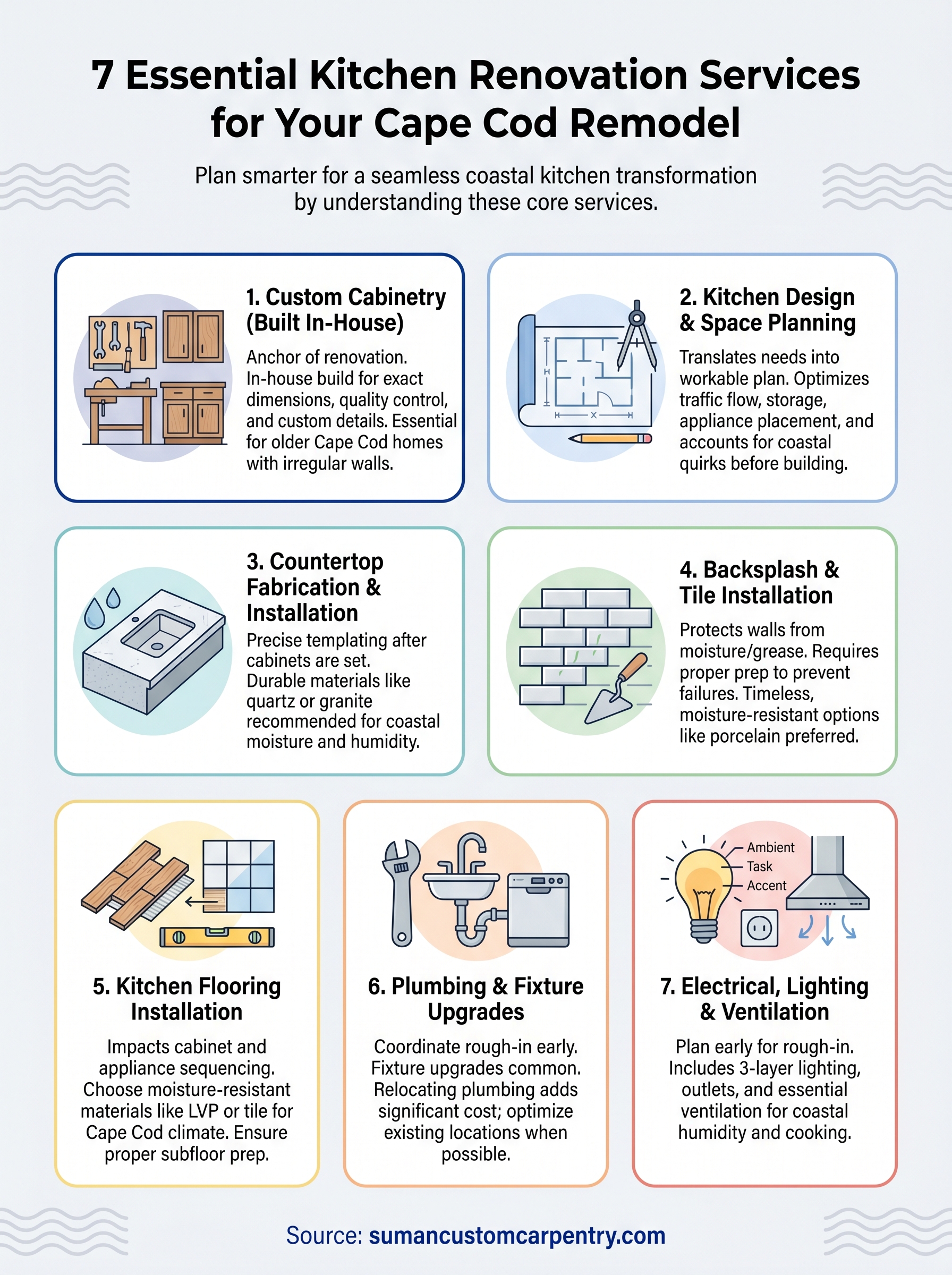
Every kitchen remodel involves the same core kitchen renovation services, but the order and budget split between them depends on your specific home and goals. The seven services covered here work together as a sequence, not a checklist you can tackle in any order. Cabinetry drives the timeline, countertops follow cabinet installation, and every finishing trade coordinates around those anchors.
Starting with a clear design and accurate measurements saves you money across every trade that follows. If you’re planning a kitchen remodel on Cape Cod and want to understand how custom cabinetry fits into your specific project, the best first step is a direct conversation with someone who has built and installed kitchens in this market. Suman Custom Carpentry builds all cabinetry by hand at our Hyannis shop and manages the full millwork scope from design through installation. Contact us to start planning your kitchen and get a clear picture of what your project actually involves.