
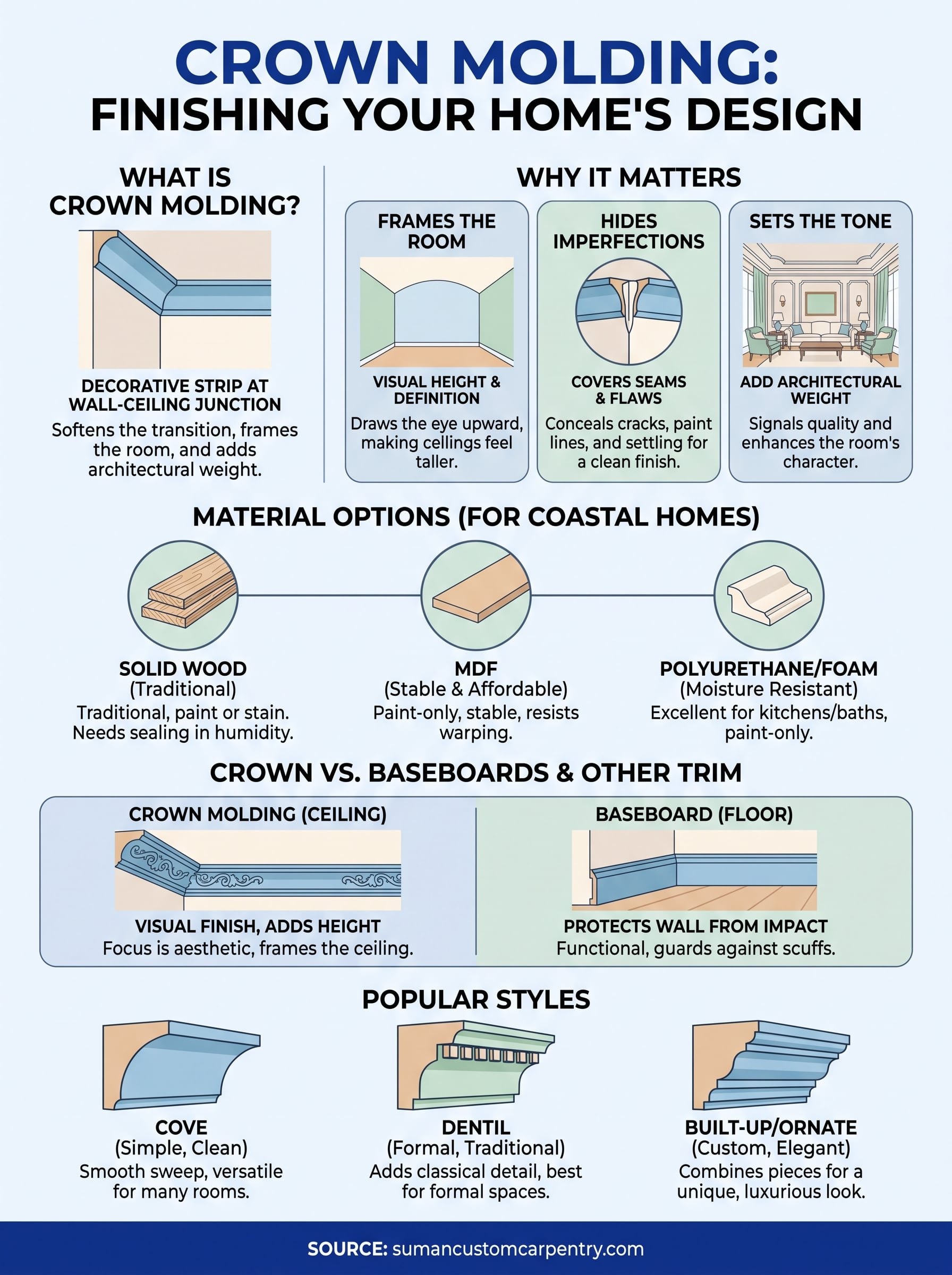
Walk into any older Cape Cod home and look up where the wall meets the ceiling. That angled trim softening the corner has a name, and a job to do. What is crown molding? It’s a decorative strip of wood installed along the top edge of a wall, right where it meets the ceiling, and it’s one of the fastest ways to make a room look finished and intentional rather than builder-grade.
Crown molding isn’t just baseboard’s fancier cousin. Baseboards protect walls at floor level and hide gaps; crown molding does something different, it creates a visual transition that draws the eye upward and adds architectural weight to a space. There are dozens of profile styles, from simple coves to ornate, multi-tiered designs with dentil detailing, and picking the right one depends on your ceiling height, room style, and budget.
In this guide, we’ll break down exactly what crown molding is made of, the most common molding profiles you’ll see in New England homes, and how it compares to other trim types. If you’re weighing options for a kitchen remodel or built-in project on Cape Cod, this is the groundwork you need before talking specifics with a carpenter.
Why crown molding matters for your home’s design
Crown molding does more than dress up a corner. It changes how a room feels the moment you walk in, because it finishes the boundary between wall and ceiling instead of leaving a raw, flat line. Builders often skip it to save money, which is exactly why its presence signals a higher standard of finish work. On Cape Cod, where so many homes mix historic charm with coastal renovation, that detail tells visitors this house was built or updated with care.
It frames the room like a picture
Think of crown molding as a picture frame for your ceiling. Without it, the eye stops abruptly at a hard right angle where two flat planes collide. With it, that transition softens and curves, guiding the eye upward and making the ceiling feel higher than it actually is. This is why crown molding works so well in older Cape homes with 8-foot ceilings; a well-chosen profile can visually stretch a room without any construction work on the ceiling itself.
A room without crown molding looks unfinished the moment you notice its absence.
It hides imperfections and adds value
Older homes settle. Walls shift, ceilings develop small gaps, and paint lines never stay perfectly straight over the decades. Crown molding covers those flaws in one continuous run, giving you a clean, deliberate edge instead of a crack you have to explain away. Beyond the cosmetic fix, it’s also one of the higher-return upgrades in residential remodeling, right alongside custom cabinetry and built-ins, because buyers read it as evidence of quality construction throughout the house, not just in that one room.
Here’s a quick look at what crown molding contributes compared to leaving a room without it:
| Feature | Room without crown molding | Room with crown molding |
|---|---|---|
| Visual ceiling height | Reads as-is | Appears taller |
| Wall-ceiling seams | Visible, unfinished | Concealed cleanly |
| Perceived finish quality | Builder-grade | Custom, intentional |
| Resale impression | Neutral | Positive, detail-oriented |
It sets the tone for the whole house
Style consistency matters more than most homeowners expect. A simple cove profile in a beach cottage says something different than a layered, dentil-trimmed profile in a formal dining room, and mixing the wrong style into the wrong house can make even expensive trim look out of place. Restoring or adding crown molding that matches your home’s era, whether that’s a 1920s Cape farmhouse or a newer coastal build, keeps every room feeling like part of the same story instead of a patchwork of renovations.
Moisture and humidity also play a bigger role here than in most parts of the country. Salt air and seasonal swings stress wood trim, so the molding profile you choose interacts directly with the material behind it. That’s part of why local craftsmanship matters so much on the Cape: a carpenter familiar with coastal conditions will factor humidity resistance into the design before it ever gets factored into the aesthetics, which saves you from cracked seams and separated joints two winters down the road.
How to choose the right crown molding for your space
Picking a profile isn’t about grabbing whatever looks nice at the lumber yard. You need to match the molding to your ceiling height, your room’s proportions, and the style already established in your trim work. Get this wrong and even a beautifully milled piece will look bolted on instead of built in.
Start with ceiling height
Height dictates scale more than any other factor. A room with 8-foot ceilings, common in older Cape Cod homes, needs a smaller profile, usually in the 3 to 5 inch range, so the molding doesn’t crowd the space and make the ceiling feel lower. Rooms with 9-foot or taller ceilings can handle wider, more elaborate profiles, sometimes 6 inches or more, without overwhelming the walls.
Molding sized wrong for your ceiling height fights the room instead of finishing it.
Match the room’s existing trim
Your baseboards, door casings, and window trim all set a visual language. If your home leans traditional with fluted casings and detailed baseboards, a plain cove profile will look thin and mismatched next to them. Formal dining rooms and living rooms usually support built-up, multi-piece crown, while bedrooms and hallways often look better with a single, simpler profile that doesn’t compete with furniture and doorways.
Consider the room’s function
A few practical questions help narrow the choice fast:
- Is this a high-traffic or high-moisture room, like a kitchen or bathroom, where material durability matters more than ornamentation?
- Does the room have crown-adjacent features, such as cabinetry or built-ins, that the molding needs to tie into visually?
- Will lighting be recessed or hidden behind the molding, which calls for a deeper, specific profile designed for that purpose?
- Is the ceiling flat and true, or does it have settling and waves that a wider, more forgiving profile can hide better than a thin one?
Answering these before you commit to a profile saves you from a costly reinstall later. On Cape Cod specifically, factor in exposure to salt air and humidity swings too, because the right choice here often means picking a molding style that pairs well with a moisture-resistant material, which we’ll cover next.
Crown molding materials and their best uses
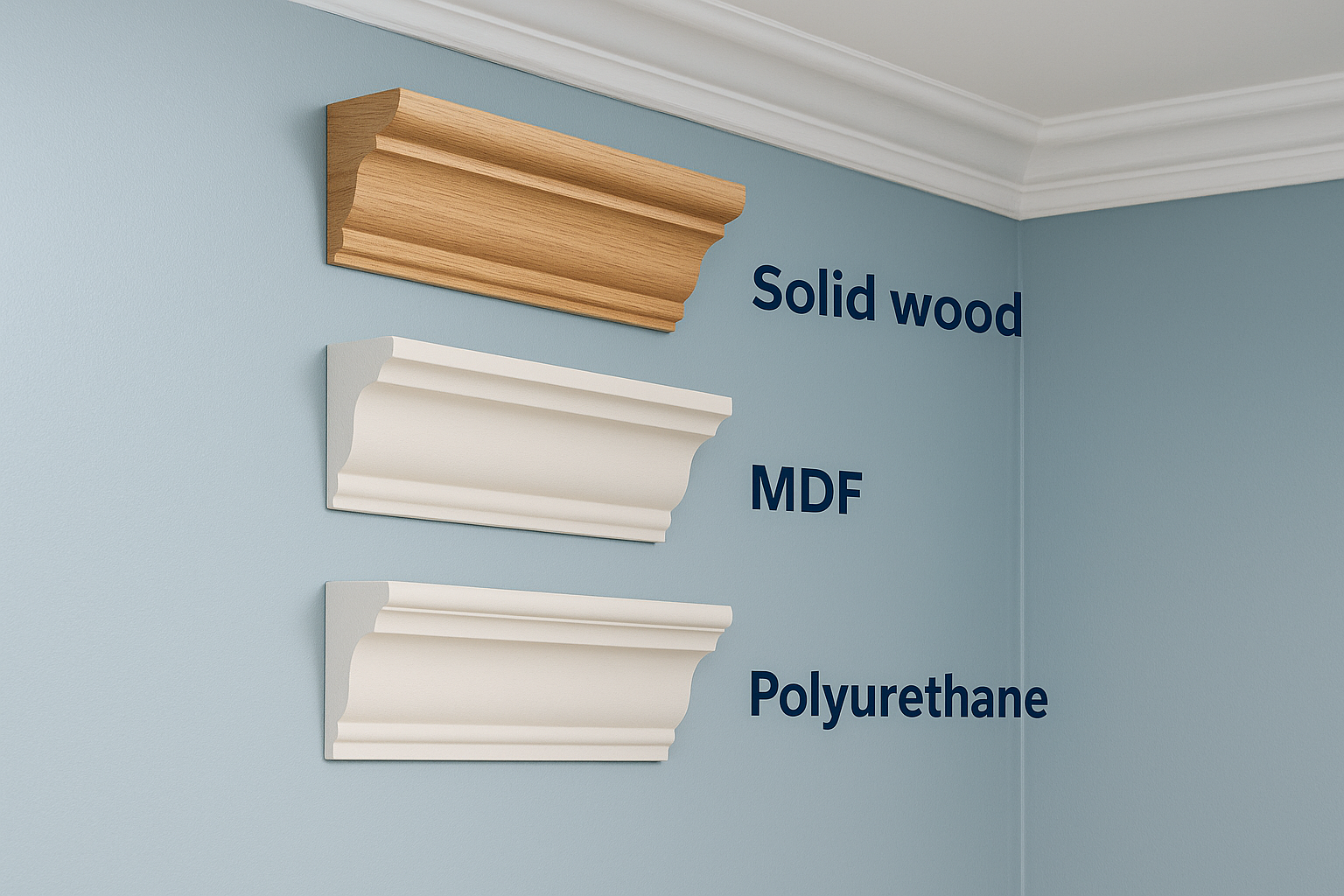
Material choice matters as much as profile shape, especially on Cape Cod where salt air and humidity swings put real stress on trim. Solid wood, MDF, and polyurethane each behave differently once installed, and picking the wrong one for the room can mean cracked seams or warped joints within a few seasons.
Solid wood stays the traditional standard
Poplar, oak, and pine remain the go-to choices for homeowners who want crown molding that can be sanded, carved, and refinished for decades. Wood takes paint and stain beautifully, holds sharp detail on ornate profiles, and matches the character of older Cape homes better than manufactured alternatives. The tradeoff is cost and sensitivity to moisture; solid wood needs proper sealing and climate control to avoid expansion and contraction near bathrooms or exterior walls.
The best crown molding material is the one that matches your room’s humidity, not just its budget.
MDF and polyurethane offer practical alternatives
MDF (medium-density fiberboard) has become popular for painted trim because it’s stable, affordable, and resists the warping solid wood sometimes shows in shifting humidity. Polyurethane and foam profiles go a step further, standing up to moisture in kitchens and bathrooms where wood would eventually fail. Neither material stains well, so they’re built for paint-grade applications only.
Here’s how the three stack up for coastal homes:
| Material | Moisture resistance | Best rooms | Finish options |
|---|---|---|---|
| Solid wood | Moderate, needs sealing | Living rooms, dining rooms | Paint or stain |
| MDF | Good | Bedrooms, hallways | Paint only |
| Polyurethane/foam | Excellent | Kitchens, bathrooms | Paint only |
Choosing between them usually comes down to how much moisture the room sees and whether you want a stained, natural-wood look or a clean painted finish. A carpenter working regularly in coastal conditions will steer you toward the material that survives your specific space, not just the one that looks best in a showroom.
Crown molding vs. baseboards and other trim
Homeowners often lump all trim into one category, but crown molding, baseboards, and casing each solve a different problem. Baseboards protect the wall where it meets the floor, taking the scuffs from vacuums, shoes, and furniture that would otherwise chip paint or drywall. Crown molding handles the opposite corner, the wall-to-ceiling seam, and its job is almost entirely visual since that joint rarely takes physical abuse. Confusing the two, or assuming one can substitute for the other, is a common mistake in DIY trim planning.
Baseboards protect, crown molding finishes
Just the phrase says it: baseboards sit at the base, crown sits at the crown. Baseboards tend to be flatter and more utilitarian, built to survive contact, while crown molding is shaped with curves and angles meant to catch light and shadow. Wanting one without the other is fine structurally, but a room with tall, detailed baseboards and no crown molding often feels bottom-heavy, like the design stopped halfway up the wall.
Baseboards guard your walls. Crown molding guards your room’s sense of style.
Casing and chair rail fill the gaps
Xcasing runs vertically and horizontally around doors and windows, framing openings the same way crown molding frames the ceiling line. Chair rail sits partway up the wall, historically to protect plaster from chair backs, and today mostly as a style element that breaks up tall walls visually. None of these trims do the same job as crown molding, and none of them can replace it if your goal is that upward, finished look at the ceiling.
Here’s a quick side-by-side to keep the differences clear:
| Trim type | Location | Primary purpose |
|---|---|---|
| Baseboard | Wall meets floor | Protects wall from impact |
| Crown molding | Wall meets ceiling | Visual finish, adds height |
| Casing | Around doors/windows | Frames openings |
| Chair rail | Mid-wall | Style break, historic wall protection |
Understanding these distinctions matters before you start pricing a project, since a contractor quoting "trim work" could mean any combination of the four, and each one carries a different cost and installation process.
Popular crown molding styles for every home
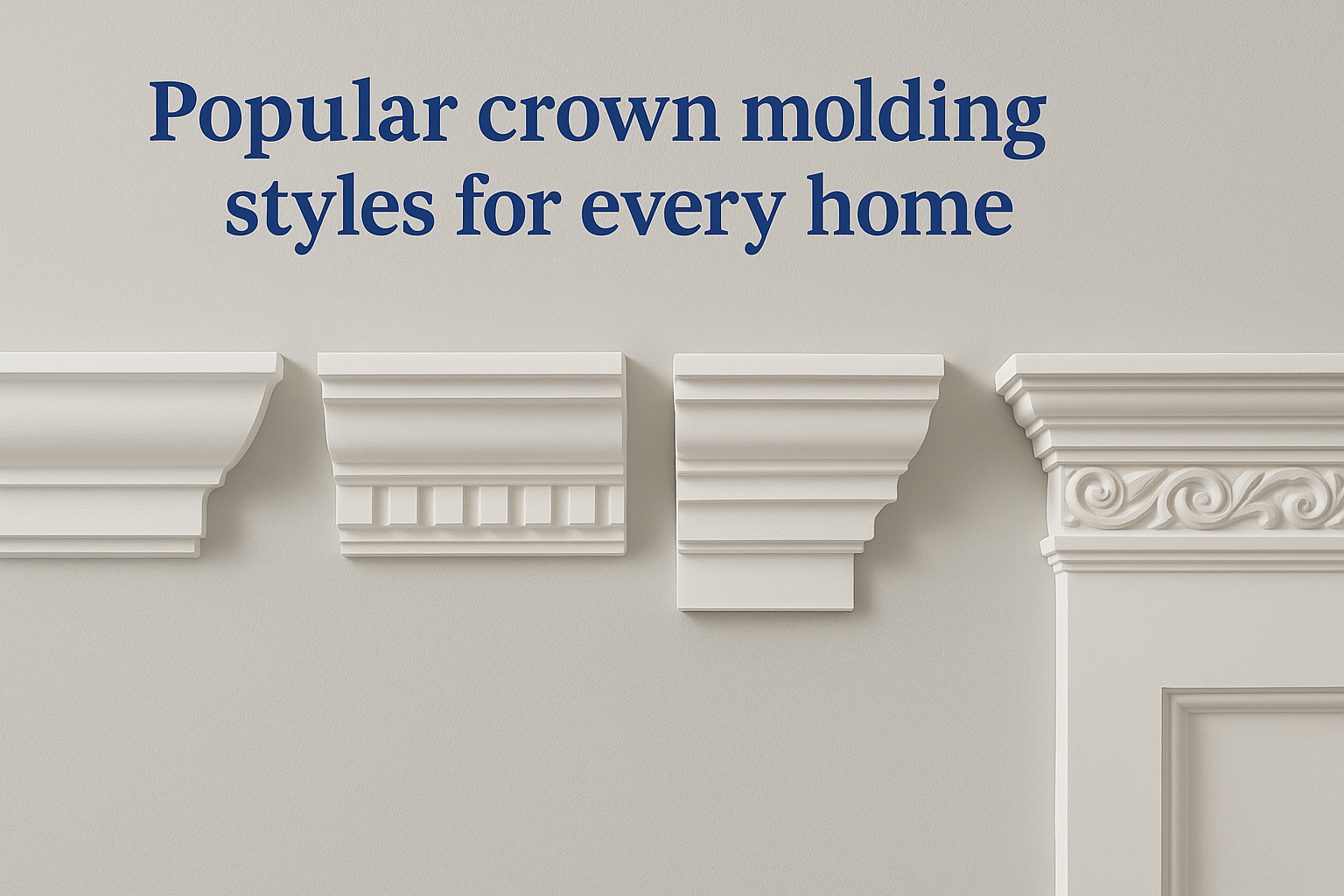
Once you know your ceiling height and material, the fun part is picking a profile that actually fits your home’s character. Crown molding styles range from a single flowing curve to layered combinations of three or four separate pieces stacked together, and each one reads differently depending on the room around it. Cape Cod homes tend to favor a few styles more than others, mostly because they pair well with the coastal, cottage, and colonial architecture common here.
Cove and simple profiles
Cove molding is the plainest option, a smooth concave curve that sweeps from wall to ceiling without any carved detail. It works well in bedrooms, hallways, and beach cottages where you want the finished look without drawing attention to the trim itself. Simple profiles also install faster and cost less, which matters if you’re trimming out an entire second floor rather than just one showcase room.
A simple profile still finishes a room, it just does it quietly instead of loudly.
Dentil and stepped crown
Dentil molding adds small, evenly spaced square blocks along the bottom edge, a detail borrowed from classical architecture that reads as formal and traditional. Stepped crown builds height through layered angles instead of ornament, giving a room more visual weight without the fussiness of carved detailing. Both styles suit:
- Dining rooms and formal living rooms
- Colonial and farmhouse-style Cape homes
- Rooms with 9-foot or taller ceilings that can support the added scale
Built-up and ornate crown
Built-up crown combines two or more separate profiles, often a base molding topped with a smaller cove or bead, to create a custom look no single stock piece can match. Ornate profiles go further still, incorporating scrollwork, egg-and-dart patterns, or rope detailing for entryways and primary suites meant to feel elevated. These combinations take more skill to miter and install cleanly, which is where working with a carpenter who builds custom trim in-house pays off, since stock pieces alone rarely deliver the exact look homeowners picture for their space.
Getting the finishing touch right
Crown molding earns its place in a room by doing two jobs at once: finishing the wall-ceiling seam and signaling that someone cared about the details. Once you understand ceiling height, material choice, and profile style, picking the right molding for your home stops feeling like guesswork and starts feeling like a plan. Cape Cod’s humidity and salt air make that plan matter even more, since the wrong material can undo good design in a single damp winter.
Getting crown molding right isn’t a weekend DIY project if you want clean miters, tight seams, and a profile that matches your home’s character. That’s where local, hands-on craftsmanship makes the difference between molding that looks bolted on and molding that looks like it’s always been there. If you’re ready to talk through options for your own space, reach out to Suman Custom Carpentry and start the conversation.