
A living room without a proper media setup often feels incomplete, cables running loose, speakers sitting on the floor, remotes scattered across mismatched furniture. If you’ve been searching for custom entertainment center ideas, you’re probably tired of the cookie-cutter TV stands that don’t quite fit your wall, your equipment, or your style. A built-in entertainment center solves all of that while adding real storage and long-term value to your home.
The best custom units do more than hold a screen. They organize books, hide wiring, display collections, and frame your TV so it feels like part of the room rather than an afterthought. Whether you want floor-to-ceiling shelving, a sleek floating design, or something with traditional Cape Cod character, the options are broader than most people realize. And the functional details, adjustable shelving, integrated lighting, cable management, make the difference between furniture that looks good in photos and furniture that actually works in your home.
At Suman Custom Carpentry, we design and hand-build every piece in our Hyannis shop, from concept sketches through final installation. Entertainment centers are one of our favorite projects because they combine cabinetry, trim work, and creative problem-solving in a single build. Below, we’ve pulled together ten ideas that reflect what we build for Cape Cod homeowners, each one practical, each one built to last.
1. Full-wall built-in media center with custom millwork
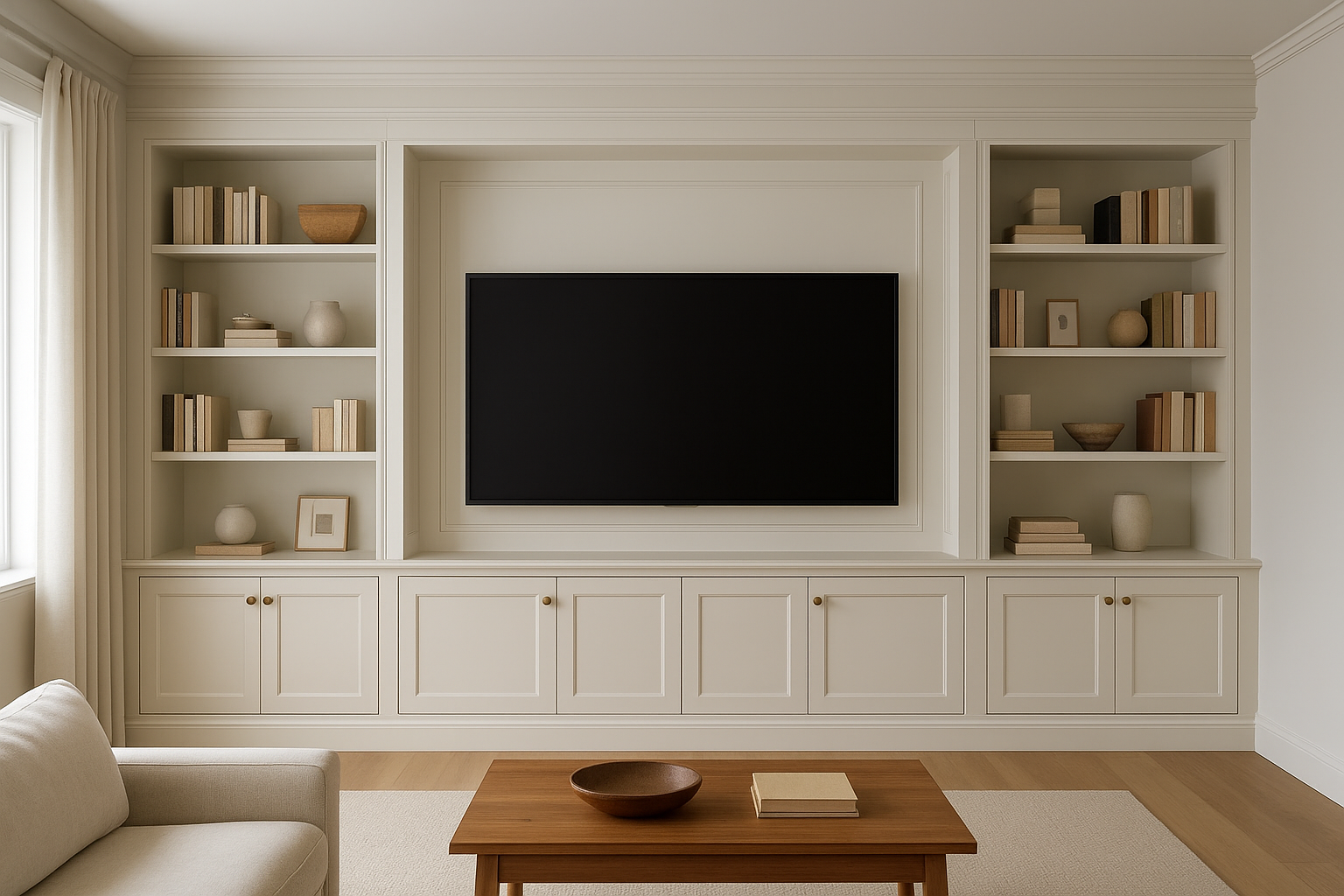
A full-wall built-in is the most ambitious of all custom entertainment center ideas, and also the most rewarding. It takes every inch of one wall and turns it into purposeful storage, display space, and a media hub that looks like it was always part of the house. These builds require more planning and investment than smaller units, but for the right room, nothing else competes with the result.
Layout and look
This design spans the entire width of your wall, typically floor to ceiling. The TV sits centered in a recessed panel, flanked by symmetrical columns of shelving and cabinetry on both sides. Crown molding at the top connects the unit to your existing trim work, making it feel architectural rather than furniture. You end up with a room that looks deliberately designed rather than assembled from separate pieces over time.
Storage that works
A full-wall unit gives you room to handle all your storage needs in one place. Deep lower cabinets hide gaming consoles, receivers, and cable boxes behind solid doors, while upper shelves display books, artwork, or speakers. Planning dedicated zones from the start, one column for media equipment, one for books, one for display, keeps the wall organized long after the build is done.
Dedicating specific zones to equipment versus display from the design stage prevents the visual clutter that makes most media walls look busy within a few months of use.
Materials and finish options
Most full-wall builds use paint-grade maple or MDF for a smooth, furniture-quality finish that matches your interior trim. If you want more visual character, fluted pilasters, raised panel doors, or beadboard backing inside open shelves add detail without overwhelming the space. Stained hardwoods are a strong option if your room already has warm wood tones you want to carry through the design.
Planning tips and cost range
These builds require precise measurements before anything gets cut. Wall depth, ceiling height, and the location of outlets or HVAC vents all shape the final design. Running cord management conduit through the wall before installation is much easier than addressing it after the unit is in place. Budget for a full-wall build typically starts around $8,000 to $15,000 or more depending on size, materials, and detail level.
2. Built-in TV center framed by bookcases
This design is one of the most popular custom entertainment center ideas for good reason. It keeps the TV as the focal point while adding flanking bookcases that balance the wall without overwhelming it. The result feels grounded and intentional, and it works in rooms where a full-wall build would feel too heavy.
Layout and look
The TV panel sits centered on the wall with floor-to-ceiling bookcases built symmetrically on either side. Depending on your ceiling height, you can include a connecting bridge above the TV to tie the two sides together visually. This creates a unified frame around the screen rather than two separate shelving units that happen to share a wall.
Getting the bookcase depth right matters here. Shallow shelves, around 10 to 12 inches, keep the bookcases from jutting into the room while still holding most books and display items comfortably.
Storage that works
The bookcases handle books, décor, and speakers without demanding dedicated cabinet space. If you want to keep electronics out of sight, adding a lower cabinet section with doors at the base of each bookcase gives you closed storage for routers, receivers, and game consoles without breaking the open, airy feel of the upper shelves.
Materials and finish options
Paint-grade maple is the most common choice here because it photographs cleanly and matches most trim packages. Adding adjustable shelf pins rather than fixed shelves gives you flexibility as your collection changes over time.
Planning tips and cost range
Measure your wall width carefully before finalizing the bookcase proportions. A TV panel that’s too narrow relative to the bookcases looks pinched. Budget typically falls between $5,000 and $10,000 depending on height, cabinet detailing, and finish complexity.
3. Built-in entertainment center with a fireplace feature
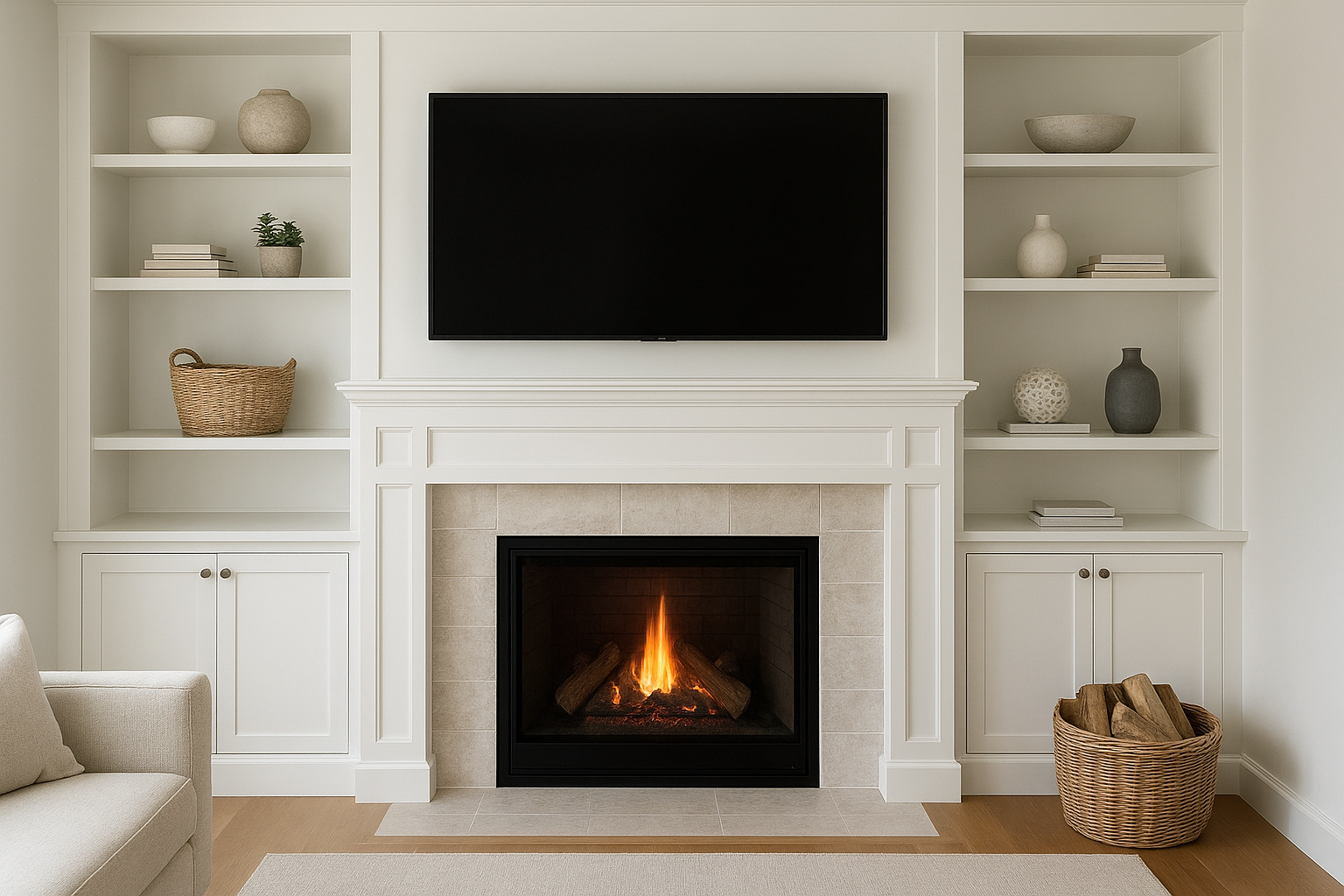
Combining a fireplace with a built-in media unit is one of the most requested custom entertainment center ideas for living rooms on Cape Cod. The fireplace becomes the true anchor of the wall, with the TV and storage built symmetrically around it rather than competing for attention.
Layout and look
The fireplace sits centered on the wall, framed by built-in cabinetry and shelving on each side. The TV typically mounts above the firebox or off to one side in a dedicated panel, depending on your viewing angle preferences. Columns of cabinetry extend from the fireplace surround outward, with the millwork tying everything together through consistent trim profiles and cornice details.
Mounting a TV directly above a working fireplace works best when the firebox is recessed and you can maintain at least 12 inches of clearance, which protects your screen from heat damage over time.
Storage that works
The flanking cabinets give you dedicated space for media equipment, firewood storage, or decorative display depending on what your household needs. Lower cabinets with doors handle receivers, streaming devices, and remote clutter. Open upper shelves between the fireplace and the outer columns add breathing room without sacrificing storage capacity.
Materials and finish options
Paint-grade maple with a built-up mantel surround is the most common approach because it unifies the fireplace and the cabinetry into one cohesive piece. Adding panel molding or pilasters on the cabinet faces reinforces the formal, architectural feel that fireplace walls tend to call for.
Planning tips and cost range
Confirm your fireplace clearance requirements and local building codes before finalizing the design. These builds typically range from $9,000 to $16,000 depending on fireplace type, surround complexity, and total wall width.
4. Floating built-in console with open shelving
A floating console mounts off the floor on a wall-mounted base, giving the room a lighter, more open feel than traditional floor-standing units. It’s one of the cleaner custom entertainment center ideas for modern or transitional spaces where you want built-in storage without the visual weight of a full floor-to-ceiling design.
Layout and look
The console panel sits at roughly counter height, between 18 and 24 inches off the floor, with open shelving rising above it. That gap underneath creates a visual break that makes ceilings read taller and the room feel less closed in.
You can run the shelving symmetrically across the full wall or offset it for a less structured look. Either approach keeps the TV front and center without making the wall feel crowded.
Storage that works
Open shelves above the console hold books, speakers, and display objects without closing off the wall visually. The console cabinet typically includes two to four compartments for remotes, gaming controllers, and media equipment.
Floating consoles work best when your media equipment runs slim. Bulky stacked receivers are harder to hide without deep cabinet depth, so plan your shelf dimensions around your actual gear before finalizing the design.
Materials and finish options
Painted MDF or maple work well here because the floating profile is already a visual statement on its own.
Adding a wood veneer panel on the console face or the shelf backing introduces warmth without weighing the look down.
Planning tips and cost range
Your wall studs need to support the full load of the console and its contents, so proper blocking during framing is not negotiable.
These builds typically range from $4,000 to $8,000 depending on span, materials, and cabinet complexity.
5. Clean, minimalist built-in with hidden doors
Among the most refined custom entertainment center ideas, the minimalist built-in with hidden doors strips away visible hardware and ornamental detail to create a wall that looks more like architecture than furniture. Push-to-open doors or recessed finger pulls replace traditional knobs and pulls, so the surface reads as one continuous, uninterrupted plane.
Layout and look
The TV panel sits flush within the built-in, surrounded by cabinet doors that align perfectly with the surrounding millwork. When everything is closed, the wall shows almost no seams, no handles, and no visual noise. The overall effect is calm and deliberately restrained, which suits modern, Scandinavian, and transitional interiors well.
The key to pulling this look off is precision. Doors that are even slightly out of alignment break the seamless appearance the entire design depends on.
Storage that works
Behind those flush cabinet doors, you can pack in substantial storage for gaming systems, streaming devices, media collections, and anything else you want out of sight. The closed-front design makes it especially practical for rooms where clutter stays hidden until you need access.
Materials and finish options
Smooth MDF with a painted finish is the standard choice because it produces the flat, grain-free surface this style requires. Matte sheens outperform gloss here since they hide fingerprints and minor surface variation better than high-gloss lacquer.
Planning tips and cost range
Soft-close hinges and push-to-open hardware add to the build cost but are worth budgeting for upfront. These units typically range from $6,000 to $11,000 depending on wall width and door count.
6. Slatted wood or fluted panel media wall
Textured panel walls have become one of the most visually striking custom entertainment center ideas available right now. A slatted or fluted panel treatment adds depth, warmth, and pattern to your media wall without relying on cabinetry details or ornamental molding to carry the design.
Layout and look
Vertical slats or fluted panels run across the wall behind and around the TV, creating a rhythm of light and shadow that makes the surface feel rich even when the room is simple. The TV typically floats in front of the panel on a slim wall mount, keeping the textured backdrop fully visible rather than buried behind a cabinet frame.
Keeping the panel treatment consistent across the full wall width, rather than stopping at the TV edges, is what makes this design feel intentional rather than decorative.
Storage that works
Floating shelves or a low console mounted directly onto the panel handle your equipment and display needs without interrupting the texture. This approach works best when you keep visible gear minimal, so a streaming stick and a soundbar rather than a stack of components.
Materials and finish options
White oak and walnut are the most popular choices for slatted panels because their grain reads cleanly between slats. Painted MDF fluting works well in more formal or transitional rooms where you want the texture without the warmth of natural wood tones.
Planning tips and cost range
Confirm that your wall blocking and mounting points align with the panel layout before installation starts. These builds typically range from $4,500 to $9,000 depending on panel material, wall size, and added console or shelf work.
7. Corner built-in that saves floor space
A corner built-in is one of those custom entertainment center ideas that solves two problems at once: it puts dead corner space to work and frees up the longer walls in your room for windows, doors, or other furniture.
Layout and look
The unit wraps into the corner at a 45-degree angle or with an L-shaped configuration, with the TV mounted on the angled center panel and shelving extending down each adjacent wall. This pulls your seating arrangement toward the corner rather than pushing it against a single wall, which works well in square or awkward rooms where standard layouts feel forced.
An angled center panel typically works better than a true L-shape because it gives you a flat, forward-facing surface for the TV rather than a side angle that hurts your viewing line.
Storage that works
Both wings extending along each wall handle storage without crowding the room. Lower cabinets with doors on each side give you closed storage for gear and media clutter, while the upper shelves stay open and visually light. Common storage zones for this layout include:
- Gaming consoles and receivers behind lower cabinet doors
- Books and display objects on open upper shelves
- Speakers tucked into the outer shelf columns
Materials and finish options
Paint-grade maple or MDF are the practical choices here because the angled geometry requires precise cuts that benefit from consistent, stable materials. Adding matching trim details across all three panels ties the corner unit together so it reads as one piece rather than separate sections joined at an angle.
Planning tips and cost range
Measure your corner carefully, since out-of-square walls are common and directly affect how the unit sits. These builds typically range from $5,500 to $10,000 depending on span and detail level.
8. Media center with display niches and accent lighting
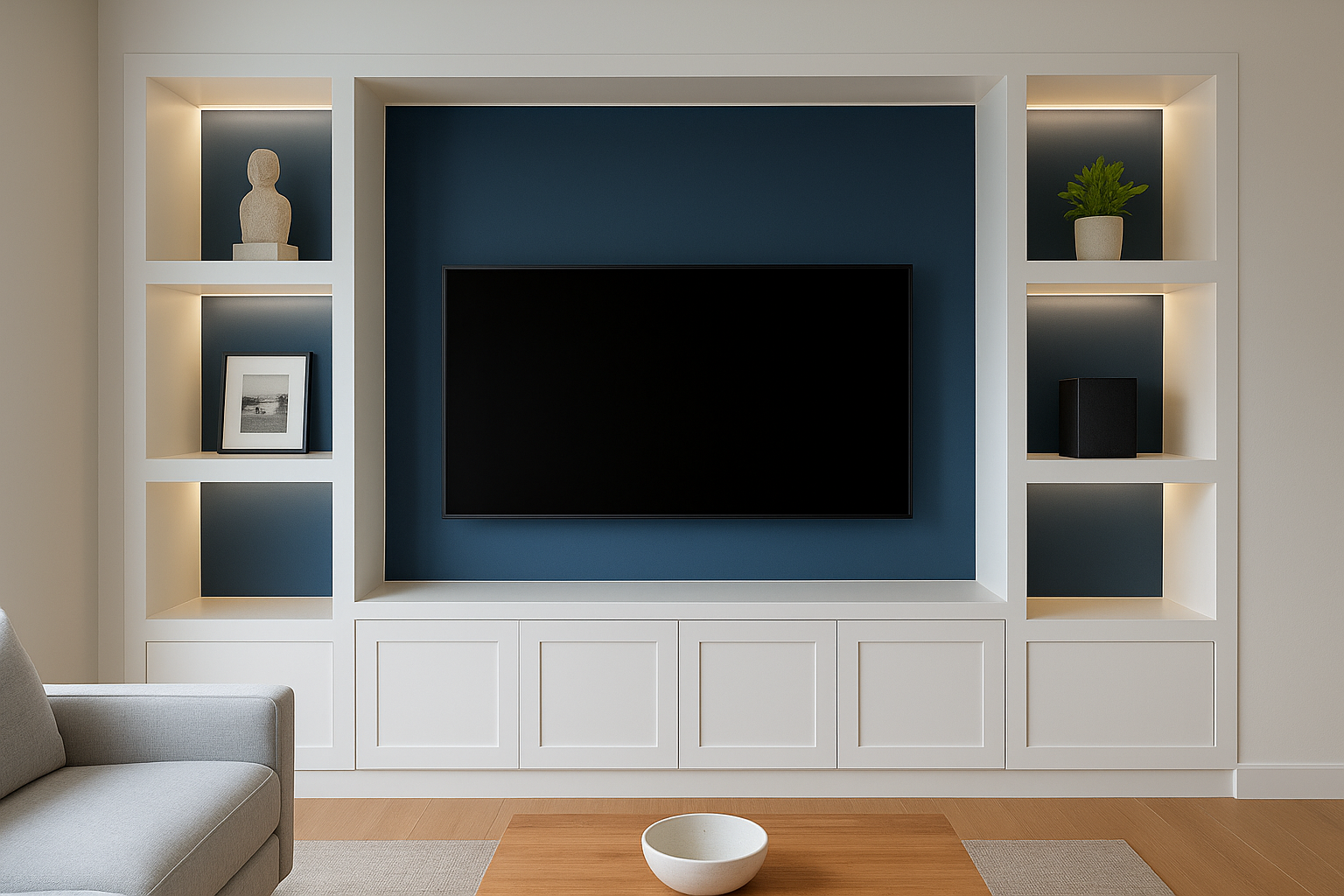
Among the most visually dynamic custom entertainment center ideas, a media wall built around dedicated display niches and integrated lighting turns your collection into part of your room’s design. Rather than hiding everything behind closed doors, this approach puts selected objects on purpose-built stages, framed by light.
Layout and look
The TV sits centered, with recessed niches of varying sizes arranged symmetrically or asymmetrically on both sides. Each niche is sized to hold a specific object: a sculpture, a framed photo, a plant, or a speaker. LED strip lighting installed inside each recess washes the back panel with soft light, drawing the eye across the wall rather than locking attention on the screen alone.
Varying the niche dimensions intentionally, rather than making every opening the same size, creates a more composed, gallery-like feel that a uniform grid can’t match.
Storage that works
Lower cabinets with solid doors handle media equipment, remotes, and anything you want out of sight. The open niches above stay curated and intentional rather than becoming general-purpose shelves that collect clutter over time.
Materials and finish options
Painted MDF works well for the niche interiors because it takes paint evenly and holds clean shadow lines at the edges. A contrasting back panel color inside each niche, darker than the surrounding cabinet face, adds depth without additional material cost.
Planning tips and cost range
Plan your lighting power source and switch placement before the build starts, since running wire after installation is disruptive. These units typically range from $6,500 to $11,000 depending on niche count, lighting complexity, and cabinet detailing.
9. Entertainment center that doubles as a home office nook
Remote work changed how people use their living spaces, and this is one of the most practical custom entertainment center ideas for households that need media storage and a dedicated workspace in the same room. A built-in that folds both functions into one wall keeps your setup organized without giving an entire room over to a home office.
Layout and look
The TV panel stays centered while a built-in desk surface extends from one side, tucked between upper shelving and a base cabinet. When you’re not working, the desk reads as part of the overall unit rather than a separate piece of furniture interrupting the room. Matching millwork profiles across both the media section and the office nook pull the whole wall together visually.
Positioning the desk on the side of your non-dominant hand keeps your working elbow off the keyboard and away from the TV panel, which helps with ergonomics and avoids scuff damage to the cabinet face.
Storage that works
The office side handles file storage, printer access, and supply organization inside lower cabinets, while upper shelves above the desk hold books, binders, or display items. The media side manages your equipment separately so work gear and entertainment gear never compete for the same space.
Materials and finish options
Painted maple or MDF keeps both sections looking unified. Adding a solid hardwood desk surface in a contrasting stain introduces warmth right where you spend focused time, which makes the workspace feel more intentional.
Planning tips and cost range
Plan your outlet and USB port placement along the desk wall before installation. These builds typically range from $6,000 to $11,000 depending on desk size and cabinet configuration.
10. Cabinet-box built-in that looks fully custom
Not every budget supports a full custom millwork build, and this approach is one of the most practical custom entertainment center ideas for homeowners who want a built-in look without the full custom price. Pre-built cabinet boxes from quality suppliers get assembled and installed wall-to-wall, then finished with custom trim, crown molding, and scribe pieces that make the whole unit read as a single, purpose-built piece.
Layout and look
The cabinet boxes anchor the layout, with the TV panel centered and storage columns extending to each side. Once your carpenter adds matching crown molding at the top and base trim at the bottom, the visible seams between boxes disappear and the unit blends into the room the same way a true custom build does.
The finish work, trim, scribing, and paint, carries more visual weight than the cabinet boxes themselves. Spending on quality installation and finishing gets you most of the way to a fully custom result.
Storage that works
Standard cabinet boxes offer consistent depth and door sizing that suits media equipment well. You can mix open upper sections with closed lower cabinets to balance display space against hidden storage for receivers, consoles, and remotes.
Materials and finish options
Painted finishes unify the boxes and trim into one cohesive surface. Choosing soft-close hinges and integrated pull hardware upgrades the feel without adding significant cost.
Planning tips and cost range
Confirm wall dimensions before ordering boxes since returns on cut-to-fit pieces are rarely straightforward. These builds typically range from $3,500 to $7,000 depending on box count and trim complexity.
Next steps for your built-in
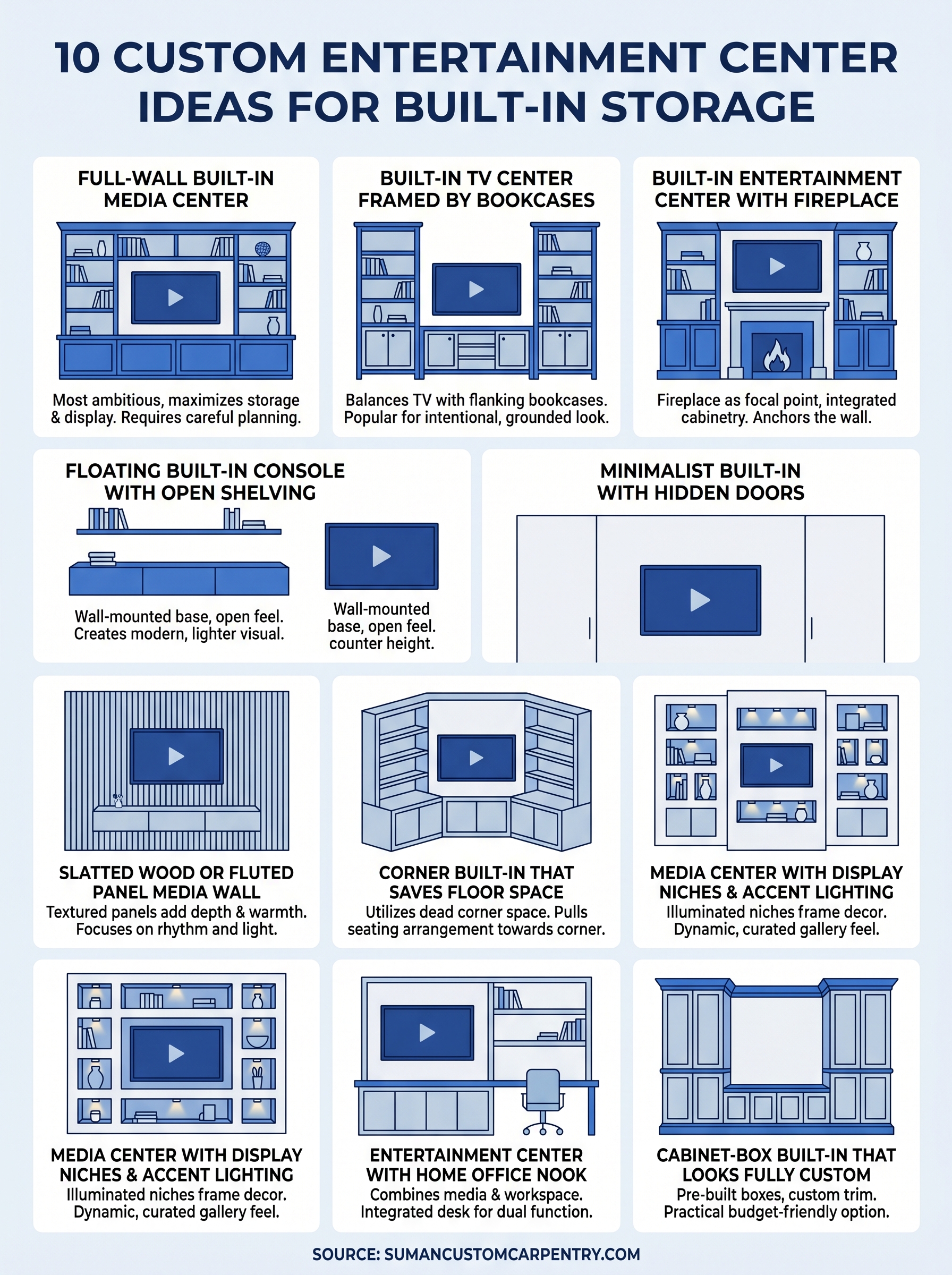
These ten custom entertainment center ideas cover a wide range of styles, budgets, and room types, but the right choice always comes down to your specific wall, your storage needs, and how you actually use the space day to day. Before you commit to a design, measure your wall dimensions, list your equipment, and think through how much you want visible versus hidden. Those decisions shape every detail that follows, from cabinet depth to door style to lighting placement.
At Suman Custom Carpentry, we design and hand-build every unit in our Hyannis shop, from the first sketch through final installation on Cape Cod. Every build carries a lifetime warranty on cabinet boxes and doors, so what we build for you is built to last decades. If you’re ready to move from ideas to a real plan, contact us to start your project and talk through your space with our team.