
Cabinet hardware is the jewelry of your kitchen, and picking the wrong finish or shape can throw off a design you spent months planning. If you’re searching for kitchen cabinet hardware ideas, you’ve probably already picked your cabinet color and countertop and now you’re stuck staring at a wall of knobs and pulls at the hardware store, unsure what actually fits a Cape Cod kitchen.
This guide skips the generic hardware roundups and focuses on styles that work specifically in coastal Massachusetts homes, where salt air, beach house charm, and a mix of old and new construction all matter. You’ll get real pairings of finishes, shapes, and cabinet styles rather than a random Pinterest dump.
We’ve built custom kitchens across Hyannis and the rest of Cape Cod since 2018, and hardware choice is one of the last decisions clients make, but it changes the whole feel of the room. Below are nine hardware ideas we’ve actually installed or recommended, from brushed brass pulls on shaker cabinets to matte black knobs that hold up against humidity and sandy hands. Read through them before you order anything.
1. Brushed nickel hardware for classic coastal style
Brushed nickel is the safest bet we recommend to clients who want their kitchen to look good in ten years, not just this season. It’s the hardware equivalent of a navy blazer: it works everywhere, matches almost any fixture finish, and never screams for attention.
How it looks and feels
Unlike polished chrome, brushed nickel has a soft, matte sheen that hides fingerprints and water spots, which matters a lot in a working kitchen near the water. The texture reads warm rather than cold, and it holds up well against the salt air that eventually dulls cheaper finishes. Run your hand over it and you’ll notice a slight grain, almost like brushed stainless, that catches light without glaring under pendant fixtures.
Best cabinet styles to pair with
This finish pairs naturally with painted shaker cabinets in white, soft gray, or navy, which happen to be the three most requested colors we build in Hyannis kitchens. It also works on natural wood cabinets with a lighter stain, since the cool metal tone balances warm wood without fighting it. We rarely recommend it on high-gloss modern cabinet fronts, where it can look a little flat next to a more reflective black or chrome hardware option.
Placement and installation tips
Getting the placement right matters as much as the finish itself. Here’s what we tell clients before install day:
- Use pulls on drawers and knobs on doors, or knobs throughout for a more traditional look
- Center knobs on the stile, roughly 2.5 to 3 inches from the top corner on upper cabinets
- Keep pull length proportional to drawer width; a 30-inch drawer front usually calls for a 5 to 6-inch pull
- Stick with one hardware brand and finish batch to avoid slight color mismatches between pieces
Why it fits a Cape Cod kitchen
Brushed nickel earns its spot on this list because it does exactly what a coastal Massachusetts kitchen needs: it resists tarnish from humid air, it doesn’t clash with stainless appliances, and it photographs well whether your kitchen leans traditional or slightly updated. It’s also the easiest finish to sell a future buyer on, since almost nobody dislikes it.
Brushed nickel is the one finish that never looks dated, which is exactly why it’s still the top seller in coastal kitchens.
If you’re renovating an older Cape home, brushed nickel bridges the gap between the house’s original character and a kitchen that still feels current.
2. Unlacquered brass pulls for warm New England charm
Unlacquered brass is the finish we push clients toward when they want their kitchen to look like it has history, even in a brand-new build. Unlike lacquered brass, which stays shiny and static forever, this version ages with the house and picks up character every year.
How it looks and feels
Unlacquered brass starts out warm and golden, almost like an antique doorknob, but it’s designed to develop a patina over time from hand oils and use. Within a year or two, high-touch spots dull slightly while the rest keeps its glow, giving the hardware a lived-in look that reads intentional rather than worn out. It feels heavier in the hand than most finishes too, since solid brass pulls carry real weight compared to plated alternatives.
Best cabinet styles to pair with
This finish shines on inset cabinet doors, painted cabinetry in deep greens or navy, and natural wood tones like white oak. We’ve also used it on simple shaker fronts when a client wants warmth without going full farmhouse.
Placement and installation tips
Expect some finish variation between pieces since patina develops unevenly. Order everything from the same production run, and handle pulls with clean hands during install to avoid uneven early staining.
Unlacquered brass rewards patience: the more it’s touched, the better it looks.
Why it fits a Cape Cod kitchen
New England homes have always leaned on brass for hardware and fixtures, so this choice feels rooted rather than trendy in a Cape Cod kitchen.
3. Matte black hardware for crisp nautical contrast
Matte black hardware gives a kitchen the kind of contrast that photographs well and holds up in daily use. It’s become the go-to request from clients who want their white or light-gray cabinets to feel intentional instead of plain, and it pairs surprisingly well with the navy and denim-blue cabinetry we see so often near the water.
How it looks and feels
This finish reads flat and modern, with almost no shine even under direct kitchen lighting. Matte black hides fingerprints better than almost any other finish on this list, which matters in a house full of kids or sandy beach gear. It feels slightly cooler to the touch than bronze or brass, and the edges tend to be crisper, giving it a more architectural presence on the door.
Best cabinet styles to pair with
Matte black works best on painted shaker cabinets in white, cream, or navy, where the dark hardware acts as a visual anchor. It also suits slab-front cabinets in a coastal-modern kitchen, since the clean lines match the flat sheen.
Placement and installation tips
Use bar pulls on drawers and slim knobs on doors for a consistent nautical feel. Wipe hardware down during install, since black finishes show smudges from packaging oils more than lighter finishes do.
Matte black is the fastest way to add contrast without adding clutter.
Why it fits a Cape Cod kitchen
Against white trim and shiplap, black hardware echoes the look of a ship’s rigging, giving an otherwise soft coastal kitchen some backbone.
4. Polished chrome knobs for a fresh, airy feel
Polished chrome brings a crisp, reflective brightness that a lot of coastal kitchens need, especially in older Cape homes with smaller windows and limited natural light. It’s the finish we suggest when a client wants their kitchen to feel bigger and brighter without touching a single wall.
How it looks and feels
Polished chrome has a mirror-like shine that bounces light around the room, which makes it the most reflective option on this list. It feels cool and smooth to the touch, with none of the texture you’d find on brushed nickel. Fingerprints show up faster here than on any other finish, so it’s a trade-off between brightness and upkeep.
Best cabinet styles to pair with
This finish works best on white or pale blue shaker cabinets, and it pairs naturally with marble or quartz countertops that already have some sparkle. Avoid pairing it with warm wood tones, since the cool shine tends to fight rather than complement natural grain.
Placement and installation tips
Stick with simple round knobs on doors and slim bar pulls on drawers to keep the look clean. Buff hardware with a soft cloth after install, since chrome shows every smudge from packaging and handling.
Polished chrome does more to brighten a small kitchen than almost any paint color.
Why it fits a Cape Cod kitchen
Many older Cape Cod kitchens run darker and tighter than newer builds, and chrome’s reflective quality helps counter that, giving the space a fresh, updated feel without a full renovation.
5. Oil-rubbed bronze pulls for weathered coastal charm
Oil-rubbed bronze is what we reach for when a client wants their kitchen to feel like it’s been there for decades, weathered by salt air and years of use. It’s darker and moodier than brass, but it carries the same warmth, which makes it a favorite in older Cape homes that lean traditional rather than modern.
How it looks and feels
Oil-rubbed bronze starts as a deep brown-black finish with lighter copper undertones that show through at the edges and high points. It has texture you can feel under your fingers, almost like hammered metal, and that texture hides fingerprints and water spots better than shinier finishes. Over time it darkens slightly with handling, but it never develops the dramatic patina you’d see on unlacquered brass.
Best cabinet styles to pair with
This finish pairs well with raised panel cabinets, cherry or walnut wood tones, and painted cabinetry in deep green or charcoal. It looks out of place on flat slab doors, where its texture has nothing to complement.
Placement and installation tips
Use cup pulls or bin pulls on drawers and simple round knobs on doors for a cohesive, traditional look. Order a few extra pieces up front since exact color matching gets harder once a run sells out.
Oil-rubbed bronze gives a kitchen instant age and warmth without a single day of actual wear.
Why it fits a Cape Cod kitchen
Weathered coastal charm is exactly what this finish delivers, echoing the worn shingles and old ship hardware you see throughout Cape Cod’s older housing stock.
6. Ceramic and glass knobs for cottage-style kitchens
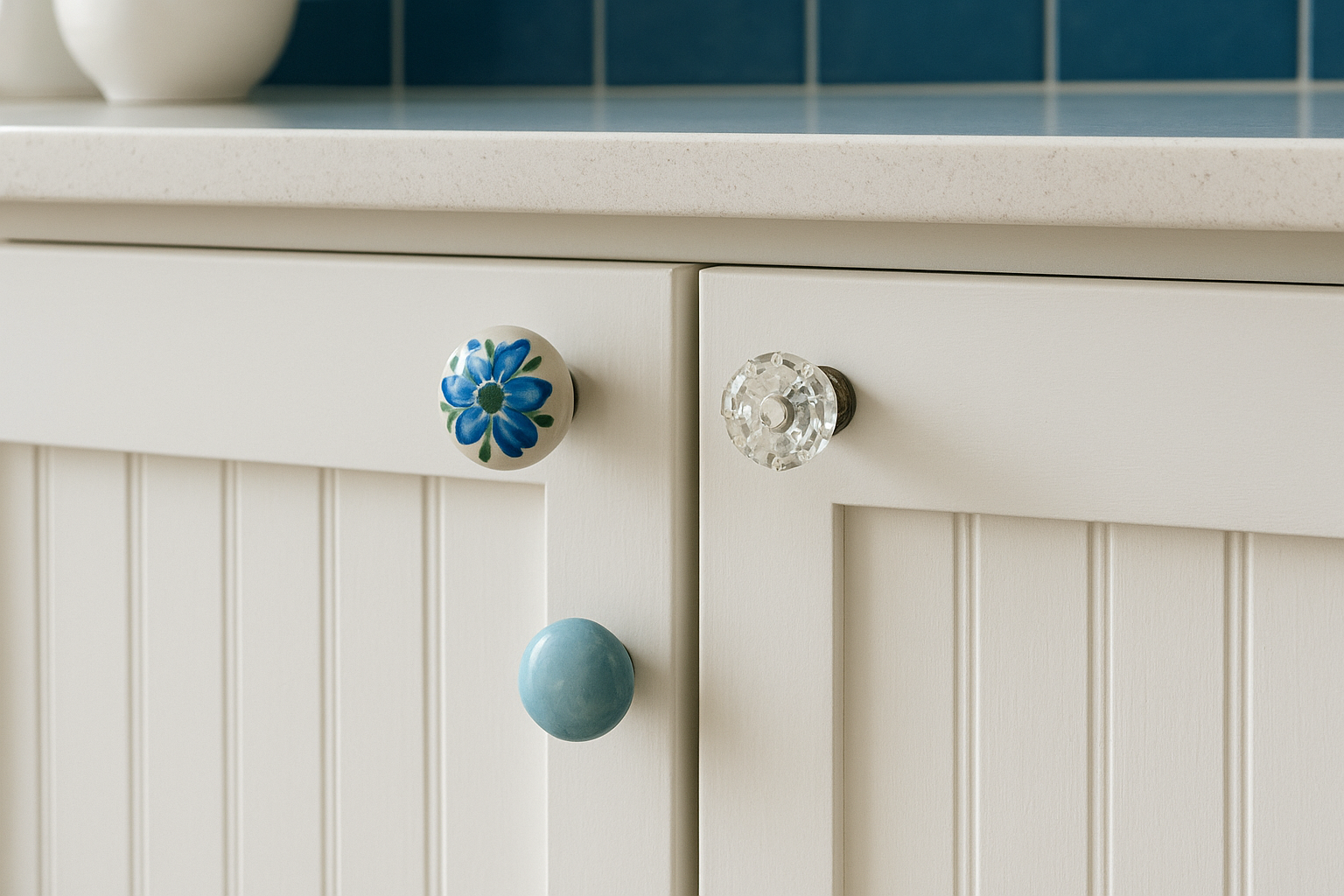
Ceramic and glass knobs bring a softer, more playful texture into a kitchen than any metal finish can. We recommend them to clients who want their kitchen cabinet hardware ideas to feel personal rather than catalog-ordered, especially in a cottage or beach house that leans into pattern and color instead of hiding from it.
How it looks and feels
Ceramic knobs often come hand-painted or glazed in a single solid color, while glass knobs range from clear crystal-cut styles to colored milk glass in soft blues and greens. Both feel cool to the touch and lighter than solid metal, and the surface has a slight give that reads handmade even when it’s mass-produced. Small chips and glaze variations are common and, honestly, part of the charm.
Best cabinet styles to pair with
These knobs pair naturally with painted beadboard cabinets, open shelving, and cottage-style kitchens with a mix of white and pastel tones. Skip them on sleek modern cabinetry, where the delicate shape gets lost.
Placement and installation tips
Use knobs only, since ceramic and glass rarely come in pull form. Hand-tighten each one gently; overtightening cracks the glaze.
Ceramic and glass knobs work best when you let a little imperfection show.
Why it fits a Cape Cod kitchen
This style echoes the secondhand-shop, sun-faded charm found in older Cape cottages, where nothing matches perfectly and that’s exactly the point.
7. Woven leather pulls for a relaxed beach house feel
Woven leather pulls bring texture into a kitchen that no metal finish can match. We suggest them to clients who want their kitchen cabinet hardware ideas to feel tactile and unfussy, the kind of hardware you’d expect to find in a beach house that’s more about comfort than polish.
How it looks and feels
Woven leather pulls wrap a metal core in braided or stitched leather, usually in natural tan, saddle brown, or weathered gray. They feel warm and slightly soft under your hand, nothing like the cold grip of chrome or nickel. The leather ages the way a good belt or boot does, picking up small creases and a slightly darker tone with regular use.
Best cabinet styles to pair with
This style pairs best with natural wood cabinets, whitewashed shaker fronts, and painted cabinetry in soft neutrals like sand or driftwood gray. It fits looser, more casual kitchens rather than tight, formal layouts.
Placement and installation tips
Leather pulls need a little more care than metal hardware. Keep these points in mind before you order:
- Choose leather pulls with a stainless or brass hardware core for durability near sinks and stoves
- Avoid placing them directly beside the range, where heat and grease shorten the leather’s lifespan
- Wipe with a dry cloth only; skip harsh cleaners that dry out the leather
- Order one or two extras, since leather batches vary slightly in color
Woven leather pulls add warmth you can feel, not just see.
Why it fits a Cape Cod kitchen
This hardware suits the relaxed, sandy-feet version of Cape Cod living, where a kitchen should feel lived-in rather than showroom-perfect.
8. Cup pulls for a vintage farmhouse touch
Cup pulls bring a shape into your kitchen that no knob or bar pull can replicate. We install these for clients chasing a farmhouse touch without going full rustic, since the half-moon shape has just enough history to feel intentional but not costume-y.
How it looks and feels
Cup pulls curve outward from the drawer front like a small scoop, letting you hook your fingers underneath instead of gripping a straight bar. They sit flush against the wood at the top and flare slightly at the bottom, which gives even a plain drawer front some dimension. Most come in brass, bronze, or black, and the deeper the cup, the more old-fashioned the look reads.
Best cabinet styles to pair with
This shape belongs on beadboard drawer fronts, raised panel cabinetry, and farmhouse sinks with an apron front nearby. Pair them with simple knobs on upper doors so the cups don’t compete with anything else in the room.
Placement and installation tips
Center each cup pull along the top edge of the drawer, never lower, so fingers naturally slide underneath. Measure twice before drilling since the mounting screws sit further apart than on a standard bar pull.
Cup pulls give a kitchen instant history without a single reclaimed board.
Why it fits a Cape Cod kitchen
Cape Cod’s older farmhouses and converted barns already lean toward this look, so cup pulls feel like they belong rather than arrived from a catalog last week.
9. Mixed metal hardware for a custom, layered look
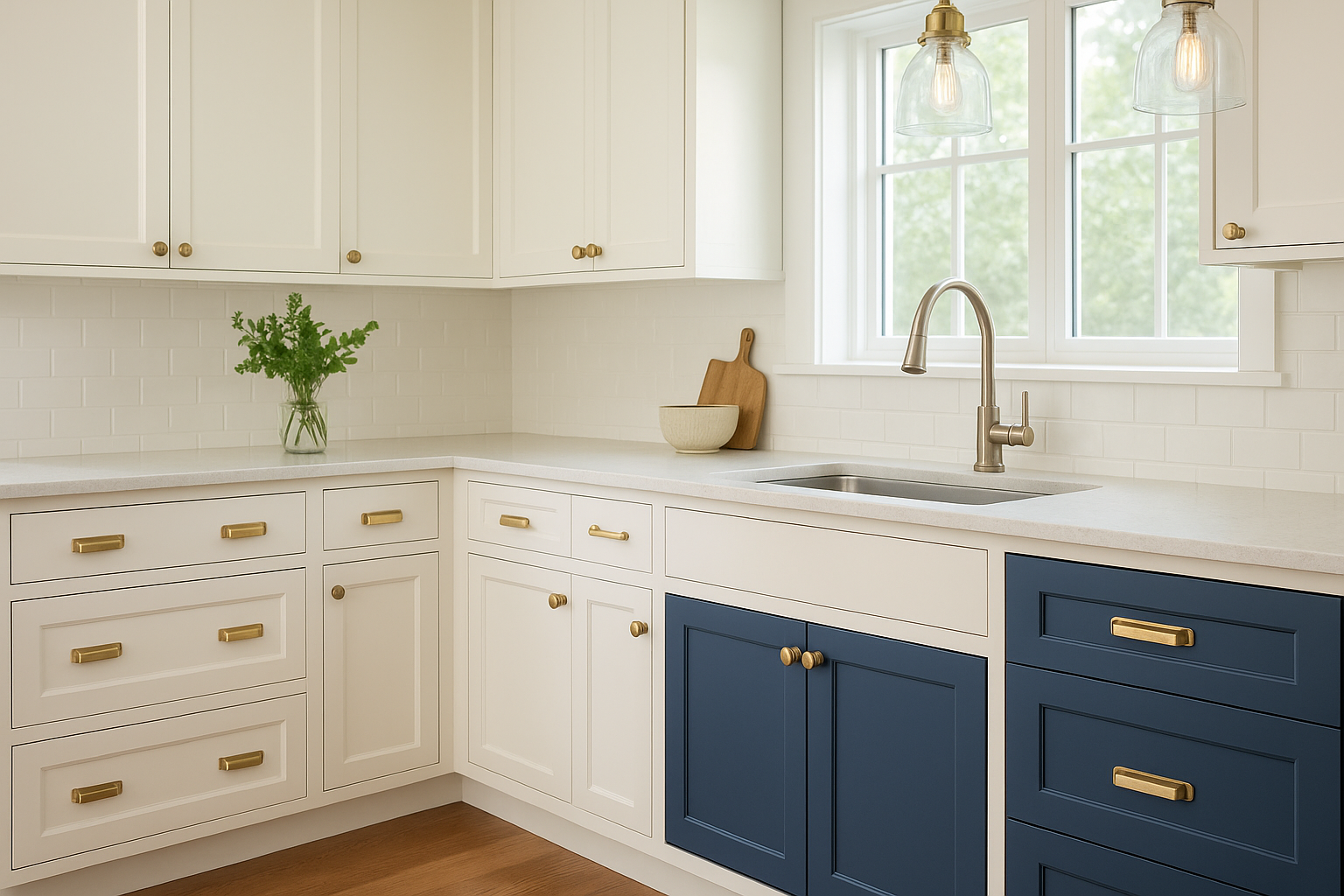
Mixed metal hardware breaks the old rule about matching every finish in the kitchen, and it’s the choice we see more clients ask for every year. Instead of picking one metal and sticking with it everywhere, you layer two or three finishes on purpose, which gives a kitchen the collected-over-time feel of a home that wasn’t furnished in a single shopping trip.
How it looks and feels
Mixed metal hardware usually pairs a warm tone like brass or bronze with a cool tone like nickel or chrome, often split between the island and perimeter cabinets. Done well, it feels curated rather than mismatched, since the finishes echo other metals already in the room, like faucet fixtures or pendant lighting. Done poorly, it looks like leftover parts from two different renovations, so the split needs a clear logic behind it.
Best cabinet styles to pair with
This approach works best on kitchens with two-tone cabinetry, where the island already carries a different paint color than the surrounding cabinets. It also suits larger kitchens with distinct zones, like a baking station or a butler’s pantry, where a finish shift signals a change in purpose.
Placement and installation tips
Pick one dominant finish for roughly 70 percent of the hardware, then use the second finish on an island or a single wall of cabinets. Keep faucets and lighting in mind before finalizing either metal.
Mixed metal hardware only works when one finish clearly leads and the second plays a supporting role.
Why it fits a Cape Cod kitchen
Older Cape homes rarely had matching hardware to begin with, so a layered look feels authentic to the region’s patchwork renovation history rather than staged.
Choosing hardware that fits your home
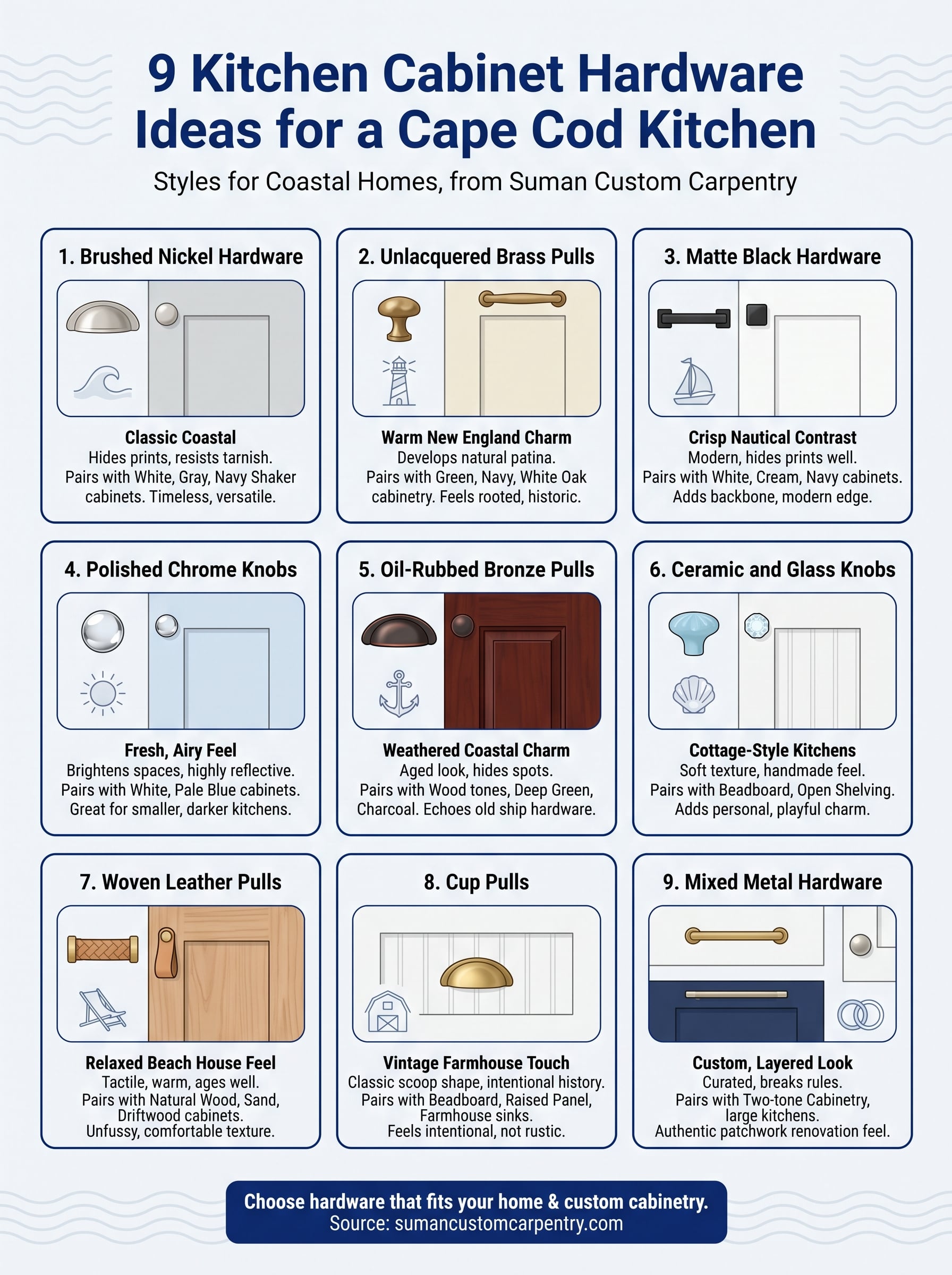
Hardware is a small detail with an outsized effect on how a kitchen feels day to day. Nine finishes can guide your search, but the right choice still comes down to your cabinet style, your lighting, and how much wear your kitchen actually sees from sandy hands, salt air, and daily cooking. Brushed nickel and matte black cover most kitchens without much risk, while brass, bronze, leather, and mixed metals reward homeowners chasing something more personal.
Getting hardware right is easier when the cabinets themselves are built for it, with solid wood fronts and proper reinforcement behind every knob and pull. That’s the kind of custom cabinetry we build in our Hyannis shop, and it’s why hardware conversations happen early in every project we take on. If you’re planning a kitchen renovation anywhere on Cape Cod, talk to our team at Suman Custom Carpentry about pairing the right hardware with cabinets built to last.