Choosing the right wood stain colors for kitchen cabinets is one of the most consequential design decisions you’ll make during a renovation. The stain you pick affects everything, how large the room feels, how well it pairs with your countertops and flooring, and whether you’ll still love the look five or ten years from now. Get it right, and your kitchen becomes the anchor of your home. Get it wrong, and you’re staring at regret every morning over coffee.
At Suman Custom Carpentry, we build and stain custom kitchen cabinets by hand at our shop in Hyannis, Cape Cod. Since 2018, we’ve worked with homeowners across the Cape to select stain colors that complement their spaces, their lifestyles, and the unique coastal light that pours through Massachusetts kitchens. We see firsthand how a stain can completely transform the character of a room, and how trends shift from year to year.
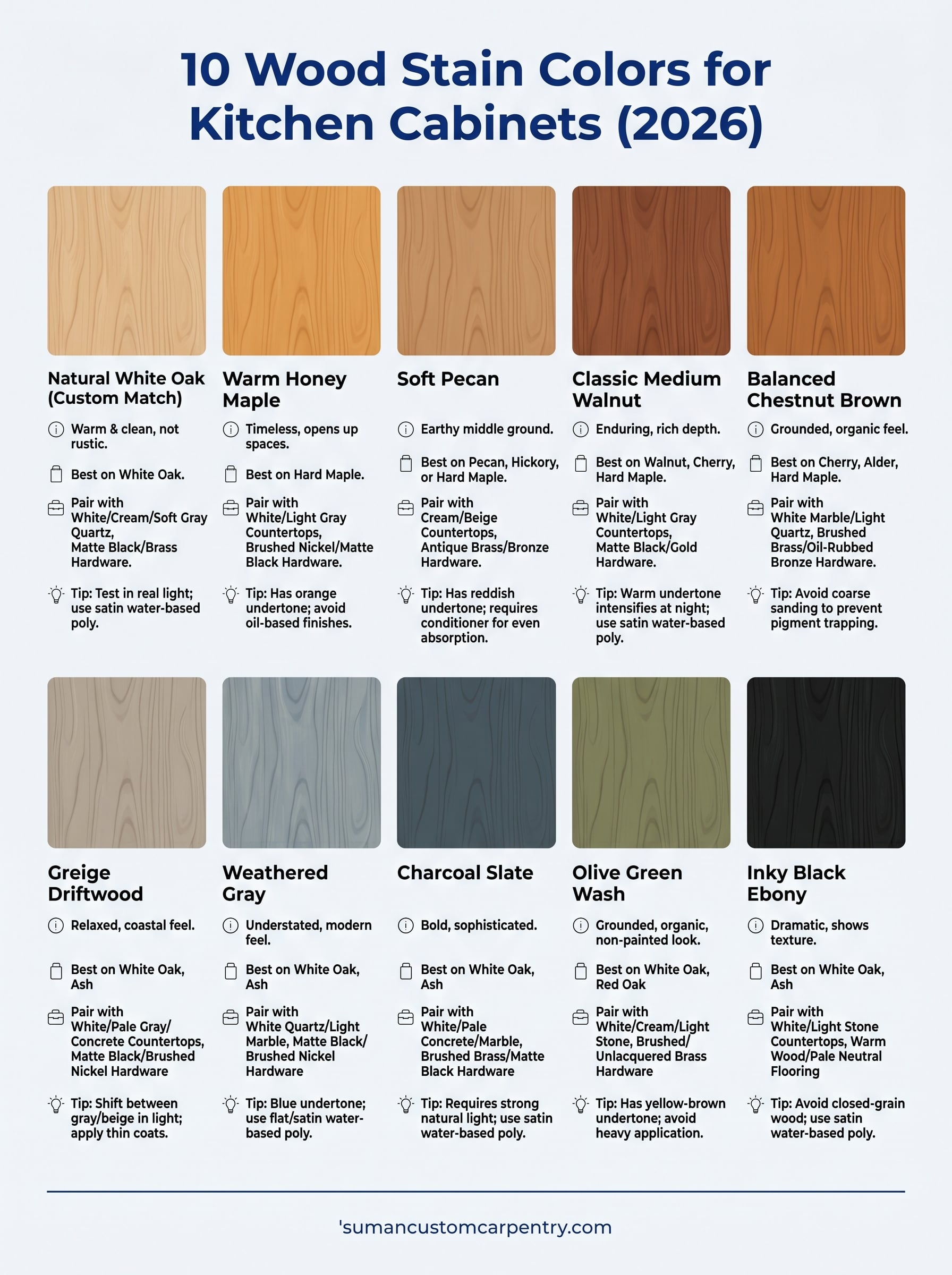
This guide breaks down 10 wood stain colors worth considering in 2026, from warm honey tones to rich, moody darks. For each one, we’ll cover what wood species it works best on, where it shines in a kitchen design, and what to watch out for before committing. Whether you’re planning a full kitchen build or refinishing existing cabinetry, this list will help you narrow down your options with confidence.
1. Natural white oak with a custom match
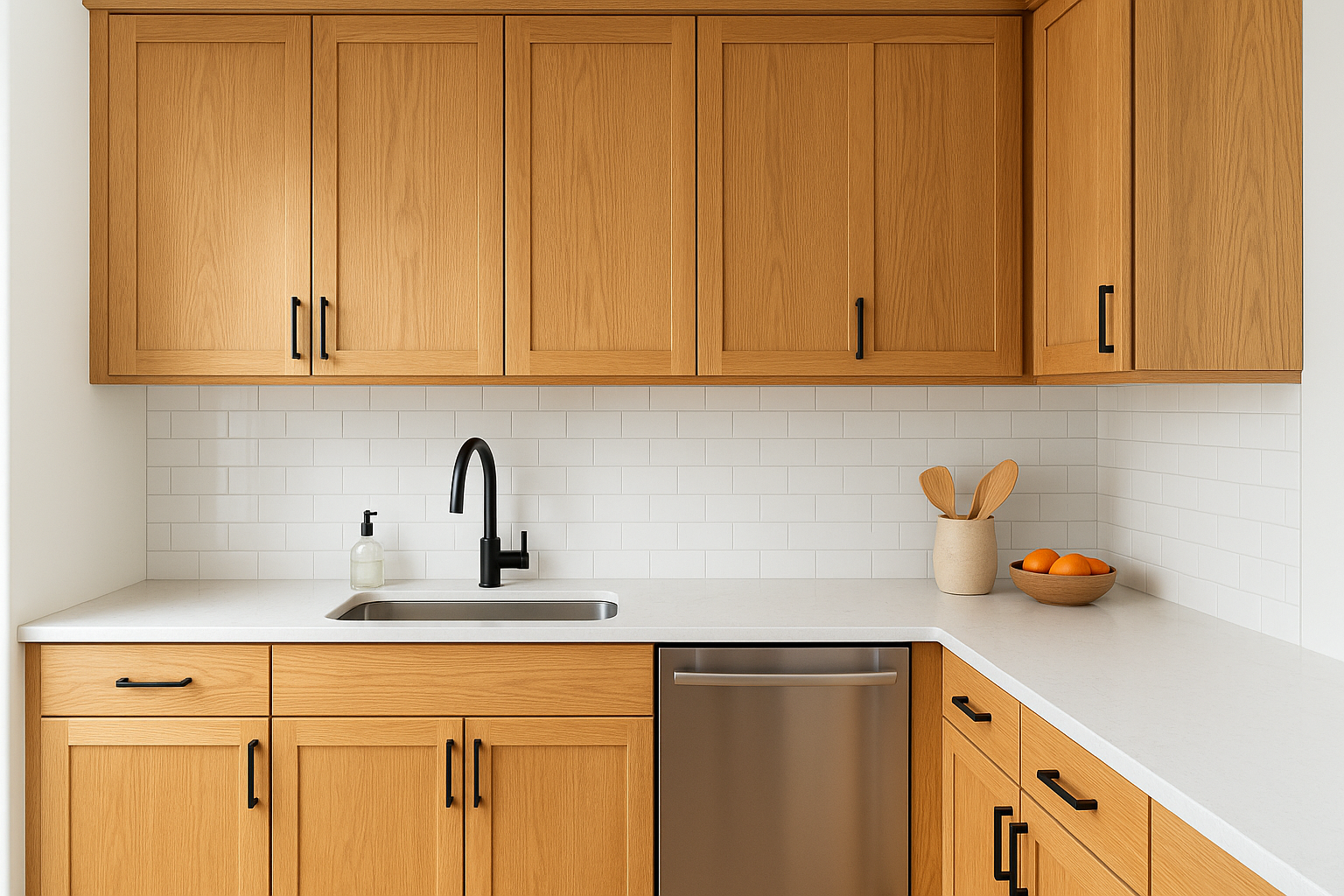
Natural white oak stained with a custom-matched finish is the most-requested look we see heading into 2026. It reads warm and clean without leaning too rustic or too modern, which makes it one of the most versatile wood stain colors for kitchen cabinets on this entire list.
See the undertone in real light
White oak carries a subtle golden or green undertone depending on the cut and the board. Sample your chosen stain in your actual kitchen under both natural daylight and your artificial lighting before committing. What reads as neutral in a showroom can shift noticeably warm or cool once it’s on your walls.
A stain sample applied directly to your cabinet wood, viewed in your kitchen at different times of day, is the only reliable way to confirm the final color before you commit.
Pair it with countertops, flooring, and hardware
For countertops, white, cream, or soft gray quartz and stone sit best alongside a natural white oak tone. Matte black or brushed brass hardware both complement the warm wood well. If your floors are also wood, aim for a lighter or clearly contrasting tone so the kitchen doesn’t feel like one uniform slab of brown.
Choose the right wood species and grain
White oak is the strongest species choice for this look because its tight, consistent grain takes stain evenly and avoids the blotchy result you get with pine or soft maple. Rift-sawn or quarter-sawn cuts give you the cleanest face, which lets the stain color read clearly rather than getting buried under a wild, swirling grain pattern.
Pick a sheen and topcoat that lasts
For white oak cabinets, a satin or low-sheen water-based polyurethane gives you day-to-day durability without making the wood look plastic. Skip high-gloss finishes on natural oak tones entirely; they catch every fingerprint and surface scratch in a working kitchen and age poorly within a few years.
Avoid common staining mistakes
The biggest mistake with white oak is skipping wood conditioner before applying stain. Even tight-grained oak absorbs unevenly in spots, which leads to streaks and patchy color. Sand to 180-grit minimum, wipe off all dust with a tack cloth, apply conditioner, let it dry completely, and only then pick up your stain brush.
2. Warm honey maple
Warm honey maple is one of the most timeless wood stain colors for kitchen cabinets, and it’s holding strong into 2026. This finish sits in the golden-amber range, bright enough to open up a smaller kitchen but rich enough to feel intentional and designed.
See the undertone in real light
Honey maple carries a distinctly orange-leaning undertone that intensifies under warm incandescent or halogen bulbs. Test your sample in both natural daylight and evening lighting before you finalize your order, because this color can read as caramel or deep orange depending on the light source in your kitchen.
Viewing your stain sample at night under your kitchen’s actual bulbs is just as important as seeing it in daylight.
Pair it with countertops, flooring, and hardware
White or light gray countertops create a clean contrast that prevents the honey tone from overwhelming the space. Brushed nickel and matte black hardware both work well. Keep your flooring clearly lighter or darker than the cabinet tone so everything doesn’t blend together into one flat plane.
Choose the right wood species and grain
Hard maple is the natural choice here because its smooth, fine grain absorbs stain with almost no blotching. Avoid ash or hickory for this finish, since their open grain patterns break up the clean honey color and produce an uneven result.
Pick a sheen and topcoat that lasts
A satin water-based polyurethane protects honey maple without dulling the warmth. Oil-based finishes tend to amber further over time, which pushes the color into orange territory within a few years.
Avoid common staining mistakes
Applying stain over unsealed or poorly sanded maple is the fastest way to get blotchy, uneven color. Sand to 180-grit, use a pre-stain wood conditioner, and apply your stain in thin, even coats with a quality brush or cloth.
3. Soft pecan
Soft pecan sits in the warm, earthy middle ground between honey maple and chestnut brown, making it one of the most approachable wood stain colors for kitchen cabinets in 2026. It reads as a natural, sun-warmed tan with a hint of red that grounds a kitchen without pulling it too dark.
See the undertone in real light
Pecan stains carry a subtle reddish-brown undertone that shifts noticeably depending on the direction your kitchen faces. North-facing kitchens with cooler light tend to mute the warmth, so test your sample on the actual cabinet wood in your specific kitchen before making a final call.
A pecan stain that looks perfectly balanced in the afternoon can read as noticeably redder once evening lighting takes over.
Pair it with countertops, flooring, and hardware
Cream, off-white, and warm beige countertops complement soft pecan without competing with its natural warmth. Brushed bronze or antique brass hardware pulls out the reddish depth in the stain beautifully. Keep your flooring in a clearly lighter tone to avoid the space feeling heavy.
Choose the right wood species and grain
Actual pecan or hickory wood is the obvious choice, but both species have a pronounced, open grain that creates visible variation in the final color. If you prefer a more even result, hard maple takes pecan-toned stains smoothly and consistently.
Pick a sheen and topcoat that lasts
A satin water-based polyurethane works best here. Oil-based topcoats tend to push the warmth further red over time, which can throw off the balanced tone you started with.
Avoid common staining mistakes
Hickory and pecan absorb stain unevenly across their grain, so skipping a pre-stain conditioner will leave blotchy patches. Sand to 180-grit minimum and condition the wood fully before applying your first coat.
4. Classic medium walnut
Classic medium walnut is one of the most enduring wood stain colors for kitchen cabinets, and it remains a strong choice in 2026. It lands in the rich, warm brown range with just enough depth to feel substantial without darkening your kitchen the way a deep espresso finish would.
See the undertone in real light
Medium walnut stains carry a warm, red-brown undertone that surfaces quickly under incandescent lighting. Test your sample in your actual kitchen under both natural daylight and your evening bulbs, because the red tone can intensify significantly once the sun goes down.
Always apply your stain sample directly to the wood species you’re using, not to a chip card or a sample board made from a different wood.
Pair it with countertops, flooring, and hardware
White, light gray, or cream countertops give medium walnut the contrast it needs to stay visually balanced. Brushed gold or matte black hardware both complement the brown warmth without competing with it. Keep your flooring either clearly lighter or noticeably darker than the cabinet tone to avoid a flat, one-note look.
Choose the right wood species and grain
Walnut and cherry are the strongest species choices because both absorb pigment evenly and showcase warm depth naturally. Hard maple also takes this stain well if you want a smoother, more consistent grain surface with less visible variation.
Pick a sheen and topcoat that lasts
A satin water-based polyurethane preserves the natural warmth without adding a plastic-looking sheen. Oil-based finishes will push the color noticeably redder within a few years.
Avoid common staining mistakes
Sand to at least 180-grit before applying any stain on walnut-toned finishes. Coarser sanding leaves visible scratches that catch the dark pigment and show clearly through the final topcoat.
5. Balanced chestnut brown
Balanced chestnut brown sits at the intersection of warm and rich, giving your kitchen a grounded, organic feel without tipping into the darker espresso territory. This is one of the wood stain colors for kitchen cabinets that works just as well in a traditional Cape Cod kitchen as it does in a cleaner, more transitional space.
See the undertone in real light
Chestnut brown carries a red-orange undertone that can shift dramatically depending on the light in your kitchen. Test your stain sample on your actual cabinet wood and view it at multiple times of day, since afternoon sun and evening bulbs will read the color very differently.
The undertone in chestnut brown intensifies significantly under warm incandescent lighting, so always confirm your sample at night before you commit.
Pair it with countertops, flooring, and hardware
White marble, light quartz, or cream-toned stone countertops balance the depth of chestnut without washing it out. Brushed brass or oil-rubbed bronze hardware draws out the warmth naturally. Keep your flooring in a noticeably lighter or distinctly darker tone to give the cabinets room to anchor the space visually.
Choose the right wood species and grain
Cherry and alder are the strongest species choices for chestnut brown because both absorb pigment evenly and carry natural warmth in the wood itself. Hard maple also works well if you want a tighter, more consistent grain surface with less variation in the final finish.
Pick a sheen and topcoat that lasts
A satin water-based polyurethane protects the finish without pushing the color further red over time. Oil-based topcoats will amber the chestnut tone within a few years.
Avoid common staining mistakes
Sand to 180-grit minimum before applying any stain. Coarser grits leave scratch marks that trap dark pigment and show through the topcoat on a warm, mid-tone finish like chestnut.
6. Greige driftwood
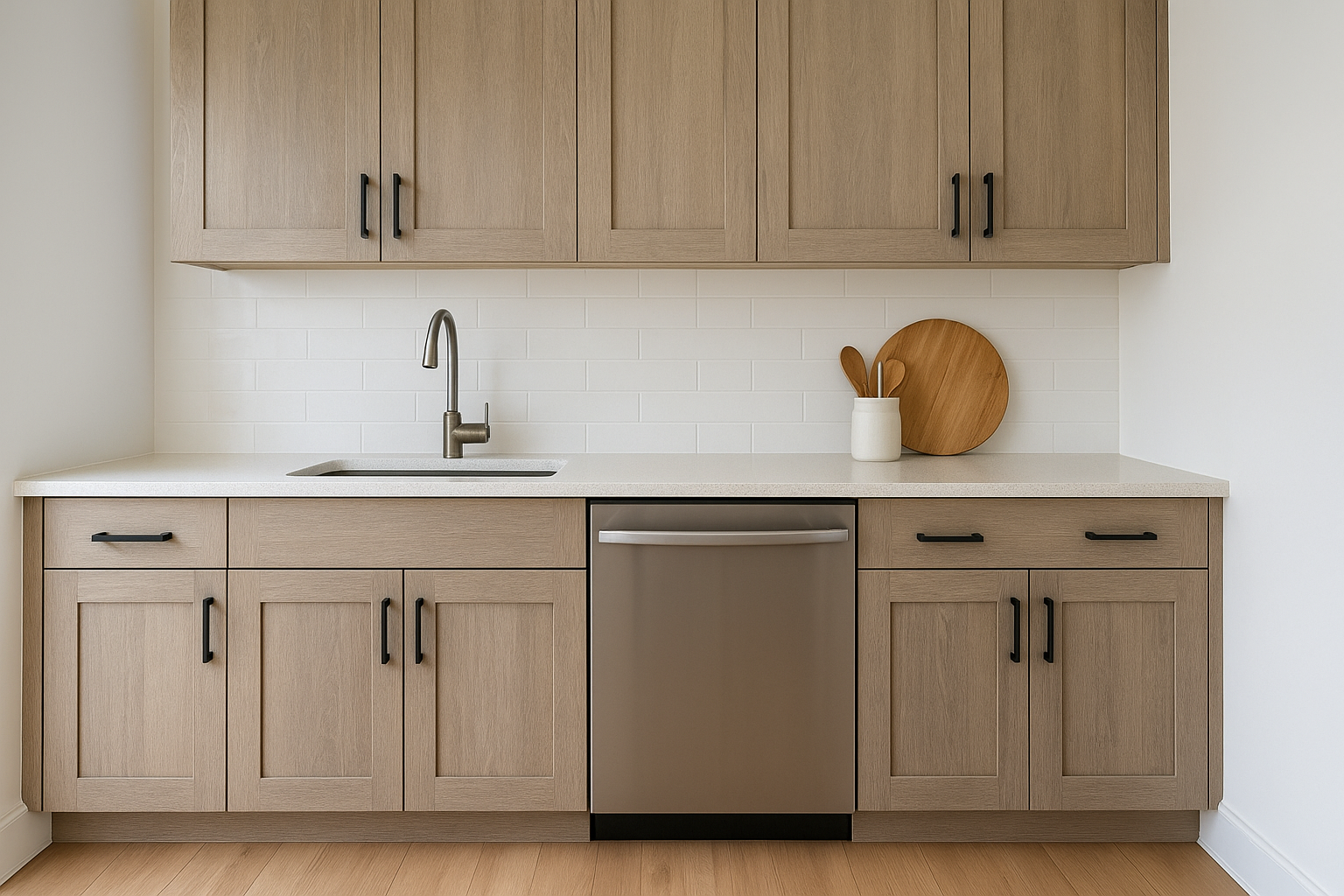
Greige driftwood blends cool gray and warm beige into a finish that feels relaxed without looking unfinished. It’s one of the wood stain colors for kitchen cabinets that fits naturally in coastal homes, where soft, weathered tones reflect the landscape outside. In Cape Cod kitchens especially, this finish lands well because it mirrors the light-bleached palette the region is known for.
See the undertone in real light
Greige driftwood stains carry both cool and warm undertones simultaneously, which makes them sensitive to your kitchen’s lighting. Under natural daylight the finish reads closer to gray, while warm artificial bulbs pull the beige side forward noticeably. Test your sample on the actual cabinet wood at different times of day before you finalize anything.
A greige stain that looks balanced at noon can lean clearly warmer or cooler once your kitchen’s evening lighting takes over.
Pair it with countertops, flooring, and hardware
White, pale gray, or soft concrete-look countertops complement greige driftwood without pulling the tone in either direction. Matte black or brushed nickel hardware both keep the look grounded. Keep your flooring clearly lighter or distinctly darker so the cabinets hold their own visual weight in the room.
Choose the right wood species and grain
White oak and ash are the strongest choices because their open grain shows through the translucent greige tone and adds natural texture to the finish. Avoid soft maple here, since its closed grain absorbs the color too flatly and loses the driftwood character entirely.
Pick a sheen and topcoat that lasts
A flat or satin water-based polyurethane works best because higher sheen levels fight the matte, weathered quality this finish projects. Oil-based topcoats will amber over time and push the tone warmer than you intended.
Avoid common staining mistakes
Greige is a layered, multi-pigment stain, so applying it too heavily in one coat produces muddy, uneven color. Work in thin, consistent passes, let each coat dry fully, and sand lightly between coats with 220-grit paper to keep the finish smooth and even.
7. Weathered gray
Weathered gray delivers a cool, understated finish that reads as intentional and modern without veering into the cold, clinical look that a straight gray paint would produce. As one of the more distinct wood stain colors for kitchen cabinets, it shows the natural grain of the wood through a translucent gray layer, which keeps it from feeling flat.
See the undertone in real light
Weathered gray stains carry a blue-gray undertone that shifts noticeably depending on your light source. Kitchens with large windows facing north will push the finish toward a cooler, icier tone, while warmer bulbs pull a subtle silver warmth forward. Test your sample at different times of day before committing.
Apply your stain sample to the actual wood you’re using and check it under both daylight and your evening kitchen lights before you finalize anything.
Pair it with countertops, flooring, and hardware
White quartz or light marble countertops work best here because they reflect light back into the space and prevent the gray from feeling heavy. Matte black hardware sharpens the contrast, while brushed nickel keeps the look softer. Your flooring should sit clearly lighter or have a warm wood tone so the cabinets don’t blend into the floor.
Choose the right wood species and grain
White oak and ash are the strongest choices because their visible, open grain breaks up the gray tone and gives the finish texture and character.
Pick a sheen and topcoat that lasts
A flat or satin water-based polyurethane preserves the cool, matte quality. Oil-based topcoats amber over time and fight the gray tone directly.
Avoid common staining mistakes
Apply weathered gray in thin, even coats and avoid over-brushing wet stain. Heavy application fills the grain and produces a muddy, opaque result rather than the layered, translucent finish this color requires.
8. Charcoal slate
Charcoal slate is one of the boldest wood stain colors for kitchen cabinets on this list, delivering a deep, cool-toned finish that still lets the natural grain of the wood show through. It works best in kitchens with strong natural light, where the translucent dark tone reads as sophisticated rather than heavy.
See the undertone in real light
Charcoal slate carries a cool blue-gray undertone that shifts visibly depending on your light source. Kitchens with warm bulbs can pull a faint silver or purple cast out of the stain, so always test your sample on the actual cabinet wood in your kitchen before finalizing your choice.
View your stain sample under both natural daylight and your evening kitchen lighting before you commit to this finish.
Pair it with countertops, flooring, and hardware
White quartz, light concrete, or pale marble countertops give charcoal slate the contrast it needs to stay visually balanced. Matte black hardware blends seamlessly into the dark tone, while brushed brass adds a sharp, warm contrast that lifts the whole kitchen. Keep your flooring in a noticeably lighter or warmer tone so the cabinets anchor the space without closing it in.
Choose the right wood species and grain
White oak and ash are the best choices here because their open grain stays visible through the dark pigment and prevents the finish from reading as a flat, painted surface.
Pick a sheen and topcoat that lasts
A satin water-based polyurethane preserves the cool depth without adding a mirror-like sheen that shows every fingerprint.
Avoid common staining mistakes
Apply charcoal slate in thin, even coats and avoid overloading your brush. Heavy application fills the grain and turns a layered, dimensional finish into a flat, muddy result.
9. Olive green wash
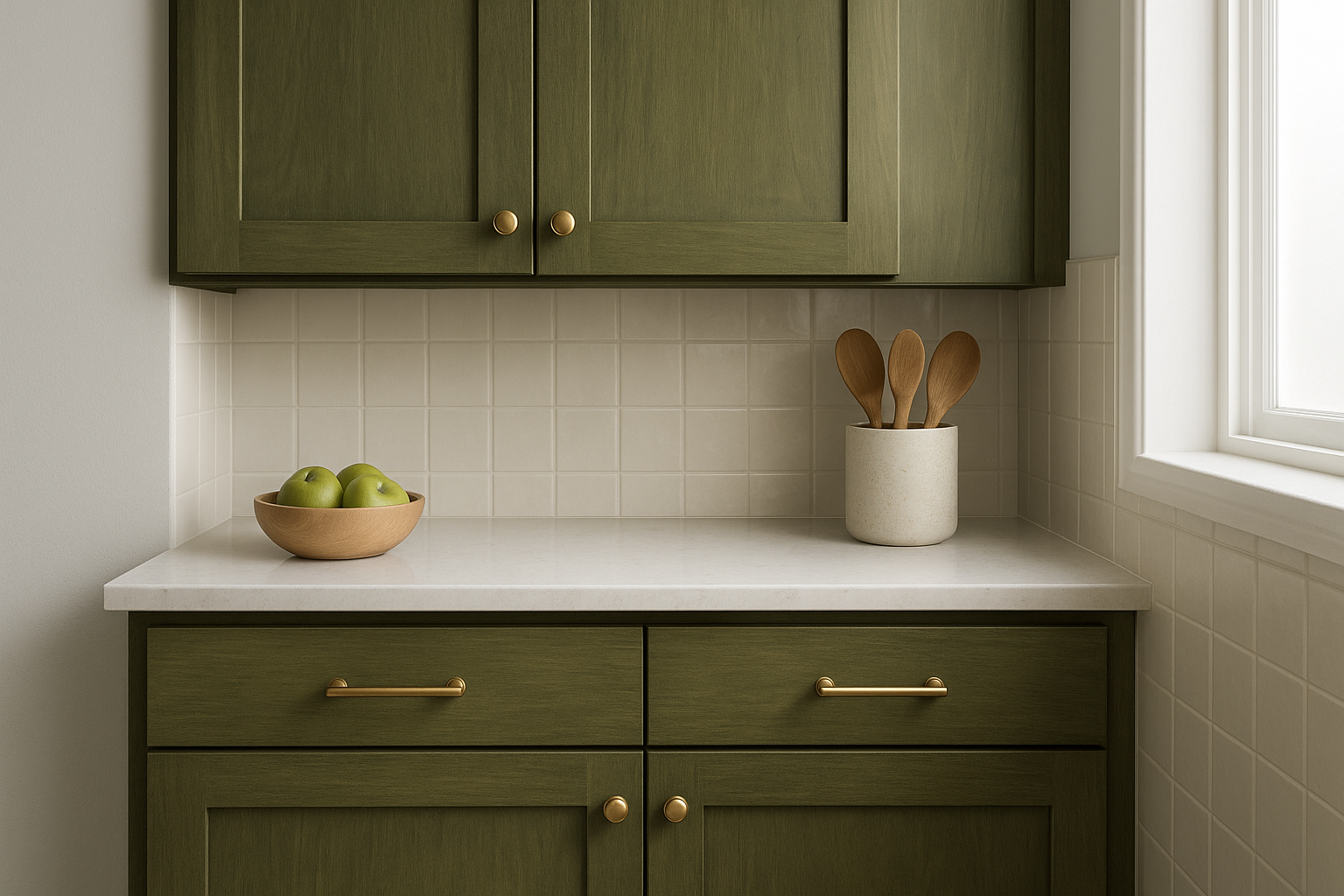
Olive green wash is one of the more unexpected wood stain colors for kitchen cabinets gaining traction in 2026, but it makes strong design sense. The finish delivers a muted, earthy green tone that still lets the natural grain read through, giving your kitchen a grounded, organic feel without committing to a full painted look.
See the undertone in real light
Olive green stains carry a yellow-brown undertone beneath the green that shifts significantly depending on your kitchen’s light. In kitchens with warm artificial bulbs, the finish pulls noticeably more golden, while natural daylight keeps the green balanced and clear. Test your stain sample on the actual cabinet wood at different times of day before finalizing your decision.
Checking your stain sample under both morning and evening light in your kitchen is the only way to confirm how the olive tone will actually live in your space.
Pair it with countertops, flooring, and hardware
White, cream, or light stone countertops complement olive green wash without competing with the earthy tone. Brushed brass or unlacquered brass hardware draws out the golden undertone beautifully. Keep your flooring in a clearly lighter or warmer neutral so the cabinets stay visually distinct.
Choose the right wood species and grain
White oak and red oak are the strongest choices here because their open grain adds texture and prevents the green wash from reading as flat or painted. Avoid maple for this finish, since its tight grain absorbs the color too evenly and loses the layered, organic quality the wash technique requires.
Pick a sheen and topcoat that lasts
A flat or satin water-based polyurethane preserves the matte, earthy character of the finish. Oil-based topcoats amber over time and shift the olive tone toward yellow-brown, which throws off the green balance you started with.
Avoid common staining mistakes
Apply olive green wash in thin, even passes and avoid working over wet stain. Heavy-handed application fills the grain and produces a solid, painted appearance rather than the translucent, layered quality this finish depends on for its character.
10. Inky black ebony
Inky black ebony is the most dramatic of all the wood stain colors for kitchen cabinets on this list, and it’s gaining real traction in 2026. This finish delivers a deep, near-opaque black tone while still letting subtle grain texture show through, which is what separates it from a standard painted cabinet.
See the undertone in real light
Black ebony stains can carry a cool blue or slightly warm brown undertone depending on the brand and the wood species underneath. Test your sample on the actual cabinet wood in your kitchen under both natural and artificial light before committing, since the grain still influences how the final color reads even at this depth.
The difference between a blue-black and a brown-black ebony finish is subtle on a chip card but very visible across a full set of cabinet doors.
Pair it with countertops, flooring, and hardware
White or light stone countertops are the strongest pairing because they give the dark cabinets a clean visual break. Keep your flooring in a warm wood tone or pale neutral so the cabinets anchor the kitchen without making the space feel closed in.
Choose the right wood species and grain
White oak and ash work best here because their open grain stays visible through the black pigment, giving the finish depth and texture rather than a flat, painted appearance. Avoid closed-grain species like hard maple, which absorbs the pigment too uniformly and loses the grain character entirely.
Pick a sheen and topcoat that lasts
Use a satin water-based polyurethane to protect the finish without creating a high-gloss surface that catches every fingerprint and smudge in a working kitchen.
Avoid common staining mistakes
Apply ebony stain in thin, controlled coats and let each layer dry fully before adding the next. Overloading the wood fills the grain and produces a flat, lacquer-like result instead of the layered depth this finish depends on.
What to do next
You now have a solid starting point for narrowing down wood stain colors for kitchen cabinets that will actually work in your space. The next step is getting samples on real wood, not chip cards, and testing them in your kitchen under your actual lighting before you commit to anything. The right stain color makes a significant difference in how your finished kitchen looks and holds up over time.
At Suman Custom Carpentry, we build every cabinet by hand at our shop in Hyannis, Cape Cod, and we work through the stain selection process directly with each client from the start. If you’re planning a kitchen renovation and want to work through your options with someone who knows the craft, reach out to our team at Suman Custom Carpentry to start a conversation about your project.