
A cramped bathroom doesn’t have to feel like one. The difference between a bathroom that frustrates you every morning and one that actually works comes down to how you use your walls, corners, and vertical space. If you’ve been searching for bathroom shelving and storage ideas, you’re probably dealing with a space that’s short on square footage but full of products, towels, and daily essentials that need a proper home. The good news: small bathrooms respond incredibly well to smart storage solutions.
At Suman Custom Carpentry, we design and build custom shelving, vanities, and built-ins at our shop in Hyannis for homeowners across Cape Cod, and bathrooms are one of the spaces where custom work makes the biggest impact. We’ve seen firsthand how a few well-planned storage pieces can completely transform a tight bathroom into something that feels open and organized.
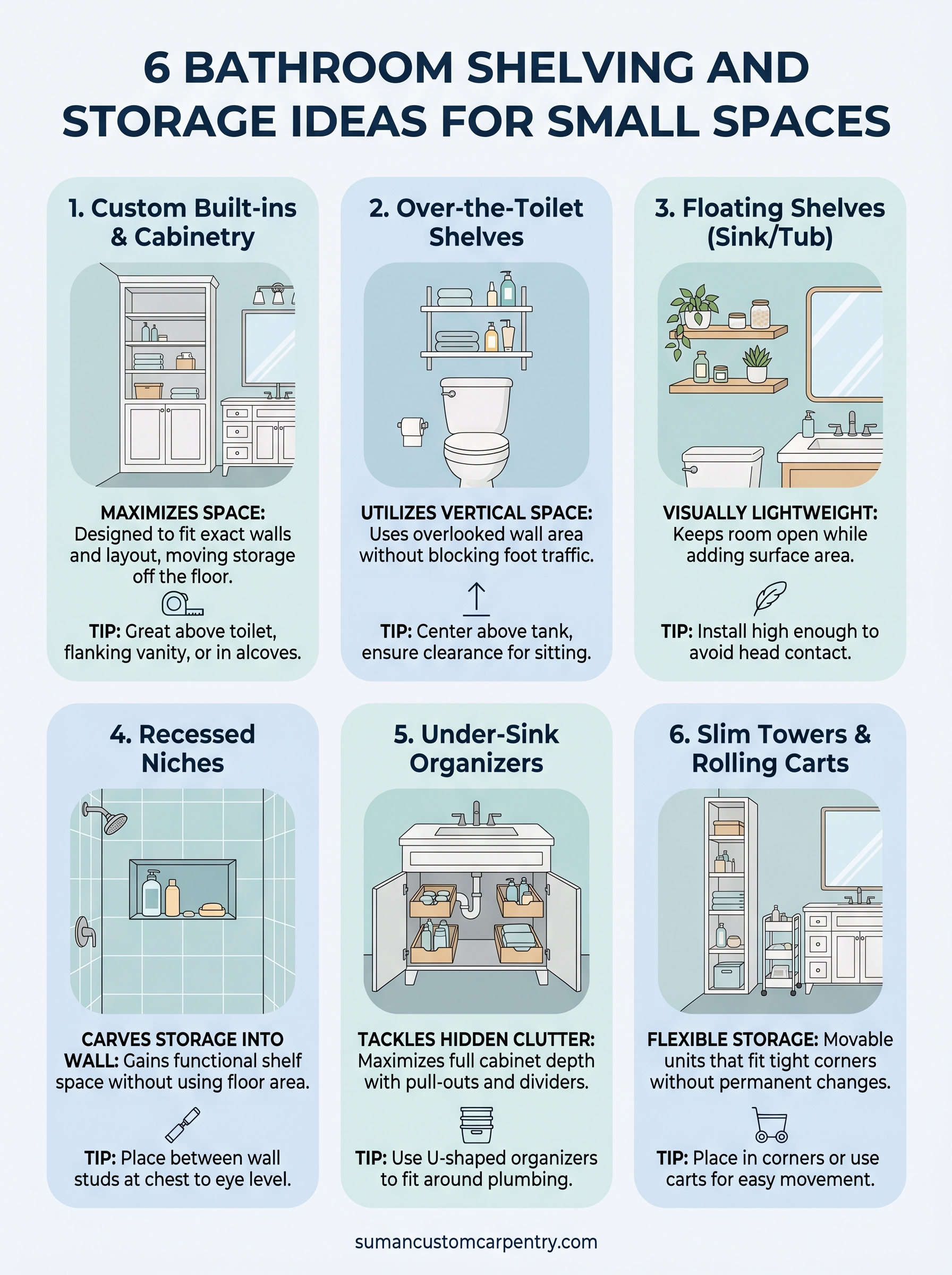
This article breaks down six practical shelving and storage ideas that work specifically in smaller bathrooms. From floating shelves to recessed cabinets, each option includes what to consider, where it works best, and how to get the most out of limited space. Whether you’re planning a full remodel or just looking for a weekend upgrade, you’ll walk away with ideas you can actually use.
1. Custom built-in shelving and cabinetry
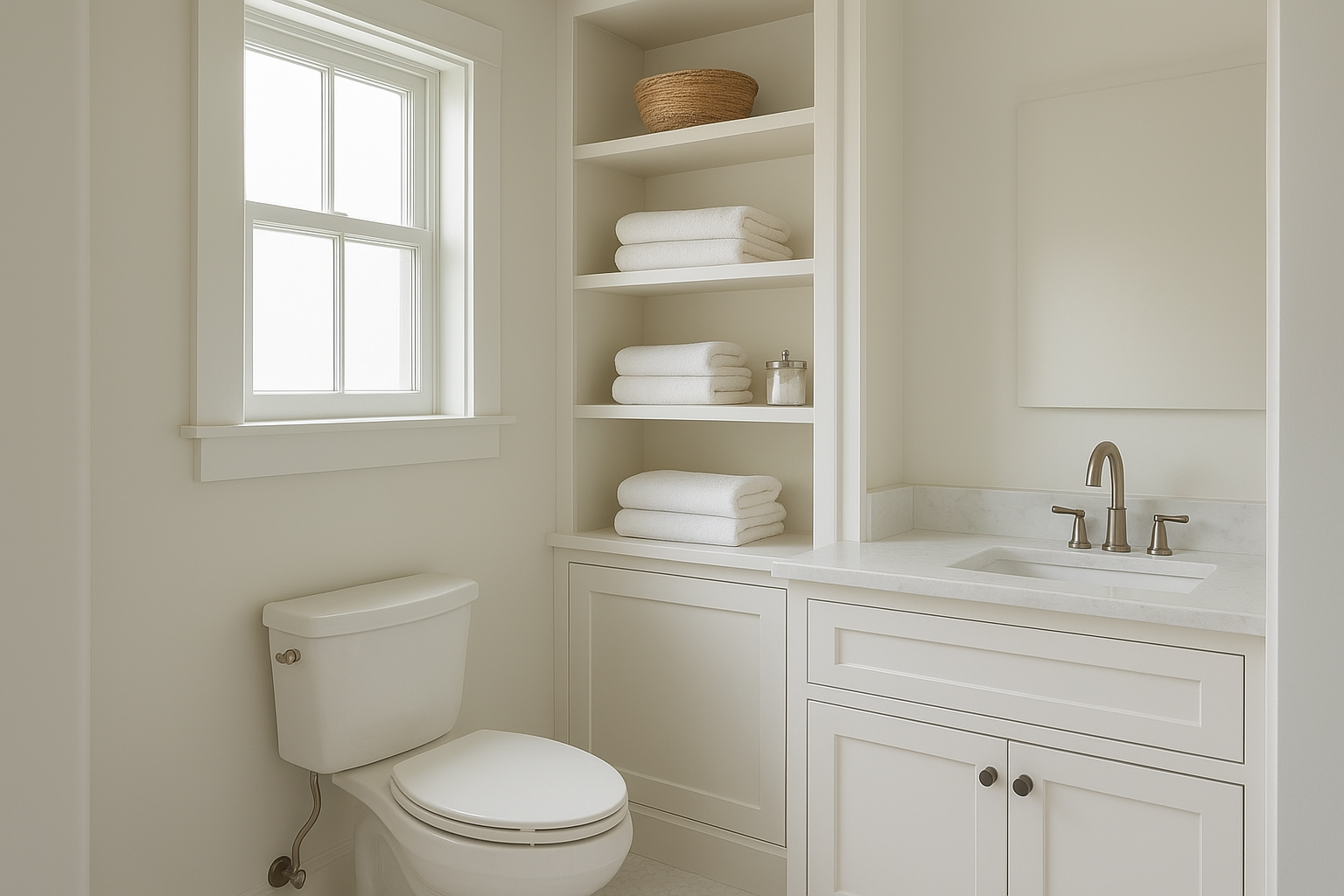
Custom built-ins are one of the most effective bathroom shelving and storage ideas available because they use every inch of your available space rather than working around it. Unlike freestanding or prefab options, built-in cabinetry is designed to fit your exact walls, ceiling height, and layout, which means you stop losing space to awkward gaps and dead corners.
What it solves in small bathrooms
In a small bathroom, floor space is the most valuable thing you have. Built-in shelving moves storage off the floor and into the walls or along vertical runs, freeing up room to move around. You can store towels, toiletries, cleaning supplies, and extra paper without adding a single piece of furniture to your floor plan.
Custom built-ins effectively expand your usable storage without expanding your bathroom’s footprint.
Best layout and placement tips
The most effective placements are above the toilet, flanking the vanity, or tucked into a recessed alcove if your wall depth allows it. If you have a wall between the door and the shower, that stretch is often a great run for floor-to-ceiling cabinetry. Think vertically: shelves that extend all the way up store items you rarely use at the top and keep daily essentials at arm’s reach below.
Materials and moisture-proofing
Bathrooms are high-humidity environments, so material selection matters more here than in almost any other room. Solid wood with a quality sealer, marine-grade plywood, or MDF with a moisture-resistant primer are all reliable choices. At Suman Custom Carpentry, we hand-build bathroom cabinets in-house and select materials suited for coastal Cape Cod conditions, where salt air and humidity are year-round factors rather than seasonal ones.
Typical cost range
Custom built-in bathroom cabinetry typically runs $1,500 to $5,000 or more depending on size, materials, and complexity. A single recessed cabinet costs far less than a full wall of floor-to-ceiling built-ins, so the range reflects real variation. The investment pays off in usability, durability, and resale value, especially in a market like Cape Cod where quality finishes matter to buyers.
2. Over-the-toilet shelves and cabinets
The space above your toilet is one of the most overlooked areas when people explore bathroom shelving and storage ideas. Most small bathrooms leave that wall completely bare, which means you’re wasting a vertical run of usable space that doesn’t interfere with foot traffic or floor layout.
What it solves in small bathrooms
Over-the-toilet storage gives you a place to keep towels, toilet paper, and personal care products without touching any floor space. For tight bathrooms, this one addition can clear the clutter that accumulates on countertops and windowsills, making the whole room feel more controlled.
Best layout and placement tips
Shelves work best when they’re centered above the tank and spaced high enough that someone sitting down won’t bump their head. A closed cabinet keeps the look clean and hides products you’d rather not display. Open shelves suit decorative storage, while enclosed units work better for everyday essentials.
This spot rewards you with practical storage precisely because it’s a wall most people never think to use.
Materials and moisture-proofing
Choose water-resistant finishes like sealed wood, PVC, or moisture-resistant MDF for this location. Humidity from flushing and showering builds up fast here, so unsealed wood or standard particleboard will warp over time.
Typical cost range
Prefab over-the-toilet units run $50 to $300 at most home improvement stores. A custom-built option tailored to your exact wall dimensions and finish preferences typically starts around $400 to $800.
3. Floating shelves over the sink or tub
Floating shelves are one of the most visually lightweight bathroom shelving and storage ideas you can add to a small space. Because they attach directly to the wall with no visible cabinet box underneath, they keep the room feeling open while still giving you usable surface area for everyday items.
What it solves in small bathrooms
Floating shelves solve the problem of surface clutter with no floor penalty. Over the sink, they put your most-used products within arm’s reach. Over the tub, they hold shampoo, soap, and candles without blocking natural light or making the room feel boxed in.
A pair of floating shelves above the sink can replace a cluttered countertop entirely.
Best layout and placement tips
Install shelves high enough to avoid head contact but low enough to reach comfortably. Two or three staggered shelves tend to work better than a single wide one because they let you vary what you store at each level and add visual interest to an otherwise plain wall.
Materials and moisture-proofing
Avoid raw wood in wet zones without a proper sealer or waterproof finish. Sealed hardwood, powder-coated metal, and tempered glass all hold up well near a sink or tub where splashing and steam are constant.
Typical cost range
Floating shelf brackets and boards from hardware stores typically run $20 to $150 per shelf. Custom-built floating shelves with a matched finish start around $200 to $600 depending on material and size.
4. Recessed niches and wall cut-ins
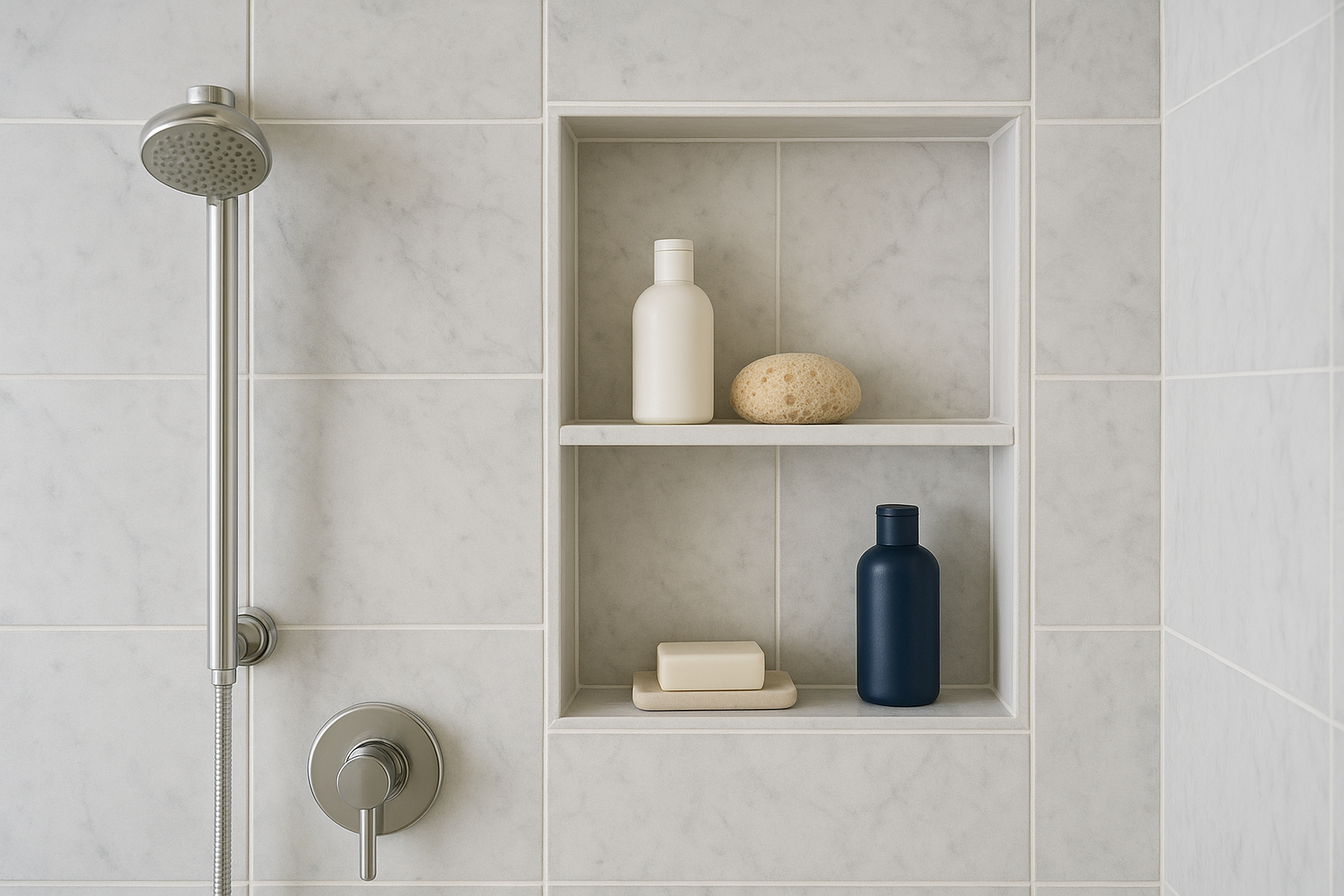
Recessed niches take bathroom shelving and storage ideas in a different direction entirely. Instead of adding something to your wall, you carve storage into it, which means you gain functional shelf space without consuming a single inch of floor or surface area.
What it solves in small bathrooms
A recessed niche works particularly well in the shower or above the tub where freestanding options aren’t viable. You get dedicated spots for shampoo, soap, and razors without relying on hanging caddies that drip and rust over time. Niches also remove the visual clutter of products lining the tub edge, which makes even a compact shower feel more intentional.
Best layout and placement tips
Cut niches between wall studs, which gives you a standard opening of roughly 14 inches wide. In the shower, place them at chest to eye level so everything stays easy to reach. Outside the shower, a niche beside the toilet or flanking the vanity works well for rolled towels or small decorative items.
Positioning your niche between studs keeps the project structurally straightforward and avoids costly surprises.
Materials and moisture-proofing
Shower niches need waterproof tile or solid surface material covering all interior faces. Grout lines should be sealed thoroughly because water intrusion behind the wall causes mold and long-term structural damage.
Typical cost range
A basic tiled shower niche runs $200 to $600 installed. Custom options with decorative tile or built-in lighting push costs to $800 and above.
5. Under-sink organizers and drawer upgrades
The cabinet under your sink is one of the most underused storage spots in any bathroom. Most people push a few items under there and call it done, but with the right organizers and drawer inserts, that space can handle a surprising amount of daily clutter. This is one of the more accessible bathroom shelving and storage ideas because you don’t need to touch your walls or hire a contractor to get started.
What it solves in small bathrooms
Under-sink storage tackles the hidden clutter problem that makes small bathrooms feel chaotic even when the countertop looks clean. Pull-out drawers and tiered organizers let you use the full depth of the cabinet instead of piling items in a single layer that’s impossible to sort through quickly.
Best layout and placement tips
Work around your plumbing by using U-shaped or adjustable organizers designed to fit around pipes. Stackable bins, pull-out drawers, and tension rod dividers all maximize what you can store without requiring permanent modifications.
Treating under-sink storage like a real drawer rather than a dumping ground transforms how functional your bathroom feels on a daily basis.
Materials and moisture-proofing
Choose plastic, coated wire, or sealed wood organizers that won’t warp if a pipe drips. Avoid cardboard or untreated wood bins in this location since humidity under the sink stays consistently high.
Typical cost range
Prefab under-sink organizers run $20 to $150 at most home improvement stores. A custom-built pull-out drawer system starts around $300 to $700 depending on cabinet size and materials.
6. Slim freestanding towers and rolling carts
Not every bathroom shelving and storage idea requires drilling into walls or hiring a contractor. Slim freestanding towers and rolling carts give you flexible, movable storage that fits into tight corners and beside vanities without any permanent changes to your bathroom layout.
What it solves in small bathrooms
Freestanding towers and carts solve the flexibility problem that built-ins can’t. If your bathroom layout changes, or you’re renting and can’t modify walls, these units let you add storage immediately without committing to a permanent installation. You can reposition them as your needs shift and take them with you when you move.
Best layout and placement tips
Place slim towers in corners or beside the vanity where they fill dead space without blocking movement. Rolling carts work especially well when you need to move them out of the way during cleaning or when multiple people share one bathroom.
A narrow tower tucked into a corner adds several shelves of storage without claiming more than a square foot of floor space.
Materials and moisture-proofing
Look for rust-resistant metal, sealed bamboo, or plastic construction. Avoid open-grain wood that hasn’t been properly finished, since bathroom humidity will cause it to warp and swell within months and leave you replacing the unit sooner than expected.
Typical cost range
Freestanding towers run $30 to $200 at most home retailers. Rolling carts start around $25 for basic wire versions and climb to $150 or more for solid-sided units with multiple drawers.
Next steps for a tidier bathroom
The right bathroom shelving and storage ideas don’t require a full renovation to make a real difference. Start by identifying where your biggest pain points are: a countertop that stays cluttered, a shower with no dedicated product storage, or a vanity cabinet that’s impossible to navigate. Solving one problem at a time keeps the project manageable and lets you see results quickly.
If you’re ready for something more permanent, custom built-ins and vanity upgrades give you storage that’s built around your specific space rather than worked into it. At Suman Custom Carpentry, we design and hand-build bathroom cabinetry at our Hyannis shop for homeowners across Cape Cod. Every piece is made to fit your exact layout and finish preferences, and built to handle the humidity that comes with coastal living year-round. Contact us to start your custom bathroom project and we’ll walk you through the options from the first conversation.