
If you’re planning a kitchen renovation on Cape Cod, one of the first questions you’ll ask is: what does kitchen cabinet replacement cost actually look like in 2026? It’s a fair question, and one without a simple answer, because pricing shifts dramatically based on cabinet type, materials, layout complexity, and whether you’re going with stock, semi-custom, or fully custom-built cabinetry.
At Suman Custom Carpentry, we design and hand-build custom kitchen cabinets right here in our Hyannis shop. Over seven-plus years of building kitchens across Cape Cod, we’ve watched clients wrestle with confusing price ranges and vague estimates. That experience gave us a clear picture of what drives costs up, what keeps them reasonable, and where homeowners tend to overspend or underbudget.
This guide breaks down current national averages, cost-per-linear-foot estimates, material and labor pricing, and the real differences between stock and custom options. Whether you’re replacing a few cabinets or gutting the entire kitchen, you’ll walk away with the numbers you need to set a realistic budget, and the context to understand what you’re actually paying for.
Why kitchen cabinet replacement costs vary
Kitchen cabinet replacement cost varies because no two kitchens are built the same way. Your total spending depends on cabinet type, material quality, kitchen size, and layout complexity working together. Before you set a number, you need to understand which of those factors pulls the hardest on the final price.
Cabinet type: stock, semi-custom, or custom
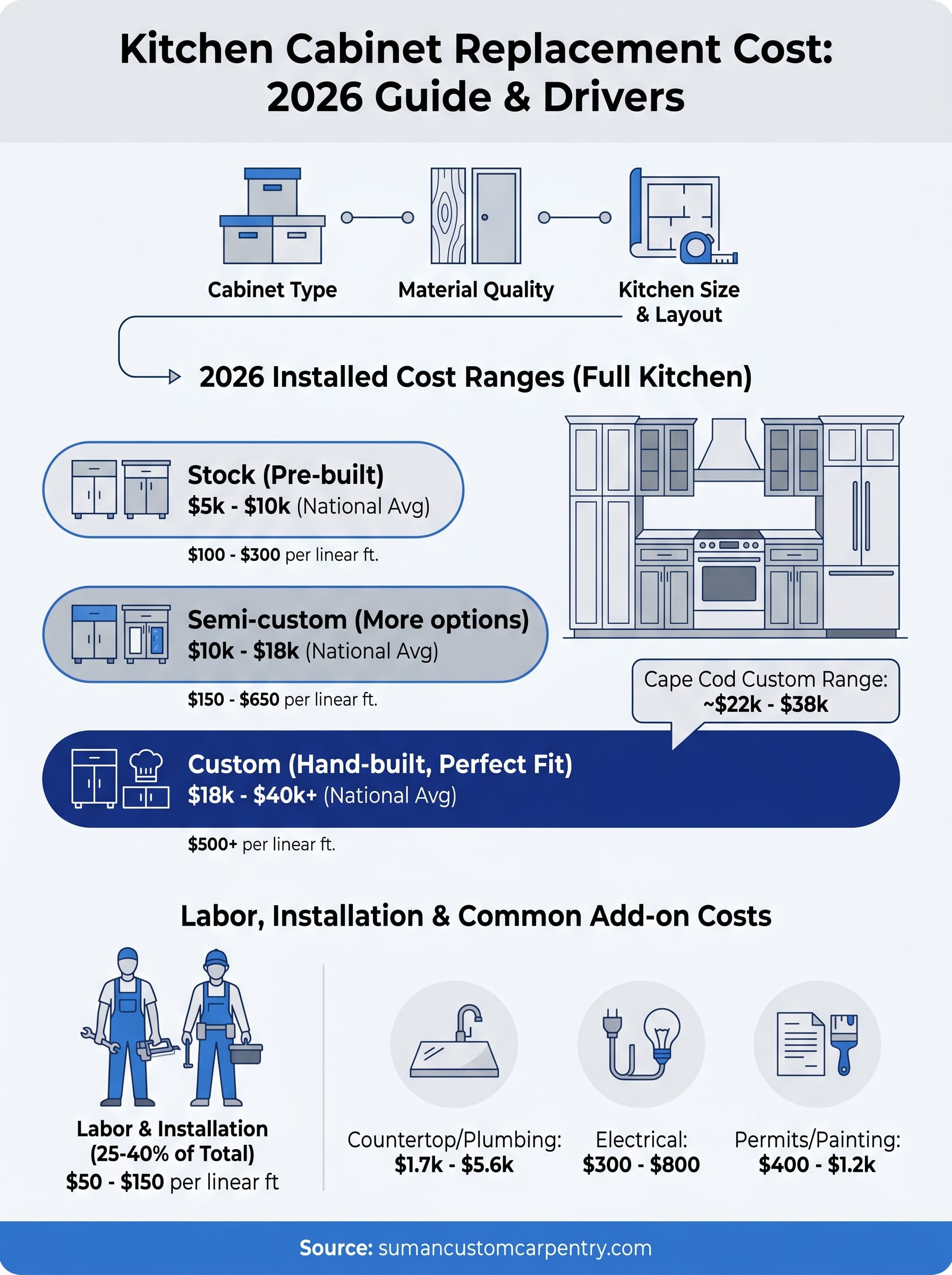
The type of cabinet you choose is the single biggest cost driver in any replacement project. Stock cabinets are pre-built in fixed sizes and land at the low end of the price scale. Semi-custom cabinets expand your size and finish options but cost more per linear foot. Fully custom cabinets, built specifically for your kitchen, command the highest price and the best fit, materials, and longevity.
Here’s how the three types compare on installed price per linear foot:
- Stock: $100 to $300
- Semi-custom: $150 to $650
- Custom: $500 and up
Custom cabinets cost more upfront, but they fit your exact space, use stronger materials, and typically carry longer warranties, which makes them the better long-term investment for most homeowners.
Materials and construction quality
Wood species and box construction method account for a large share of your material costs. Solid hardwood like maple or cherry costs more than plywood-box cabinets with veneer faces, and both outprice particleboard options by a significant margin. Finish type drives costs further: painted cabinets need more prep work and multiple coats, which raises both material spend and labor time compared to stained finishes.
Hardware and interior features add up quickly too. Soft-close hinges, dovetail drawer boxes, pull-out shelves, and built-in organizers all improve day-to-day function but push your total higher. Choose upgrades based on how you actually cook and use your kitchen, not just what looks good in a showroom.
Kitchen size and layout
Your kitchen’s total linear footage sets the baseline before you pick a single cabinet style. A 20-linear-foot galley kitchen costs far less than a U-shaped kitchen running 40-plus feet. Angled walls, soffits, irregular ceiling heights, and island cabinets add complexity that requires more custom fitting and specialty sizing, both of which push labor costs up alongside material costs.
Removing your existing cabinets also factors into the budget. Demolition and disposal fees typically run $200 to $500 depending on kitchen size and how carefully the old cabinets need to come out. If you’re keeping your existing layout, you’ll spend less on labor than if you’re relocating plumbing or electrical to support a new configuration.
2026 installed cost ranges and real examples
Understanding where your project lands in the real pricing spectrum helps you plan without relying on estimates that don’t reflect current material and labor costs. The numbers below reflect what homeowners are actually paying in 2026, with installed pricing covering both the cabinets and the labor to put them in.
National average installed costs
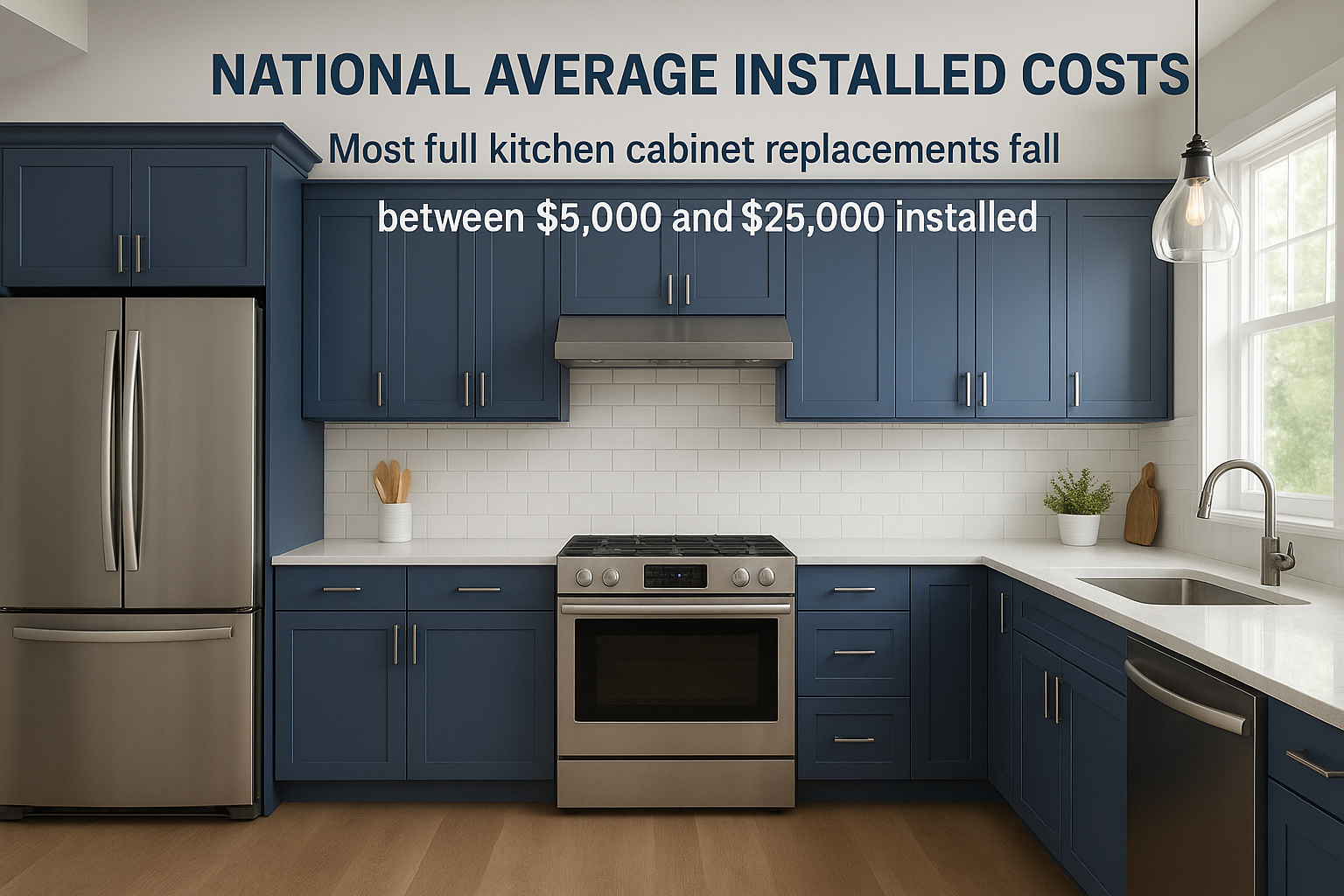
Most full kitchen cabinet replacements fall between $5,000 and $25,000 installed, with the national average sitting around $12,000 to $13,500 for a mid-size kitchen. That range shifts depending on cabinet type, finish, and kitchen size. Here’s how the numbers break down by cabinet tier:
| Cabinet Type | Installed Cost (Full Kitchen) | Cost Per Linear Foot |
|---|---|---|
| Stock | $5,000 to $10,000 | $100 to $300 |
| Semi-custom | $10,000 to $18,000 | $150 to $650 |
| Custom | $18,000 to $40,000+ | $500 and up |
Custom kitchens at the higher end of that range reflect premium wood species, complex layouts, and specialty interior hardware, not inflated margins.
What real kitchens cost on Cape Cod
Cape Cod homeowners tend to invest at the mid-to-upper end of the scale, partly because of local labor rates and partly because most clients here are choosing semi-custom or fully custom cabinetry for seasonal and year-round homes that need to hold up against coastal humidity. A standard 25-linear-foot kitchen with custom-built cabinets from Suman Custom Carpentry typically runs between $22,000 and $38,000 installed, depending on wood species, hardware selections, and layout complexity. When you factor in the kitchen cabinet replacement cost against the lifespan of hand-built cabinetry, the value per year is considerably stronger than stock alternatives.
How to estimate your cabinet replacement budget
Before you call a contractor or visit a showroom, run a quick estimate yourself so you walk in with a realistic number. Estimating your kitchen cabinet replacement cost doesn’t require a design degree. You need two things: your kitchen’s total linear footage and a per-foot cost based on the cabinet tier you’re targeting.
Measure your linear footage first
Linear footage is the total length of all your cabinet runs, measured along the walls where cabinets will hang or sit. Measure each wall section in feet and add them together. Include both upper and lower cabinet runs, but count them as a single combined measurement rather than doubling your wall length. A typical kitchen runs between 20 and 40 linear feet, with island cabinets adding another 8 to 12 feet on top of that.
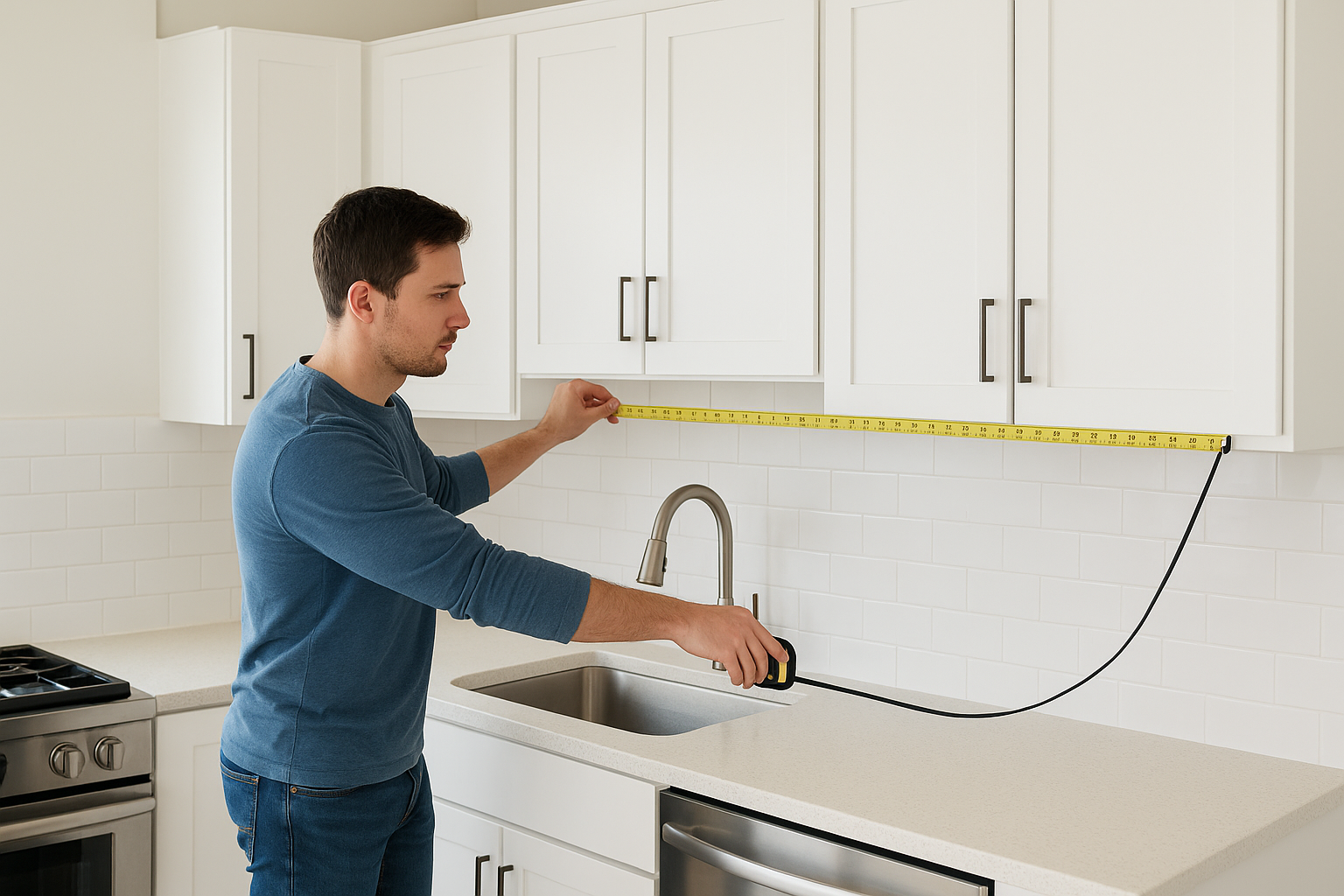
Use this framework to build your baseline:
- 20 linear feet: smaller galley or single-wall kitchen
- 30 linear feet: mid-size kitchen, most common in Cape Cod homes
- 40+ linear feet: larger U-shaped or open-plan layouts with islands
Apply your cabinet tier to the number
Once you have your linear footage, multiply it by the installed cost range for your chosen cabinet tier. If you’re targeting custom cabinetry at $500 per linear foot and your kitchen runs 30 feet, your baseline sits at $15,000 before accounting for hardware upgrades, specialty finishes, or island work.
Add 15 to 20 percent to your baseline as a buffer, because most homeowners upgrade at least one or two selections once they see samples in person.
Specialty items like pull-out shelving, deep drawer stacks, or custom panel refrigerators sit outside the linear foot calculation and should be added as line items once you’ve pinned down your layout.
Labor, installation, and common add-on costs
Labor and installation make up 25 to 40 percent of your total kitchen cabinet replacement cost, so leaving them out of your budget is a costly mistake. Most contractors charge either a flat rate per linear foot or a day rate, and the right approach depends on your kitchen’s complexity. Straightforward swaps on standard layouts cost less to install than projects involving new electrical, plumbing shifts, or custom filler pieces.
Expect to pay between $50 and $150 per linear foot for professional cabinet installation, with higher rates on Cape Cod reflecting local labor market pricing.
What labor actually covers
Installation labor includes more than mounting boxes to walls. Your installer accounts for leveling, shimming, scribing cabinets to imperfect walls, hanging upper cabinets, securing lowers to the floor, and fitting trim pieces around corners and ceilings. Experienced installers also handle minor adjustments on site when a wall is out of plumb or a ceiling height shifts mid-run, which is common in older Cape Cod homes.
Common add-on costs to budget for
Several line items sit outside the cabinet price itself, and each one adds to your final number. Knowing these in advance keeps your budget accurate from the start rather than inflated by surprises mid-project.
- Countertop removal and replacement: $1,500 to $5,000 depending on material
- Plumbing disconnection and reconnection: $200 to $600
- Electrical work for under-cabinet lighting: $300 to $800
- Permit fees: $100 to $500 depending on your town
- Painting or touch-up work after installation: $300 to $700
Factor these costs into your budget alongside cabinet pricing so your total number reflects the full scope of the project.
Reface, replace, or go custom on Cape Cod
Before you commit to a budget, you need to decide which path fits your kitchen’s actual condition and your long-term goals. Refacing, full replacement, and custom builds each carry a different kitchen cabinet replacement cost, and the right choice depends on what your existing cabinets look like underneath the surface.
When refacing makes sense
Refacing covers your existing cabinet boxes with new veneer or laminate and replaces only the doors and drawer fronts. This works well when your box frames are structurally sound and you just want a cosmetic update. Refacing typically runs 40 to 60 percent less than full replacement, making it a realistic option if your layout works and the bones are solid. On Cape Cod, humidity and salt air often compromise older cabinet boxes over time, so refacing on damaged boxes tends to create more problems than it solves.
When full replacement is the right call
Full replacement lets you correct layout problems, relocate storage, and start fresh with better materials. If your boxes show water damage, warping, or soft spots, replacement is the only path that addresses the root issue. You also gain the ability to reconfigure your entire kitchen to match how you actually use the space, something refacing cannot give you.
Replacing cabinets in a Cape Cod home often uncovers water damage or structural issues that refacing would have simply covered over.
Why custom-built cabinets hold up on the Cape
Coastal humidity, salt air, and seasonal temperature swings put mass-produced cabinetry under real stress. Custom-built cabinets use hardwood frames and quality plywood boxes that resist moisture better than particleboard alternatives. At Suman Custom Carpentry, every cabinet is hand-built in Hyannis with materials chosen to handle Cape Cod’s specific climate, backed by a lifetime warranty on cabinet boxes and doors.
A simple way to plan your next move
You now have the full picture on kitchen cabinet replacement cost: what drives the price, how to estimate your linear footage, what labor actually covers, and when custom-built cabinetry is the right call for a Cape Cod home. The clearest next step is to get your kitchen measured and talk through your layout with someone who builds cabinets for a living, not just sells them.
At Suman Custom Carpentry, every project starts with a design consultation where you bring your questions and we bring honest numbers. Our cabinets are hand-built in Hyannis, designed around your specific kitchen and coastal climate, and backed by a lifetime warranty on boxes and doors. You won’t get a vague estimate or a bait-and-switch on materials. Start your custom kitchen project with Suman Custom Carpentry and get a clear plan before you commit to a single dollar.