Choosing the right finish can make or break the look and longevity of your cabinets. Whether you’re planning a full kitchen remodel or updating a bathroom vanity, understanding the types of wood cabinet finishes available helps you make a decision you’ll actually be happy with for years. The finish affects everything, color, texture, durability, and maintenance, so it’s worth getting right the first time.
At Suman Custom Carpentry, we hand-build every cabinet in our Hyannis shop and walk clients through finish options before a single board gets cut. After eight years of building custom cabinetry across Cape Cod, we’ve seen how the right finish transforms a room and how the wrong one leads to regret and costly do-overs. That firsthand experience is what shapes this guide, it’s not theory, it’s what we see working (and failing) in real homes every day.
Below, we break down the most common cabinet finish types, from stains and paints to glazes, lacquers, and beyond. You’ll learn what each finish looks like, how it holds up, and which option fits your style and lifestyle. By the end, you’ll have a clear picture of your choices and the confidence to pick the finish that’s right for your project.
1. Professional cabinet finishing for Cape Cod homes
Cape Cod’s salt air and coastal humidity create real challenges for cabinetry that most general guides ignore. Understanding what separates a professionally finished cabinet from a DIY result helps you invest your budget in the right place.
What you get with a shop-built, shop-finished cabinet
When cabinets are built and finished in a controlled shop environment, you get consistent results that on-site painting simply cannot match. The finish goes on before installation, which means clean edges, even coats, and no overspray or masking tape in your kitchen.
Best finish choices for coastal humidity, salt air, and heavy use
Catalyzed lacquers and conversion varnishes hold up best in Cape Cod homes because they cure to a hard, moisture-resistant film. Waterborne enamels and oil-based paints are solid second choices, especially when applied over a properly built primer system that seals the wood before color goes on.
How pros match color and sheen across doors, boxes, and trim
Color matching across multiple surfaces requires careful batch control and consistent sheen levels. A professional shop sprays all components from the same finish run and adjusts sheen from gloss to satin to matte so the final result reads as one unified look rather than a patchwork of slightly mismatched tones.
How long finishing takes in a real kitchen timeline
Finishing adds five to ten business days to a standard kitchen build when done correctly. That window covers sanding, priming, color coats, and a final inspection before delivery.
Rushing the finishing schedule is the most common reason cabinets leave a shop with uneven sheen or visible sanding marks.
What drives cost up or down on a finishing package
Finish complexity and door profile are the two biggest cost levers. A flat-panel door in a single paint color costs less to finish than a detailed raised-panel door with glaze or distressing. Other factors that push cost higher include:
- Two-tone color schemes requiring separate finish runs
- High-gloss sheen that demands more prep and sanding stages
- Specialty finishes like cerusing or wire-brushing on open-grain wood
When to hire a local custom shop like Suman Custom Carpentry
If you want cabinets built to handle salt air, heavy daily use, and decades of Cape Cod living, a local shop that builds and finishes in-house gives you direct accountability from design through final installation.
2. Penetrating oil and hardwax oil finishes
Penetrating oils and hardwax oils soak into the wood fiber rather than forming a surface film. These finishes produce some of the most natural-looking types of wood cabinet finishes available, but they carry real trade-offs worth understanding before you commit.
What it looks like on maple, oak, walnut, and rift white oak
Oil finishes bring out deep grain patterns on open-grain species like oak and walnut. On tighter-grain woods like maple, the look reads more matte and understated, with no surface sheen to distract from the natural character.
Durability in kitchens and baths, including water and heat
These finishes offer moderate water resistance but struggle near sinks and ranges. Heat from steam or hot pots can leave marks if the surface is not regularly maintained.
Hardwax oils hold up noticeably better than straight linseed or tung oil in kitchen conditions.
Best uses, worst uses, and who should avoid oil finishes
Open shelving and islands suit oil finishes well. Avoid applying them to vanity tops or any cabinet surface that takes daily water exposure.
Repairability and touch-ups, including spot fixes
Oil finishes allow easy spot repairs without visible sheen lines. You lightly sand the damaged area and apply fresh oil, which blends in cleanly.
Maintenance schedule and cleaning products that will not strip it
Plan to re-oil every one to two years using a product matched to your original finish. Skip silicone sprays and harsh degreasers, both degrade the oil layer quickly.
Cost range compared to film finishes
Oil finishes typically run 10 to 20 percent less than lacquer or conversion varnish systems because they require fewer application stages.
3. Wood stain with a clear topcoat
Stain paired with a clear topcoat gives you visible wood grain and color in one system. This combination ranks among the most popular types of wood cabinet finishes because it highlights the natural character of the wood while adding a protective layer on top.
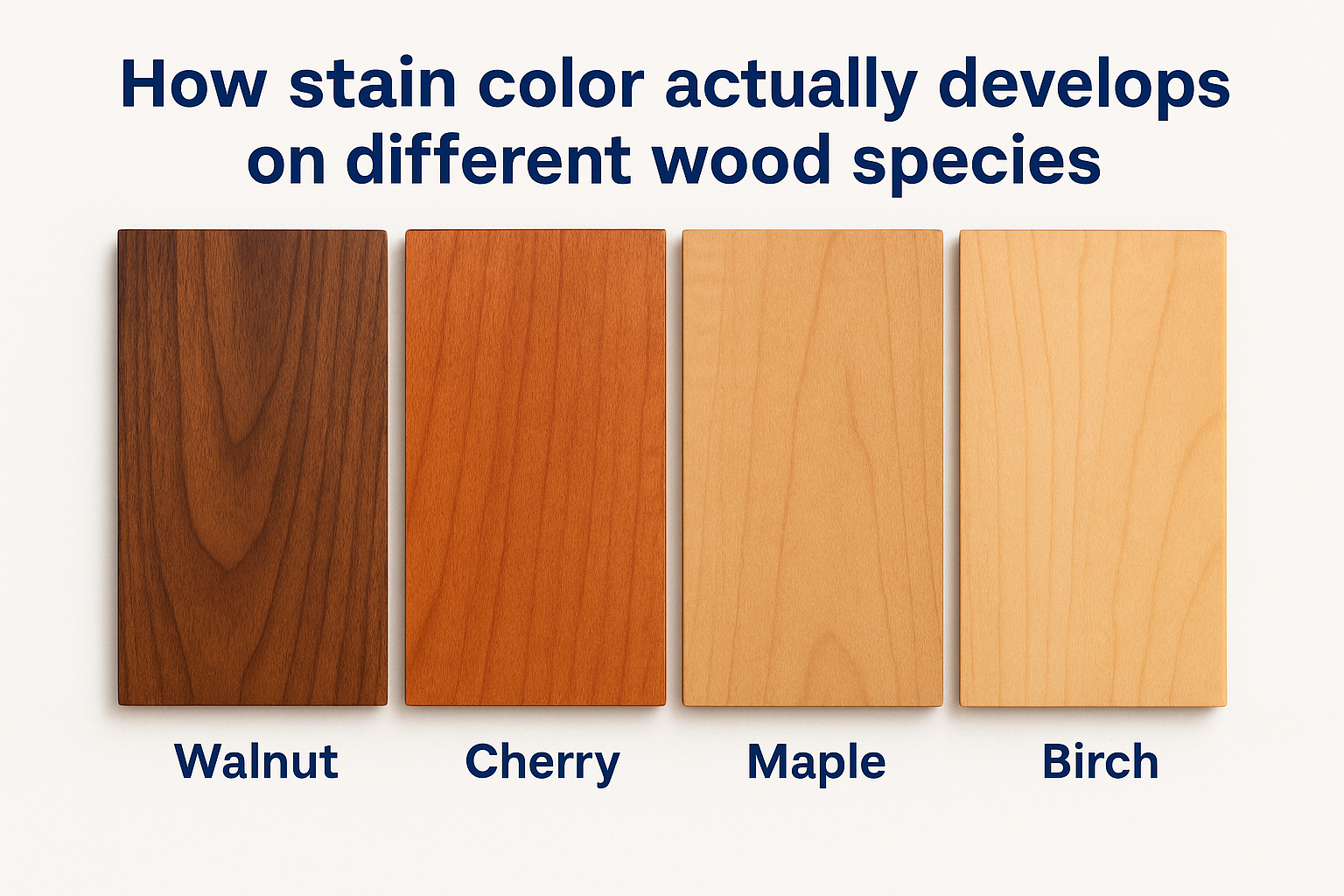
How stain color actually develops on different wood species
Wood species determines how stain looks more than the stain label itself. Walnut and cherry absorb color evenly, while maple and birch tend to resist pigment and produce uneven results without careful prep work.
Stain types that matter for cabinets: dye, pigment, and gel
Dye stains penetrate deeply and produce vibrant, transparent color. Pigment stains sit closer to the surface and add opacity. Gel stains work well on tricky species like maple because their thick consistency limits uneven absorption.
Choosing light vs dark stain for grain, contrast, and warmth
Lighter stains let grain patterns read clearly and keep a space feeling open. Darker stains add warmth and depth but can hide fine grain details that make premium wood worth paying for.
Topcoat options after stain and how they change the look
Your topcoat controls final sheen and durability, not the stain. Lacquer over stain dries fast and stays clear; polyurethane adds more build and toughness.
The topcoat you choose matters as much as the stain color itself when it comes to long-term performance.
Common stain problems: blotching, lap marks, and grain raise
Blotching is the most common complaint on soft or tight-grain species. A pre-stain conditioner reduces uneven absorption, and sanding between coats prevents grain raise from ruining the final surface.
Cost and longevity expectations
A stain-and-topcoat system typically costs less than a full paint system but requires more surface prep time. Expect 10 to 15 years of solid performance when the topcoat is applied correctly and the cabinets receive basic care.
4. Painted wood cabinets
Painted wood cabinets remain one of the most popular types of wood cabinet finishes because they deliver clean, consistent color across every surface regardless of the wood grain underneath.
Paint systems that hold up: enamel, primer, and topcoat basics
A proper paint system starts with a bonding primer that seals the wood and gives the topcoat something to grip. Alkyd or waterborne enamel topcoats provide the hardness and washability kitchens and baths demand.
Sheen options and how they affect fingerprints and cleaning
Satin and semi-gloss sheens strike the best balance for cabinets because they wipe clean without showing every fingerprint the way high-gloss does. Flat and eggshell options look soft but trap grease and scuff easily, making them poor choices for cabinet surfaces.
Best paint colors and cabinet looks trending into 2026
Warm whites and soft off-whites continue to lead kitchen remodels heading into 2026, while deep navy and forest green lowers add contrast on islands. Greige tones hold up well in rooms that get heavy coastal light.
Neutral colors stay relevant far longer than trend-driven choices that can feel dated within a few years.
The one-third rule for two-tone cabinets and how to use it well
Keep your darker color on the lower cabinets and your lighter tone on the uppers. This approach grounds the room visually and prevents your upper cabinets from feeling heavy overhead.
Touch-ups, chipping risk, and what to expect at edges
Edges and corners chip first, especially on MDF profiles. Keeping your original paint code on file lets you blend touch-ups cleanly over time.
Cost, lead time, and why spraying usually wins
Spraying eliminates brush marks and delivers a smoother, more uniform film than rolling. Painted finishes typically add three to five days to a standard finishing schedule.
5. Glaze and highlighting techniques
Glaze is one of the more decorative types of wood cabinet finishes, and it works by adding a translucent layer of color that pools in recesses and profiles to create depth and dimension across the cabinet surface.
What glaze does and when it improves a kitchen
Glaze settles into carved details, panel edges, and molding profiles to create contrast against the base color. It suits kitchens where the style calls for traditional, transitional, or aged character rather than a clean, modern look.
Glaze over stain vs glaze over paint
Glaze over paint produces the most visible contrast because the glaze color pops clearly against a solid base. Glaze over stain works more subtly, deepening shadows in grain details without overwhelming the natural wood character beneath.
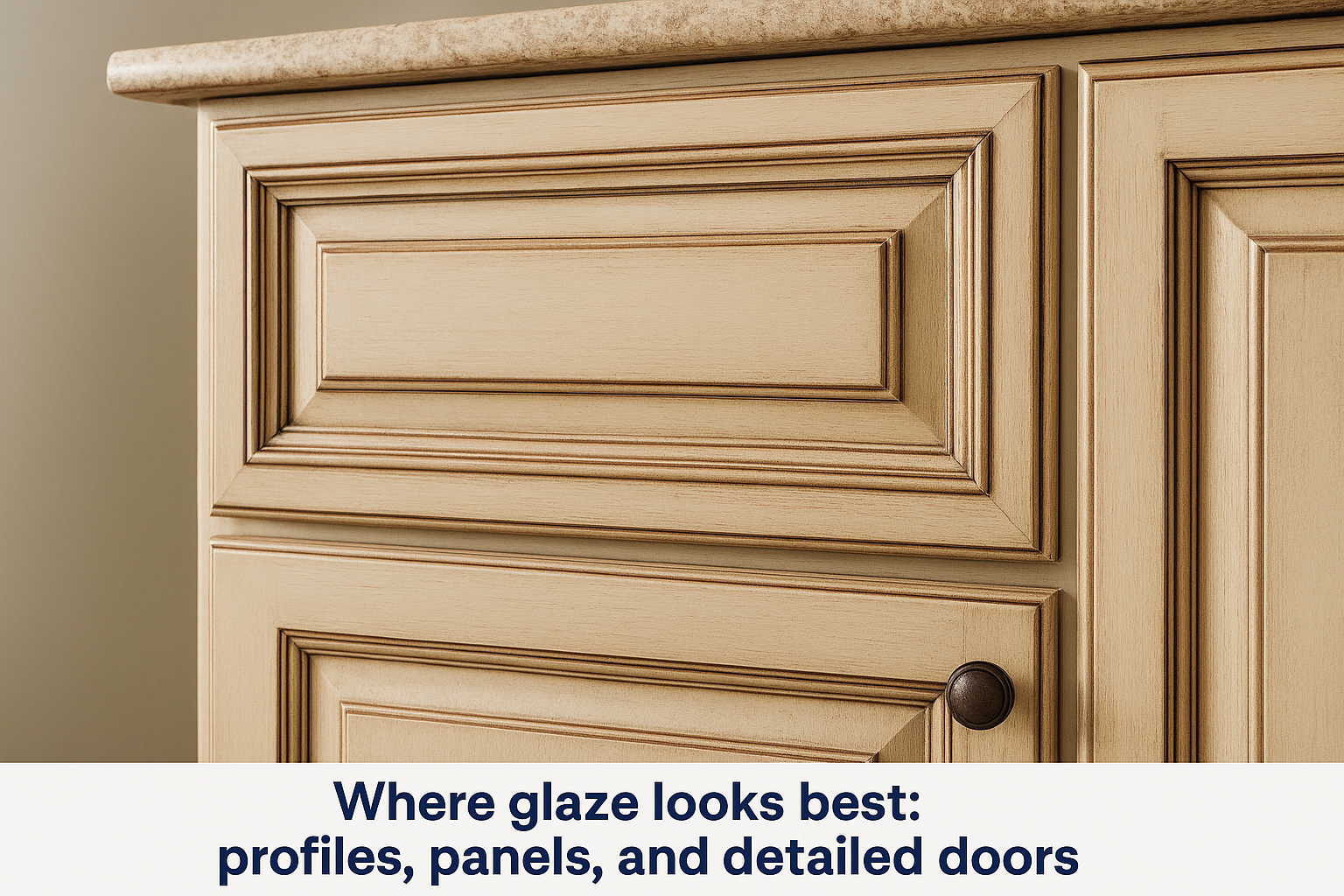
Where glaze looks best: profiles, panels, and detailed doors
Raised-panel and beaded-frame doors show glaze most effectively because the profile gives it somewhere to collect and highlight. Flat slab doors offer almost no relief for the glaze to settle into, so the visual effect disappears on that door style.
Durability and cleaning concerns in high-touch areas
Glaze sits between your base coat and topcoat, which means cleaning products matter more than usual. Skip abrasive pads near glazed surfaces because they wear through the finish unevenly.
Sealing glaze under a quality topcoat is the single most important step for long-term durability.
How to avoid muddy color and over-antiqued results
Apply glaze sparingly and wipe back excess before it sets. Too much glaze across too many surfaces creates a heavy, muddy result that overwhelms your cabinet color rather than enhancing it.
Cost factors and when glaze makes sense
Glaze adds labor time and material cost, typically 15 to 25 percent above a standard painted finish. Your door style and design goals need to genuinely benefit from added visual depth to justify that investment.
6. Clear film finishes: polyurethane and varnish
Clear film finishes let the natural wood character stay fully visible while building a hard protective layer on top. Among the types of wood cabinet finishes available, clear coats give you the most direct path from raw wood to a finished surface without adding any color of their own.
What a clear coat does that stain or paint cannot
A clear coat locks in the wood’s natural tone without contributing pigment. It also seals small surface variations and forms a continuous film that resists moisture, abrasion, and daily cleaning.
Polyurethane vs varnish vs shellac in plain language
Polyurethane cures to a harder, more durable film than traditional varnish and holds up better in kitchens. Shellac dries fast but offers very little water resistance, making it a poor stand-alone choice for cabinet surfaces.
Water-based vs oil-based clear coats and the tradeoffs
Oil-based poly adds an amber tone that warms lighter wood, while water-based versions dry faster and stay colorless with far less odor. Water-based products typically need an extra coat to build equivalent film thickness.
Best use cases: natural wood, open grain, and high-wear zones
Clear finishes work best on natural walnut, white oak, and rift-cut species where you want grain to carry the visual impact. High-traffic surfaces like island tops and pantry doors benefit most from the hard, protective film.
Repair difficulty, recoating, and long-term yellowing
Oil-based products yellow noticeably over time, which shifts the tone on lighter wood species. Recoating requires light scuff sanding between coats to ensure proper adhesion.
Yellowing from oil-based clear coats is a common surprise on light-toned cabinetry when no sample testing happens beforehand.
Cost and performance expectations
Clear film systems typically cost less per square foot than full paint packages because they use fewer material layers. With solid prep and routine care, you can expect reliable performance for 10 to 20 years before a full recoat becomes necessary.
7. Lacquer and modern waterborne finishes
Among the types of wood cabinet finishes professionals use most, lacquer and modern waterborne systems consistently deliver the smooth, factory-level results that homeowners expect from custom cabinetry. Both options offer real advantages depending on your priorities.
Lacquer basics and why it produces a smooth, uniform look
Lacquer dries fast and levels extremely well, which makes it a favorite for spray application in a shop environment. The result is a thin, hard, uniform film that brings out clean lines and crisp profiles without looking thick or plastic-like.
Catalyzed finishes and why many shops use them on cabinets
Catalyzed lacquer and conversion varnish use a chemical hardener that dramatically improves durability over standard nitrocellulose lacquer. Most professional cabinet shops choose these systems because the cured film resists scratches, moisture, and cleaning chemicals far better than uncatalyzed options.
Catalyzed finishes are not reworkable the way standard lacquer is, so getting the application right the first time matters.
Waterborne cabinet finishes for low odor and fast turnaround
Waterborne finishes dry within one to two hours between coats, which compresses the finishing schedule. They also produce far less odor and VOC output than solvent-based lacquers, making them a practical choice for shops working in tighter spaces.
Durability, chemical resistance, and heat limits near ranges
Catalyzed systems handle heat and chemical exposure better than waterborne options. Near a range, keep in mind that sustained direct heat above 140 degrees can still soften any cabinet finish over time.
What maintenance looks like for gloss, satin, and matte
Gloss finishes show fingerprints quickly but wipe clean easily with a damp cloth. Satin and matte sheens hide smudges better but require gentler cleaning products to avoid shining up dull areas.
How to choose between lacquer, waterborne, and conversion finishes
Your project timeline and performance needs should drive this decision. If durability near water or heat is the priority, conversion varnish wins. If fast turnaround and low odor matter more, waterborne is the right call.
Picking your finish with confidence
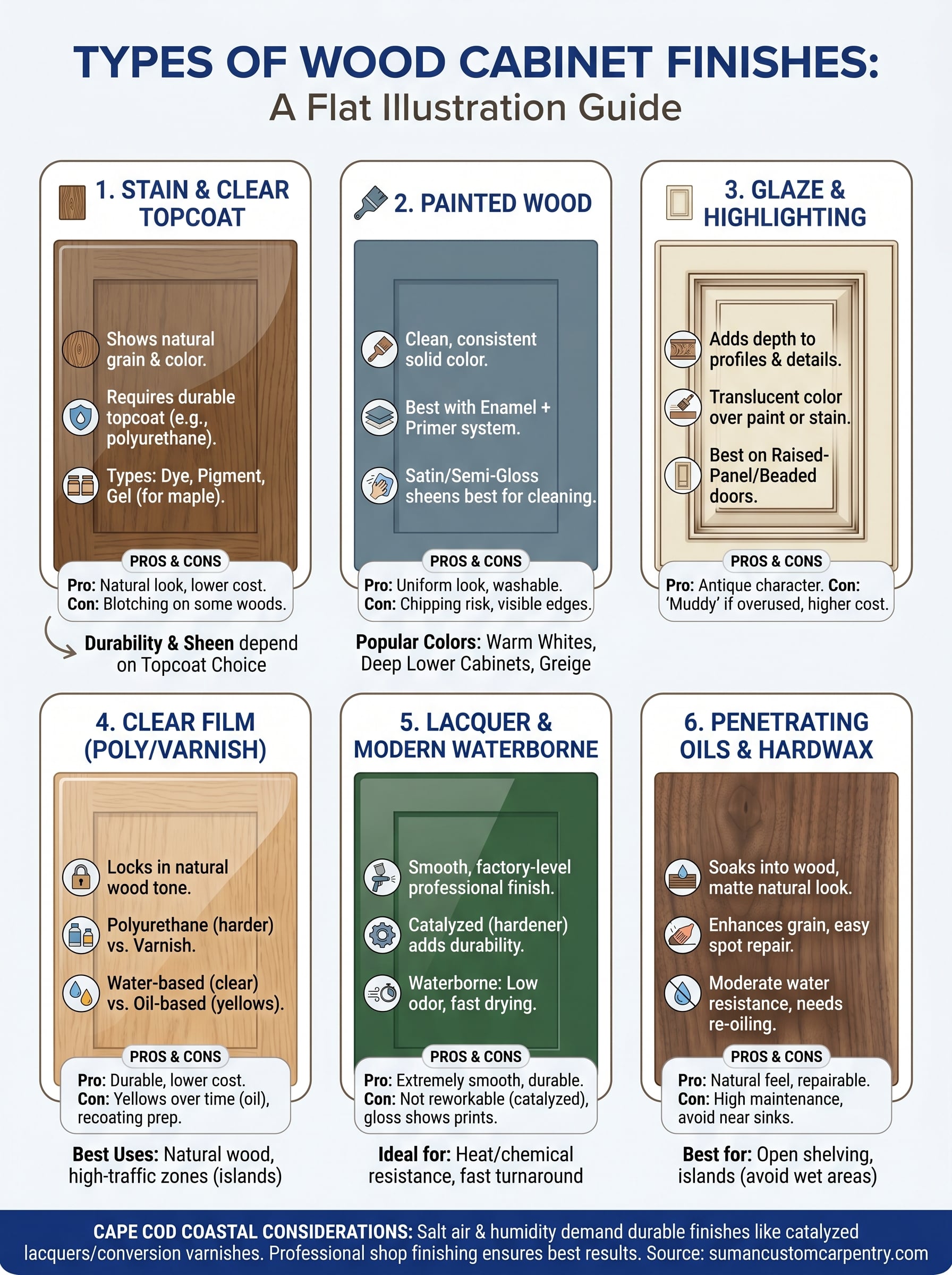
The seven types of wood cabinet finishes covered in this guide each suit different priorities, and knowing those differences puts you in control of the decision. Your lifestyle, your wood species, and your tolerance for maintenance should drive the choice, not just the color sample you see in a showroom photo.
Cape Cod homes face real demands from humidity and salt air, so picking a finish that holds up to those conditions matters as much as picking one that looks right on day one. Work with a shop that builds and finishes in-house, and you get direct accountability for both the build quality and the finish system from start to finish.
Your cabinets deserve a finish that works as hard as the people using them every day. Contact Suman Custom Carpentry to talk through your finish options with someone who hand-builds custom cabinetry for Cape Cod homes and backs every project with a lifetime guarantee.