
A well-planned kitchen cabinet design with island can completely reshape how your kitchen looks, feels, and functions. The island becomes the center of everything, cooking, eating, socializing, storage, and the cabinet layout around it either makes that work beautifully or creates awkward bottlenecks. Getting the design right means thinking about more than just aesthetics; it means understanding clearances, workflow, and how your household actually uses the space.
At Suman Custom Carpentry, we design and hand-build custom kitchen cabinetry at our shop in Hyannis, Cape Cod. Islands with seating are one of the most common requests we get from homeowners, and after years of building them, we’ve seen firsthand what layouts perform well and which ones cause headaches down the road. That experience shapes every recommendation in this article, these aren’t generic ideas pulled from a mood board. They’re grounded in real builds and real kitchens.
Below, you’ll find seven kitchen cabinet and island designs that incorporate seating in different ways. Each one covers layout details, storage considerations, and spacing requirements so you can figure out what actually fits your kitchen before committing to a design. Whether you’re planning a full renovation or exploring options, this should give you a solid starting point.
1. Custom built-in island with seating by Suman Custom Carpentry
A fully custom island built by Suman Custom Carpentry gives you complete control over dimensions, storage, and seating layout. Every piece is hand-built in our Hyannis shop and designed around your specific kitchen footprint, so nothing gets forced into a space it doesn’t fit.
Best layout and clearances
42 inches of clearance on all working sides of the island is the standard recommendation. If you’re placing seating on one end or along a dedicated side, that side needs at least 36 inches between the island and the nearest wall or cabinet to give seated guests enough room to pull out a stool without blocking foot traffic.
Cabinet and storage features
Custom islands can incorporate deep base drawers, pull-out trash systems, and built-in spice pullouts on the prep side. Because we build to your measurements, you can specify exactly where each drawer sits relative to your workflow. Drawer boxes are built from solid wood, not particleboard, so they handle heavy pots and daily use without warping or failure.
Seating plan and comfort
Most custom islands seat two to four people comfortably depending on the overhang design. We typically build a 12-to-15-inch overhang on the seating side to give adequate knee clearance for standard counter-height or bar-height stools. The overhang gets supported with corbels or a recessed toe-kick panel depending on your chosen style.
A 12-inch overhang works for counter-height stools (18 inches), while bar-height stools (28 to 30 inches) need at least a 15-inch overhang.
Materials and finishes that fit the style
Custom islands can be built in painted MDF, hardwood face frames, or full solid wood depending on your budget and aesthetic. We match the island finish to your perimeter cabinetry or intentionally contrast it, whatever your kitchen cabinet design with island calls for visually.
Best for these kitchens and households
This option works best for larger kitchens with 12 or more feet of open floor space and households that want a kitchen tailored to how they actually cook and entertain rather than adapted from a stock layout.
Cost factors and budget range
A custom island from Suman Custom Carpentry typically ranges from $8,000 to $20,000 depending on size, materials, and complexity. Design consultation and installation are included in every project.
2. Shaker island with a raised end panel and stools
A Shaker-style island with a raised end panel is one of the most recognizable kitchen cabinet designs with island seating you’ll find in Cape Cod homes. The raised panel on the non-seating end gives the island a finished, furniture-like look that anchors the space without heavy ornamentation or complicated trim work.
Best layout and clearances
Place this island in a kitchen with at least 42 inches on all working sides and 36 inches on the seating side. The raised end panel adds 3 to 4 inches of depth, so account for that before you finalize the overall footprint.
Cabinet and storage features
The seating side stays open below the overhang to allow knee clearance, while the work side holds base drawers or door cabinets for cookware and dry goods. A mix of deep drawers near the range and door storage toward the seating end keeps the island useful from every angle.
Seating plan and comfort
Space each stool 26 to 28 inches apart to give guests enough elbow room without crowding the overhang.
Most Shaker islands seat two to three people comfortably along one side using standard 18-inch counter-height stools with a 12 to 15-inch overhang.
Materials and finishes that fit the style
Painted maple or poplar with a recessed center panel suits this style well. White, soft gray, and navy hold up in active kitchens and stay visually clean over time.
Best for these kitchens and households
This layout fits traditional, transitional, and farmhouse kitchens and works especially well for households that want a timeless look with practical daily seating.
Cost factors and budget range
Semi-custom Shaker islands typically run $3,000 to $8,000 depending on size and panel complexity. Custom-built versions from a local carpenter sit at the higher end of that range.
3. Two-tone island with seating and furniture-style trim
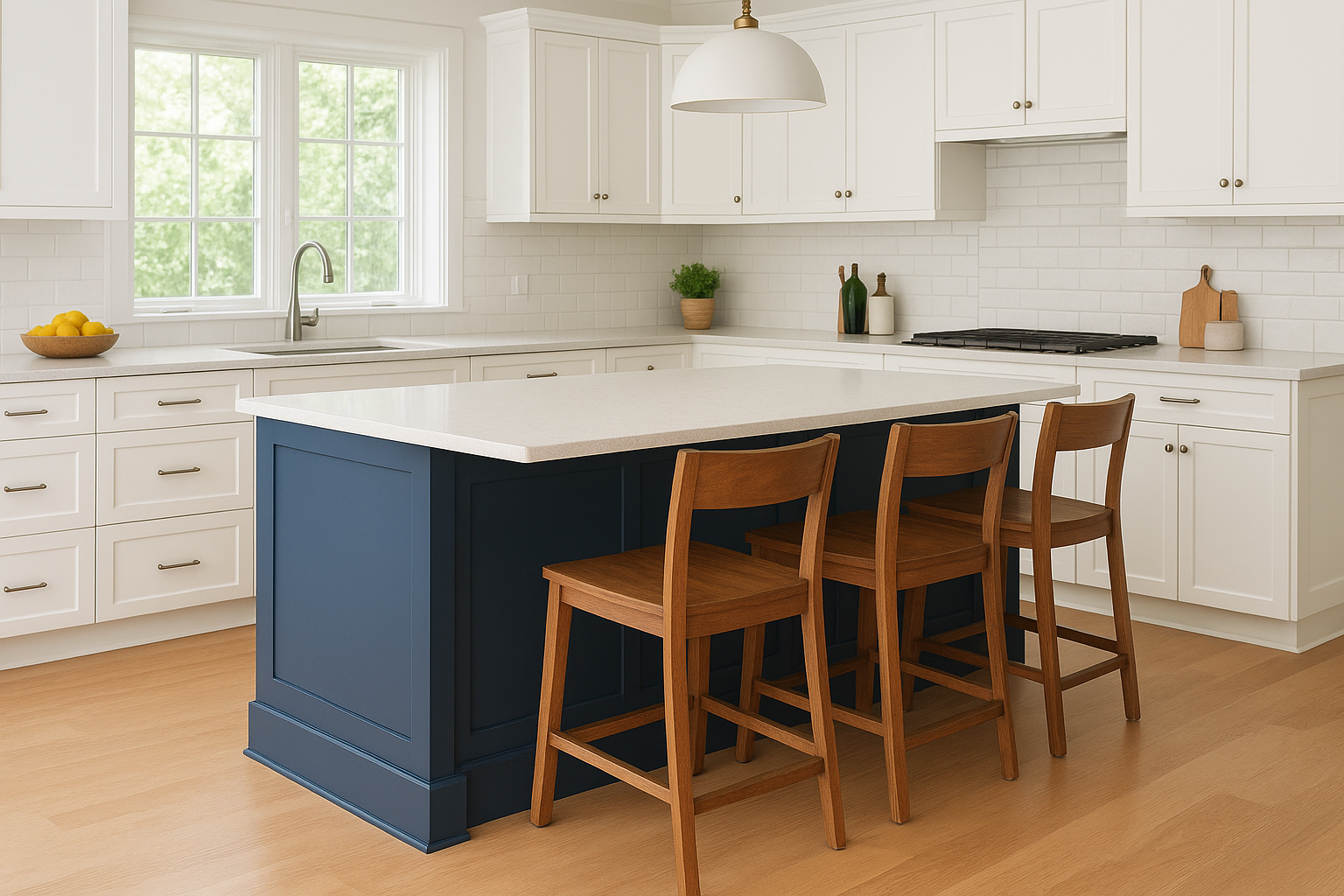
A two-tone island pairs a contrasting color on the island base against the perimeter cabinetry and adds furniture-style trim details like legs or bracket feet to make the island read as a standalone piece. This kitchen cabinet design with island approach suits homeowners who want the island to make a visual statement without overwhelming the rest of your space.
Best layout and clearances
The trim details add visual presence but minimal extra depth, so standard clearances still apply. Keep 42 inches on all work sides and at least 36 inches on the seating side. Confirm final measurements after adding leg or bracket trim before ordering your countertop material.
Cabinet and storage features
Decorative base trim limits how far the toe-kick can extend downward, so concentrate storage in deep top drawers on the work side and door cabinets below for items you access less often.
Seating plan and comfort
Furniture-style legs on the seating end pair naturally with open-back or bench-style seating rather than standard pedestal stools.
Two to three seats fit comfortably along a 12 to 15-inch overhang, spaced 26 to 28 inches apart.
Materials and finishes that fit the style
Navy, forest green, or charcoal on the island base paired with white or cream perimeter cabinets is the most popular combination. A wood-stained island with painted uppers also works well if your kitchen leans toward a warmer, more organic aesthetic.
Best for these kitchens and households
This design works best in transitional and traditional kitchens where you want the island to anchor the social side of the space and hold its own visually.
Cost factors and budget range
Furniture-style detailing adds labor and material costs over a flat-panel build. Expect $4,500 to $10,000 for a semi-custom version, with custom-built islands running higher depending on trim complexity and finish work.
4. Slim galley island with seating for two and pull-outs
A slim galley island works where a larger footprint simply won’t fit. This kitchen cabinet design with island keeps the run narrow, typically 24 to 30 inches deep, so the kitchen stays open while still delivering seating and meaningful storage in a tight space.
Best layout and clearances
You need at least 42 inches on both working sides of the island to maintain a functional traffic path. Since the island runs narrow, the overall kitchen needs to be at least 10 feet wide to make the math work without pinching your workflow.
Cabinet and storage features
Pull-out drawers on the work side make the most of the limited depth. Two or three stacked pull-outs on each section give you organized access to cookware, utensils, and pantry items without requiring you to reach deep into a base cabinet.
Pull-outs on a narrow island recover nearly all usable depth that a standard door cabinet would waste.
Seating plan and comfort
The seating end holds two counter-height stools spaced 26 inches apart. Keep the overhang between 10 and 12 inches since the slim profile doesn’t leave room for a wider cantilever without structural support.
Materials and finishes that fit the style
Painted finishes in light neutrals keep a narrow island from feeling heavy. A contrasting countertop material like butcher block adds warmth without adding visual bulk.
Best for these kitchens and households
This layout suits smaller kitchens and households of one or two people who want seating but can’t sacrifice floor space.
Cost factors and budget range
A custom slim galley island typically runs $3,500 to $7,000 depending on pull-out configuration and countertop material.
5. L-shaped island with seating that faces the living area
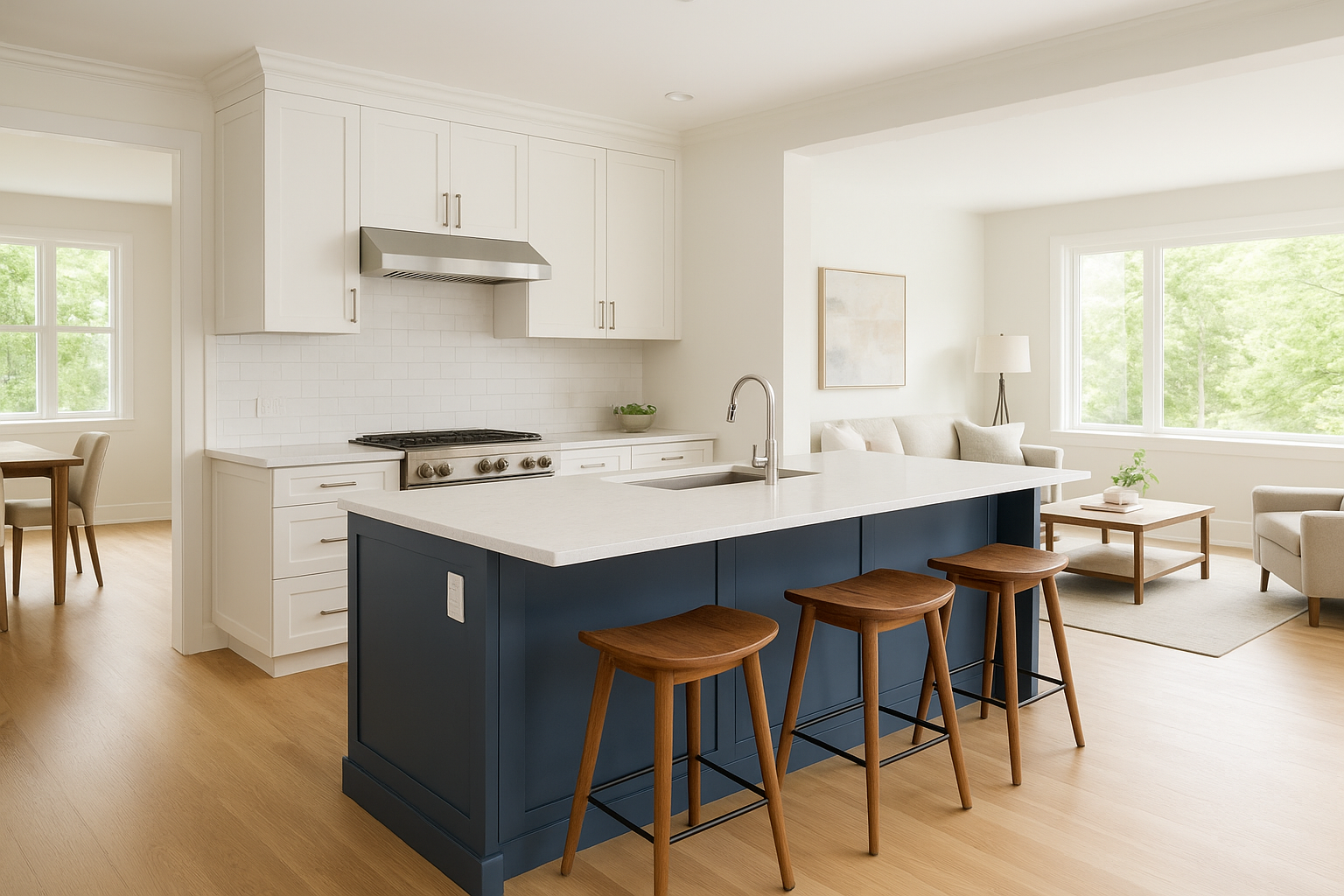
An L-shaped island extends one leg toward the living or dining area, creating a natural divide between the kitchen and the rest of an open floor plan. This kitchen cabinet design with island works well in open-concept homes where you want seating that keeps guests connected to the conversation without pulling them into the work zone.
Best layout and clearances
Keep 42 inches of clearance on all working sides of the island. The extended seating leg needs 36 inches of open space between the overhang edge and the nearest furniture so guests can sit and stand without blocking traffic through the kitchen.
Cabinet and storage features
The work-side base holds deep drawers and door cabinets for cookware and pantry items. The seating leg stays open below the overhang, which keeps sightlines clean from the living area and avoids a closed-off feel on that side.
Seating plan and comfort
The seating leg fits three to four stools spaced 26 to 28 inches apart along a 12 to 15-inch overhang.
This layout lets seated guests face the living area rather than a wall or appliances, which makes the island a more natural gathering point while you cook.
Materials and finishes that fit the style
Painted or stained wood finishes both work here. Pick a finish that looks intentional from the living space since the island faces multiple sightlines in an open floor plan.
Best for these kitchens and households
This design suits open-concept homes where the kitchen, dining, and living areas share one continuous space and you want the island to bridge all three zones.
Cost factors and budget range
An L-shaped island typically runs $5,000 to $12,000 depending on the length of the seating leg, materials, and countertop selection.
6. U-shaped kitchen island with seating outside the work zone
A U-shaped kitchen layout with a central island works differently from the other designs on this list. The perimeter cabinetry wraps three sides, and the island sits in the center with seating on the outward-facing side, away from the cooking zone. This kitchen cabinet design with island keeps guests completely clear of prep and cooking traffic.
Best layout and clearances
This setup requires a large kitchen footprint, typically at least 14 feet wide. You need 42 inches of clearance between the island and each run of perimeter cabinetry to keep the work path unobstructed while people are seated on the outside edge.
Cabinet and storage features
The island base concentrates storage on the work-facing sides using deep drawers for cookware and door cabinets for bulk items. The seating side stays open or minimal to reduce visual weight and give seated guests a clean sightline into the kitchen.
Keeping the seating side storage-free makes the space feel more intentional and less visually heavy from the dining or living area.
Seating plan and comfort
Three to four counter-height stools fit comfortably along a 12 to 15-inch overhang on the outward-facing side, spaced 26 to 28 inches apart to avoid crowding.
Materials and finishes that fit the style
Painted finishes or warm wood tones that complement your perimeter cabinetry give this layout visual cohesion across a large footprint without competing surfaces.
Best for these kitchens and households
This layout suits large kitchens in open-concept homes where households want a clear boundary between the cooking area and the seating and social zone.
Cost factors and budget range
Expect $5,500 to $13,000 for a custom island in this configuration depending on size, material selection, and storage complexity.
7. Workstation island with a prep sink and seating
A workstation island adds a prep sink directly into the island surface, turning it into a dedicated secondary work zone away from your main sink. This kitchen cabinet design with island suits households that cook seriously and want seating built into the same footprint without disrupting the workflow.
Best layout and clearances
You need 42 inches of clearance on all working sides of the island to keep the prep zone functional. The seating side requires 36 inches of open space between the overhang edge and the nearest wall or furniture.
Cabinet and storage features
Place plumbing-accessible base cabinets on the sink side to allow for drain and supply line routing. The remaining base holds pull-out drawers for prep tools, cutting boards, and colanders that you reach for most during active cooking sessions.
Dedicated storage directly below the prep sink keeps your most-used tools within arm’s reach without crossing the main cooking zone.
Seating plan and comfort
Two to three stools fit along a 12 to 15-inch overhang on the side opposite the sink. Space each stool 26 to 28 inches apart to avoid crowding the seating area.
Materials and finishes that fit the style
Quartz or stainless steel countertops hold up well around a prep sink. Keep the cabinet finish in a durable painted or stained hardwood that can handle daily splatter near the sink side.
Best for these kitchens and households
This layout works best for households of three or more people who cook frequently and want both a functional prep station and informal seating in one island.
Cost factors and budget range
Plumbing integration adds cost over a standard island build. Expect $6,500 to $14,000 depending on sink selection, plumbing complexity, and cabinet configuration.
A quick way to choose your best island
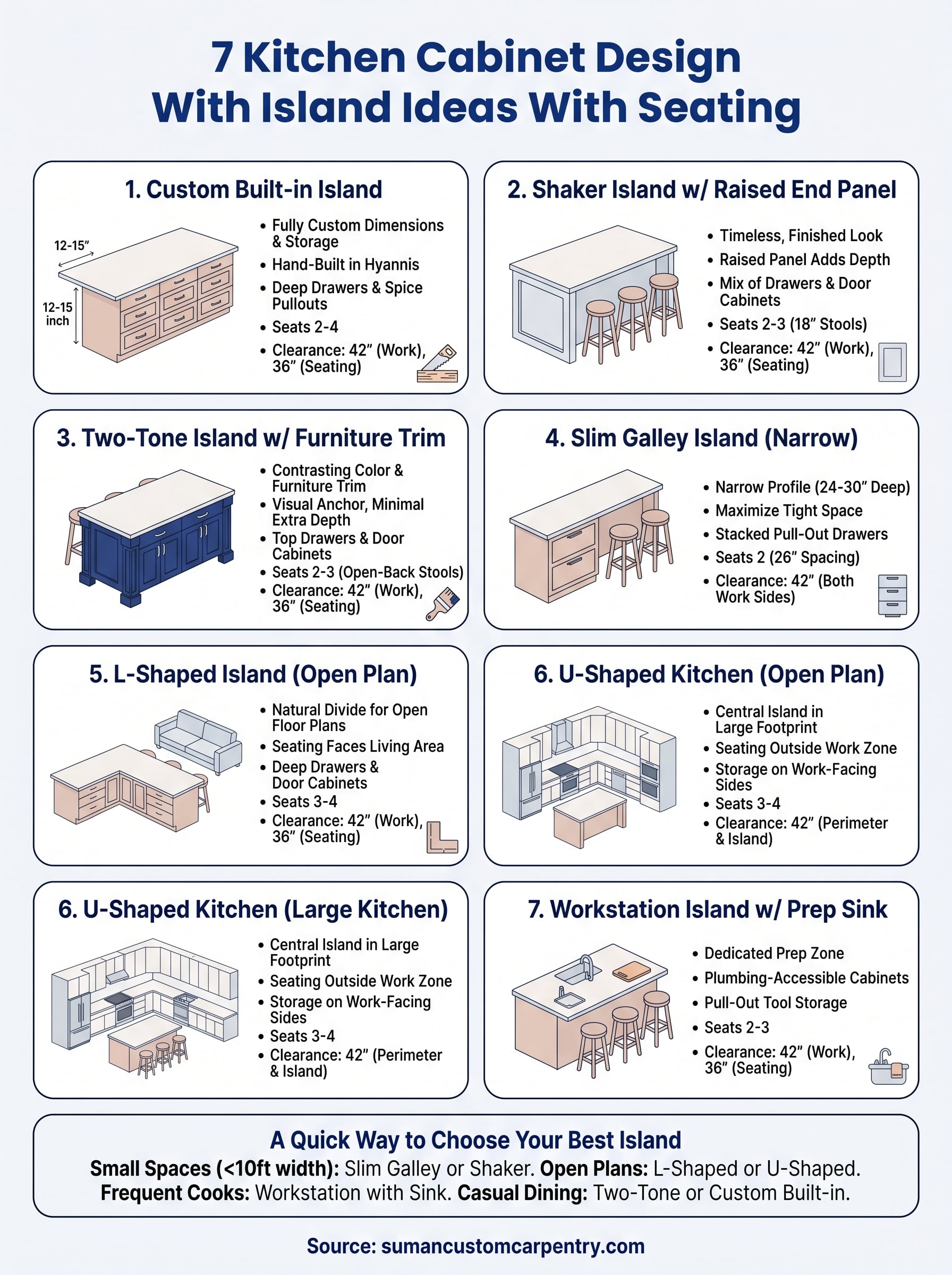
Start with your kitchen’s actual floor space. If you have less than 10 feet of width, a slim galley island or Shaker end-panel design keeps the layout functional without pinching your traffic paths. If you’re working with an open floor plan, the L-shaped or U-shaped options give you a natural zone between cooking and socializing.
Then match the island to how you actually cook. Frequent cooks who want efficiency should look at the workstation island with a prep sink. Households focused on casual dining and entertaining will get more value from a two-tone or custom built-in island with a generous seating overhang.
Your best kitchen cabinet design with island is the one built around your specific dimensions, habits, and household size. If you’re ready to stop guessing and start planning, talk to Suman Custom Carpentry about what a hand-built custom island would look like in your kitchen.