
A kitchen island can make or break how your kitchen actually functions day to day. It’s where meals get prepped, where kids do homework, where guests gather with a drink while you cook. But stock islands from big-box stores rarely fit the way your household works, or the dimensions of your kitchen. That’s why exploring custom kitchen island ideas before you start a remodel is worth every minute. The right island should solve real problems in your space, not just look good on a screen.
At Suman Custom Carpentry, we design and hand-build kitchen islands at our Hyannis shop on Cape Cod, tailored to the exact layout, storage needs, and style of each client’s home. We’ve seen firsthand how a well-planned island transforms a kitchen from cramped to comfortable, from cluttered to functional and beautiful.
Here are six ideas we keep coming back to, proven approaches to seating, storage, and style that work especially well in Cape Cod kitchens. Whether you’re planning a full renovation or upgrading a single feature, these should give you a strong starting point for your project.
1. Hand-built custom island for your layout
A hand-built island starts with your kitchen’s actual dimensions and how you use the space daily. Unlike prefab options, a custom-built island can be sized, shaped, and configured to fit your specific floor plan and household routines. This is the foundation of any custom kitchen island idea worth pursuing.
Choose the island’s job first
Before any wood gets cut, decide what your island needs to do. Prep space, dining, storage, and appliance housing each demand different layouts and dimensions. Choosing one or two primary functions upfront keeps the design focused and prevents the island from trying to do too many things poorly.
Build in storage that actually matches your routines
Think about what you reach for most during a typical cooking session. Deep drawers for pots, divided inserts for utensils, and pull-out shelves for oils and spices make daily tasks faster without extra searching. Storage that reflects your actual habits outperforms any generic cabinet configuration every time.
The best storage is the kind you reach for without thinking about where it is.
Add seating without blocking traffic flow
Seating on one side of the island is a practical choice, but overhang depth and walkway clearance matter just as much as the number of seats. Plan for at least 42 inches of clear floor space on all working sides so the kitchen stays functional when multiple people are moving through it.
Pick materials that hold up in a coastal home
Cape Cod homes deal with humidity, salt air, and seasonal temperature shifts that put real stress on wood and finishes. Solid species like maple and white oak, properly sealed, handle these conditions well. Avoid finishes that trap moisture along the grain or show chips and peeling after a couple of seasons.
Typical budget range and what drives cost
A hand-built custom island typically runs $3,500 to $12,000 or more, depending on size, materials, and features like integrated sinks or custom hardware. The biggest cost drivers are countertop material selection, drawer count, and any electrical or plumbing work tied into the island.
When to work with Suman Custom Carpentry
Suman Custom Carpentry builds every island at our Hyannis shop on Cape Cod, giving us direct control over quality from the first cut to the final installation. If you want an island built around your kitchen’s exact measurements and your family’s real daily habits, we’ll walk you through the full process from the initial consultation through completion.
2. Contrasting wood island with a waterfall top
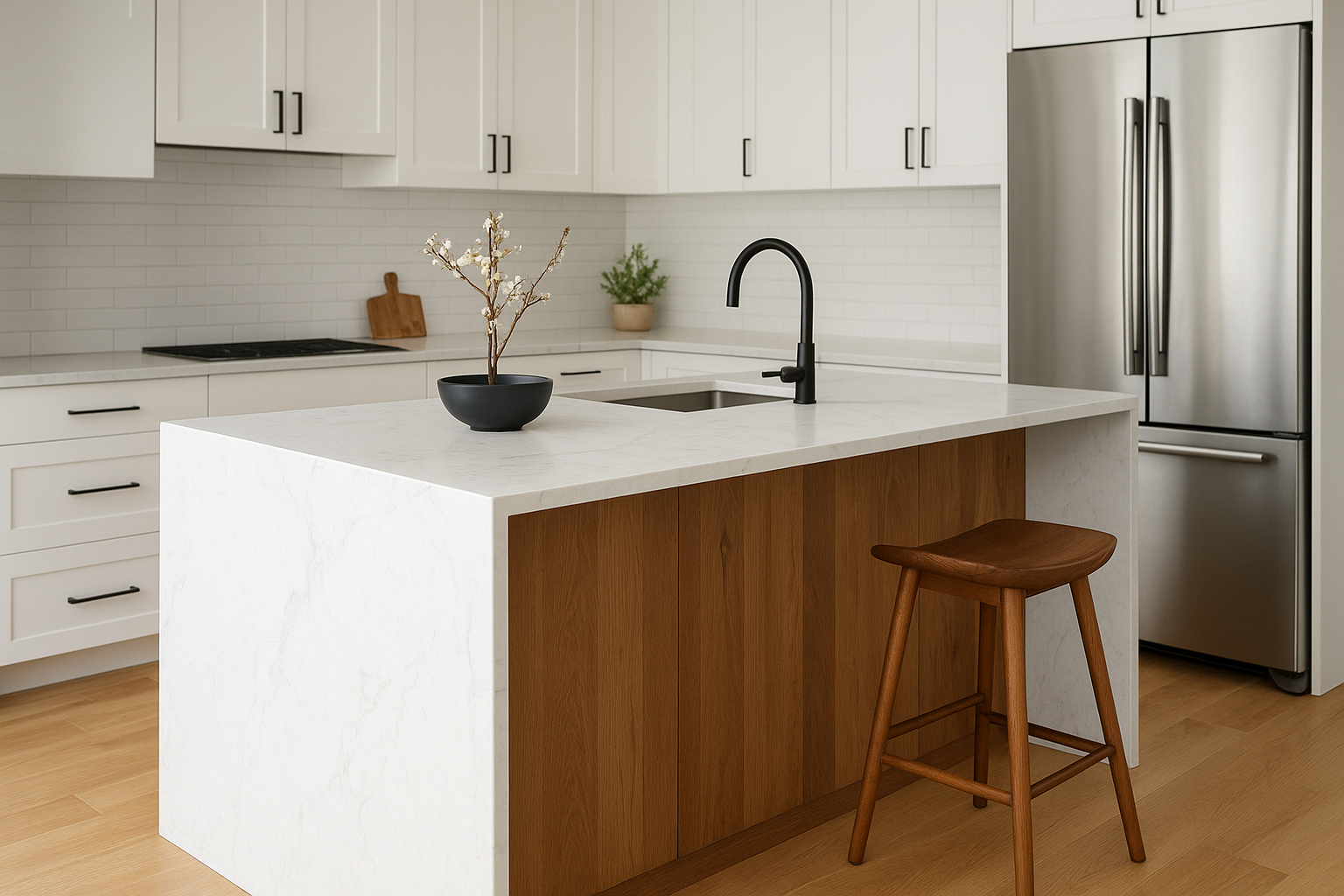
A contrasting island is one of the most effective custom kitchen island ideas for adding visual depth to a kitchen without overwhelming it. Pairing a warm wood base with a stone or solid-surface waterfall top creates a clear focal point and lets each material do what it does best.
Use contrast to make the island feel intentional
Contrast works when the two materials share at least one common element, such as tone, texture, or undertone. Pair a white oak base with a honed quartz top that has warm gray veining, and the island reads as designed rather than assembled from whatever was available.
Contrast is intentional when the two materials look like they were chosen together, not picked separately.
Select a waterfall edge that fits your lifestyle
A waterfall edge runs the countertop material down both ends of the island to the floor, creating a seamless, furniture-like appearance. It hides the cabinet box ends and reduces visible seams, but it does add material cost, so make sure the look is something you actually want before committing to it.
Add hidden outlets and knee space cleanly
Pop-up outlets and USB ports installed flush into the countertop surface keep the island functional without exposing cords or breaking the clean waterfall profile. If you’re adding seating, plan knee clearance of at least 15 inches from the overhang edge to the cabinet face so the seating side feels comfortable.
Material pairings that look current for 2026
White oak or walnut bases paired with leathered quartzite or matte porcelain tops are holding up well in kitchen design right now. These combinations wear better than high-gloss finishes in a working kitchen and tend to age more gracefully over time.
Typical budget range and what drives cost
A contrasting waterfall island typically runs $5,000 to $15,000 or more, with the countertop material being the single largest cost variable. Fabrication complexity, slab size, and whether you add integrated seating or outlets all push the number higher.
3. Two-level island for prep and entertaining
A two-level island splits your work surface into two distinct heights, giving you a lower prep zone and a raised bar counter in a single footprint. This layout is one of the most functional custom kitchen island ideas for households that cook seriously and entertain regularly, because it separates the two activities instead of letting them compete for the same space.
Decide between bar height and counter height
The raised section typically sits at 36 or 42 inches, with 42-inch bar height being the more common choice for seating with standard bar stools. If you want a relaxed, casual dining feel without the elevated perch, counter height at 36 inches is the better fit.
Keep the prep zone clear with smart storage
Store prep tools and cutting boards in dedicated deep drawers directly below the lower work surface so the prep zone stays clear when you need it most. Pull-outs and utensil dividers keep everything accessible without eating up counter space.
Add a serving ledge that hides the mess
The raised ledge does double duty: it gives guests a surface for drinks and blocks their sightline to the prep mess below.
Your raised portion creates a natural visual barrier between the working side and the seating side. Use that ledge to pass food and drinks without exposing the dirty prep work to anyone sitting at the island.
Lighting and seating spacing that feels right
Hang pendants 12 to 18 inches above the bar surface to light the seating side without glaring into the prep zone. Space bar stools 26 to 30 inches apart on center so seating stays comfortable and uncrowded.
Typical budget range and what drives cost
A two-level island typically runs $4,500 to $14,000 or more, depending on size and materials. The biggest cost drivers are the additional structural framing required for two heights and the countertop material spanning both levels.
4. Island with a dining table extension
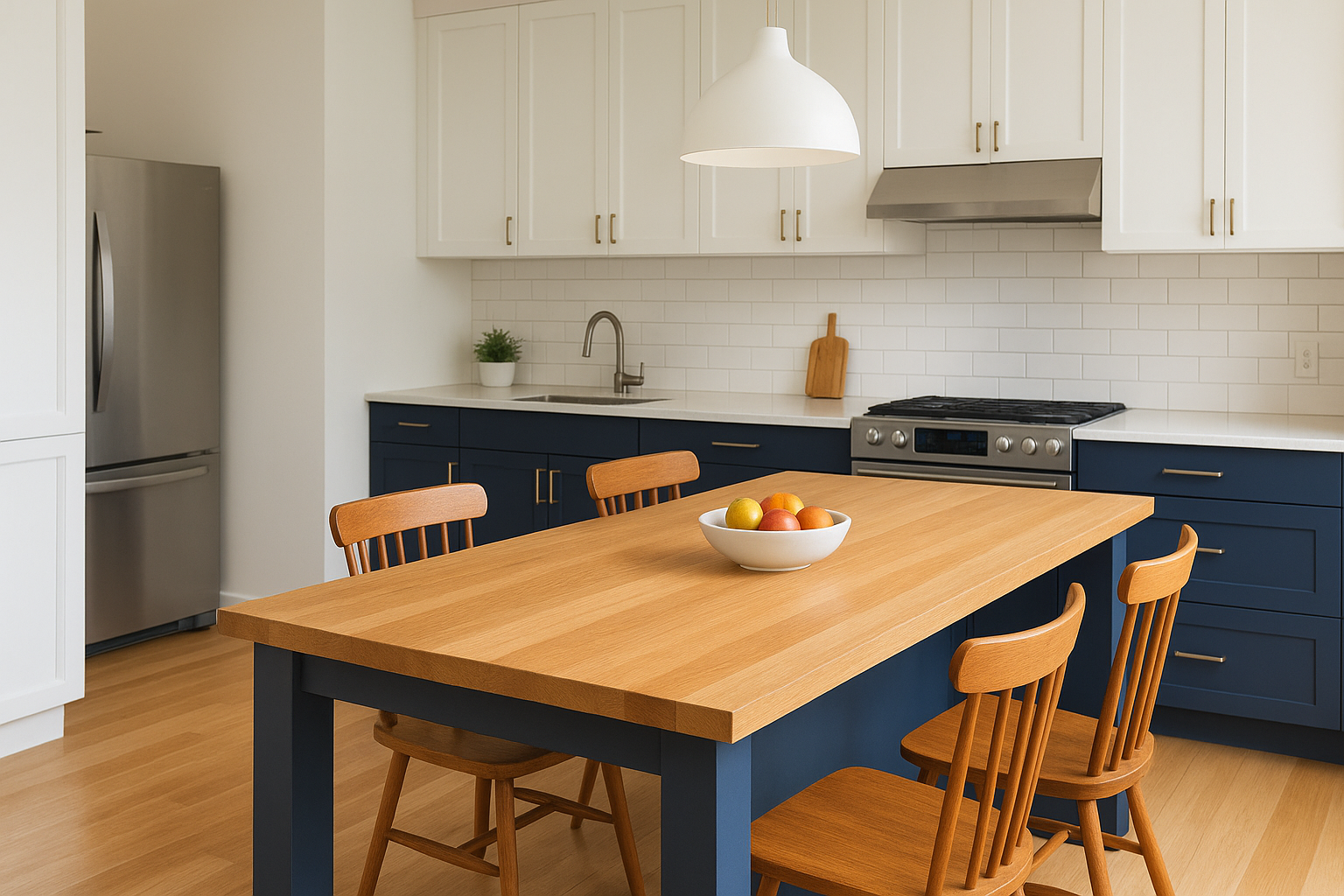
An island with a dining table extension solves the problem of needing both a prep surface and a real dining area without dedicating two separate footprints to the job. This layout is one of the most practical custom kitchen island ideas for kitchens that lack a separate dining room or where the existing table always feels too far from the action.
Pick the right table extension style
Your extension can run flush at counter height (36 inches) for a seamless look, or drop down to standard dining height (30 inches) for a more formal feel with traditional chairs. The flush option keeps the visual line clean and works better in open-plan kitchens where the island needs to read as one unified piece of furniture.
Plan comfortable seating clearance and legroom
Plan for at least 12 inches of overhang on the dining side to give seated guests enough legroom without crowding. You also need 36 to 48 inches of clearance behind each chair so people can pull out and stand up without bumping into a wall or appliance.
Tight clearance behind chairs is the most common planning mistake in kitchen dining extensions.
Support the overhang safely and subtly
Any overhang beyond 12 inches needs internal support, either through corbels, steel brackets, or a cantilevered substructure built into the island base. Hidden steel brackets are the cleanest option because they carry the load without interrupting the design.
Choose finishes that blend kitchen and dining areas
Match the extension’s finish to either your island base or your dining furniture, not both, so the transition reads as intentional. A painted base with a natural wood extension top bridges the two zones without looking forced.
Typical budget range and what drives cost
An island with a dining extension typically runs $5,500 to $16,000 or more, depending on the extension length, structural support requirements, and countertop material. Longer extensions with drop-down framing or cantilevered steel add meaningful cost compared to a simple flush overhang.
5. Workstation island with sink and cleanup zone
A workstation island consolidates sink, trash, dishwasher, and prep surface into one efficient zone, making it one of the most productive custom kitchen island ideas for serious cooks. When everything you need for cleanup sits within arm’s reach, you stop crossing the kitchen dozens of times per meal.
Lay out the sink, trash, and dishwasher in one line
Position your sink between the dishwasher and the trash pullout so dirty dishes travel the shortest possible distance from one stop to the next. This single-line layout keeps the rest of your counter clear and makes the cleanup sequence feel almost automatic.
Add pull-outs that speed up prep and cleanup
Under-sink pull-outs and tilt-out trays in front of the sink turn otherwise dead cabinet space into useful storage for cleaning supplies. Stack deep drawers on the prep side for cutting boards and mixing bowls so they stay within reach without cluttering the counter.
The best workstation islands are built so your hands never leave a two-foot radius during cleanup.
Include a landing zone for small appliances
Reserve a 12 to 18-inch section on one end of the island, clear of the sink and trash, for small appliances. A dedicated spot prevents stand mixers and instant pots from drifting across the entire surface and taking over your prep space.
Choose countertop edges and fixtures that wear well
Undermount composite or stainless steel sinks handle daily use better than drop-in options and clean up faster. Pair them with a leathered or honed stone surface that hides water marks and surface scratches better than polished finishes.
Typical budget range and what drives cost
A workstation island typically runs $6,000 to $18,000 or more, depending on plumbing complexity and countertop choice. Adding a dishwasher or built-in trash system inside the island adds both material cost and installation time, so flag those features early in the design process.
6. Compact island for small kitchens
A small kitchen doesn’t have to skip the island entirely. With the right proportions and planning, a compact island can add meaningful counter space, storage, and seating without making the room feel tighter. These custom kitchen island ideas scale down in size but not in function.
Use a furniture-style island to keep the room open
Furniture-style islands with open legs or a raised base let light and sightlines pass through rather than stopping at a solid cabinet box. Your kitchen reads as larger when the floor stays visible beneath the island on at least two sides.
Add storage without making the island bulky
Focus on vertical storage options like open shelving on one end or a single column of drawers instead of wrapping cabinets around every face. Targeted pull-outs in the right spots keep the island lean without sacrificing function.
A compact island with smart storage beats a large island with wasted space every time.
Choose a movable island only when it makes sense
A rolling island with locking casters works well if your kitchen layout changes regularly or you need to pull it aside for gatherings. Fixed islands, however, give you better structural options for plumbing or outlet integration when you need either.
Make a small island feel custom with trim details
Furniture-grade legs, applied molding, and a thick countertop edge lift a compact island from looking like a utility cart to looking like a deliberate built-in piece. These details cost relatively little but add real visual weight and intention to the finished result.
Typical budget range and what drives cost
A compact custom island typically runs $2,500 to $7,500 or more, depending on whether it’s fixed or movable and what materials you select. Leg style and countertop thickness are the two details that most affect both cost and the final appearance.
Ready to plan your island
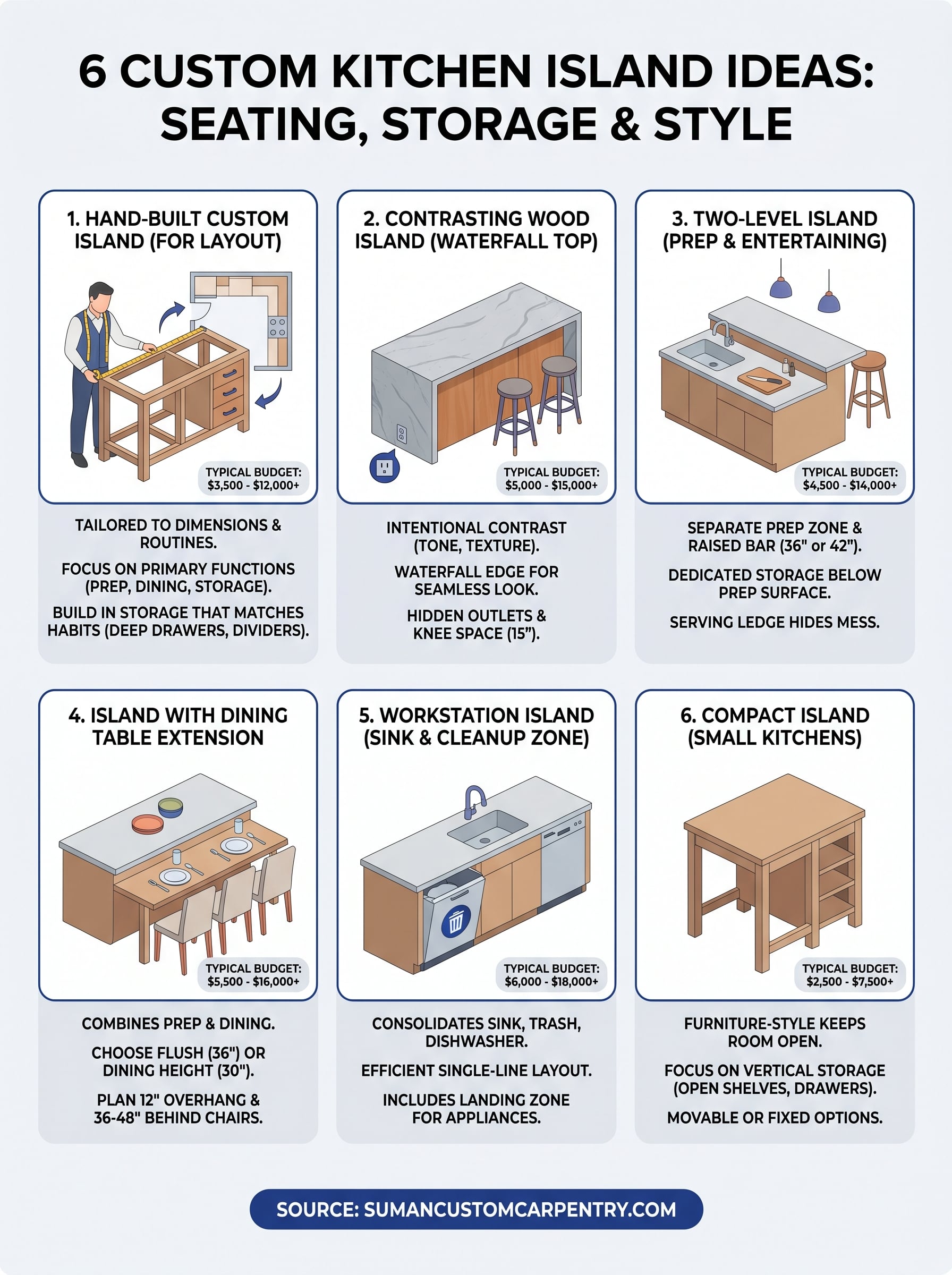
These six custom kitchen island ideas cover the most practical ways to improve how your kitchen works and looks every day. Whether you need a full workstation with a sink, a two-level layout for prep and entertaining, or a compact island that keeps a small kitchen from feeling crowded, the right starting point is knowing what your kitchen actually needs before you commit to a design. The most effective islands come from a clear plan, not from adapting a stock piece to a space it was never built for.
Suman Custom Carpentry hand-builds every island at our Hyannis shop on Cape Cod, giving you direct access to the owner through every step from design consultation to final installation. Our work comes with a lifetime guarantee on cabinet boxes and doors, so you’re investing in something built to last decades in your home. Reach out to Suman Custom Carpentry to start planning your kitchen island today.