
Your bedroom walls are wasted space if all they hold is a mirror and a stack of picture frames. Floating shelves ideas for bedroom spaces solve two problems at once: they give you storage without eating up floor room, and they turn blank walls into something worth looking at. If your nightstand is overflowing or your closet can’t hold one more sweater, shelves might be the fix you haven’t tried yet.
This isn’t a generic "add some shelves" post. You’ll get specific placement heights, material pairings, and styling tricks that actually work in a real bedroom, above the headboard, beside a window, in an awkward corner. We’ve built enough custom cabinetry and built-in shelving on Cape Cod to know what holds up over years of use, not just what looks good in a photo.
Below are 12 ideas covering everything from minimalist single-shelf statements to full wall-to-wall systems. Some you can install yourself this weekend. Others, especially anything load-bearing or built into a wall, are worth handing to a carpenter who builds custom, hand-fitted pieces for a living.
1. Custom-built floating shelves made for your bedroom
Most floating shelves you find in stores come in three sizes and two colors, and none of them will match your trim, your wall length, or the way you actually use your bedroom. Custom-built floating shelves are cut, finished, and fitted to your exact wall, your paint color, and your storage habits. This is the option we build most often at our Hyannis shop, and it’s usually the difference between a shelf that looks tacked on and one that looks like it was always part of the room.
How it works
A carpenter measures your wall, talks through what you want to store and display, then builds the shelf from solid wood or veneered plywood with a hidden mounting cleat or steel rod system anchored into the studs. There’s no visible bracket, no gap between the shelf and the wall, and no flex when you load it with books. Everything, from the wood species to the depth to the edge profile, gets decided around your bedroom style instead of a factory template.
A shelf built to your wall, not pulled off a shelf, is the one detail that makes a bedroom feel finished.
Best for
Custom floating shelves make the most sense for homeowners who’ve already tried a big-box version and watched it sag, or who have an oddly shaped wall that standard sizes can’t fill cleanly. They’re also the right call if you want the shelf to match existing cabinetry, like a closet system or a built-in dresser, so the whole room reads as one cohesive design instead of a patchwork of separate purchases.
Sizing and placement
We typically build bedroom shelves 8 to 12 inches deep and anywhere from 24 inches to a full 8-foot run, depending on the wall. Weight capacity depends on the mounting method and the studs behind the drywall, but a properly anchored hidden-bracket shelf holds far more than an off-the-shelf version rated for 20 pounds.
| Detail | Standard store shelf | Custom-built shelf |
|---|---|---|
| Depth options | 6" or 10" only | Any depth to fit your wall |
| Finish match | Limited stock colors | Matched to your trim or cabinetry |
| Weight rating | Often 15-25 lbs | Built to load, stud-anchored |
| Fit | Gaps on uneven walls | Scribed and fitted to your wall |
Styling tips
Keep the finish consistent with your room’s woodwork, whether that’s a warm oak, a painted white to match trim, or a driftwood gray that fits coastal Cape Cod interiors. Group three to five objects per shelf rather than lining everything up evenly. Mix a stack of books, a small plant, and one framed photo so the eye has somewhere to rest. If you’re building more than one shelf, stagger the widths slightly instead of making them identical twins, it reads as designed rather than assembled from a kit.
2. Floating shelves above the bed
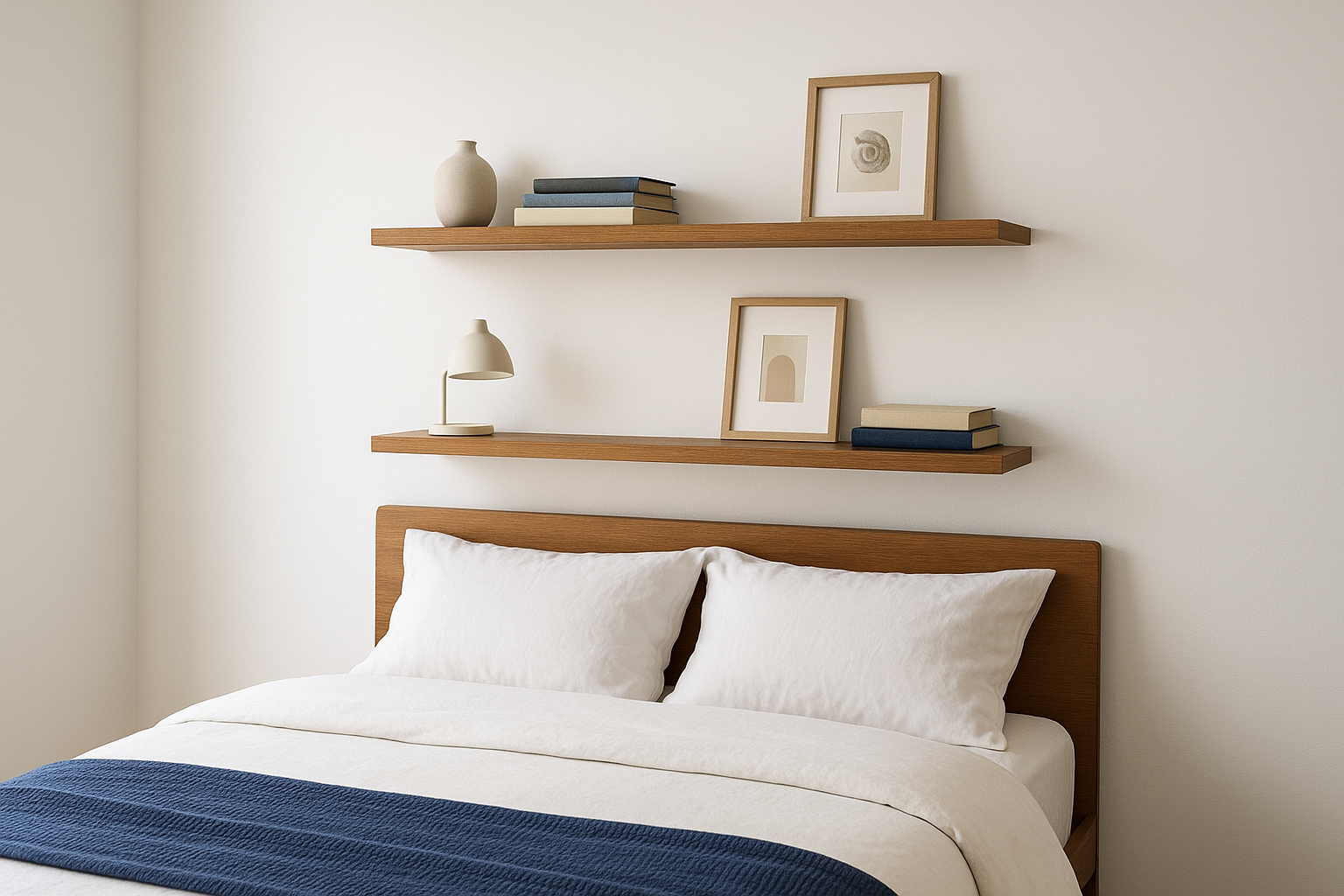
A shelf mounted above your headboard replaces the oversized art piece or mirror most bedrooms default to. Floating shelves above the bed give you the visual anchor of a statement piece while doing double duty as display space for books, framed photos, or a small lamp. It’s one of the highest-impact changes you can make to a bedroom wall without touching the floor plan at all.
How it works
One or two shelves get mounted on the wall directly above the headboard, centered on the bed rather than the wall itself. The mounting has to go into studs, not just drywall anchors, because anything above a bed needs to be secure. Most installers use a concealed cleat system so there’s no visible hardware between the shelf and whatever sits below it.
Best for
This works best for bedrooms without a tall headboard, where there’s at least 12 to 14 inches of clear wall space above the bed frame. It’s a strong fit for renters and homeowners alike who want a decorative focal point without committing to a large piece of furniture or a heavy mirror that’s awkward to hang.
Sizing and placement
Anything mounted above a bed has to be anchored into studs, no exceptions.
Leave at least 6 to 8 inches between the top of the headboard and the bottom of the shelf. Standard depth runs 6 to 8 inches, wide enough for books and small decor but shallow enough to stay out of the way when you sit up in bed.
Styling tips
Stick to lightweight, low-profile items only, nothing that could fall and hit someone sleeping below. A small reading lamp, a framed print leaned rather than hung, and a stack of two or three books work well. Avoid heavy vases or anything with sharp edges, and skip glass entirely if you have kids who climb into bed with you.
3. Floating shelf nightstands instead of furniture
Small bedrooms often lose square footage to bulky nightstands that block a walking path or crowd a doorway. Floating shelf nightstands solve that by mounting a single shelf beside the bed at the right height, giving you a spot for a lamp and a book without a single leg touching the floor. Among all the floating shelves ideas for bedroom layouts we build, this is the one that makes the biggest difference in a tight room.
How it works
A carpenter mounts a shelf, usually 12 to 16 inches deep, at standard nightstand height on the wall next to the bed. The shelf attaches with a hidden cleat anchored into a stud, so there’s no wobble when you set down a glass of water or reach for your phone charger. Some versions add a second, narrower shelf below for extra storage, mimicking a two-tier nightstand without the footprint.
Best for
This fits small bedrooms, guest rooms, or any layout where a traditional nightstand makes the walk to the closet or bathroom awkward. It also suits anyone who vacuums or mops often and is tired of moving furniture out of the way every time.
Sizing and placement
A floating nightstand frees up floor space a traditional one never could.
Mount the shelf 24 to 26 inches off the floor, roughly level with your mattress top, and keep it within easy reach of where your arm falls when lying down. Leave at least an inch of clearance from the headboard so nothing catches when you adjust pillows.
Styling tips
Keep the surface functional first: a lamp, a phone, a small dish for jewelry or glasses. Add one personal touch, like a small framed photo or a candle, but resist turning it into a display shelf. Function matters more here than anywhere else on this list.
4. A built-in shelf attached to your headboard
A headboard and a shelf don’t have to be two separate purchases. A built-in headboard shelf combines both into one wall-mounted unit, giving you a padded or wood-paneled backrest with a ledge running along the top or sides for books, a lamp, and a glass of water. Cape Cod clients ask for this often when they’re redoing a primary suite and want the bed to feel like part of the room’s architecture instead of a piece dropped in from a furniture store.
How it works
We build the headboard and shelf as one connected structure, anchored into wall studs with a hidden bracket system so the whole thing reads as a single fixture rather than a headboard with a shelf bolted on afterward. The shelf portion typically wraps the top edge of the headboard or extends past its sides, giving you a continuous surface instead of two mismatched pieces competing for attention.
Best for
This suits homeowners doing a full bedroom renovation who want furniture and storage to disappear into the wall design. It also works well for anyone who’s tired of nightstands and headboards from different collections that never quite match in finish or style.
Sizing and placement
A headboard and shelf built as one piece never looks like two separate purchases fighting for attention.
Shelf depth usually runs 6 to 10 inches along the top edge, wide enough for a stack of books without crowding pillows. Height depends on your mattress, but the shelf surface typically sits 8 to 10 inches above the top of the mattress.
Styling tips
Keep decor sparse along the top edge since it’s within arm’s reach while lying down. One lamp per side, a book, maybe a small plant on one end only. Match the headboard finish to your existing trim or bed frame so the whole build looks intentional, not improvised.
5. A floating bookshelf wall for a reading nook
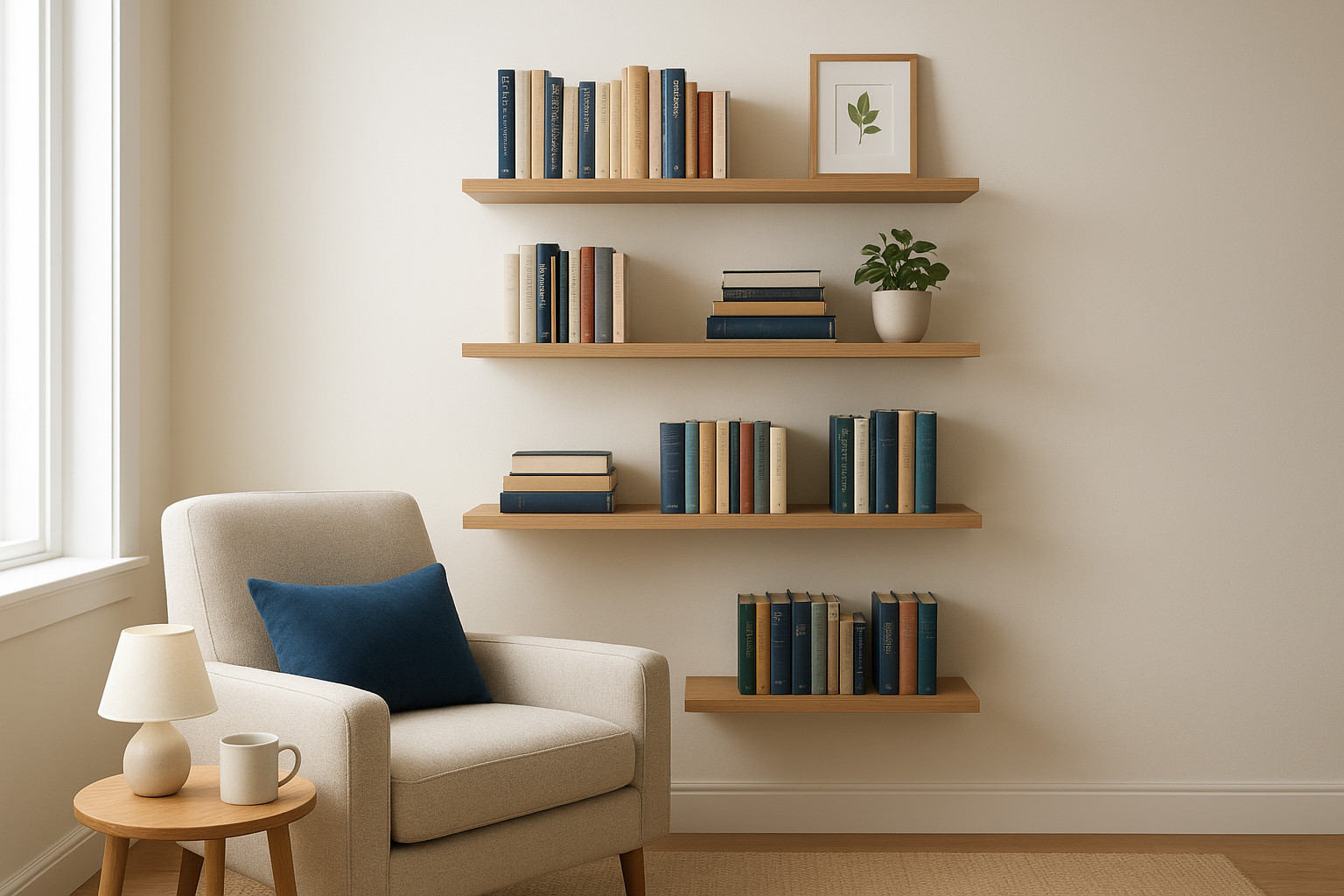
If you’ve got a reading chair tucked into a corner or a window seat that never gets used, a wall of floating shelves turns that dead space into a real destination. A floating bookshelf wall groups several shelves at varying heights across one section of wall, creating enough storage for a serious book collection without a single bulky bookcase eating into the room. It’s the option we recommend most when clients tell us they want their bedroom to feel like a retreat, not just a place to sleep.
How it works
We install anywhere from three to six shelves in a staggered or grid pattern, each anchored into studs with a concealed cleat so the whole wall reads as one cohesive build rather than a row of separate pieces. Depth and spacing vary shelf to shelf, which lets you fit paperbacks on some and taller art books or decor on others without wasted headroom.
Best for
This setup suits readers with a growing book collection and anyone who wants a defined nook, near a chair, a window, or an unused corner, that feels separate from the sleeping area. It’s also a smart choice for guest rooms that double as a library when no one’s staying over.
Sizing and placement
A staggered shelf wall turns an unused corner into the one spot in the bedroom you actually want to sit in.
Space shelves 10 to 14 inches apart vertically for average hardcovers, and vary depths between 6 and 10 inches to break up the visual rhythm. Keep the lowest shelf at least 30 inches off the floor so it clears a chair back or reading lamp cord.
Styling tips
Alternate horizontal book stacks with vertical rows, and slide in a bookend, small framed print, or single plant every third shelf. Leave one shelf mostly empty. That breathing room is what keeps the whole wall from looking cluttered.
6. Floating shelves inside the closet
Closets waste more space than any other spot in a bedroom. A rod, one shelf up top, and that’s it, no matter how tall the ceiling actually is. Floating shelves inside the closet replace that single fixed shelf with a full system built around what you actually own, sweaters, shoes, folded jeans, bins, without paying for a walk-in remodel. It’s one of the most requested upgrades when we build custom closet systems on Cape Cod, because most closets are built to a code minimum, not to a person’s wardrobe.
How it works
Shelves get mounted directly to the closet’s side walls and back wall using a hidden cleat or bracket system anchored into studs or blocking, stacked at heights that match what’s stored on each one. Taller shelves near the bottom hold folded bulk items, tighter spacing up top handles shoes or accessories. Because everything’s built to the closet’s actual dimensions, there’s no wasted inch on either side the way there is with a stock wire shelving kit.
Best for
This fits any bedroom with a reach-in or walk-in closet that currently has one shelf and a rod doing all the work. It’s especially useful for households sharing a closet, since you can split the shelving into distinct zones instead of stacking everyone’s things in one pile.
Sizing and placement
A closet built around your wardrobe holds more than one built around a building code minimum.
Space shelves 12 to 16 inches apart for folded clothing and 8 to 10 inches for shoes or small bins. Keep the lowest shelf at least 60 inches up if a rod runs below it, so hanging clothes clear the shelf edge.
Styling tips
Use matching bins or baskets on open shelves so the closet looks organized even mid-week. Label bins if more than one person shares the space, and leave one shelf empty for whatever you haven’t figured out storage for yet.
7. A floating desk shelf for a workspace
Bedrooms doubling as home offices need a desk that doesn’t dominate the room, and a floating desk shelf does exactly that. Instead of a bulky desk with four legs eating up floor space, a single wide shelf mounts at desk height and holds a laptop, a lamp, and a mug without a footprint on the floor. It’s a practical answer for anyone who’s carved a workspace out of a corner that was never meant to hold one.
How it works
A carpenter mounts a deep shelf, usually thicker and sturdier than a decorative one, at standard desk height using a hidden bracket or cleat anchored into studs. Because it’s load-bearing for daily use, laptop, monitor, keyboard, it needs more support than a display shelf, often with a steel rod system running further into the wall for stability. Some builds add a second, narrower shelf above for a monitor riser or shallow storage.
Best for
This suits anyone working from a bedroom without room for a real desk, especially in smaller homes or apartments. It’s also a smart pick for a guest room that occasionally becomes a workspace, since the shelf disappears into the wall when it’s not in use instead of taking up permanent floor space.
Sizing and placement
A desk that hangs on the wall gives you a workspace without giving up the room.
Mount the surface 28 to 30 inches off the floor, standard desk height, with a depth of at least 20 inches to fit a laptop and elbow room. Leave 30 to 36 inches of clearance in front for a chair to pull in and out comfortably.
Styling tips
Keep the surface clear at the end of each workday. A small cable tray underneath keeps cords from dangling into view, and a single task lamp mounted on the wall above frees up desk space entirely. Choose a finish that matches your bedroom’s woodwork so the workspace blends in rather than announcing itself.
8. Floating shelves under a wall-mounted TV
A wall-mounted TV without anything below it looks unfinished, and a bulky media console defeats the purpose of mounting the TV in the first place. Floating shelves under a wall-mounted TV give you a spot for a soundbar, a streaming box, and a candle or two, without dragging a dresser-sized piece of furniture back into the room. It’s a clean way to finish off a bedroom TV setup that otherwise looks like it’s floating in empty wall space.
How it works
One or two shelves get mounted below the TV bracket, spaced far enough apart to keep components ventilated and cords out of sight. A carpenter routes a cutout or a small gap at the back of the shelf so cables can drop straight down to an outlet instead of running across the front. The shelf itself anchors into studs with a hidden cleat, the same system used above the bed, so there’s no visible bracket competing with the clean lines of the mounted screen.
A shelf under a mounted TV should disappear into the wall, not compete with the screen above it.
Best for
This fits any bedroom with a wall-mounted TV and no existing furniture to hold the components underneath. It’s a strong option for smaller rooms where a media console would eat up floor space you’d rather keep open, and for anyone who wants a minimal look instead of a stack of black boxes on a stand.
Sizing and placement
Mount the shelf 6 to 10 inches below the TV, with a depth of 10 to 12 inches to fit a soundbar or streaming device comfortably. Keep the shelf width close to the TV’s own width so the whole setup reads as one unit rather than mismatched pieces.
Styling tips
Hide cords with a paintable cord channel that matches the wall color, and keep the shelf itself sparse: components only, maybe one small plant on the end. Skip anything reflective directly under the screen, glare shows up the moment the TV turns on.
9. Corner floating shelves for tight spaces
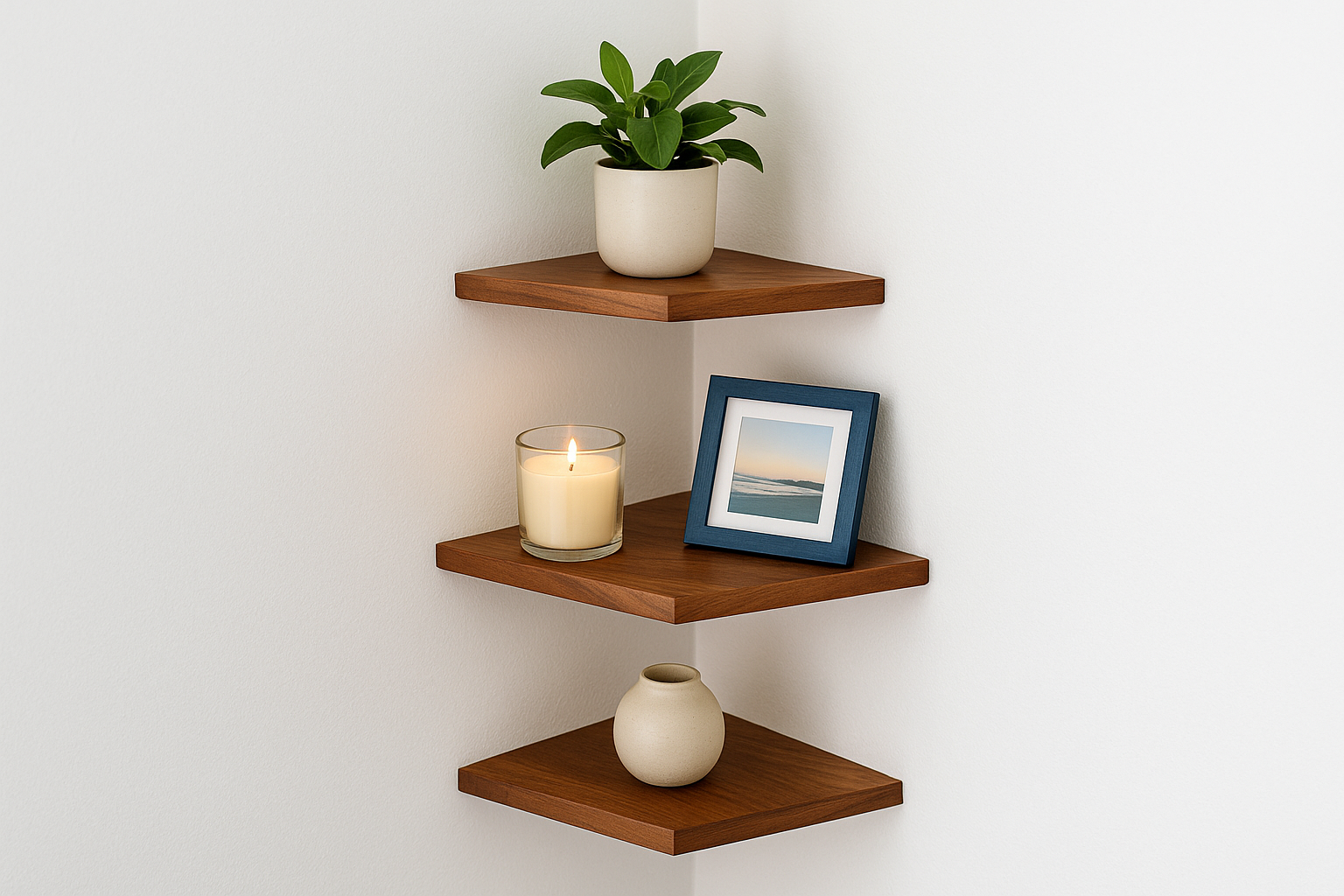
Corners get ignored in most bedrooms because square shelves and rectangular furniture don’t fit them well. Corner floating shelves solve that by wrapping diagonally across the angle where two walls meet, turning a dead zone into usable display or storage space. Small bedrooms benefit the most, since every corner left empty is square footage you’re not using for anything.
How it works
Each shelf gets cut at a 45-degree angle on the back edge so it sits flush against both walls at once, then mounts with a hidden cleat anchored into studs or blocking on at least one side. Because corners rarely have a stud running exactly where you need one, a carpenter often adds a mounting block behind the drywall first. Skipping that step is why so many DIY corner shelves wobble or pull loose within a year.
Best for
This suits small bedrooms, awkward layouts with a corner that furniture can’t reach, or rooms where every other wall is already full of a bed, dresser, or closet door swing. It’s also a good fit for anyone who wants a display spot without giving up any more flat wall space than they already have.
Sizing and placement
A corner shelf turns the one spot in the room every piece of furniture avoids into usable space.
Stack two to four shelves 10 to 12 inches apart vertically, starting around 40 inches off the floor. Keep depth between 8 and 10 inches on each side of the angle so the shelf doesn’t jut out awkwardly into the walking path.
Styling tips
Use the corner shelves for smaller, lighter items since the angled mount carries less load than a straight wall shelf. A small plant, a candle, and a framed photo work better here than a stack of hardcovers. Vary the height of objects shelf to shelf so the eye travels up the corner instead of stalling on one flat row.
10. Floating shelves with built-in LED lighting
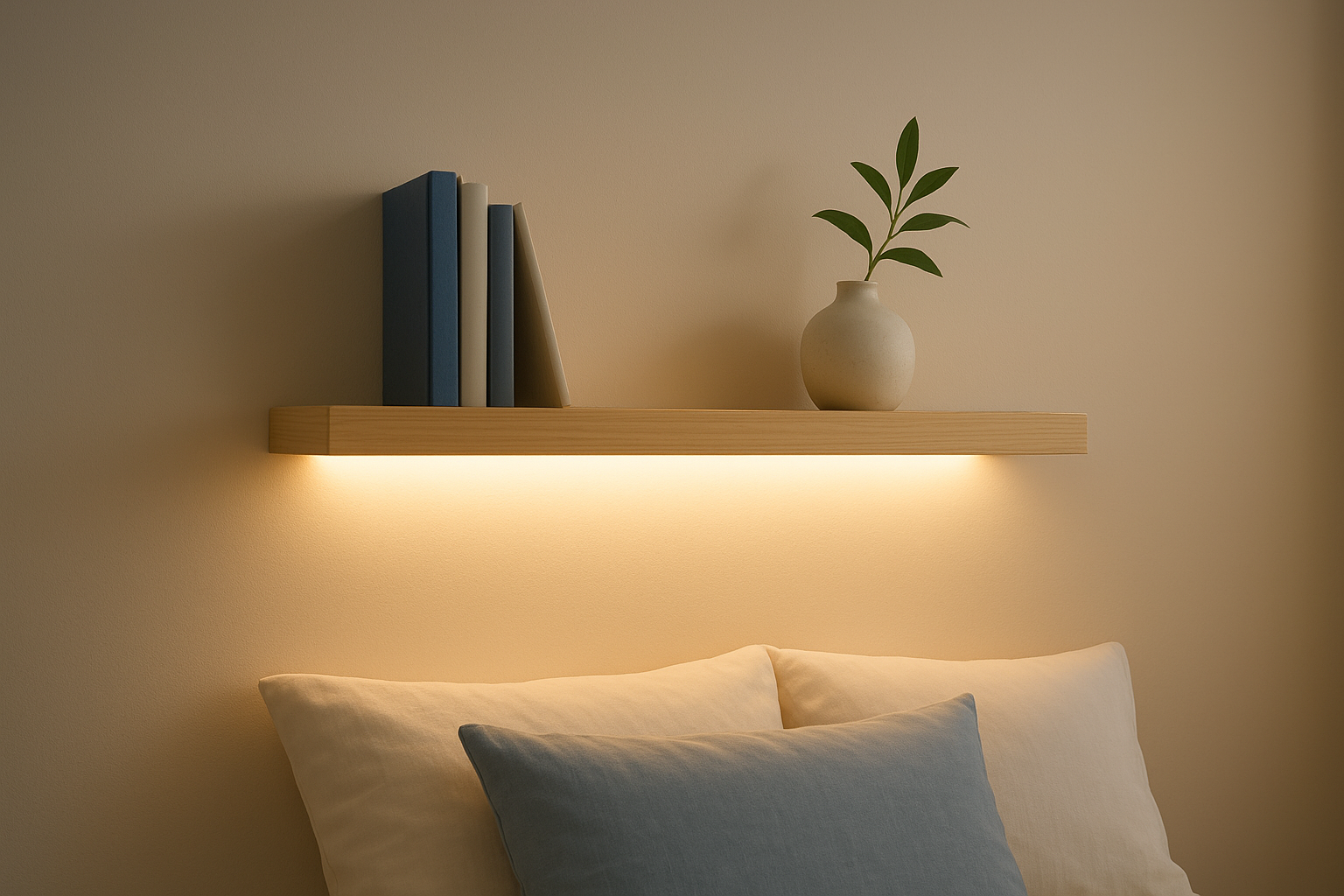
A plain shelf disappears the moment the sun goes down, but a shelf with built-in LED lighting stays useful and looks like a design feature instead of an afterthought. Strips tucked under the lip or along the back edge wash the wall with soft light, turning a display shelf into something closer to a light fixture that also holds your books. It’s one of the most requested upgrades for floating shelves ideas for bedroom walls that double as a reading spot or a soft night light source.
How it works
A carpenter routes a channel into the underside or back edge of the shelf during the build, then runs a low-voltage LED strip through it before the shelf goes on the wall. Wiring drops down inside the wall to a plug or a small in-wall dimmer switch, so there’s no visible cord hanging below the shelf. Because the wiring runs through the shelf itself, this has to be planned before installation, not added after the fact.
Best for
This fits bedrooms that want a secondary light source beyond the overhead fixture, especially for reading in bed or moving around at night without flipping on a bright light. It also suits anyone building a display shelf for collectibles or art where lighting adds depth instead of relying on flat daylight alone.
Sizing and placement
Lighting built into the shelf itself beats a lamp sitting on top of it every time.
Mount lit shelves 12 to 18 inches apart if stacking more than one, so the glow from each doesn’t wash out the one below it. Keep the light channel set back from the front edge so the bulb line stays hidden from a standing view.
Styling tips
Choose a warm white bulb, around 2700K, for a bedroom rather than a cool white that feels clinical. Add a dimmer so the shelf can shift from a bright display at night to a soft glow at bedtime, and keep objects on the shelf translucent or light-colored so they catch the light instead of blocking it.
11. Floating shelves for a nursery or kids room
A nursery changes fast. What holds diapers and burp cloths this year holds picture books and stuffed animals the next. Floating shelves for a nursery or kids room grow with that shift because they’re not tied to a crib or a changing table that gets outgrown. Instead of buying new furniture every couple of years, you adjust what sits on the shelf and keep the wall mount for the long haul.
How it works
Shelves mount low enough for a child to reach on their own once they’re walking, anchored into studs with rounded edges and no hardware exposed underneath. Depth stays shallow, usually 6 to 8 inches, so books and toys don’t tip forward when a small hand grabs one off the shelf. A carpenter also skips glass or sharp-cornered materials entirely on builds meant for a kids room.
Best for
This suits parents furnishing a nursery who want a display spot for books and keepsakes without a bulky bookcase a toddler could pull over. It also fits older kids’ rooms where floor space for toy bins and floor puzzles matters more than another dresser against the wall.
Sizing and placement
A shelf a toddler can reach safely does more for a kids room than one that just looks nice from the doorway.
Mount the lowest shelf around 24 to 30 inches off the floor for a toddler, raising higher shelves to 40 to 50 inches for items you want out of reach. Space multiple shelves at least 10 inches apart so board books sit upright without crowding.
Styling tips
Face board books forward instead of stacking them spine-out, so covers double as wall art and kids can pick titles on their own. Add soft-cornered bins for small toys, and keep anything breakable or battery-powered on the top shelf only, out of a toddler’s reach entirely.
12. Floating shelves above a dresser or window
A dresser topped with a mirror or a window with bare wall above it are both missed opportunities. Floating shelves above a dresser or window fill that gap with display space that doesn’t compete with what’s already there. It’s a small addition, but it’s often the detail that makes a wall look finished instead of half-decorated.
How it works
A single shelf, or a pair stacked with space between them, mounts on the wall above the dresser top or window trim, anchored into studs with a hidden cleat the same way as every other shelf on this list. Above a window, the shelf usually runs the same width as the window casing so it reads as one unit rather than a random plank. Above a dresser, it typically matches the dresser’s width or extends a few inches past each side.
Best for
This fits bedrooms where a dresser feels bare on top, or a window has awkward blank wall space above the trim that nothing else addresses. It also suits anyone who wants a rotating display spot for seasonal decor without rearranging the dresser top itself.
Sizing and placement
A shelf above a window should match the trim width, not just the wall space available.
Leave 4 to 6 inches of clearance above window trim so the shelf doesn’t crowd the casing. Above a dresser, mount 10 to 14 inches up from the dresser top, close enough to feel connected but far enough to avoid bumping items when opening drawers.
Styling tips
Keep the shelf lighter in scale than the furniture below it, a few small frames, a plant, one candle. Above a window, skip anything that blocks natural light from coming in, and choose a finish that matches the window trim so the two pieces read as one built element instead of separate additions.
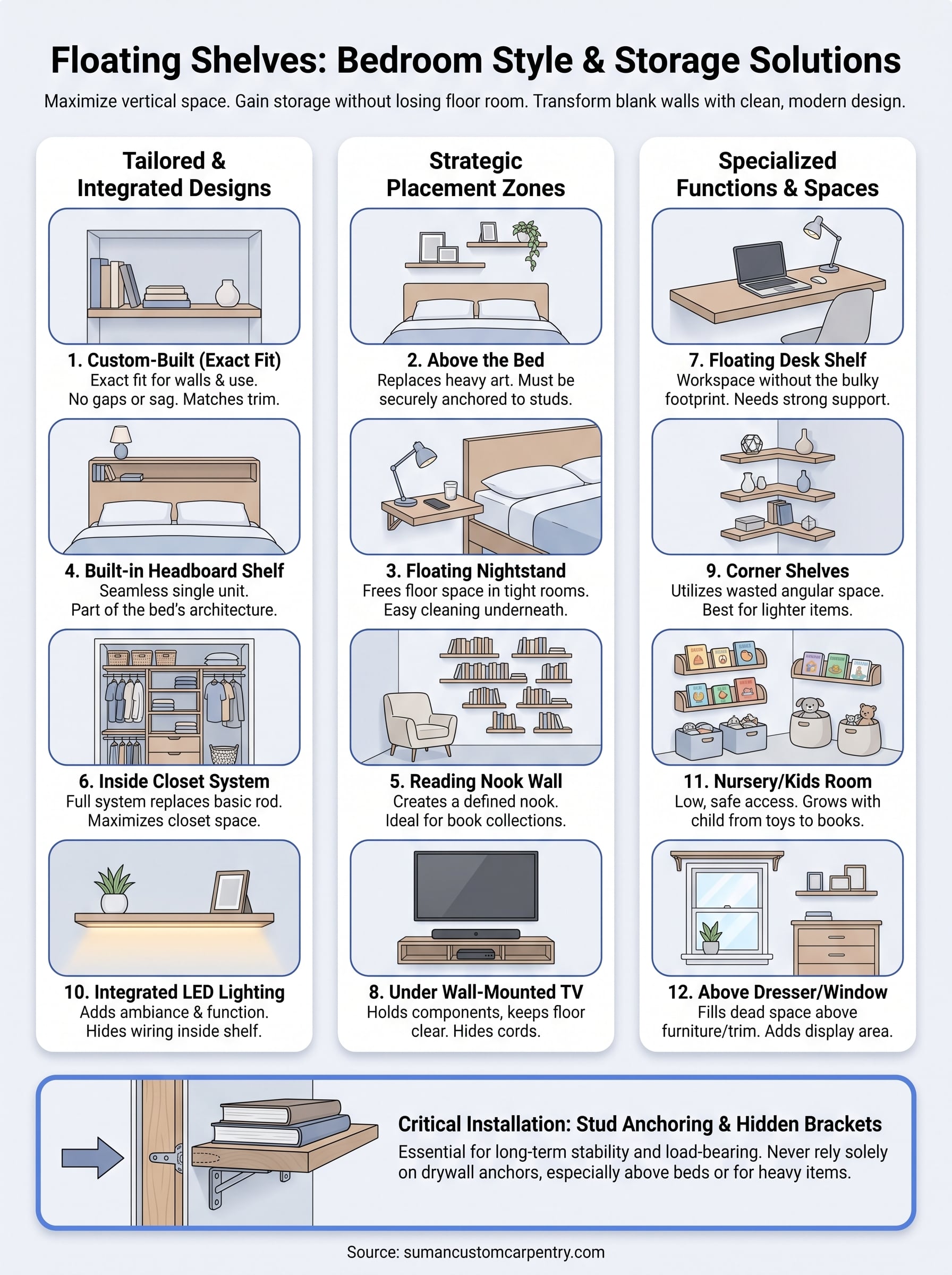
Choosing the right fit for your bedroom
Twelve ideas is a lot to sort through, so start with the problem you actually have. Cramped nightstand? Try the floating nightstand or the headboard shelf. Bursting closet? Build a real system instead of living with one sagging shelf and a rod. Blank wall over the bed or dresser? That’s the easiest win on this list, and it costs the least in time and materials.
Whatever you pick, the shelf only works long-term if it’s mounted right. Stud anchoring and hidden bracket systems aren’t optional extras, they’re what keeps a shelf from pulling out of the wall a year in, especially above a bed or inside a closet carrying real weight.
If you’re on Cape Cod and ready to move past store-bought shelving that never quite fits, talk to Suman Custom Carpentry about building something for your actual wall, not a template.