
Cabinets set the entire tone of a kitchen. They cover more square footage than any other element in the room, which means your choice of kitchen cabinet design styles directly shapes how the space looks and feels. Whether you’re drawn to clean modern lines or the warmth of traditional raised panels, understanding what’s out there helps you make a confident decision, not one you’ll second-guess five years from now.
At Suman Custom Carpentry, we design and hand-build custom kitchen cabinets at our shop in Hyannis, Cape Cod. Every project starts with a conversation about style, function, and how a homeowner actually uses their kitchen. That process has given us a front-row seat to what works, what lasts, and what clients love years after installation.
This guide breaks down 11 distinct cabinet design styles worth knowing before you start your remodel. For each one, we’ll cover what defines it, where it works best, and what to consider before committing. By the end, you’ll have a clear picture of which direction fits your home and your taste, so your next conversation with a cabinetmaker is a productive one.
1. Custom cabinetry built to match your style
Custom cabinetry sits at the top of all kitchen cabinet design styles because it starts with you, not a catalog. Instead of adapting your kitchen around what a manufacturer already built, a custom cabinetmaker builds around your space, your workflow, and your taste. That means every cabinet dimension, door style, and finish reflects a deliberate choice rather than a compromise.
What it looks like in a finished kitchen
Custom kitchens look intentional in a way that stock or semi-custom work rarely achieves. Every corner cabinet, filler piece, and panel detail fits the room rather than compensating for it. You get clean lines where cabinets meet walls, ceilings, and appliances because the measurements were built from your actual kitchen, not a standard module size.
Where custom design adds the most value
Custom work pays off most in kitchens with unusual layouts, ceiling heights above standard, or architectural details worth preserving. If your Cape Cod home has sloped ceilings, a bay window, or a tight corner, custom cabinetry turns those challenges into design features instead of problems. Floor-to-ceiling runs and built-in refrigerator panels are two examples that look seamless in custom work and awkward in stock.
A custom cabinet built to the ceiling eliminates the gap that collects dust and makes a kitchen feel unfinished.
Layout and storage options you can build in
You can spec pull-out shelves, drawer inserts, built-in spice racks, and integrated waste bins directly into the design from the start. Nothing gets retrofitted or forced in later. Each storage feature fits the way you actually cook and organize, which makes daily use noticeably smoother than adapting to a fixed layout.
Material and finish choices that hold up on the coast
Cape Cod’s humidity and salt air put real stress on finishes. Solid wood species like hard maple and white oak handle seasonal movement better than engineered substitutes. Finishes chosen specifically for coastal conditions stay sharp through humid summers and dry winters without cracking or peeling prematurely.
Cost and timeline expectations
Custom cabinetry costs more upfront than stock options, but the lifetime warranty on cabinet boxes and doors changes the long-term math considerably. A full custom kitchen at Suman Custom Carpentry typically runs a 40-to-60-day build and installation timeline from signed design to completed installation, so planning ahead matters.
2. Shaker cabinets
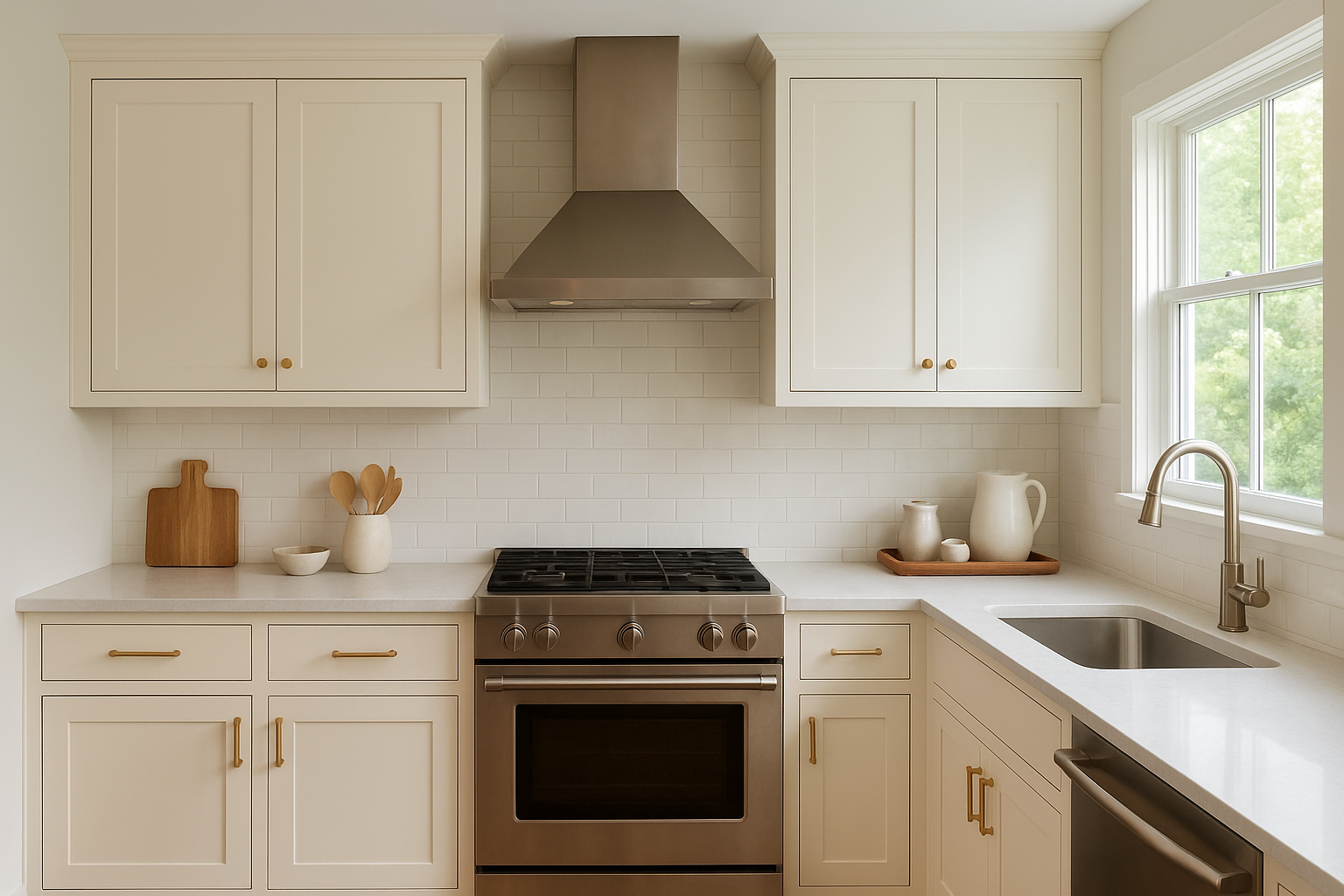
Shaker cabinets remain one of the most widely chosen kitchen cabinet design styles for good reason. Their five-piece door with a flat center panel keeps things simple enough to work across multiple design directions without locking you into a single aesthetic.
What defines the Shaker look
The Shaker door gets its character from a recessed center panel framed by four flat rails and stiles. No curves, no ornate carving, just clean geometry. That restraint is exactly what makes it translate so well across different home styles and finish choices.
Best fits for Cape Cod homes
Shaker cabinets suit Cape Cod interiors particularly well because they bridge traditional New England architecture and cleaner modern sensibility. Whether your home leans toward a classic cape-style look or a lighter coastal feel, Shaker doors hold their own without competing with other design elements in the room.
The right Shaker cabinet works just as naturally in a 1920s cape-style house as it does in a recently built coastal renovation.
Hardware choices that change the vibe fast
Swapping hardware on Shaker doors shifts the entire feel of your kitchen faster than almost any other change. Brushed brass pulls push the design warmer and more traditional, while matte black or brushed nickel reads cleaner and more contemporary. You control the tone with one decision.
Finish options and upkeep
Painted Shaker doors in whites, soft greens, and grays clean easily with a damp cloth and hold up well in active kitchens. Stained wood versions show grain and warmth if you prefer a more natural look. Both directions stay manageable with routine care.
Budget and durability notes
Shaker cabinets sit in a practical range for custom work. Solid wood construction adds longevity, and the straightforward door profile means fewer points where finish or structure degrades over years of daily use.
3. Slab or flat-panel cabinets
Slab cabinets are the defining choice among kitchen cabinet design styles that prioritize a clean, uninterrupted surface. A slab door is exactly what it sounds like: a single flat panel with no frame, recess, or raised detail. That simplicity makes it one of the boldest statements you can put in a kitchen.
How slab doors create a clean, modern look
Flat doors work by removing visual noise. No rails, stiles, or center panels means the eye moves across the cabinet face without interruption, making the kitchen feel larger and more ordered. The result is a look that photographs well and ages gracefully in contemporary settings.
When slab works best in small kitchens
Tight kitchens benefit most from slab doors because the flat surface reduces visual clutter. Less detail means less visual weight, and that makes a smaller space feel more open. Pair slab cabinets with light finishes and minimal hardware to push this effect further.
In a compact kitchen, slab doors with integrated pulls can make the entire run of cabinetry read as one cohesive surface.
Fingerprints, scratches, and finish durability
High-gloss slab finishes show fingerprints and fine scratches more readily than textured or painted styles. Matte finishes hide daily wear better and suit coastal homes where humidity and salt air can stress gloss coatings over time.
Handle styles and integrated pulls
Slab doors give you full freedom with hardware. Bar pulls and integrated finger pulls both work cleanly against the flat surface. Integrated pulls eliminate hardware entirely, which keeps the look seamless.
Cost factors to plan for
Material choice drives most of the cost variation in slab cabinetry. Solid wood slabs move with humidity and need proper construction to stay stable. High-quality plywood cores with veneer faces offer better dimensional stability and often cost less than solid alternatives.
4. Raised panel cabinets
Raised panel cabinets carry more visual weight than most other kitchen cabinet design styles. The center panel sits elevated above the surrounding frame, creating a three-dimensional door face that reads as formal and detailed from across the room.
What makes raised panel feel traditional
The raised panel door earns its traditional reputation through depth and shadow. Light catches the beveled edges between the frame and the elevated center, giving the door a sculptural quality that flat or recessed styles do not produce. That layering of detail signals craftsmanship in a way that reads immediately to most homeowners.
When raised panel looks current instead of dated
Raised panel stays fresh when you pair it with the right finish and hardware. A crisp white paint with simple pulls keeps it from feeling heavy. Darker stains with brass hardware push it toward a richer look that feels intentional rather than old.
A raised panel door in a clean painted finish can hold its own in a modern kitchen without looking out of place.
Wood species, stain depth, and grain considerations
Cherry, walnut, and white oak all suit the raised panel profile because their grain patterns complement the door geometry rather than fighting it. Consider these pairing notes:
- Oak with a deep stain highlights open grain and adds warmth
- Cherry brings richer color as it ages naturally over time
- Walnut offers darker contrast without heavy staining
Cleaning and long-term maintenance
The beveled edges collect dust and grease more than flat-panel alternatives, so regular wiping with a damp cloth matters more here. A gentle wood-safe cleaner applied consistently keeps the finish intact through years of daily use.
Price range and build complexity
Raised panel doors require more machining time than slab or Shaker profiles, which places them at a slightly higher price point in custom work. The added build complexity reflects directly in the finished door detail you see every day.
5. Inset cabinets
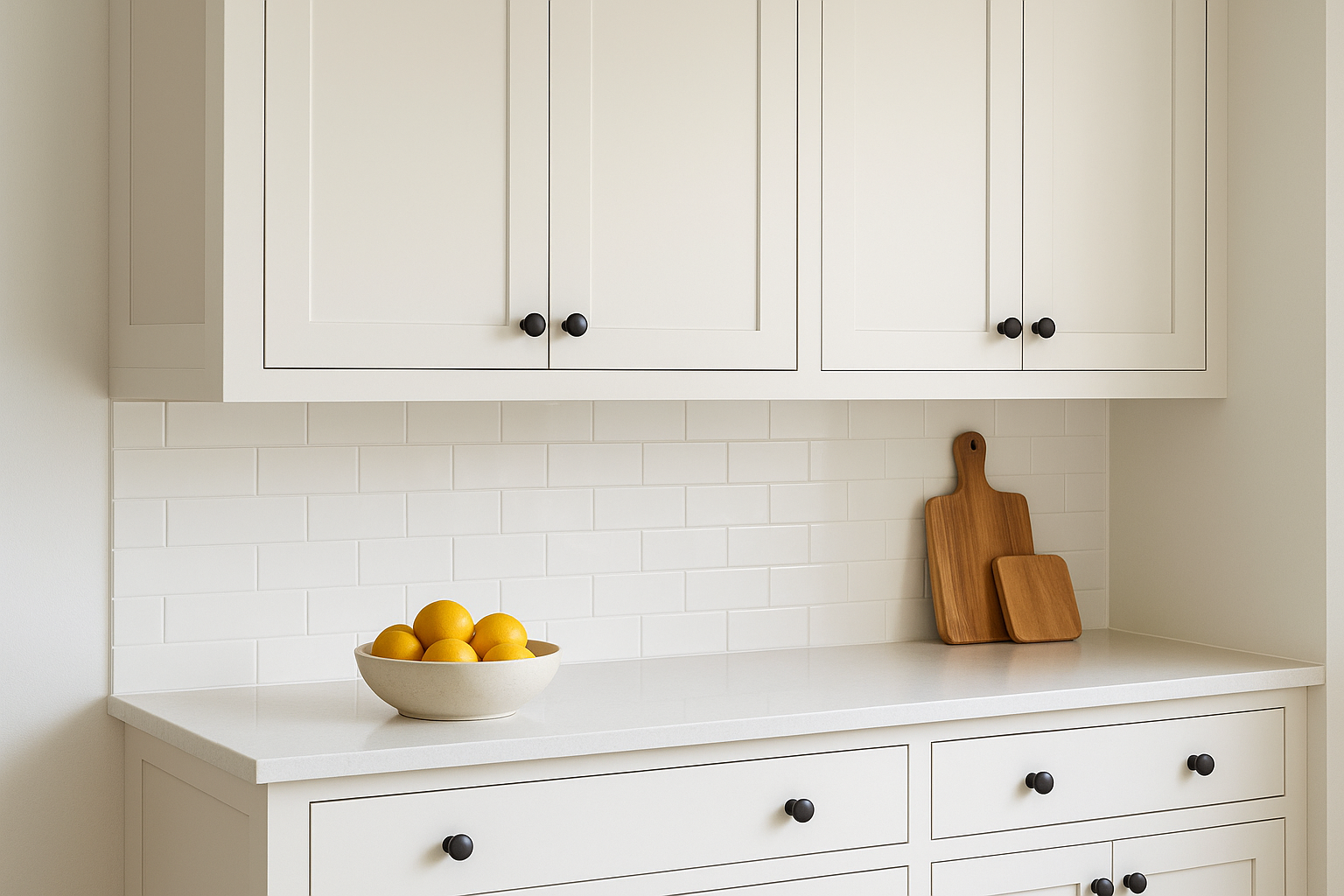
Inset cabinets sit in a category of their own among kitchen cabinet design styles because the door sits flush inside the cabinet frame rather than overlaying it. That single construction difference produces a look that feels refined and furniture-like in a way that overlay doors simply cannot replicate.
How inset doors change the whole cabinet profile
When the door sits inside the frame, the entire cabinet face becomes a flat, continuous plane. No door lips or overlapping edges break the surface, so the cabinetry reads more like built-in furniture than a standard kitchen installation. That quality tends to suit traditional, transitional, and high-end coastal homes particularly well.
The craftsmanship details that matter
Inset work demands tighter tolerances than overlay construction. Every door must fit its opening precisely, which means the cabinetmaker needs to account for wood movement, hinge placement, and frame squareness at every step. The visible gap around each door, called the reveal, must stay consistent across the entire run for the finished result to look intentional.
Inconsistent reveals on inset cabinets are immediately visible, which is why this style depends entirely on the quality of the build.
Reveal lines, hinges, and hardware choices
Butt hinges and knife hinges are the traditional choices for inset doors, and both show on the exterior, so the hardware becomes part of the design. Knobs and small pulls work well here because they complement the frame-forward look without overwhelming it.
Humidity movement and seasonal adjustments
Wood expands and contracts with Cape Cod’s seasonal humidity shifts, which affects inset doors more than overlay styles. Proper wood selection and reveal sizing during the build account for this movement so doors open freely year-round without binding.
Cost and installation considerations
Inset cabinetry costs more than overlay construction because tighter tolerances require more time at every stage of the build. Your investment reflects the level of precision involved, and the finished result holds that quality visibly for decades.
6. Beadboard cabinets
Beadboard cabinets bring texture into a kitchen in a way most other kitchen cabinet design styles skip entirely. The door face features a series of narrow vertical grooves separated by small rounded ridges called beads, giving the cabinet a tactile quality that flat or recessed doors simply don’t offer.
The texture that makes beadboard stand out
The beadboard pattern creates visual rhythm across the cabinet face without relying on carved detail or raised geometry. Each groove catches light at a slightly different angle, adding depth to an otherwise flat surface. Painted finishes amplify this effect by letting the ridges cast soft shadows throughout the day.
Best fits for cottage and coastal kitchens
Beadboard suits cottage, farmhouse, and coastal interiors because the texture references traditional New England building details. Cape Cod homes with wainscoting, board-and-batten walls, or shiplap ceilings carry beadboard cabinetry naturally without any visual conflict between elements.
When your home already uses linear wood patterns in other rooms, beadboard cabinets connect the kitchen to that thread rather than introducing something that competes.
Where to use beadboard so it does not overwhelm
Applying beadboard to every cabinet run can make a kitchen feel busy. A more controlled approach limits it to island panels, a single accent run, or lower cabinets only while keeping upper doors simpler.
Cleaning grooves and paint durability
The grooves collect grease and dust faster than smooth door faces, so regular cleaning with a soft brush matters here. A semi-gloss or satin paint holds up better than flat finishes and wipes clean more easily in an active kitchen.
Budget notes and alternatives
Beadboard door profiles sit within a reasonable range for custom work because the groove pattern requires modest machining time. If solid wood costs are a concern, MDF beadboard inserts within a frame door deliver a similar look at a lower material cost.
7. Louvered cabinets
Louvered cabinets stand apart from other kitchen cabinet design styles because the door face is made up of angled horizontal slats rather than a solid panel. That construction lets air move through the door, which originally made louvered doors a practical choice for pantry storage. Today, homeowners use them primarily for the distinctive visual texture they bring to a kitchen.
The airy look louvered doors create
The stacked slat pattern creates strong horizontal lines across the cabinet face, drawing the eye across the run rather than up and down. That directional quality makes louvered doors feel lighter than solid alternatives, and the shadow play between each slat adds depth that changes noticeably as natural light shifts through the day.
Louvered doors work best when light hits them at an angle, which is worth considering when you plan their placement in the room.
Where louvered doors work best
Pantry cabinets and utility storage areas suit louvered doors particularly well because airflow through the slats keeps enclosed spaces from trapping moisture. Coastal kitchens benefit from this quality given Cape Cod’s humid summer conditions.
Dust and cleaning realities
Each slat ledge collects dust and grease faster than a smooth door face. A soft brush or narrow vacuum attachment makes regular cleaning manageable, but this style does require more attention than flat or Shaker profiles.
Pairing louvered doors with simpler styles
Using louvered doors on every cabinet run overwhelms a kitchen. Limiting them to a pantry column or island end panels while keeping surrounding doors simple keeps the texture from competing with itself.
Cost and sourcing considerations
Louvered door profiles require precise milling, which places them at a higher price point than standard flat or Shaker options. Custom fabrication ensures the slat spacing and finish match the rest of your cabinetry exactly.
8. Glass-front cabinets
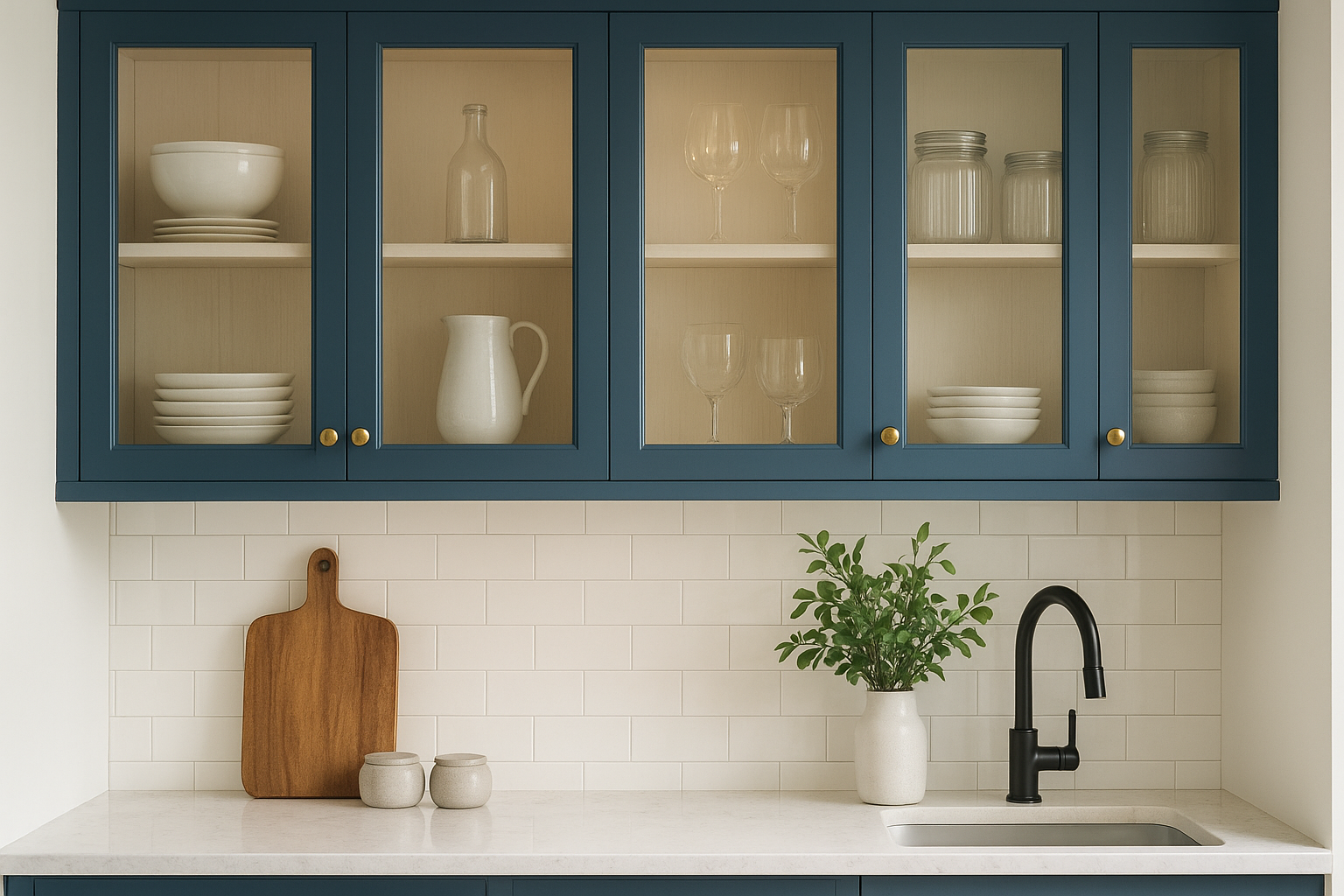
Glass-front cabinets add a layer that most other kitchen cabinet design styles don’t offer: visibility. Replacing a solid door panel with glass opens up the cabinet face, lightens the overall visual weight of the room, and gives you a way to incorporate color, texture, and curated display into your kitchen design.
Types of glass and how each one reads
Clear glass puts everything inside on full display, while seeded, reeded, or frosted glass softens the view and adds texture of its own. Fluted glass has grown in popularity recently because it diffuses light beautifully and adds interest without requiring perfectly organized shelves behind it.
Frosted or textured glass gives you the open feeling of glass doors without the pressure of keeping every shelf display-ready at all times.
Where glass-front cabinets belong in a layout
Upper cabinets flanking a range hood or positioned above a window are natural spots for glass doors because they draw the eye upward and balance the visual weight of lower cabinets. Avoid placing glass doors where deep storage or everyday clutter lives.
What to display and how to keep it looking tidy
Matching dishware, glassware, and simple decorative pieces work best because they hold visual consistency without much effort. Wipe down the interior regularly since grease and dust collect on shelves just as readily as anywhere else in the kitchen.
Lighting options inside uppers
LED puck lights or strip lighting installed inside glass-front uppers transform the cabinet into an accent feature after dark. Keep the wiring hidden and the fixture small so the light reads as ambient rather than exposed.
Cost and durability tradeoffs
Glass inserts add cost over solid doors, and tempered glass is the right choice for both safety and longevity in an active kitchen setting.
9. Open shelving and open cabinets
Open shelving removes the door entirely, which changes how kitchen cabinet design styles function at a practical level. You gain immediate access to everything stored on the shelf, but you also take on the responsibility of keeping those items looking organized and clean every day.
How open storage changes function day to day
Your most-used items stay within reach without opening a door, which speeds up cooking routines considerably. The tradeoff is that everything stays visible at all times, so disorganized shelves communicate a disorganized kitchen the moment anyone walks in.
The best places to go open without regret
Flanking a range hood or filling a short wall between windows are natural spots for open shelving because those locations typically hold items you use often and display comfortably. Avoid positioning open shelves near the stove where grease and steam will coat everything stored there.
Open shelving works best in the spots where your best-looking everyday items already live naturally.
Styling rules that keep it from looking cluttered
Limit the variety of colors, materials, and object heights on each shelf to keep the display from looking random. Grouping similar items and leaving breathing room between pieces makes a significant visual difference in how the finished shelf reads from across the room.
Grease, dust, and cleaning considerations
Open shelves collect grease and dust faster than enclosed cabinets, which means weekly wiping becomes part of your routine rather than occasional maintenance.
Budget and build details
Open shelving typically costs less than full cabinet runs because there are no doors, hinges, or catches to fabricate and install. Floating shelf brackets and solid wood shelves keep the build straightforward without sacrificing durability.
10. Two-tone cabinet designs
Two-tone cabinets have earned a consistent place among kitchen cabinet design styles because they add visual depth without requiring architectural changes. The approach splits your cabinetry between two distinct colors or finishes, creating intentional zones that a single uniform finish simply cannot produce.
Popular two-tone pairings that age well
The combinations that hold up longest rely on contrast rather than competition. Here are three pairings that stay current across different home styles:
- Navy lowers with white uppers
- Sage green lowers with cream uppers
- Warm wood tones with painted whites
A two-tone kitchen ages better when both colors connect to fixed elements already in the room, like flooring or countertop stone.
Layout strategies for uppers, lowers, and islands
Darker tones on lower cabinets and lighter finishes on uppers mirror how light naturally moves through a room. Your island works well as a contrasting accent without competing with the perimeter run.
How to match countertops, backsplash, and flooring
Your countertop needs to connect both cabinet colors without favoring one too heavily. Look for a stone or laminate surface that pulls tones from both finishes, and let the backsplash act as a visual bridge between the two.
Paint sheen and finish durability tips
Satin and semi-gloss sheens hold up better in active kitchens than flat paint because they clean more easily. Keeping a consistent sheen level across both colors ensures the light reads the same way on every surface.
Cost impact and repaint considerations
Two-tone work adds labor to a custom build because each color transition requires separate masking and finishing passes. Budget for additional repaint costs down the road if you plan to refresh one color without repainting the other.
11. Fluted and reeded cabinet fronts
Fluted and reeded cabinet fronts represent one of the more specific choices within kitchen cabinet design styles, but their impact on a finished kitchen is immediate. Both profiles introduce vertical texture to an otherwise flat door face, giving cabinetry a sculptural quality that feels current without chasing a trend.
The difference between fluted and reeded looks
Fluted profiles feature concave channels cut into the wood, creating a series of grooves that run vertically down the door face. Reeded profiles are the inverse, with raised rounded ridges sitting above the surface rather than recessed below it. The difference is subtle in photographs but reads clearly in person once light hits the surface at an angle.
Reeded fronts tend to catch light more dramatically than fluted ones, which makes them a stronger choice when your kitchen relies on natural light as a design element.
Where this texture works best in a kitchen
Island panels and accent cabinet runs suit this texture best because they let the profile stand out without repeating across every surface. Applying fluted or reeded fronts selectively keeps the kitchen from feeling visually overloaded.
Pairing fluted fronts with simple shapes and colors
Neutral colors like warm white, soft cream, or natural wood tones let the texture carry the visual interest without adding color competition. Pair these fronts with simpler Shaker or slab doors on surrounding cabinets so the textured run reads as intentional contrast.
Cleaning texture and wear over time
Each groove or ridge collects dust and grease at a faster rate than smooth door profiles, so consistent wiping with a soft cloth and gentle cleaner keeps the finish intact without wearing down the surface detail.
Cost and fabrication notes
Custom milling adds time to the fabrication process for both fluted and reeded profiles, which places them above standard flat or Shaker doors on the cost scale. The finished result justifies the investment in kitchens where texture and visual depth are central to the design goal.
Wrap-up and next steps
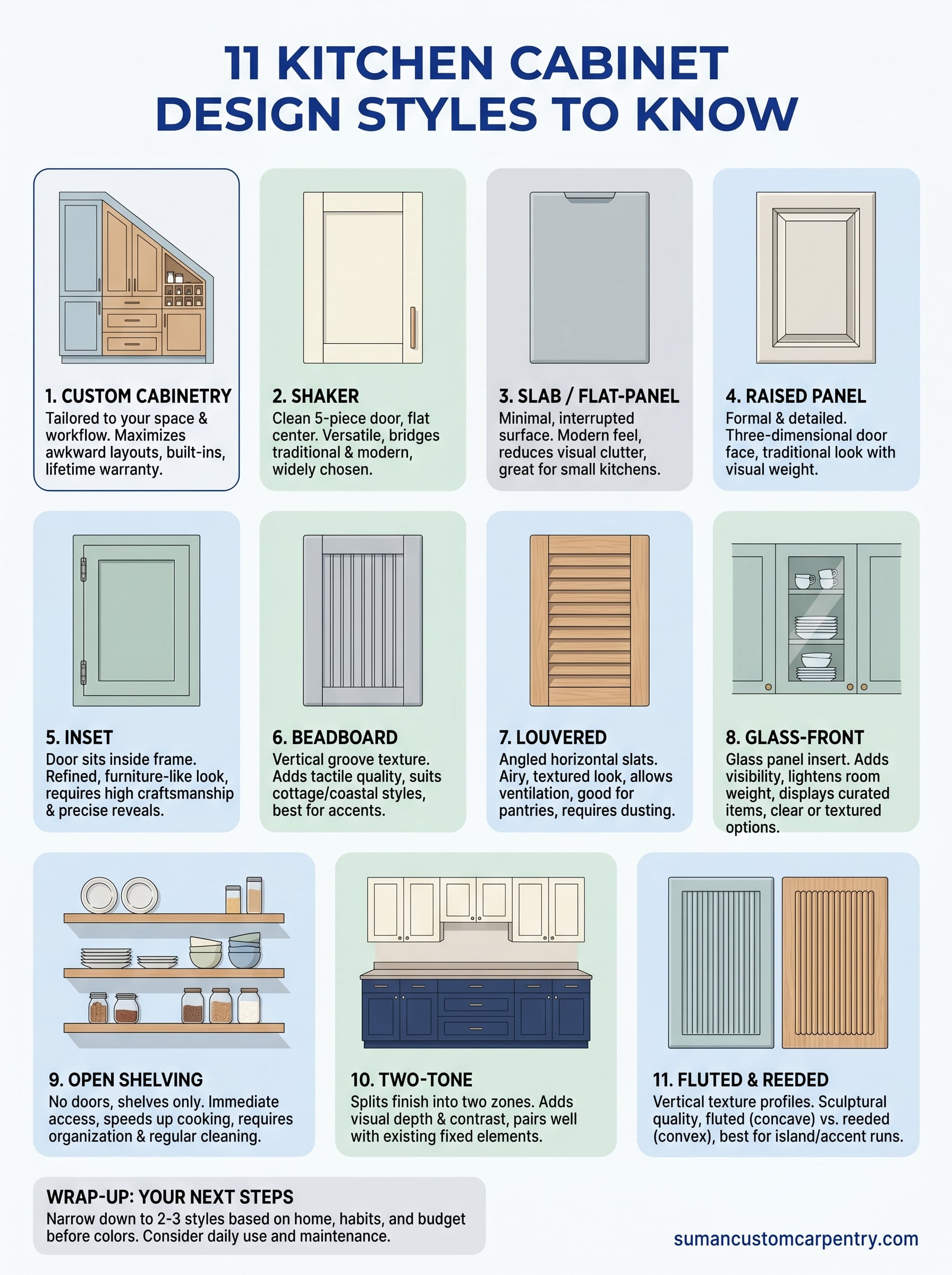
These eleven kitchen cabinet design styles give you a solid foundation for walking into any design conversation with real clarity about what you want and why. From the clean simplicity of slab doors to the furniture-like precision of inset cabinetry, each style carries distinct trade-offs worth understanding before you commit to a direction.
Your next step is to narrow your list down to two or three styles that genuinely fit your home, your habits, and your budget. Think about how your kitchen gets used daily and let that narrow the field before color and finish decisions come into the picture. If you’re renovating a kitchen on Cape Cod or the surrounding area, Suman Custom Carpentry builds every cabinet by hand at our Hyannis shop and backs the work with a lifetime warranty on cabinet boxes and doors. Reach out to start a custom kitchen conversation and we’ll help you match the right style to your space from the first meeting forward.