
You finally installed floating shelves, or you’re about to, and now you’re staring at empty wood wondering what actually belongs on them. Pinterest boards full of perfectly staged shelves don’t tell you how to avoid clutter, mismatched heights, or that awkward gap that makes the whole thing look unfinished. Good floating shelves decorating ideas solve a real design problem: how to add storage and personality to a wall without it looking like a dorm room bookshelf.
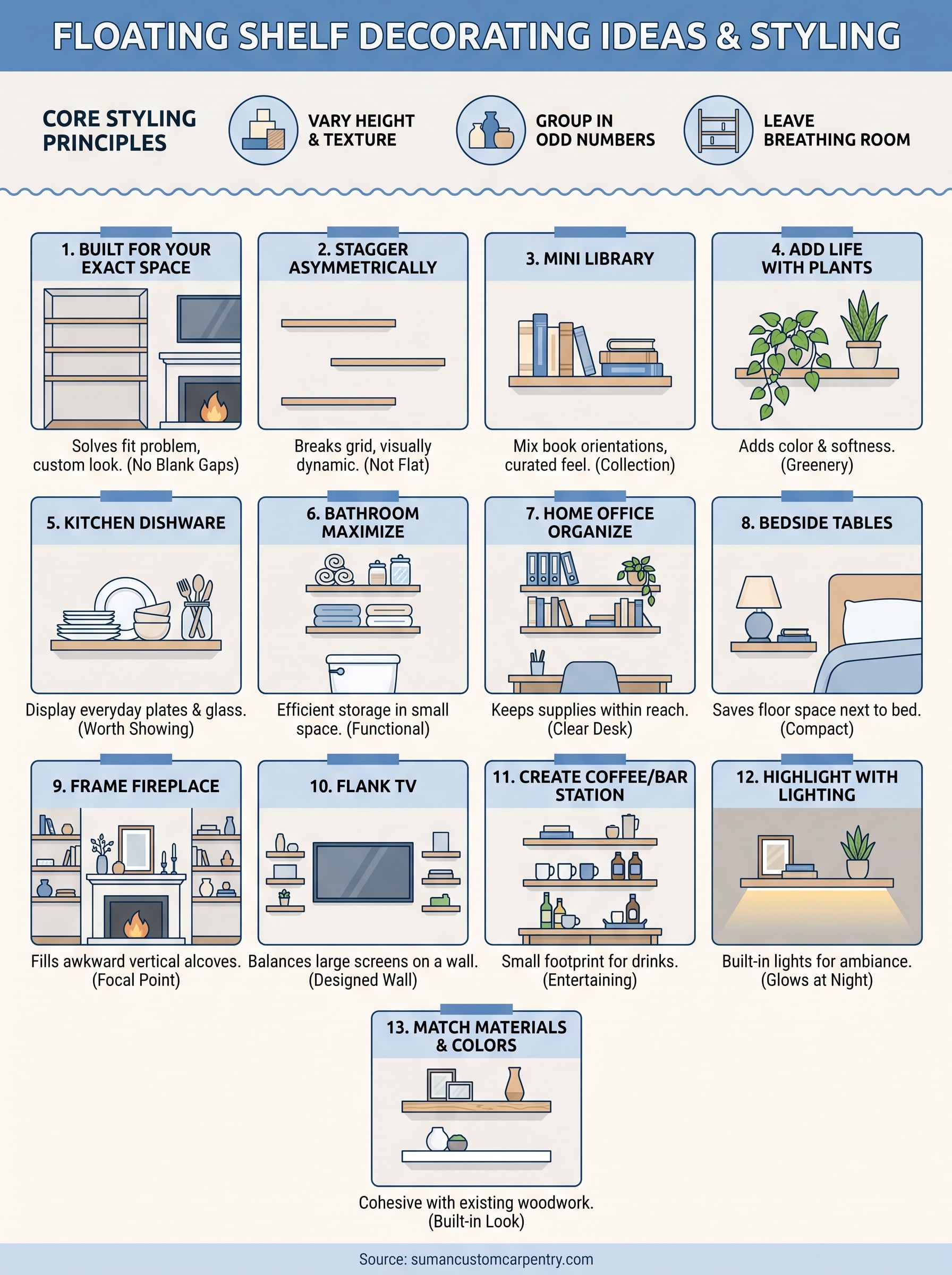
The short answer is that great shelf styling comes down to varying height and texture, grouping items in odd numbers, and leaving breathing room instead of packing every inch. Whether you’re working with a single shelf above a kitchen counter or a full wall of built-ins in a living room, the same principles apply, just scaled to the space and the room’s function.
Below, we walk through 13 ways to style floating shelves across kitchens, bathrooms, bedrooms, entryways, and home offices. These come from what we see working in real Cape Cod homes, where custom-built shelving has to hold up to coastal light and daily use while still looking intentional. You’ll find ideas for both rented apartments and permanent, hand-built installations.
1. Custom floating shelves built for your exact space
Before you buy a pack of pre-cut shelves from a big box store, consider what a custom-built floating shelf actually solves: the exact fit problem. Stock shelves come in standard widths, usually 24, 36, or 48 inches, which almost never match the actual dimensions of your alcove, kitchen wall, or awkward nook next to a chimney. Custom work closes that gap, literally, so you’re not left staring at three inches of blank wall on either side.
What it looks like
A custom floating shelf is built to the inch for your wall, your ceiling height, and the load you plan to put on it. Instead of a generic bracket-and-board setup, you get a solid wood or veneered shelf with hidden mounting hardware rated for the weight of books, dishware, or a television console. On Cape Cod, we build most of these from oak, maple, or painted poplar to match existing trim, and we cut the depth to whatever the room calls for, from a slim 6-inch spice ledge to a 14-inch display shelf over a mantel.
Where it works best
This approach earns its cost in spaces where a stock shelf simply won’t cut it:
- Odd-shaped alcoves next to fireplaces or bay windows
- Kitchens where you want the shelf to match existing cabinetry stain
- Commercial spaces like offices or retail that need a cohesive, branded look
- Load-bearing situations, such as a shelf meant to hold a television or heavy cookbooks
A shelf built to fit your exact wall will always look more intentional than one that almost fits.
Homeowners planning a full kitchen or built-in project tend to see the most value here, since the shelving becomes part of the room’s architecture rather than an afterthought hung on top of it.
Styling tips
Once the shelf itself is right, styling gets easier because you’re not fighting proportions. Match the wood tone to your existing cabinetry or trim so the shelf reads as built-in rather than added on. Keep the finish consistent with nearby woodwork, whether that’s a matte painted look or a natural wood grain. If you’re commissioning custom work, ask your carpenter about weight capacity upfront so you know what the shelf can hold before you start decorating. And because these shelves are permanent, resist the urge to overfill them right away; leave room to add pieces as you find them, the same way you’d curate a bookshelf over years rather than in one weekend trip to a home store.
2. Stagger shelves in an asymmetrical arrangement
Straight, evenly-spaced shelves look tidy but they can also look flat, like a store display rather than something you actually live with. Staggered floating shelves break that grid by mounting boards at different heights and offsets, creating a wall that feels more like a piece of art than a storage unit.
What it looks like
Instead of three shelves lined up at 12-inch intervals, you might hang one shelf at eye level, another 8 inches higher and shifted six inches to the left, and a third lower and shorter, tucked to the right. The gaps between shelves become part of the design instead of wasted space. This works with two shelves just as well as five, and it’s one of the easier shelf decorating ideas to pull off in a rental since you’re not committing to a rigid pattern.
Where it works best
Staggered arrangements shine in spots where the wall itself has personality to spare:
- Stairwells and hallways, where the sightline changes as you walk past
- Living room accent walls that need visual interest without a full gallery wall
- Small entryways where a single symmetrical row would feel cramped
An asymmetrical wall of shelves reads as designed on purpose, not just installed.
Styling tips
Before drilling anything, lay the shelves out on the floor first to test spacing and offsets, then use painter’s tape on the wall to mark bracket locations. Grouping in odd numbers, three or five shelves rather than two or four, tends to look more natural to the eye. Vary what sits on each shelf too: a taller vase on the highest board, a stack of books on the middle one, a single sculptural object on the lowest. Keep at least six inches of vertical clearance between staggered shelves so nothing feels cramped when you actually put items on them.
3. Turn your shelves into a mini library
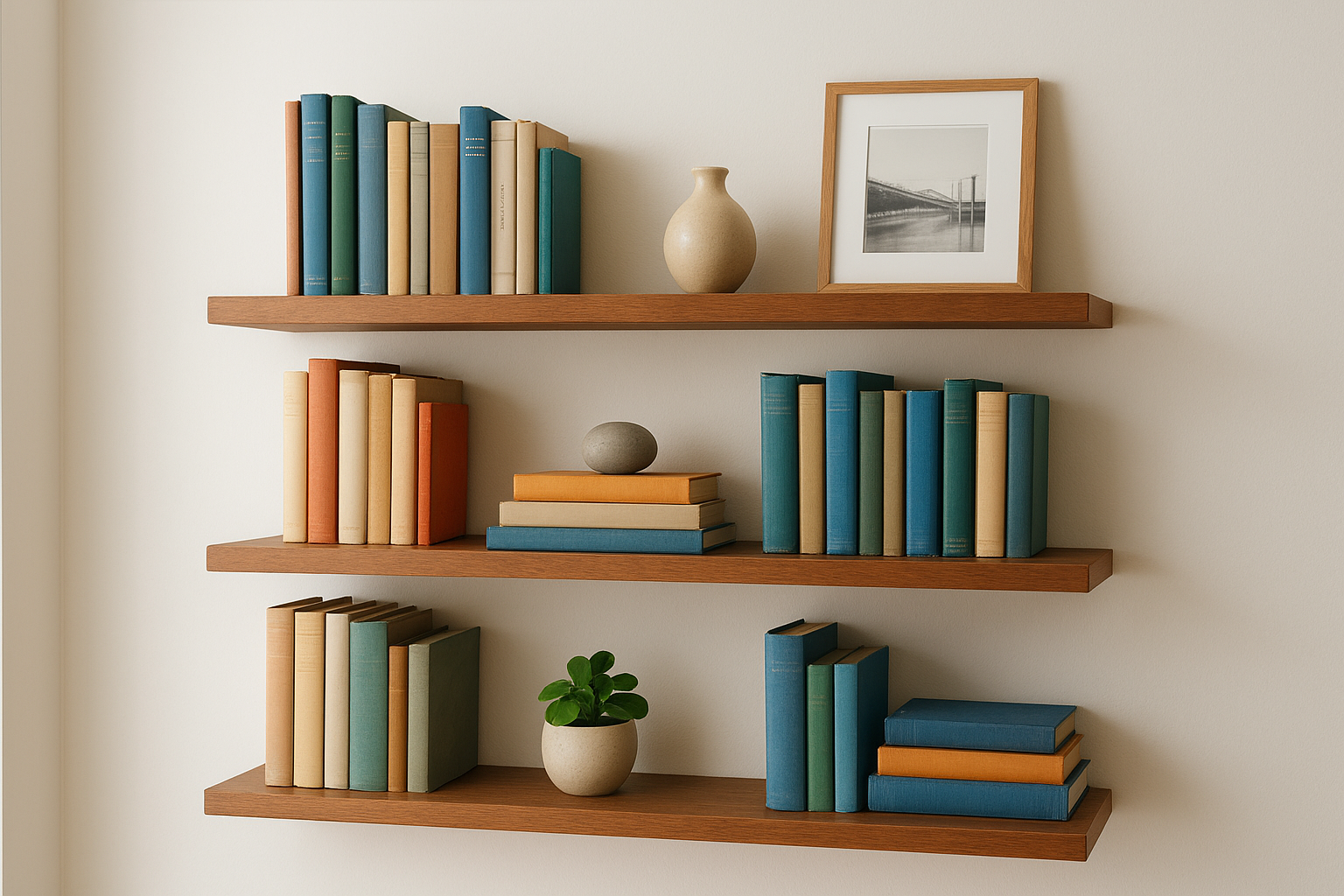
Books add color, texture, and instant personality to a wall, which makes a floating shelf bookcase one of the easiest styling wins on this list. You don’t need a full built-in bookcase to get the look. A few well-placed shelves can hold a rotating collection of paperbacks, hardcovers, and the odd magazine without the bulk of a traditional case.
What it looks like
Picture two or three shelves stacked with books arranged both vertically and horizontally, so the spines create their own rhythm instead of one flat row. Some books stand upright in small clusters of three to five, others lie flat in stacks of two or three, topped with a small object like a paperweight or framed photo. This mix keeps the eye moving instead of reading the shelf as one long line of spines.
Where it works best
This idea suits rooms where reading actually happens or where you want a lived-in, collected feel:
- Home offices and reading nooks, where books are functional, not just decorative
- Living rooms flanking a window or doorway
- Bedrooms, especially above a headboard where a traditional bookcase won’t fit
A shelf of books arranged with intention feels collected, not cluttered.
Styling tips
Sort books loosely by color or height rather than alphabetically. It reads more like a designed bookshelf styling moment and less like a library card catalog. Pull a few books forward and push others back to add depth, and don’t fill every shelf edge to edge. Leave gaps for a small plant, a piece of pottery, or a framed print every foot or two. If you’re working with a custom-built shelf, ask for slightly deeper boards, at least 8 inches, so hardcover books don’t overhang the edge and become a knock-off hazard.
4. Add life with plants and faux botanicals
Empty shelves can feel sterile no matter how nicely the wood is finished. Floating shelf plant styling fixes that fast, adding color and softness that books and ceramics alone can’t match. A single trailing pothos or a small row of faux eucalyptus stems does more to warm up a wall than another stack of decor objects ever will.
What it looks like
Greenery on a shelf usually falls into two categories: trailing plants that spill over the edge, like pothos or string of pearls, and upright plants in small pots, like a snake plant or a fiddle leaf fig cutting. Faux versions have gotten good enough that most guests won’t know the difference, which matters in low-light rooms where real plants struggle. Mix a trailing plant on one shelf with a squat, upright one on another so the greenery doesn’t all read at the same height.
Where it works best
This idea works almost anywhere, but it does the most heavy lifting in a few specific spots:
- Kitchens, where herbs in small pots double as decor and function
- Bathrooms, where humidity actually helps real plants like pothos or ferns thrive
- Home offices, where a bit of green cuts the sterile, all-business feel
A single trailing plant does more for a shelf than three decorative objects combined.
Styling tips
Group plants in odd numbers just like you would with books or vases, and vary pot material between ceramic, terra cotta, and woven baskets to add texture. Never let plants dominate more than a third of any given shelf; the goal is a living accent, not a jungle. If natural light is limited, lean on faux botanicals near the back and save any real plants for the front, where they’ll actually get enough light to survive.
5. Style open kitchen shelves with dishware
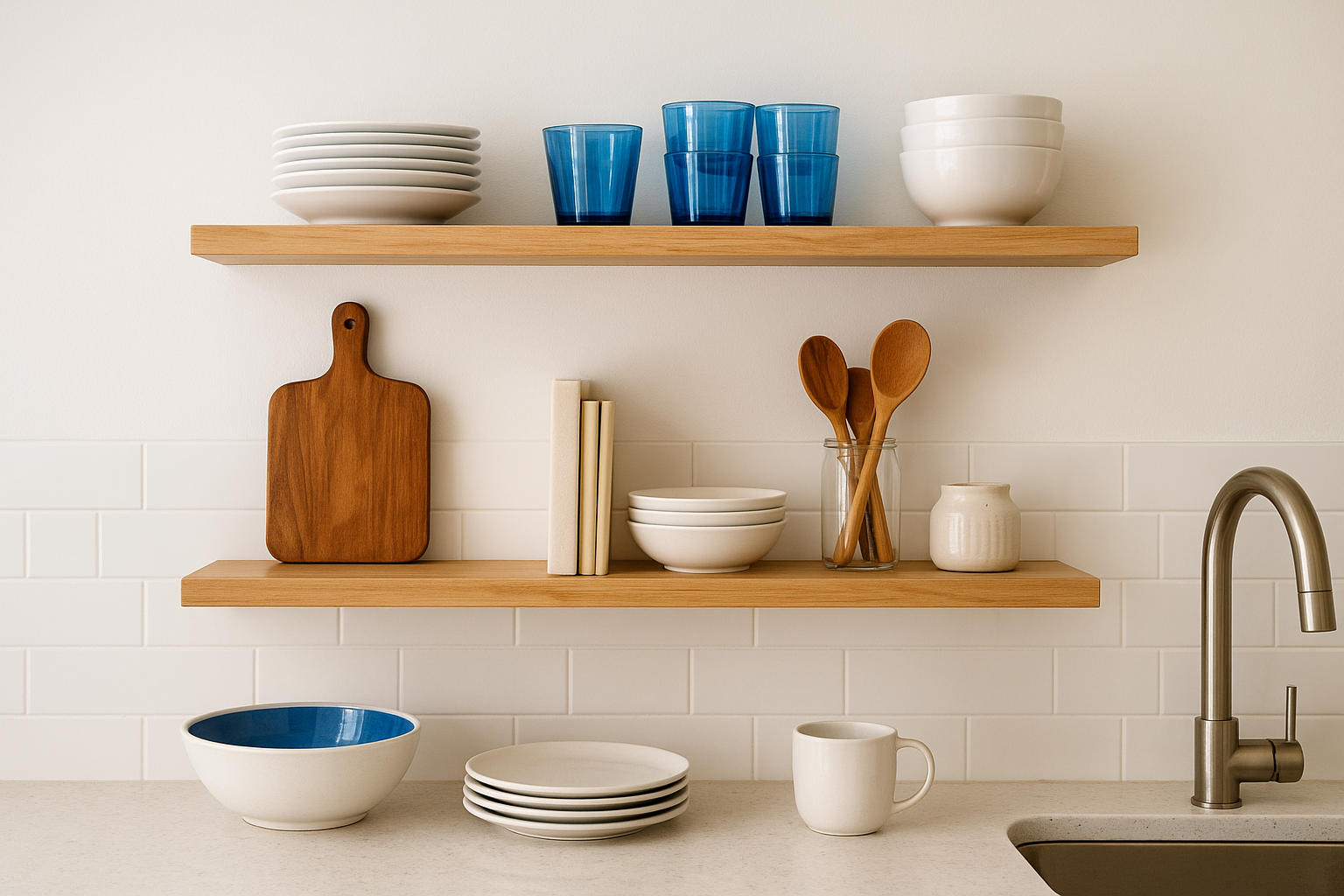
Swapping upper cabinets for open kitchen shelving is one of the biggest style commitments on this list, but it pays off fast if you cook and entertain often. Instead of hiding your everyday plates and glassware behind doors, you put them on display, which forces a little more discipline about what you own and how it’s arranged.
What it looks like
Open shelves in a kitchen usually replace one or two sections of upper cabinets, holding stacked plates, bowls nested by size, and glassware lined up by height. The best versions mix in a few non-dish items, a wood cutting board leaned against the wall, a small stack of cookbooks, or a jar of wooden utensils, so the shelf doesn’t read as pure storage. Cape Cod kitchens we’ve built often pair a single open shelf with a run of closed cabinets below, giving homeowners display space without losing all their hidden storage.
Where it works best
This idea suits kitchens where the dishware itself is worth showing off, think white ceramics, colored glass, or a matching set bought specifically for the look. It works less well if your everyday dishes are mismatched or chipped, since open shelving puts every flaw at eye level. Renters should note this is easier to reverse than ripping out full upper cabinets.
Open shelving only looks good when what’s on it is worth looking at.
Styling tips
Keep a tight color palette, mostly white and neutral tones with one accent color, so the shelf feels curated rather than like a cluttered cupboard with the door removed. Stack no more than four to five plates per pile, and turn a few bowls or mugs so their interior color shows for variety. Wipe shelves weekly since open shelf styling in a kitchen collects grease and dust faster than closed cabinets ever will.
6. Maximize bathroom storage with floating shelves
Bathrooms rarely have enough storage, and a floating shelf bathroom setup solves that without the bulk of a full vanity cabinet. A single shelf above the toilet or a stacked pair beside the mirror gives you a place for towels, toiletries, and the small stuff that otherwise piles up on the counter.
What it looks like
Most bathroom shelf setups use two or three shorter shelves, often 18 to 24 inches wide, mounted in a narrow vertical run rather than a long horizontal spread. Rolled towels stack on the lower shelf, glass jars holding cotton balls or bath salts sit on the middle one, and a small plant or candle tops the highest shelf where water splashes least. Moisture-resistant materials matter more here than anywhere else on this list, which is why we build most bathroom shelves in painted poplar or sealed oak rather than raw, untreated wood.
Where it works best
Floating shelves earn their keep in a few specific bathroom spots:
- Above the toilet, where wall space usually sits empty
- Beside a pedestal sink that has no built-in storage
- Inside an oversized shower niche wall just outside the tub
- Small powder rooms where a full vanity won’t fit
A shelf above the toilet turns wasted wall space into real storage.
Styling tips
Roll towels instead of folding them flat; rolled towels take up less shelf depth and look more intentional. Keep glass jars uniform in shape so the row reads as a set rather than mismatched containers grabbed from different stores. Group items in threes, a candle, a small plant, and a stack of washcloths, rather than lining everything up in a single row. Skip anything that rusts or warps easily, since even sealed shelves in a bathroom deal with more humidity than the rest of the house.
7. Organize a home office with floating shelves
Home offices need storage that doesn’t eat up floor space, and floating shelves for home office setups solve that without wedging a bulky bookcase into a room that’s often already tight. A wall of shelves above a desk keeps reference books, files, and supplies within reach while leaving the actual workspace clear for a keyboard, monitor, and whatever paperwork you’re dealing with that day.
What it looks like
Most home office shelving runs in a row above the desk, usually two or three shelves spaced 10 to 12 inches apart, holding a mix of binders, books, and small storage boxes. Some setups add a narrow shelf at arm’s height for things you grab daily, a stapler, a notepad, a mug of pens, with taller reference materials pushed higher where they’re visible but out of the way. Cape Cod clients working from home often ask for a shelf deep enough, around 10 inches, to hold both books and a small printer or file box.
Where it works best
This setup earns its space in a few specific situations:
- Small spare bedrooms converted into offices, where a desk and bookcase together won’t fit
- Nooks under stairs or in hallway alcoves used as a work corner
- Shared spaces where the desk needs to disappear visually when not in use
A shelf above your desk keeps supplies close without cluttering the surface you actually work on.
Styling tips
Separate function from decor by dedicating one shelf to supplies and another to books or personal items, so the wall doesn’t read as one messy catch-all. Use small bins or trays to corral loose items like cables and sticky notes, and keep the shelf directly above your monitor lightly loaded so nothing feels like it’s looming over your screen.
8. Use floating shelves as bedside tables
Small bedrooms rarely have room for a full nightstand on both sides of the bed, and a floating shelf nightstand solves that without sacrificing a place to set a lamp or phone charger. A single shelf mounted at mattress height gives you the function of a bedside table without the footprint, which matters most in guest rooms or apartments where every square foot counts.
What it looks like
The typical setup is one shelf, roughly 12 to 16 inches wide, mounted 24 to 26 inches above the floor on each side of the bed, matching the height of a standard nightstand. Some homeowners stack two shelves instead, a slim upper shelf for a lamp and clock, and a slightly deeper lower shelf for a book and a glass of water. Because there’s no drawer, cord management matters more here than with a traditional nightstand, so the shelf often gets a small hole drilled near the back or a clip mounted underneath to route a lamp cord out of sight.
Where it works best
This idea works best in bedrooms where floor space is tight or where a full-size nightstand would crowd the walkway:
- Small guest rooms with limited square footage
- Kids’ rooms, where an open shelf is safer than a table with sharp corners
- Platform beds, where a low-profile shelf matches the bed’s minimal look
A floating shelf clears the floor around your bed without giving up a place to set a lamp.
Styling tips
Keep each side simple: a lamp, a small stack of books, and one personal object like a framed photo. Skip anything heavy or top-heavy near the edge, since there’s no lip to catch a knocked-over glass. Match the shelf finish to your headboard or bed frame so the whole setup reads as one piece rather than two mismatched additions.
9. Frame your fireplace with floating shelves
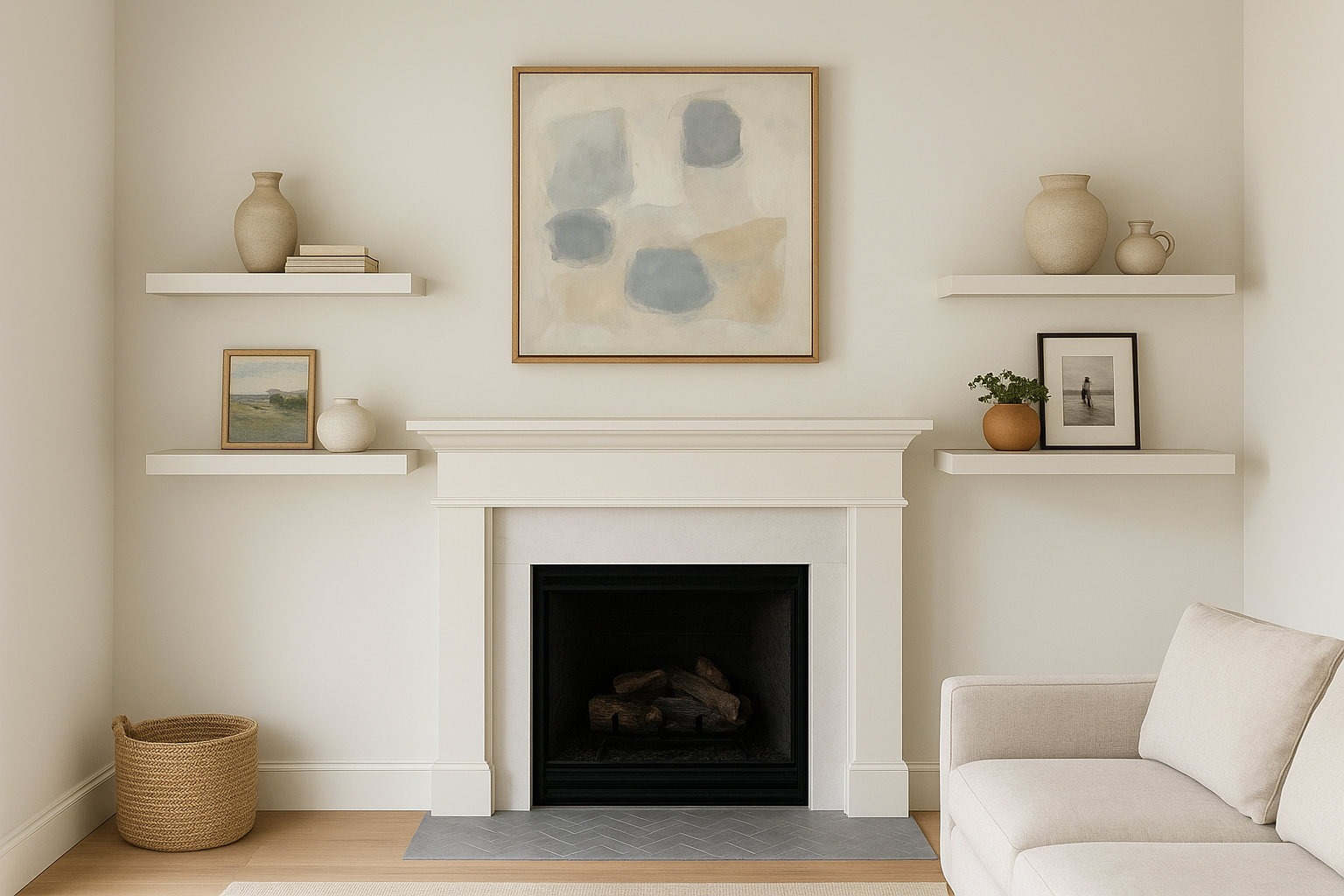
A fireplace wall often has awkward vertical space on either side of the chimney breast, and floating shelves around a fireplace fill that space without the bulk of full cabinetry. Instead of leaving those alcoves blank or cluttered with random furniture, a shelf on each side turns the whole wall into a single, intentional feature.
What it looks like
Most fireplace shelving runs as a matched pair, one shelf on each side of the mantel, mounted at the same height so the wall reads as symmetrical even if the objects on top aren’t. Depth usually runs 8 to 10 inches, deep enough for books or framed photos without crowding the narrow alcove space. On Cape Cod jobs, we often build these in the same wood or paint color as the mantel itself, so the fireplace built-in shelves look like they were planned with the fireplace rather than added years later.
Where it works best
This idea suits homes with a chimney that creates natural alcoves on either side, common in older Cape Cod colonials and farmhouse-style living rooms. It also works in newer homes with a simpler fireplace surround, as long as there’s at least 12 inches of wall space on each side to work with.
Matched shelves on either side of a fireplace turn an odd gap into the room’s focal point.
Styling tips
Mirror the styling on both sides loosely rather than exactly, using similar heights and colors but different objects, so the wall feels balanced without looking like a matching furniture set. Keep the lowest shelf clear of anything flammable or top-heavy near heat, and leave the top shelf lighter so it doesn’t visually compete with art or a mirror above the mantel.
10. Flank your TV with floating shelves
Mounting a television on the wall leaves a big blank rectangle around it unless you add something to balance it out. Floating shelves around a TV fill that space with storage and display, turning a flat-screen into part of a designed wall instead of the only thing hanging there. This is one of the most requested floating shelves decorating ideas we hear from clients replacing a bulky media console.
What it looks like
Most TV wall setups use a matched pair of shelves, one on each side of the screen, mounted at the same height and running 8 to 12 inches deep. Some homeowners add a second row above for extra display space, holding books, framed photos, or a speaker on each side. The goal is to keep the shelves narrower than the television itself so the screen still reads as the visual anchor rather than getting boxed in.
Where it works best
This setup earns its place in a few common rooms:
- Living rooms where the TV sits on a wall without a console below it
- Bedrooms with a wall-mounted TV and no room for a dresser nearby
- Basements or media rooms needing storage for remotes, gaming consoles, and cable boxes
Shelves flanking a TV turn a flat screen into part of the wall’s design instead of the only thing on it.
Styling tips
Route cords behind the wall or through a cord channel so nothing dangles between the shelves and the screen. Keep the shelf closest to the TV lighter on decor, since anything too busy competes with the screen when it’s on. Use the outer shelves for slightly taller objects, like books or vases, to draw the eye outward and make the whole wall feel intentional rather than accidental.
11. Create a stylish coffee or wet bar station
A floating shelf bar turns an empty corner or unused wall into a spot for coffee, cocktails, or both, without the cost of built-in cabinetry. Homeowners who love hosting but don’t have room for a full wet bar find this one of the more practical floating shelves decorating ideas on this list, since it adds function and style in a footprint as small as three feet of wall.
What it looks like
Typically the setup includes two or three shelves stacked above a small counter, cart, or narrow console, holding glassware, a coffee maker, bottles, and a tray for mixing tools. Open shelving above and closed storage below, a cabinet or cart, keeps breakables visible while hiding bulkier items like extra coffee bags or bar napkins. Depth usually runs 10 to 12 inches to fit standard glassware and bottles without anything hanging off the edge.
Where it works best
This idea suits a few specific spots in a home:
- Dining rooms, where a bar station saves a trip to the kitchen mid-dinner party
- Kitchen corners with an outlet nearby for a coffee maker or kettle
- Finished basements or dens doubling as entertaining spaces
A small shelf setup can do the job of a full bar cart without eating up floor space.
Styling tips
Group glassware by type, wine glasses together, rocks glasses together, rather than mixing styles on one shelf. Add a small tray to corral bottles so the surface stays organized when guests pour their own drinks. Include one textural piece, a wood cutting board or a woven basket, to soften all the glass and keep the shelf from feeling cold or clinical.
12. Highlight shelves with built-in lighting
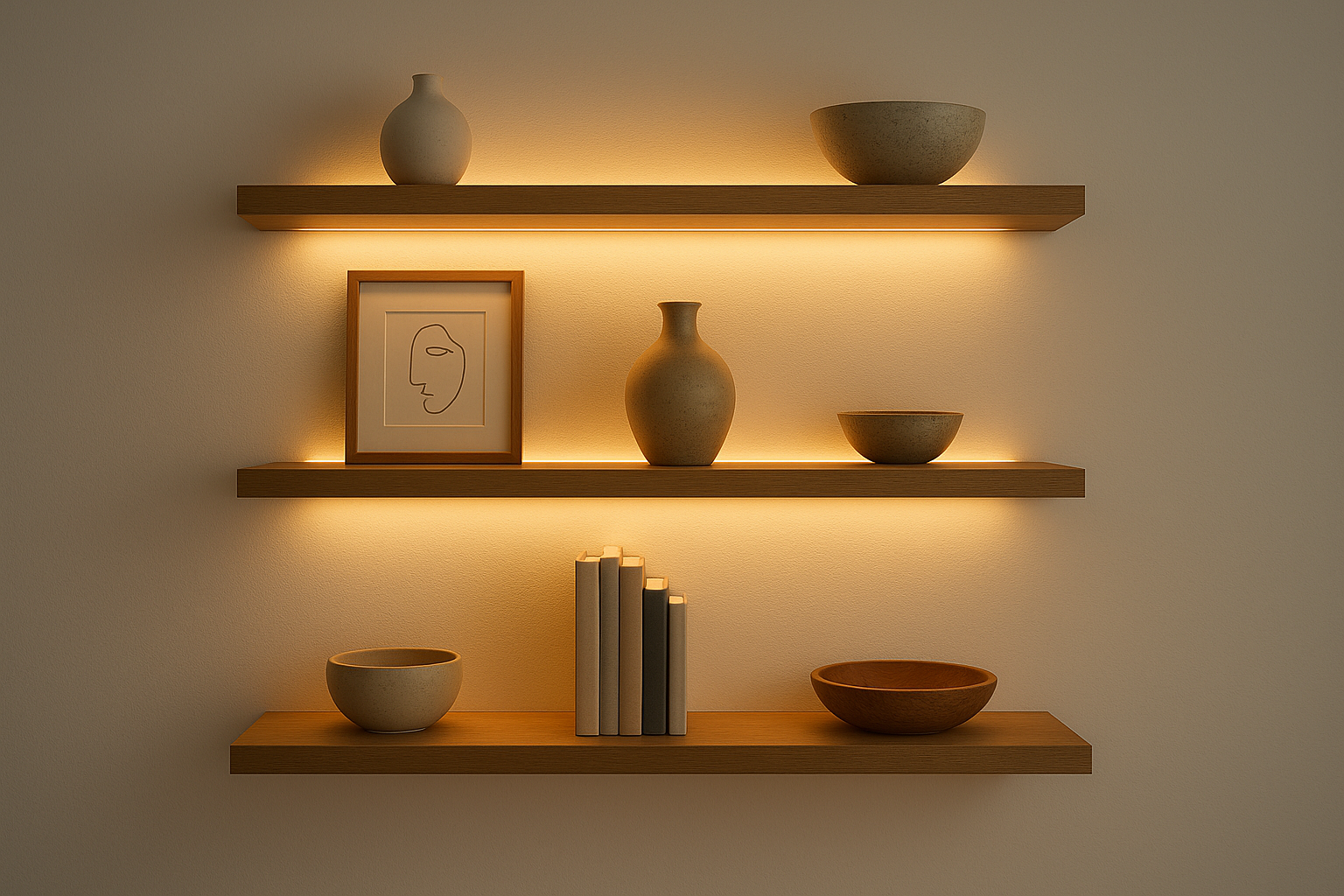
A shelf full of great objects can still fall flat if the room’s overhead light doesn’t reach it. Floating shelf lighting fixes that by putting a small light source right where you need it, turning a display into something that actually glows at night instead of sitting in shadow. It’s one of the more overlooked floating shelves decorating ideas, but once you see a lit shelf next to a dark one, you won’t want to go back.
What it looks like
Most lighted shelf setups use a thin LED strip tucked under the front lip or along the back edge, wired to a small transformer hidden behind the wall or inside the shelf itself. Some installations run on a dimmer switch, others plug into a simple outlet with an inline switch. The light washes down onto the shelf below or up onto the wall, depending on where the strip sits, and it’s dim enough to serve as accent light rather than a reading lamp.
Where it works best
Lighting pays off most on shelves that double as evening decor:
- Living room display walls where you want ambiance after dark
- Bar or coffee stations that get used at night
- Bookshelves holding collectibles or art worth showing off
A lit shelf reads as a feature; an unlit one just reads as storage after the sun goes down.
Styling tips
Stick to warm white LEDs, around 2700K, so the light flatters wood tones instead of washing them out. Hide the wiring during installation rather than running cord covers after the fact, and test brightness at night before committing to a fixed strip.
13. Choose materials and colors that match your decor
Every idea on this list falls apart if the shelf material fights with the rest of the room. Floating shelf materials and finishes decide whether a shelf reads as built-in or bolted-on, and that choice matters more than anything you put on top of it. Getting this right is the difference between a shelf that looks planned and one that looks like a weekend project.
What it looks like
Wood grain, paint color, and edge profile all signal whether a shelf belongs to the room or was added as an afterthought. A rustic reclaimed oak shelf reads completely differently than a crisp white-painted MDF board, even if they’re the same size in the same spot. Cape Cod homes we work in often lean toward natural wood tones, oak, maple, or walnut, that echo existing trim, though painted finishes in white or soft gray suit coastal, cottage-style interiors just as well.
Where it works best
This choice matters everywhere, but it carries the most weight in rooms with visible woodwork already in place, kitchens with stained cabinets, living rooms with wood trim or beams, and any space where a mismatched shelf would stand out for the wrong reason.
The right material makes a shelf disappear into the room; the wrong one makes it the first thing you notice.
Styling tips
Match the shelf’s stain or paint to your trim, not your furniture, since trim stays put and furniture moves around. Stick to one wood tone per room if you’re mixing multiple shelves. Ask your carpenter for a sample board before committing, since stain often looks different under real light than in a showroom.
Bringing it all together
Styling floating shelves comes down to a handful of habits repeated across every room: vary height, group in odd numbers, leave breathing room, and match materials to the trim already in your home. Whether you’re stacking books in a living room or lining a bathroom wall with rolled towels, those principles hold up no matter the space. The thirteen ideas here give you a starting point, but the real payoff comes from picking two or three that fit how you actually live, not just how a photo looks.
Stock shelves work fine for quick fixes, but they’ll always fight your walls a little. If you want shelving that fits your space exactly, holds real weight, and matches your existing woodwork instead of competing with it, that’s where custom work earns its keep. Reach out to Suman Custom Carpentry and we’ll build shelves designed around your room, not the other way around.